
Emotional Intelligence
How to Control Your Emotions
(So They Don’t Control You)
Emotions are like toddlers: loud and demanding.
Give in to them, they get spoiled. Ignore them, and they’ll throw a tantrum in the supermarket.
So what do you do instead?
This article will teach you how to understand them and communicate with them.
We’ve all been tripped up by our emotions before.
Under their spell, we’ve acted poorly, overreacted, or made bad choices. It’s normal to grow distrustful of them.
You don’t ever want to be at their mercy and embarrass yourself. You want to manage them.
But here’s where it gets tricky.
Everyone and their grandma has advice on this. And the suggestions are all over the place…
Take the Manosphere, for example. They say showing emotions is a no-no. They think emotions are useless and should be “stifled” to be “stoic.”
Then there’s the left-leaning pop culture. They argue you should express your emotions, whatever the cost.
But none of the camps has got it right.
Stifling emotions is unwise because emotions give us crucial information. Ignoring them is like wandering blindfolded near a cliff’s edge. Sooner or later you will fall.
Yet, expressing emotions without thinking of the fallout isn’t wise either.
Emotional intelligence means understanding your emotions and knowing the right time to express them. Or not.
People make a big deal out of expressing emotions because they crave validation from others. They forget that self-validation and recognition are sufficient.
So, how do you manage your emotions?
But before we dive into that, I have another question for you.
What is emotion?
This question is key. How can you manage something if you don’t understand it?
Answering this isn’t simple, as there are many myths and misunderstandings about emotions…
The myths around emotions
Pop psychology says we can’t control emotions.
It sees emotions as the appendix of the brain — a leftover from evolution that we can’t do much about.
It also believes that emotions come from specific parts of the brain.
But that’s far from the truth.
My understanding of this topic has done a 180-degree shift.
I now know there’s no “limbic,” “reptilian,” or “emotional brain.” The idea of an “amygdala hijack” is nonsense.
There aren’t “emotional circuits” in the brain that just take over.
Here’s another common belief: everyone shows emotions the same way.
Darwin suggested this theory of universal facial expressions for emotions — like smiling for happiness or frowning for anger. This theory has been around for hundreds of years.
This idea has even led tech giants like Google and Facebook to spend millions on emotion detection technology.
But, setting aside privacy concerns, it doesn’t work that way.
Think about it.
Do you always show anger the same way?
Sometimes you might frown. But sometimes you clench your jaws, turn cold, disengage. Or sometimes you even yell when it all feels too much.
It depends on the situation and what you’re trying to achieve.
And on top of it, there are so many versions of anger.
The sticky resentment. The mild irritation. Frustration. The simmering rage. The revolting disgust.
So which one do you mean when you say you or someone else is angry?
Moreover, our experience of emotion is influenced by culture and beliefs.
Applying a Western view of emotions globally doesn’t work.
For instance, the Himba people in Namibia see a wide-eyed stare (often seen as fearful) simply as a tarera (‘looking’) face.
Utka Eskimos appear to have no clearly defined concept of anger. While Tahitians seem not to share our concept of sadness.
According to Dr. Lisa Feldman Barrett (whom I’d be quoting a lot in this article), we can only detect emotions in others about 35% of the time. The rest of the time, we’re guessing.
But why is that such a big deal?
Because sometimes it’s a matter of life and death.
In a study, 69% of jurors who sentenced someone to death did so because they believed the defendant showed no remorse. They guessed the emotions of the criminals (which we know is only accurate 35% of the time) and felt confident enough to rob a man of his life.
Let that sink in for a moment…
Another misconception: emotions are reactions to external events. Even classic CBT (Cognitive Behavioral Therapy) teaches this.
But is it true though?
Imagine you’re heading to the airport to pick up a long-missed friend.
On the way you reminisce about the good old days and you anticipate how great it would be to meet with them once again. Your heart skips a beat. You feel fuzzy and warm.
You are experiencing joy even before the event has taken place. How can that be if emotions are only reactions to events?
So most of what you’ve known about emotions is wrong.
Here’s a better way to understand them…
The Constructed Emotions Theory
Dr. Lisa Feldman Barrett, who I mentioned before, is in the top 0.1% of the most cited scientists worldwide! She has won the National Institutes of Health Director’s Pioneer Award for her groundbreaking work on emotions.
She champions the “Constructed Emotions Theory.” It says emotions don’t just pop up out of the blue. They’re created from a mix of unique sensory inputs. Your brain uses its best predictions in more than one area to create them.
Your brain makes predictions about what you’ll see or taste. These predictions might be right, or the brain learns from mistakes and fixes wrong guesses.
These emotions vary based on your own experiences.
Let’s look at the basic building blocks of this theory:
The Body Budget
The brain runs a budget for your body, just like you do for your household expenses.
But it deals with things like glucose, salt, oxygen, water, and nutrients, not money. These are what you need to stay alive and well.
Using up glucose or oxygen is like spending from this budget. Sleeping and eating are like making deposits.
Being with a trusted friend is like savings in this budget, as everything costs a bit less in terms of energy.
On the other hand, stress is like a tax.
(Dr. Barrett talked about this in an amazing podcast with Andrew Huberman. She mentioned a study that found social stress within two hours of eating can add 104 calories to your meal. That’s 11 pounds (~5 kg) gained per year if it happens daily!)
If you’re running a deficit in your body budget, you’ll feel tired or stressed (though this doesn’t always mean something’s wrong. It could be either from a stressful day or from exercising).
So depression is like a bankrupt body budget.
Your brain focuses on bad past experiences when metabolic needs were high. It keeps making withdrawals from an already taxed budget. It might ignore alarm signals from the body.
The body tries to save energy to balance the budget. So it moves less, pays less attention to the world, and avoids people. This makes balancing the budget even harder, leaving you too fatigued to even move.
People who had tough or traumatic childhoods can also have trouble managing this budget. Their brains struggle to keep it balanced. This can increase their risk of heart disease, arthritis, diabetes, cancer, and other illnesses.
That shows how key a balanced body budget is.
So, how does the brain keep track of all this?
Affect Vs Emotions
Your brain makes a simple summary of your body’s budget. Scientists call this ‘affect’ (or mood, in everyday language).
Think of it as a 144P resolution version of a full-fledged emotion.
For example, feeling good or bad, worked up or calm, comfortable or uncomfortable, etc.
How does your brain do this?
It interprets the signals that it constantly receives from your body.
Things that positively impact your body budget make you feel good. Things that negatively impact your body budget make you feel bad.
Emotions are what you feel when you give meaning to these affective feelings.
Here’s an example…
What does it mean when you have a fast heartbeat, high blood pressure, quick breathing, tense muscles, heightened senses, blood moving from your stomach to your muscles, sweating, and extra glucose in your blood?
It could mean you are giving it your all at the gym. But the same combination can happen when you’re boiling with rage.
The affective feelings are the same, but the context helps your brain create different emotions.
And you have more control than you might think in shaping these emotions.
We’ll talk about that soon…
But first, let’s understand what emotions are and how they come to be.
What are Emotions?
Emotions as Concepts
Have you ever thought about the plight of your brain?
The poor thing’s sitting alone in a dark space, continuously getting tons of data from your eyes, ears, nose, skin, and mouth.
Kind of like how the NSA malwares gathers data from computers and phones (just kidding — but again who knows).
This information is helpful, but it’s not always clear. It needs to be interpreted.
The NSA hires thousands of analysts to interpret the data it collects from all over the world.
Your brain has something called an “interoceptive network” for this job. It gets signals from your sense organs, plus your internal organs and tissues, blood hormones, and immune system (and from a bunch of other systems). Then it interprets what all this means.
For example, it might think:
- What’s that four-legged animal chasing its tail? A dog!
- What’s this nice, cool feeling on my skin that comes and goes? A breeze!
- What’s that strong, good smell in the morning? Fresh coffee!
Your brain is always busy trying to understand what it’s sensing.
It uses your memories as a guide. If something happening now matches with a memory, it’s quicker and easier for the brain.
But it can’t go through thousands of old memories one by one. That would take too long.
Instead, it uses concepts.
A concept is a compressed version of thousands of past experiences. They’re like labels or groups your brain makes to understand the world.
When you see something new, your brain doesn’t ask, “What’s this?” It asks, “What’s this like?” It’s much simpler than trying to figure it out from scratch.
Your brain stores a “tree” concept instead of remembering every tree you’ve seen. When you see a tree, your brain matches it to this concept.
Dr. Barrett talks about this in her excellent TED talk.
Take a look at this picture.
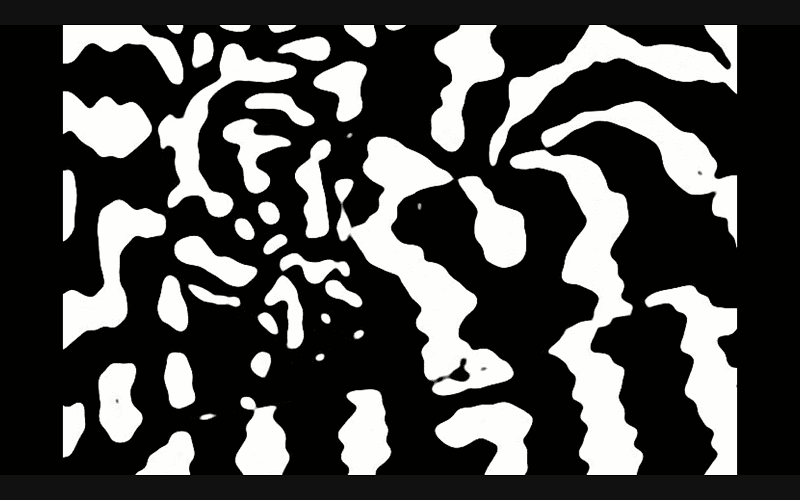
While you’re looking, your neurons are firing like mad trying to perceive something besides black and white blobs. Your brain is searching through its collection of concepts, making tons of guesses, trying to figure out what category this picture fits into.
(I saw a smiley face, the crosshair from The Predator in Arnold’s movies, a cartoon giraffe, a bent spoon like in The Matrix, a mermaid, and a snake before I stopped.)
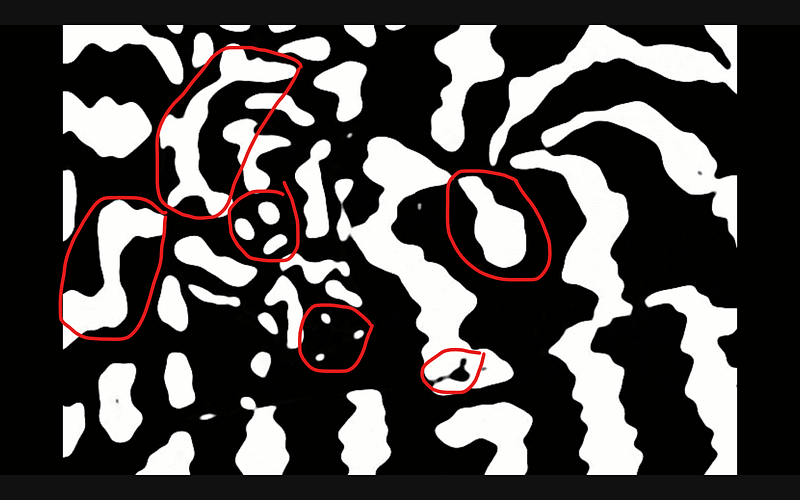
Now look at the below picture:

Looking back at the first image, you can now see a snake.
What’s going on here?
Initially, you had “experiential blindness” with the first picture. You couldn’t perceive something because you didn’t have a concept.
But now, with a new concept in your mind, your brain fills in the missing pieces. This happens so automatically that you probably can’t see the picture the old way, even if you try.
We don’t experience the world directly; we experience our brain’s simulation of it. Without a concept for something, we can’t add it to our brain’s simulation.
This is why some things are interesting and others aren’t. When you understand what’s happening, you can guess what comes next. Correct prediction secretes Dopamine in the brain and makes you feel good.
Tiago Forte gives a great example in his article:
“Imagine you are sitting in a Parisian café on vacation, sipping fine wine and eating cheese. You may overhear a French couple at the next table over immersed in conversation. The conversation contains all the information you would need to understand what they’re saying. But if your mind is missing a set of concepts known as “the French language,” it will sound meaningless to you.”
These concepts help you make sense of a world that always provides incomplete, ambiguous information. They let you recognize things fast and (usually) right, saving time and energy.
Dr. Barrett’s work shows how this idea applies to the messy, subjective world of emotions.
The Theory of Constructed Emotion says emotions are concepts that are constructed by the brain. Emotions like “fear,” “sadness,” and “disappointment” are just concepts.
Just as your brain interprets a pattern of cool, nice air a “breeze,” it might name certain body feelings as “fear” or “disappointment.”
These emotions feel real because they come from inside us. But to the brain, the body is just another part of the world to figure out.
It uses the same “interoceptive network” to interpret sensations from inside the body — like your heart’s rhythm, how you breathe, your stomach’s growls, and the contraction and dilation of your veins. Your muscles running low on energy is named “exhaustion.” Not enough sleep becomes “overwhelm.” Missing friends becomes “loneliness.”
So, the emotions you feel are just changes in the body budget, not objective facts.
They’re also shaped by your culture and your history of interactions with others. This is why the Himba don’t understand wide-eyed fear, the Eskimos don’t understand anger, and the Tahitians don’t understand sadness.
Emotions as predictions
But the brain isn’t just sitting back, looking at sensory data, and trying to match and interpret them. If it did that, it would be too slow and could be risky for our survival.
So, what does it do?
The brain starts reacting before it gets all the data. It creates a “simulation” of what might happen next and gets ready to act on that guess.
For example, as you’re about to see a beach, even before you can see the horizon, your brain gets ready to feel awed at the sight of the vast expanse of turquoise water.
Or, if you’ve had unpleasant encounters with someone, your brain gets anxious and uneasy before you meet them again.
Predicting is what the brain does all the time. It can’t help but make guesses about every experience you have, or any experience it thinks you might have.
Do you get how big this is?
This means what you see, hear, touch, taste, and smell are just your brain’s simulations of the world. And these guesses feel more real to you than the actual world.
When the real world starts matching the brain’s guess, our brain might stop taking in new info. It just shuts off.
Ever had that awkward moment when you interrupted a friend and guessed wrong? That’s this mechanism at work.
What if the brain’s guess is wrong?
If it’s smart, it changes its prediction to match what it’s sensing. But sometimes, it sticks to its first prediction and filters the new data so that it matches it (this is how bias works).
Now, how does this prediction mechanism connect to the body budget?
The brain always predicts the body’s energy needs. When the body budget is off, it constructs emotions to:
- explain what’s happening
- explain what might happen
- kickstart a plan of action to re-balance the body budget
Emotions can become a self-fulfilling prophecy. The more you expect to feel a certain way, the more you get ready for it, and the more likely you’ll feel that way.
In a way, you create your own reality in your brain.
You’ve now got better tools and mental models to understand emotions. You know emotions are real, but what they seem to say might not always be true.
But what do you do with this new understanding? How can you use it to manage your emotions better?
Here are some strategies.
I’ve put the most effective ones first. Practice and get good at these before trying the others.
Let’s get started…
How to Manage Emotions
Get the Fundamentals Right
Body budget is crucial it is for your emotional health.
So treat your body budget as holy and do everything in your power to keep it balanced.
How do you do that?
Here are the 4 most impactful things that you need to get right:
- Sleep
- Nutrition
- Exercise
- Sunlight
Sleep
Sleep is the body’s magical way to restore everything to balance.
On the days you wake up well-rested, life feels a little easier and the problems seem a little less difficult.
If there’s only one thing you want to remember from this article — then prioritize your sleep.
A ton of info is available out there on how to do that. Here are a few things that have worked for me:
- Sleeping without a shirt on
- Making the room temperature cool
- Having enough ventilation in the room I’m sleeping. If the AC is not on, then I keep the windows open.
- Having the last meal and the last glass of water at least 2 hours before going to bed
- Using yellow lights in the evening
- No screentime for the last 1 hour before going to bed
I’m not too big on using supplements so can’t recommend any.
But I’m a big fan of trying out things and seeing the results. I recommend you do the same.
Nutrition
After sleep, the next thing you should fix is nutrition.
And after understanding the concepts of body budget, you might realize now how crucial it is.
Although I’m no expert here, these are some pointers that help me keep my nutrition on point:
- Intermittent fasting.
- Eating a protein-rich diet balanced diet with lots of vegetables, fruits, and nuts. Here’s a quick hack I learned from Jack D Coulson — when preparing a plate, heap 2 servings of protein, 1 serving of vegetables, and then 1 serving or less of carb.
- Eating only till you’re 70–80% full.
- Eating mindfully without looking at a screen (Watching something while eating is a bad habit that I still haven’t been able to overcome completely)
- Drinking 3–4 liters of water daily
- No snacking between meals.
- Not eating anything that comes with packaging.
- No fad diets or detoxes. Those are crap.
Exercise
I consider exercise to be the 3rd most crucial step. You can work out as hard as you want, but you cannot outrun the effects of poor sleep or nutrition.
Sometimes, the predictive loops between body and mind are so strong that it’s hard to break their pattern. Moving helps balance these signals, putting your body budgets back into balance.
All animals use movement to regulate their body budgets. If a dog has too much glucose in its system, it can run around or spin in circles to burn it off.
Humans are blessed. We can use purely mental concepts to shift our budgets. But when that fails, a quick run or workout helps.
Here’s my routine as a dad and husband, with a full-time job and a coaching side gig:
- Lifting weights and bodyweight exercises 3 times a week
- Walking 30 mins daily
- Yoga or strength conditioning once every 2 weeks (I’d like to increase this frequency sometime soon)
This works for me, but find what fits you best.
For guys over 35, I suggest getting a knowledgeable coach.
I once injured my lower back because I didn’t warm up right and my posture was off. It took months of physiotherapy to heal.
Working with an experienced coach saves you from that hassle.
Sunlight
Make sure you get enough sunlight.
The morning sun helps set your body clock, making your sleep better. It also helps in vitamin D and serotonin synthesis, boosting your mood and focus.
Here’s my routine for daily sunlight:
After my son goes to school, I walk to drop off bags at his daycare. It’s a 4 km walk.
This helps me kill 3 birds with one stone: daily movement, morning sun, and listening to an audiobook, which is a bonus.
That’s the basics covered.
Now, before we dive into the Jedi mind tricks, remember this: Without nailing these first four steps, trying the next techniques is like trying to fill a bottomless bucket. It won’t hold.
But once you’ve got habits for these four, here’s what to do next:
Dig Deeper
Build awareness of your automatic thoughts and patterns.
When you’re feeling down, understand what’s really happening.
Your brain has received stimuli and sensations from your sense organs and from within your body. Then it interpreted them and created a summary of summaries.
So the summary of “tension across the upper back,” “rapidly beating heart,” and “clenched jaw can become “anxiety”.
Realizing this takes away some of their emotional impact.
With practice, you can break down the emotion into parts. This stops it from coloring your view of the world.
Try naming your feelings more clearly. Focus on different body parts. Or check if you’re hungry, thirsty, or tired.
This helps you understand what’s going on inside.
Dr. Barrett gave a great example:
Picture drawing a cup. You want to turn a 3D object into a 2D drawing. You could try drawing the cup and end up with a poor drawing.
But a realist painter breaks the cup into light and shadow. Then, they paint those on the canvas. Doing this gets a pretty good rendering of the 3D cup on a 2D canvas.
Do the same with your emotions.
Don’t just lazily accept the high-level summary of summaries that your brain creates. Dig deeper and look at the low-level summaries — things like your heartbeat, breathing, and muscle tension.
This gives you a picture closer to reality and helps you make better decisions.
Here are a few tools that can help:
Journalling
Our thoughts are jumbled in so many ways.
Writing them down makes them clearer.
I use a daily page format on Notion. Here’s a sneak peek:
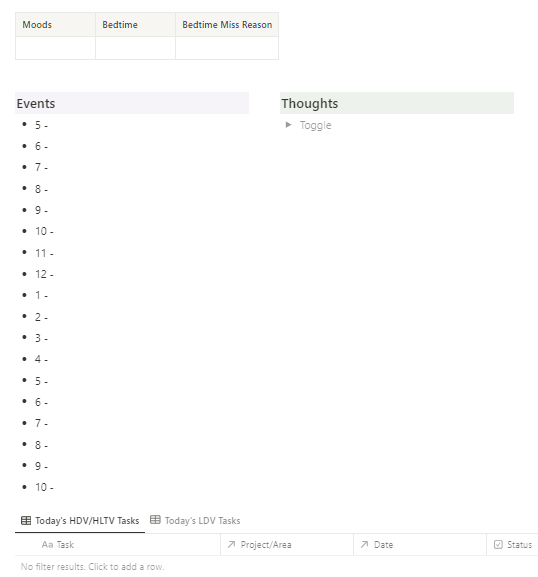
This combines ideas from Stephen Timoney, Dan Koe, and Neville Medhora along with my iterations over the years.
Feel free to use it or change it as needed.
Understand Cognitive Distortions
Our minds have faulty patterns called cognitive distortions.
We all have them and fall for them from time to time.
Paying attention to these patterns saves you pain.
Here’s a thread I wrote explaining them:
Don’t just believe these stories.
Reflection
Journalling is great.
But to unlock its true power, add a regular reflection ritual.
I reflect daily, weekly, monthly, quarterly, and yearly.
It helps me get a clear picture of my progress. It also tells me if something is falling through the cracks.
Don’t sleep on this habit.
Improve your Emotion Vocabulary
You now know if you don’t have a concept to describe an emotion, it won’t be able to perceive it. You’ll feel the bodily sensations, but can’t label them precisely.
This skill to construct and identify precise emotions is called emotional granularity.
If you only know feeling “good” and “bad,” your emotional granularity is low. You won’t know what’s really going on inside you. Life becomes difficult for you.
But imagine if you had more precise concepts like Jeong (정) in Korean, the feeling of attachment to a close friend. Or the German word Backpfeifengesicht, wanting to punch someone in the face. Or Age-otori (上げ劣り) in Japanese, the regret after a bad haircut.
Or Liget, a Filipino word for the bloodlust soldiers have in war, which once they are back home, makes them wonder if they are psychopaths.
Your brain would be so efficient in constructing these precise concepts!
The higher your emotional granularity, the better you will be able to label what you’re feeling, the better your body budget will be allocated, and the better decisions you will be able to make.
You’ll handle challenges better.
Studies show people with high emotional granularity go to the doctor less, need less medicine, and spend fewer days in the hospital. In contrast, low emotional granularity is associated with depression, social anxiety, eating disorders, autism, borderline personality disorder, and general anxiety.
But can you improve emotional granularity?
Yes, absolutely.
I’ll paraphrase Tiago Forte here:
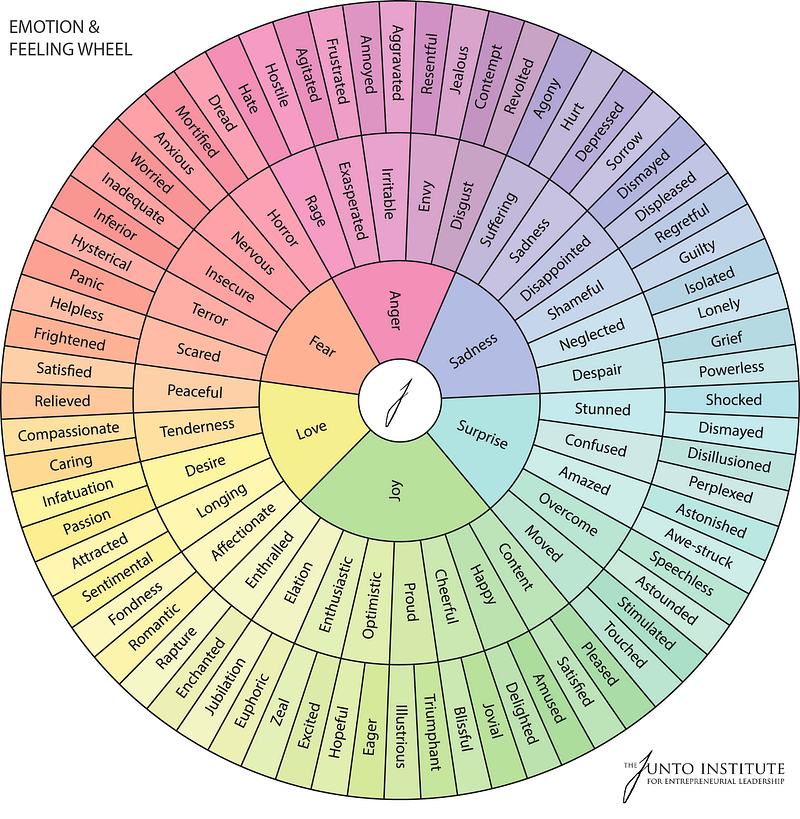
“If you can learn to distinguish more precise meanings for “Feeling great” (happy, content, thrilled, relaxed, joyful, hopeful, inspired, prideful, adoring, grateful, blissful . . .) or “Feeling crappy” (angry, aggravated, alarmed, spiteful, grumpy, remorseful, gloomy, mortified, uneasy, dread-ridden, resentful, afraid, envious, woeful, melancholy . . .), your brain will have many more options for predicting, categorizing, and perceiving emotions.”
The Junto Institute’s emotional wheel is a great tool to help you get better at this:
Acquire More Models
You’ve learned that your mental models and concepts directly affect your body budget, and in turn how you experience emotions.
This means the more models you collect, the better you can handle your feelings.
So, how do you collect these models?
Try new things — so that your body budget gets used to different regimens.
It’s like a vaccine — you gently introduce a foreign concept to your mind. This way, you’re better at dealing with surprises later.
This could be anything:
- travel to new places
- meet different people
- take a cold shower
- read different kinds of books
- try new activities.
These things show us different ways to meet human needs, which we might want to borrow for ourselves.
Here’s something else to keep in mind…
You have an ego. You have a wounded part within yourself. You’re a human being.
So you will get triggered sometimes
Keeping yourself sheltered and running away from difficult situations makes this worse. Your brain learns that these situations are scary. Then you feel more anxious and scared next time.
It’s better to face these situations and trust your brain to cope.
For example, if you hate going home for holidays because of overbearing conversations, maybe see it as a challenge?
I do this a lot. Putting myself in tough spots has taught me a lot about me. I’ve gotten better at handling these situations.
But be smart about it. If there’s physical or emotional abuse, stay away.
It’s not worth it.
Your Goals get to Decide
Now that you understand emotions better, you will have better tools to manage them.
You know emotions aren’t scary.
You don’t always have to react right away. They’re just your body’s way of figuring things out and giving you a plan.
And you can choose to not follow your brain’s first suggestion.
The first step? Take a pause.
100% of regrets come from reacting too quickly to feelings. A pause and some deep breaths can help you overcome those urges.
Then, you can choose the best way to process the emotion.
I remember something that happened recently.
I went with some neighbors to a wholesale market in Kolkata to buy clothes for our apartment staff. I do this every year during the Durga Pujas, the biggest festival in Bengal.
We had to pay in cash, so I had money in my pocket.
Someone must have seen it because after we bought some stuff, I realized the money was gone.
I’d been pickpocketed.
I got upset and angry, but just for a bit. Years of practice helped me calm down and let it go.
I also noticed a small voice inside me saying it was strange I wasn’t freaking out. That I had the right to. Anyone else would have.
But I knew it would just waste time and energy.
My neighbors were upset too when they found out. But we managed to gather enough cash to buy what we needed.
I even joked that the theft was like forced charity since the thief probably needed the money more than me.
I could even find gratitude for the abundance in my life that losing that money didn’t sting me too much.
I chose to let it go.
Between stimulus and response there is a space. In that space is our power to choose our response. In our response lies our growth and our freedom.
- Viktor Frankl
So maybe you don’t need to act on the situation. Maybe you just need to soothe yourself? You could:
- Go for a walk
- Meditate
- Listen to music
- Read a book
- Paint
Or if you’re feeling worked up with a lot of pent-up energy, you might:
- Do a hard workout, martial arts, or dance
- Yell into a pillow
- Write an angry letter and then tear it up
- Your options are endless.
But sometimes, you need to face the issue.
Talk to the people involved. Tell them politely but firmly what you think.
Use this template as is or modify it as per your need:
“When you [their behavior], then [what happens], and I feel [your feelings]. I’d prefer [what you want them to do].”
It’s a good enough template. But it’s just a start.
Assertiveness is a skill and developing it sets you apart in every phase of life (I help my clients one-on-one to be more assertive. Find out more here.)
Sometimes, if you can’t do anything about the situation, the best thing is to accept it and move on.
But whatever you do, don’t be hard on yourself for how you feel. It’s silly to judge yourself for your brain’s guesses.
Instead, focus on understanding the process. Next time, your brain can understand reality better and make better predictions.
Be Around Less Taxing People
What if someone in your life is always taxing your body budget?
Now you know this can really affect you.
So vet and choose who you let into your life. Stick with people who help you be your best self.
Sure, you’ll still have flare-ups and disagreements. And your body is resilient enough to overcome them.
But if someone always stresses you out, you might need to cut them off your life or see them less.
Be mindful of your boundaries. And enforce them whenever needed.
Don’t depend on others to enforce them. To err is human and everyone is bound to overreach at some point.
So take responsibility to enforce your boundaries and state clearly when they are being breached
Give them a chance to fix things.
Having people you can rely on, talk to when things are hard, and who create savings in your body budget — is a true blessing
Go seek that blessing.
Create Savings for Others’ Body Budgets
The right people can make a big difference in your mental peace and happiness.
But how do you attract those kinds of people into your life?
By being that kind of person yourself.
It’s a choice.
You can be someone who taxes others’ body budgets. And then you will attract that kind of a low-vibe crowd around you.
Or you can choose to be someone who creates body budget savings for others.
Someone who holds others up and makes space for them. Someone who values gratitude, kindness, and empathy.
Someone who is never shy in accepting their mistakes and apologizes when they are wrong.
Someone who is not afraid of being vulnerable in front of people they trust.
And guess what?
When you have a surplus in your body budget all of these appear as a natural side effect.
Humans are made to be kind.
When you do random acts of kindness and be the best vibrational self that gives you more body budget savings. And creates even more surplus.
Maybe this is what true happiness is all about?
What Next?
Wow, you’ve made it through a lot of info! I get it if your head is spinning.
We turned some common ideas on their head, and that’s a lot to process all at once.
So, what’s next?
Here’s where you start: nail the basics.
Get your sleep, nutrition, movement, and sunlight exposure on point.
Then, get curious about your emotions and start building awareness of them.
Bookmark this article. Check back now and then to see how you’re doing. Gradually add new emotional skills from this article to your toolbox.
Don’t expect instant miracles (you will be disappointed).
You’re in for the long haul here.
What you’ve learned here can transform your life. It will make you a calm, wise, mature, and more grounded version of yourself. You will no longer be at the mercy of your emotions.
Others will be awed at how you keep your cool. They will want to know your secret.
And that kind of change doesn’t happen overnight.
So, keep going on your journey to emotional maturity.
I know you’ve got this!
Do you struggle with setting boundaries?
I’ve created a guide that will help you set iron-clad boundaries
even if you prefer walking on a bed of red-hot coals to saying “No” to someone.


