avatarDenise Shelton

Free AI web copilot to create summaries, insights and extended knowledge, download it at here

3203

Abstract

orts_medicine">sports medicine</a>.</p><p id="bd6e">Gilbert was an accomplished athlete. He broke the world record for consecutive <a href="https://en.wikipedia.org/wiki/Chin-up">chin-ups</a> in 1900 and set two world records in the <a href="https://en.wikipedia.org/wiki/Pole_vault">pole vault</a> in 1906. He invented the pole vault box that same year and won a gold medal in pole vaulting at the <a href="https://en.wikipedia.org/wiki/1908_Summer_Olympics">1908 Summer Olympics</a>.</p><figure id="aade"><img src="https://cdn-images-1.readmedium.com/v2/resize:fit:800/1*DDBYGRFe0H1HDmpcCua7pA.jpeg"><figcaption>The Mysto Mfg. Co. plant in New Haven, Connecticut. Inset: the first home of Mysto Manufacturing. (image via the A.C. Gilbert family collection)</figcaption></figure><p id="f634">In 1907, the year before his Olympic gold medal win, Gilbert decided against pursuing a medical career and founded the Mysto Manufacturing Company in Westerville, Connecticut. He married his college sweetheart Mary Thompson in 1908 and started a family. The couple would eventually have three children.</p><p id="98bd">Mysto’s first product was magic kits, but before long, Gilbert added other lines, including Polar Club electric fans and his biggest claim to fame: the <a href="https://en.wikipedia.org/wiki/Erector_Set">Erector set</a>, which Gilbert invented and introduced in 1911. In 1916, Gilbert renamed his enterprise the <a href="https://en.wikipedia.org/wiki/A._C._Gilbert_Company">A.C. Gilbert Company</a>. It would grow to be the largest toy manufacturer in the world. That same year the <a href="https://www.toyassociation.org/ta/about-us/toys/about-us/about-us.aspx#:~:text=The%20Toy%20Manufacturers%20of%20America,toys%20and%20games%20to%20children.">Toy Manufacturers of America</a> (now known as the Toy Association) was founded, and Gilbert was a member.</p><h1 id="a24e">World war threatens the toy industry</h1><figure id="4f40"><img src="https://cdn-images-1.readmedium.com/v2/resize:fit:800/1*Ph3nPDiYPXw1D-f6wRhjbg.png"><figcaption>A drawing of an Erector set model of a dirigible, 1913 (public domain)</figcaption></figure><p id="9799">With the spring 1917 entry of the United States (U.S.) into the war, the Toy Manufacturers of America created a War Service Committee and made Gilbert its chairman. As part of the war effort, the U.S. government had banned the manufacture of non-essential items. This decision put the toy industry into an uproar, and parents and their children looked toward the upcoming Christmas season with foreboding. Would there be any toys? Would Christmas be canceled?</p><figure id="47dd"><img src="https://cdn-images-1.readmedium.com/v2/resize:fit:800/1*9-zQibVy0WZIWPGC9ZDZJQ.jpeg"><figcaption>A. C. Gilbert at work (public domain)</figcaption></figure><p id="9825">Gilbert arranged a meeting with the Wilson administration’s Council of National Defense to convince its members that toys <i>were </i>essential items. Before the meeting, he assembled a selection of toys from various manufacturers to help make his point. The meeting was held in the office of the <a href="http://hdl.loc.gov/loc.mss/eadmss.ms010320">Secretary of the Navy, Josephus Daniels

Options

</a>.</p><p id="b9f8">Although it seems outrageous today, the meeting's focus was the importance of toys for <i>boys </i>rather than girls. This made sense at the time since steel and other materials needed to make weapons were mostly used in things like Erector sets and toy trains — what people then thought of as “boys toys.” Most girls were expected to play with dolls, which were easy enough to make at home.</p><blockquote id="872f"><p><b>“The greatest influence in the life of a boy are his toys. A boy wants fun, not education. Yet through the kind of toys American toy manufacturers are turning out, he gets both. The American boy is a genuine boy, and he wants genuine toys. He wants guns that really shoot, and that is why we have given him air rifles from the time he was big enough to hold them. It is because of toys they had in childhood that the American soldiers are the best marksmen on the battlefields of France…America is the home of toys that educate as well as amuse, that visualize to the boy his future occupations, that start him on the road to construction and not destruction.” — <i>A.C. Gilbert in his meeting with government officials as reported by the</i> Boston Post,<i> 25 October 1918</i></b></p></blockquote><figure id="2b68"><img src="https://cdn-images-1.readmedium.com/v2/resize:fit:800/1*yXVu3c3J2Dw3OINPs0ggUg.jpeg"><figcaption></figcaption></figure><p id="06c6">After addressing the council, Gilbert displayed his selection of toys. It was a brilliant tactic because it reminded the men of their own childhoods. <a href="https://lccn.loc.gov/21018814?loclr=blogadm">Secretary of Commerce, William Redfield</a>, was reported to have looked fondly at a toy steam engine and exclaimed, “I learned the rudiments of engineering on an engine like this.” The visual aids helped make Gilbert’s case.</p><p id="3d74">He successfully convinced the officials that toys were essential items for the growth and development of America’s youth. Toy production continued, and Christmas was saved. When congratulated on his presentation's success, Gilbert told reporters that it wasn’t his speech that made the difference. “The toys did it,” he said.</p><figure id="cf60"><img src="https://cdn-images-1.readmedium.com/v2/resize:fit:800/1*zfHIoPSyD7-frnYFQMFSBw.jpeg"><figcaption>World War I era Christmas card (public domain)</figcaption></figure><p id="8792">By World War I’s end on 11 November 1918, U.S. manufacturers had produced 3.5 million rifles, 20 million artillery rounds, 633 million pounds of smokeless gunpowder, and 376 million pounds of high explosives.</p><p id="e446">Approximately 20 million people lost their lives in that conflict, and another 20 million were wounded. Thankfully, during that same time period, A.C. Gilbert, along with his fellow toymakers, devoted his considerable skills to producing toys to spur young people’s imaginations and vocational aspirations instead of aiding their destruction. In the process, he raised the value of play in the public consciousness and drove home the importance of toys in the lives and positive development of children all over the world. His legacy lives on in the learning toys of today.</p></article></body>

The Man Who Saved Christmas When America Needed It Most

In the midst of WWI, America’s factories were producing weapons of war, but one man stood up for the spirit of imagination
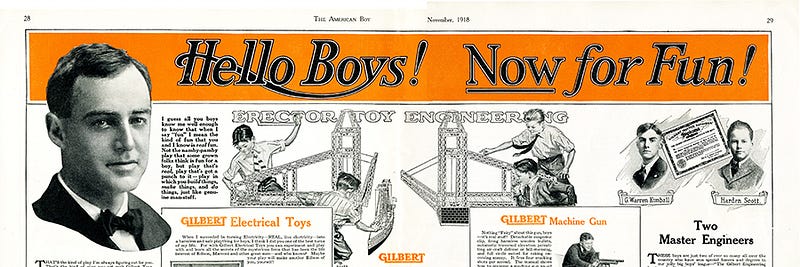
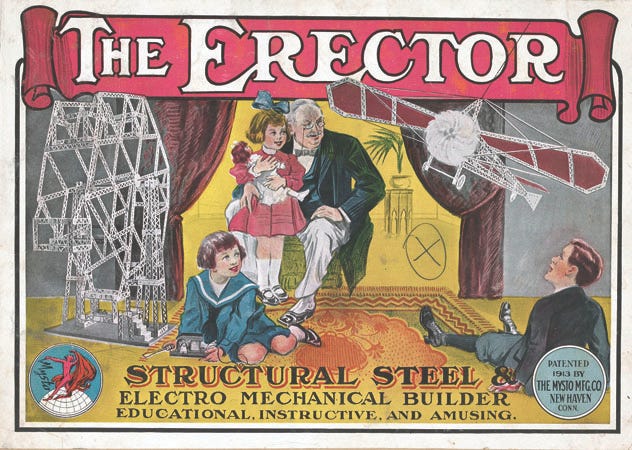
Erector set ad in The American Boy, 1918 (public domain)

“In the early days of the great war the American public was dazzled and astounded by the public reports of the contracts for enormous quantities of munitions, at unheard-of prices, that were being placed with our manufacturers by the European allies, and it was regarded as quite natural and fitting that European countries…should turn to America, with its reputation for mechanical ingenuity and ability, and its great factories, for assistance.” — Scientific American, December 23, 1916

World War I, the “war to end all wars,” broke out in Europe in the summer of 1914, following the assassination of the Austro-Hungarian heir Archduke Franz Ferdinand. Although the United States did not enter the war until almost three years later, American companies were busy filling the growing need for armaments overseas and turning a tidy profit in the process. Many retooled their factories to get in on the action.
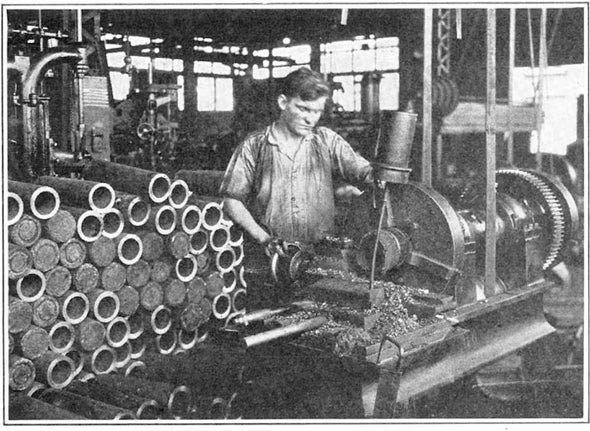
Artillery shell bodies are trimmed to the right length in a factory in the U.S. Credit: Scientific American Supplement, December 23, 1916

When the United States of America finally entered World War I in April of 1917, President Woodrow Wilson called upon the country’s manufacturers to redouble their efforts. Wilson’s Council of National Defense considered a ban on toy production so that the industry’s supplies and resources could be diverted to munitions production. Would the war cancel Christmas? One man stepped forward to argue the case for toy production. His name was Alfred Carlton Gilbert.

Olympic golden boy makes good
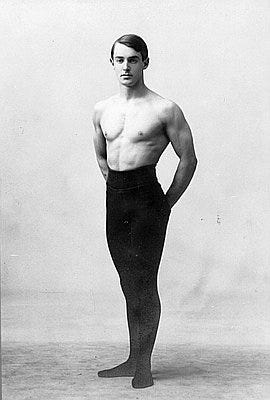
A.C. Gilbert, Olympic gold medalist in the pole vault, 1908 (public domain)

A.C. Gilbert (1884–1961) was born in Salem, Oregon. He attended Pacific University and then transferred to Yale University in 1902. He financed his education by working as a magician and earned a degree in sports medicine.

Gilbert was an accomplished athlete. He broke the world record for consecutive chin-ups in 1900 and set two world records in the pole vault in 1906. He invented the pole vault box that same year and won a gold medal in pole vaulting at the 1908 Summer Olympics.
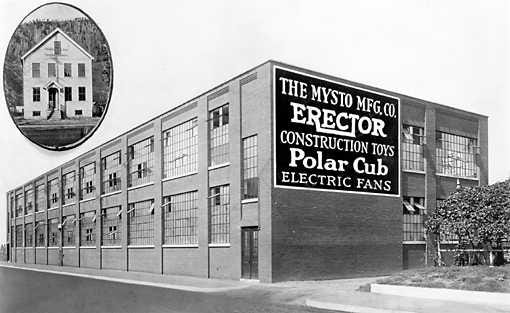
The Mysto Mfg. Co. plant in New Haven, Connecticut. Inset: the first home of Mysto Manufacturing. (image via the A.C. Gilbert family collection)

In 1907, the year before his Olympic gold medal win, Gilbert decided against pursuing a medical career and founded the Mysto Manufacturing Company in Westerville, Connecticut. He married his college sweetheart Mary Thompson in 1908 and started a family. The couple would eventually have three children.

Mysto’s first product was magic kits, but before long, Gilbert added other lines, including Polar Club electric fans and his biggest claim to fame: the Erector set, which Gilbert invented and introduced in 1911. In 1916, Gilbert renamed his enterprise the A.C. Gilbert Company. It would grow to be the largest toy manufacturer in the world. That same year the Toy Manufacturers of America (now known as the Toy Association) was founded, and Gilbert was a member.

World war threatens the toy industry
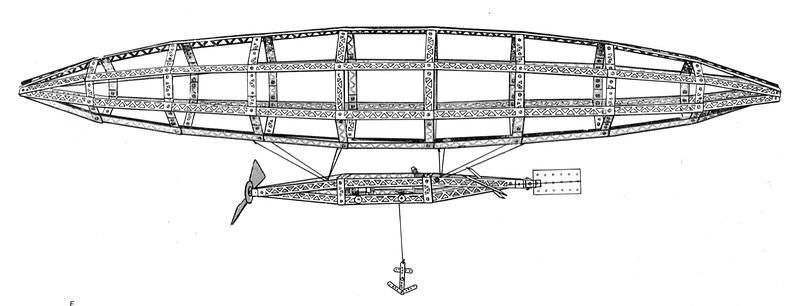
A drawing of an Erector set model of a dirigible, 1913 (public domain)

With the spring 1917 entry of the United States (U.S.) into the war, the Toy Manufacturers of America created a War Service Committee and made Gilbert its chairman. As part of the war effort, the U.S. government had banned the manufacture of non-essential items. This decision put the toy industry into an uproar, and parents and their children looked toward the upcoming Christmas season with foreboding. Would there be any toys? Would Christmas be canceled?
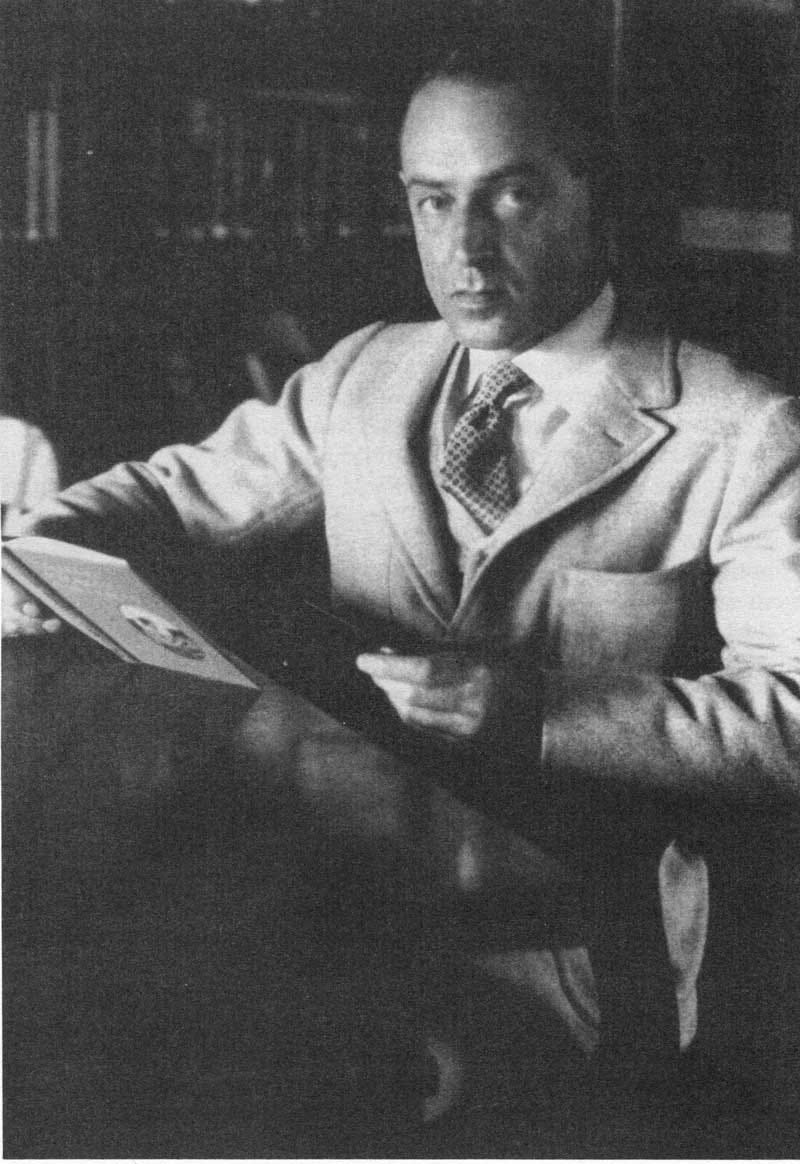
A. C. Gilbert at work (public domain)

Gilbert arranged a meeting with the Wilson administration’s Council of National Defense to convince its members that toys were essential items. Before the meeting, he assembled a selection of toys from various manufacturers to help make his point. The meeting was held in the office of the Secretary of the Navy, Josephus Daniels.

Although it seems outrageous today, the meeting's focus was the importance of toys for boys rather than girls. This made sense at the time since steel and other materials needed to make weapons were mostly used in things like Erector sets and toy trains — what people then thought of as “boys toys.” Most girls were expected to play with dolls, which were easy enough to make at home.

“The greatest influence in the life of a boy are his toys. A boy wants fun, not education. Yet through the kind of toys American toy manufacturers are turning out, he gets both. The American boy is a genuine boy, and he wants genuine toys. He wants guns that really shoot, and that is why we have given him air rifles from the time he was big enough to hold them. It is because of toys they had in childhood that the American soldiers are the best marksmen on the battlefields of France…America is the home of toys that educate as well as amuse, that visualize to the boy his future occupations, that start him on the road to construction and not destruction.” — A.C. Gilbert in his meeting with government officials as reported by the Boston Post, 25 October 1918
After addressing the council, Gilbert displayed his selection of toys. It was a brilliant tactic because it reminded the men of their own childhoods. Secretary of Commerce, William Redfield, was reported to have looked fondly at a toy steam engine and exclaimed, “I learned the rudiments of engineering on an engine like this.” The visual aids helped make Gilbert’s case.

He successfully convinced the officials that toys were essential items for the growth and development of America’s youth. Toy production continued, and Christmas was saved. When congratulated on his presentation's success, Gilbert told reporters that it wasn’t his speech that made the difference. “The toys did it,” he said.
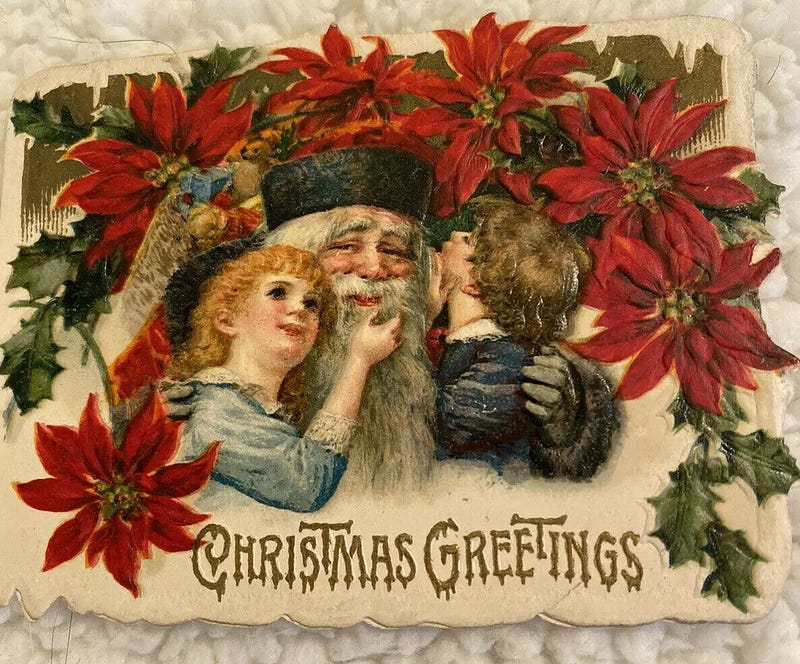
World War I era Christmas card (public domain)

By World War I’s end on 11 November 1918, U.S. manufacturers had produced 3.5 million rifles, 20 million artillery rounds, 633 million pounds of smokeless gunpowder, and 376 million pounds of high explosives.

Approximately 20 million people lost their lives in that conflict, and another 20 million were wounded. Thankfully, during that same time period, A.C. Gilbert, along with his fellow toymakers, devoted his considerable skills to producing toys to spur young people’s imaginations and vocational aspirations instead of aiding their destruction. In the process, he raised the value of play in the public consciousness and drove home the importance of toys in the lives and positive development of children all over the world. His legacy lives on in the learning toys of today.

History
Toys
Christmas
Innovation
World War I
Recommended from ReadMedium