
Man Travels 10K Flights And Dents Airline With $21M Loss
Before launching any promotion, companies need to be sure what they are offering

In the late 70s, many airlines started operations in North America, creating a lot of competition in the airline industry. Later, with the Airline Deregulation Act of 1978, the airlines also came out of control by the US government, making the business environment even more volatile.
Then the 80s era came with increasing inflation, soaring oil prices, and the depleting economic conditions defying the American economy. This emerged in a 3% drop in traffic, the sharpest plunge in over 50 years of scheduled air transportation.
During those times, among the hardest hit was none other than American Airlines. Because of the worsening situation in the US travel and tourism industry, American Airlines was going through a severe financial crisis and booked an enormous loss in 1980.
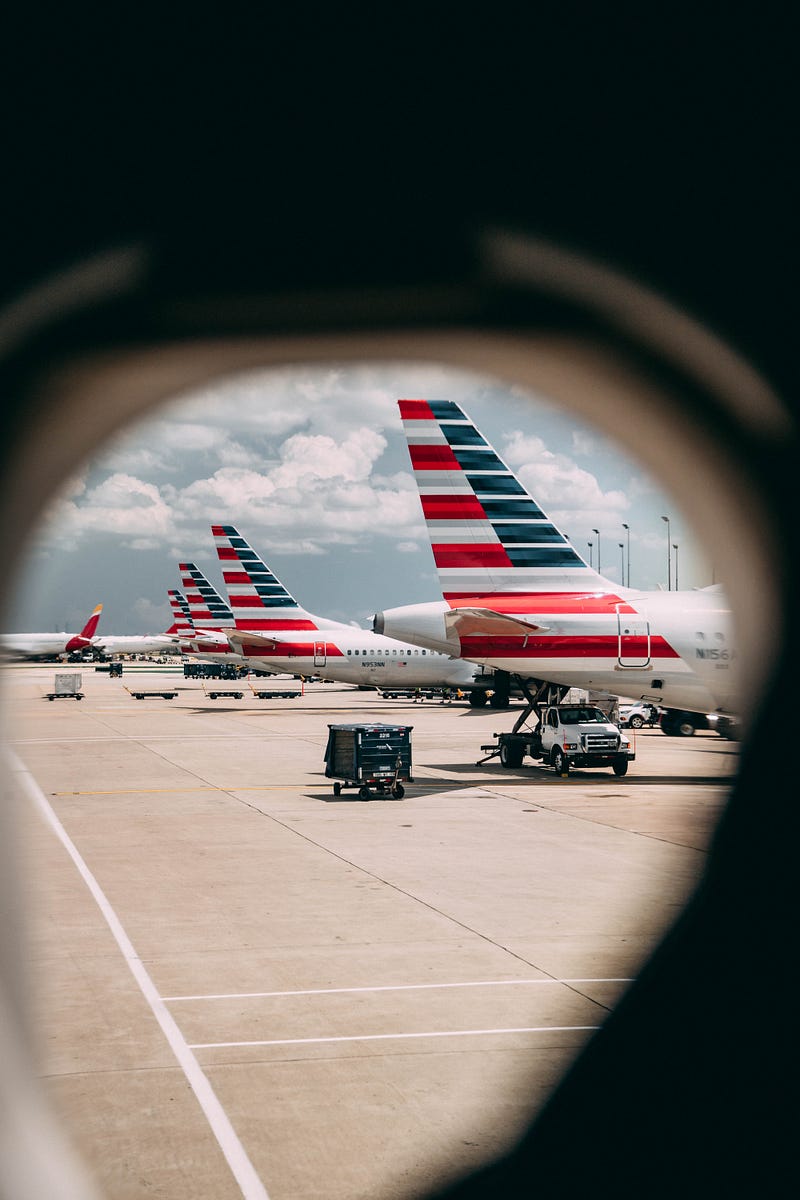
American Airlines Launches The First Customer Loyalty Program
To overcome the grave situation, American Airlines came up with a strategy to turn around the airline in terms of cash flow and profitability.
Thus, in 1981, the CEO of American Airlines Robert L. Crandall launched a customer loyalty program — AAdvantage. As part of the program, they offered a frequent flyer card named AAirpass.
The idea was to let people make a one-time payment of $250K and travel unlimited first-class flights on any local/international routes where the airline giant operated.
The AAirpass holder could also bring onboard any other passenger at a one-time charge of $150K to travel business class.
The idea was simple and seemed workable. The concept was the same as that of a buffet meal. People eat as much as they want (but they only eat up to a certain limit), the food never runs out, and the restaurant makes good money on a lump sum payment.
The idea behind the seemingly brilliant promotion was to make the travel pass super attractive so that maximum people would bear the one-time cost and enjoy a lifetime of comfort travels with American Airlines.
Promotion Gets A Positive Market Response
The promotion did well in the first few years. American Airlines sold 28 AAirpasses under the condition of lifetime free travel.
Many wealthy individuals and celebrities opted for the program. Some of the big names were baseball player Willie Mays, the business personality Michael Dell, and America’s Cup winner Dennis Conner.
But later, the world witnessed a totally unanticipated outcome.
A guy from Chicago buys the travel pass
Steve Rothstein, a financier from Chicago, became a member of the loyalty program in 1987. But he was a smart cookie. This guy financed the $400K (250+150) by securing a loan, which he paid in 5 years with 12% interest.
Then things got out of control.
He started traveling as no one ever dare imagined. Over the course of the next 25 years, Steve traveled like a crazy globetrotter. He hopped on local and international flights over 10,000 times using his air pass.
Among other destinations, Steve took 1,000 flights to New York City, 500 flights to San Francisco, 500 flights to Los Angeles, 120 flights to Tokyo, 80 flights to Paris, 80 flights to Sydney, 50 flights to Hong Kong, and so on.
Overall, Steve traveled to over 100 countries and countless local destinations.
In addition, Steve also earned points on his “frequent flyer” card. He collected a mind-boggling 40 million air miles. But he gave away all of them as he had enough on the plate via his AAirpass.
Matter Comes To The Notice Of Airline’s Top Brass
It came to the knowledge of American Airlines that Steve not only boards thousands of flights but also makes similar numbers in cancellations.
A source revealed that in around 4 years, Steve had made over 3K flight reservations, but canceled over 80% of those. This was not only creating an administrative mess, but also causing huge losses to the airline.
Many other unusual acts came to the attention of the airline’s management, who then took the charge against him. The airline’s revenue integrity team also found that Steve Rothstein was costing a whopping $1 million annually.
Steve’s travel spree ends
Ultimately, Steve got declined at Chicago O’Hare airport in 2008.
American Airlines delivered an in-person letter to Steve that his pass was no longer valid on account of illegal and fraudulent activities that he had been doing for more than a decade.
Steve sued the airline for a breach of contract. But the decision went in favor of American Airlines. Last but not least, Steve got another five years of free travel on American Airlines until all got zipped in 2013.
Steve’s Journey With American Airlines At A Glance
Here is the sequential series of events that happened over 25 years:
- 1981 American Airlines rolls out the AAirpass.
- 1987 Steve Rothstein becomes a member of the unlimited travel program.
- 1989 Steve Rothstein adds the companion feature.
- 2008 American Airlines takes away the AAirpass from Steve.
- 2009 Rothstein sues the airline for breach of contract.
- 2011 A judge decides in favor of the airline.
- 2013 Rothstein’s appeal stays until the airline exits bankruptcy.
The Economics Of AAirpass
Revenue side
- The purchase price of the main pass was $250,000.
- The purchase price of the companion pass was $150,000.
- The airline sold 28 main passes. This makes a total revenue of $7,000,000.
- Consider 50% pass holders (28 x 0.50 = 14) opted for the companion’s pass. If this assumption holds true, then there was an additional revenue of $2,100,000 to the airline.
- Total revenue works out to be $ 9,100,000 ($7M + $2M = $9M).
Cost side
- There were at least 2 travel fanatics named Steve Rothstein from Chicago and Jacques E. Vroom Jr. from Dallas who had bought the main passes and traveled like none other.
- The airline reported in 2007 that both the pass holders were yearly costing $1,000,000 each. They estimated the cost to be on account of taxes, fees, and lost revenue in terms of ticket sales because of reservations and cancellations.
- The airline canceled the AAirpasses of both persons.
- Steve Rothstein alone had cost the airline $21,000,000. Enough to bring the feasibility of AAirpass in negative territory.
- We can well imagine that the frequent flyer program was a major puncture in the airline’s financial results/bottom line.
But What Went Wrong?
There were many loopholes in the promotion. Here are a few to mention:
AmericanAirlines
- There was no cap on time, e.g. flights, routes, bookings… etc.
- There was no cap on cost e.g. monthly, yearly, a lifetime... etc.
- There were 4X additional air miles added on top of the free travels.
- There was no penalty for booking cancelations.
Steve Rothstein
- He made crazy travels over two decades.
- He canceled thousands of flights.
- He booked flights under false names.
- He gave last-minute free business class travels to people he never knew.
Who Were The Winners And Losers In The Process?
This is my take on this story.
American Airlines
American Airlines certainly gained from the program in the short run as the frequent flyer cards helped in the cash flow crunch, especially in the early 80s when the airline reported a tremendous loss and was short on cash. But in the long run, the airline ended up losing much more than it benefitted from the sale of AAirpasses.
Steve Rothstein
He was a pure winner for over 25 years. He traveled over 10 million miles collecting 40 million air miles by visiting over 100 countries on exclusive first-class travels on American Airlines. He paid by taking up a loan, which he paid rather comfortably. But all this ended on a negative note because of the erratic behavior of Steve.
Final Thoughts
The idea was good but lacked detailed working in terms of sales, finance, and legal aspects. With slight modifications in these areas, the frequent flyer program could have resulted as a highly profitable tool that American Airlines badly needed in the decade of 80s and 90s.


