
Malaysia and the Rohingya Refugees: How Much is Too Much?
Malaysia has always been at the forefront of championing Rohingya’s cause for many years. Will to much consideration and compromise bring harm to the citizens in the future?
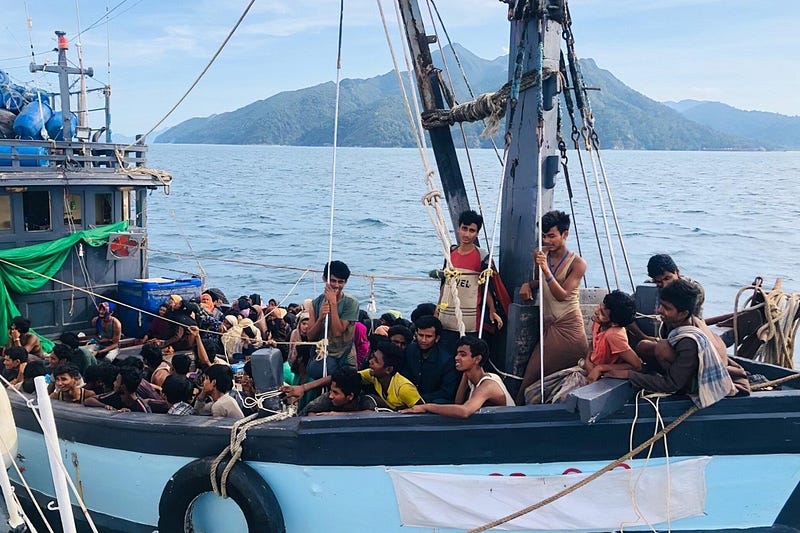
As of the end of February 2020, there are some 178,990 refugees and asylum-seekers registered with United Nations High Commissioner for Refugee in Malaysia. Whereby 56.4% of the numbers are made up by the Rohingyas-an ethnic group from Myanmar. The Myanmar Citizenship Law, amended in 1982, excludes the Rohingya from the list of recognized national ethnic groups. The law rendered them stateless and ‘formed the legal basis for arbitrary and discriminatory treatment’. Out of desperation, they have fled the country in waves, making dangerous sea journeys to Malaysia as well as Indonesia, Bangladesh, and Thailand.
Indonesia, Malaysia, and Thailand initially pushed the boats that reached their shores back out to sea. However, on the 20th of May 2015, the three governments issued a joint statement granting asylum-seekers temporary shelter, provided that the international community resettles or repatriates them within one year.
Malaysia is not a signatory to the 1951 Refugee Convention, the country does not have a legal framework regulating the status and rights of refugees. Malaysian law including the Federal Constitution of 1957 and the Malaysian Immigration Act 1959/63 does not provide refugees a legal right to remain in the country. This simply means that refugees are regarded as illegal or undocumented migrants, and they do not have legal access to employment, education, healthcare, or protection.
While Malaysians are battling with the pandemic, there are more numbers of Rohingya refugees trying to enter Malaysia illegally. Not only that, the Myanmar Ethnic Rohingya Human Rights Organization Malaysia (MERHROM) demanded some rights from the Malaysian Government. They demanded that the Malaysian Government allow the Rohingya’s refugees (without the UNHCR cards) permission to work in the job sector that suits them; require employers to insured Rohingya’s refugees who work with them; to reduce the cost of medical treatment to them; not to detain the Rohingya’s refugees working in Malaysia (without the UNHCR cards) on the ground of humanity.
Many Malaysians find the Rohingya’s claims to be absurd and baseless. Malaysians are battling with unemployment issues and now have to compete with the refugees. A couple of petitions have sprung up online demanding that the Rohingya be deported from Malaysia and that their problems should be resolved by Myanmar.
In the language of refugee policy, “durable solutions” for refugees has traditionally consisted of resettlement, repatriation, or local integration. Many Rohingya refugees aspire to a durable solution in the form of resettlement to a third country. Malaysia has one of UNHCR’s largest resettlement programs. But at present, resettlement is an increasingly slim option for the Rohingyas. While hundreds of thousands of Rohingya are displaced in Bangladesh, Thailand, Malaysia, and Indonesia, only a handful have been resettled, and there is no clear plan in place to resettle larger numbers. It is far more likely that the Rohingya refugees will either return or integrate locally. Other ethnicities like Chin, Mon, Burmese can return to Myanmar — they have citizenship. The Rohingyas are stateless.
When it comes to local integration, Thailand, Malaysia, Bangladesh, and Indonesia have all made it clear that we will not naturalize refugees. That means the most realistic option for refugees who won’t be resettled and who cannot return home is to join the migrant labor force.
If human rights advocates, humanitarian actors, and policy analysts are serious about ending displacement in Malaysia or Southeast Asia, then they cannot sacrifice social and economic rights in an attempt to protect refugees’ civil and political status. This links back to the above question, how much can we compromise, and is that too much?