
MUSIC | MY DAD’S LEGACY
Making Peace With My Brother’s Goodbye Song
There’s healing in singing
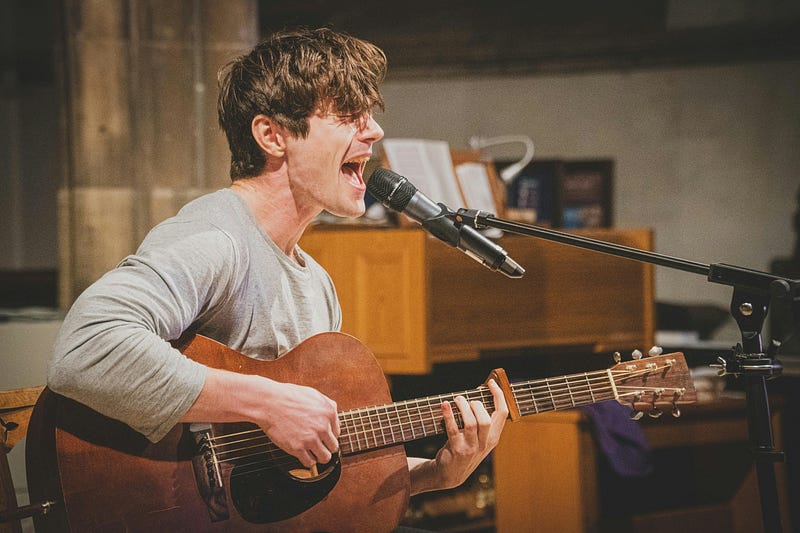
I can’t remember a time when music wasn’t a part of our household as I was growing up.
My dad loved music. He passed that down to all three of us kids, but my brother was the one who took to it the most.
Dad played the guitar. Some days it seemed like he played it with a feverish undertone that I couldn’t quite pick up on as a kid. I knew something was hidden beneath the surface, but I couldn’t pinpoint the issue.
It wasn’t until much later that I realized Dad used music to help exorcize his demons. He had a lot of them. But they were never welcomed by him or any of us.
And he never meant for them to spill onto us kids. They did, of course. They spilled often and hard and overwhelmingly at times. But he honestly never meant for them to. I know that now too.
Life is never that simple.
Dad used to tell me that there wasn’t much that singing couldn’t fix. I know he wanted that to be true. And my earliest memories involve Dad singing a lot. I could often tell he was upset, but he would make up silly little songs and sing them out loud to take the power away from whatever was bothering him.
I do that, too. It wasn’t a conscious thing, me developing this habit. And there are many things my dad passed down and modeled for me that I have worked hard to recover from.
One thing I will always be grateful for, though, is my daddy teaching me that music is my friend. That singing your way through hardship will get you farther than crying or complaining.
My girls also use this tool to deal with hard times, and I think it’s a valuable asset.
When I was little, my family used to stand me on a table to sing “She’s Got a Ticket to Ride.” They would laugh and clap for me as I performed, and I delighted in the fact that I could make them happy, that I could create a moment in time where we all smiled. Together.
Those didn’t happen very often.
I still remember, thirty-five years later, the rush of being able to make that happen. The intoxication and the power in that moment.
As I got older, it became clear that singing was not my gift. (I’m not sure I was given a gift, truth be told.) But it was one that my brother and sister shared. (Among so many others — they made a good team.)
My brother played music and sang right up until the day he died on a hot August day in the wee hours of the morning. The time of his death was the only thing that made sense. He had always claimed three a.m. as his comfort zone.
He posted a song the day before his suicide that I overlooked until after he was gone. I still feel like it may well have been a final cry for help. Perhaps it was just a sad goodbye he knew we would find when he was gone.
And find it we did. My sister and I listened to it on repeat in the months following his death. (We have not pointed it out to my parents. No need to add to the guilt they struggle under each day.)
I drove myself crazy with it for a long time. I sobbed and I wailed at the universe that we didn’t see this song till late on the day he died, instead of noticing it the day he posted it on Smule.
What if we could have helped him? That question plagued me. But what-ifs get us nowhere but running in circles, and I had to force myself to stop indulging in the never-ending cycle.
Music can hold so many messages. So many feelings that can often be difficult to express in direct conversation. Perhaps my brother couldn’t bring himself to write a note, but he did what Dad taught us.
He sang through his worst moments.
One day, I will wrap him in my arms again, and we will lift our voices together, regardless of the fact that I sound like a frog.
Peace and love, y’all. ❤


