
Makeup Is Misogynistic
Why I Don’t Wear Cosmetics
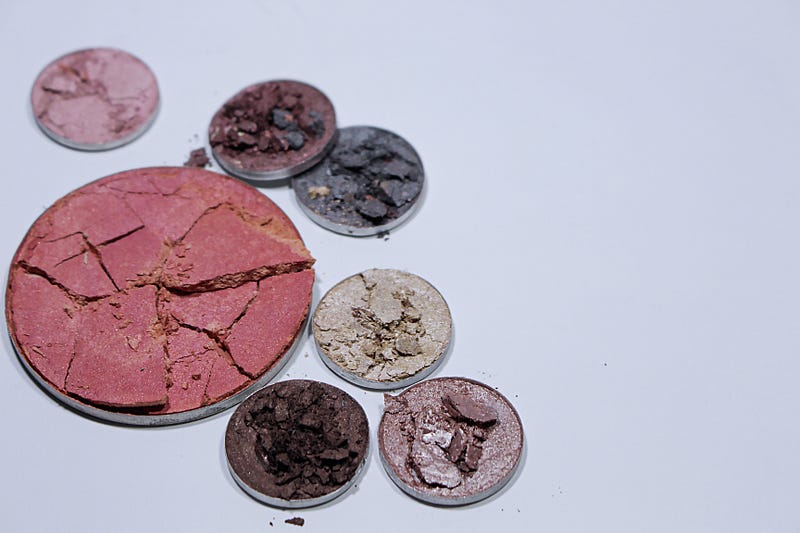
At an early age, I learned to associate cosmetics with performance. As an aspiring ballerina attending Miss Janet’s Dance Studio, I wore makeup for the annual recital. My mother, who didn’t ever wear makeup herself, would spread shadow on my eyelids and apply lipstick to my lips and cheeks. I saw cosmetics as being another part of my costume. The makeup was for my character; it wasn’t me.
In college, I envied my makeup-wearing friends. For them, getting ready for a special occasion was an energetic production involving powders, pencils, and an intricate assortment of apparatuses (some of which looked a bit dangerous). All I had to do was shower, moisturize, and apply antiperspirant. It felt very anticlimactic by comparison.
While preparing for my wedding, I was adamant that I wanted to look like me — not some idealized version of myself that I’d be unable to maintain indefinitely. I had no intention of wearing makeup. I had no plan to lose weight. When I walked down the aisle, I wanted my fiancée to see what he was really getting — the au naturel woman he loved and had asked to marry him.
I wanted to recognize myself in my wedding pictures, but I also wanted getting ready for my matrimonial milestone to involve more than showering and putting on a dress — even if it was an elaborate bridal gown. So, at a friend’s suggestion, I decided to wear some makeup — the beginner’s version. I would apply it myself — lip-gloss and foundation.
Following my wedding, I began to work my little makeup duo (foundation and lip gloss) into my special occasion preparation ritual, but I had rules. I would not be a woman with makeup in her purse. I would not be a woman you could find “fixing her face” in the bathroom or on her way to work. If it all wore off, so be it. I’d apply it and let go.
Now while I realize some women wear makeup merely as a form of expression or an innocuous, auxiliary device, for me, wearing makeup raised a few red flags (or perhaps they were perfectly plum, poppy pink, or romantic rose). While I do feel more polished wearing some cosmetic covering, I also see how easy it is to become the type of woman who won’t face the world with her bare face. I don’t want to become dependent on makeup. I don’t ever want to feel naked or unattractive without it. I don’t ever want to think that make-up defines or completes me.
The possibility of that outcome (becoming addicted to cosmetics) is why I think makeup is misogynistic. It can breed minor bouts of self-hatred in women — or at least dissatisfaction. Makeup makes me look for my face’s flaws rather than accepting it as it is naturally. Cosmetics make me self-critical. I start to wonder what else I need to improve or cover up with this or that color. Are my lashes too thin? Are my lips well enough defined? Do my cheeks have the right hue? Is my complexion all right?
For as much confidence as makeup gives me when I’m wearing it, it takes a proportional amount away when it comes off. And besides that, it’s inconvenient. I don’t like the feeling of sweating through it, so I don’t wear makeup to weddings (where I intend to dance profusely) or during the summer months. In the winter, while perspiration isn’t as big an issue, there is the chance that my “face” will rub off on my sweaters, hats, and scarves. I find that unacceptable.
Some time ago I made the decision to let my hair go gray without dyeing it. Part of my reasoning was to be chemical free after an unfortunate incident with hair relaxer left me with a semi-bald spot. However, another big part of it is that I think dyeing my hair would nudge me into an antagonistic posture towards aging.
I worry that our culture is subtly (and not so subtly) waging war against the natural physical form — a result of an unhealthy obsession with youth and perfection. We tell women that they’re beautiful and that they should love themselves. We tell little girls they can be anything they want to be — to have self-confidence. But then, and often with the same breath, we suggest they are beautiful (or can be confident) only when they are not quite themselves. We sell women (both young and old) products to “fix” or “improve” their appearance — wrinkle removers, concealers, eyelash enhancers, and other colorful cover-ups.
So, the hegemonic message I receive is that our culture is against aging and truly natural beauty. Women are prompted to be fake — dyed, painted, and otherwise augmented caricatures of femininity. The young want to look mature. The mature want to look young. No one really wants to look like herself. Everyone wants to look unflawed. Feminine façades have become the norm — what’s expected. Maybe you’re born with it. Maybe you bought it.
I want to avoid falling prey to that mentality when I look at myself in the mirror. Because real bodies come in a myriad of sizes, shapes, and colors. Real bodies age. Real bodies are imperfect and asymmetrical. I don’t want to view aging as an adversary I have to fight or the imperfections of my face and form as mistakes I have to hide.
If I could dye my hair or put makeup on my face and have both be adornments rather than keystones, I wouldn’t take such a structured stance. If I didn’t see the potential within me to become a woman afraid to face the world with my unaltered face or natural hair color, I could support hair dye and cosmetics — and maybe choose them for myself.
I believe that some women dye their hair for expressive fun and wear makeup like jewelry (nice to have, but not necessary). But I see too many women who have fallen prisoner to these things — things that were supposed to make them feel pretty — to be accessories, not shackles or obligatory.
For some, instead of being optional, cosmetic rituals have become the key to a chain that won’t let them out of the house or a crutch they can’t walk through the world without. Makeup, for some women, has become an adult security blanket — they feel exposed and vulnerable without it.
I wish I could rid our culture of cosmetic dependence. I wish I lived in a world where every woman was encouraged to be satisfied with her face instead of bombarded with messages offering ways to improve it or cover over it. I wish the majority of our society viewed makeup as an optional accessory as opposed to the required response to any perceived deficiency.
I have enough natural insecurity that I’m working on. I don’t want to buy or apply more at the cosmetics counter. So, I’ve made up my mind about makeup. At least for now, I’m not wearing it.
I don’t mean for this to be a battle cry. And I don’t presume to speak for all women either. I’ve just grown wary of the subliminal influence of daily altering my natural appearance. I want to stand clear of the line that divides “want to” and “must do.” If I’m going to be a woman capable of self-confidence and self-love, then I can’t allow my face to become a façade.
I admit I’m not one hundred percent pure. If not for the pandemic, I would probably have extensions braided into my hair right now. And perhaps I’ll choose to wear makeup again. But, for the time being, I’m keeping my face as real as I can.
And I know, I know, technically I’m cheating. My skin is brown. I’ll never be pale — not that there’s anything wrong with a fair complexion. As my mother would say, and I paraphrase, “Black women don’t need to add color to their skin. Each of us is born preloaded with pigment. Makeup is superfluous when you have a hue that’s built in.”
Black is beautiful, and white is too. My hope is that all women will love their natural appearance and hues — that wearing makeup (or dyeing their hair) won’t be compulsory, but something each woman feels free to choose or refuse.
Versions of this piece appeared on Write Away and The Body Is Not an Apology.


