
Make Your Happiness a Priority
Will Leitch, author of the novel ‘How Lucky,’ on balancing writing with parenthood (and everything else)
It’s a common concern among parents who are writers or want to write: how to find the time, and maybe more crucially, how to make the time when so many other things vie for your attention. But as Will Leitch puts it, “If I don’t write, I’ll be of no use to anyone, just like my wife would be miserable if she weren’t working at the job that she loves. We want everyone in this house to be happy.”
Will Leitch is a father who writes multiple pieces a week on Medium (follow him, why don’t you!), founded Deadspin, has written several books, and has a new novel out right now. He answered our questions about balancing all these identities, finding time to write, and the differences between writing fiction and nonfiction.
Creators Hub: How has parenthood changed you as a writer? Will Leitch: It has, in a practical sense, essentially eliminated competition as a factor in anything that I do. When I was a young writer in New York City, I was constantly aware of and agonizing about what other people were doing. Was I writing for the right places? Did I know the right people? Was I far along enough in my career? Was I making it?
Having children, in a fundamental way, eliminated all that. It didn’t matter what other people were doing anymore. All that mattered was the work that I did and the life I was helping provide for my children and my family. It made all that other stuff seem entirely unimportant — not just pointless, but actively detrimental. It made me focus on the work I thought was most important and most valuable. I also found myself wanting to someday justify to them what I did for a living. It made me want to make sure I produced work worthy of them someday looking back at it. I’m sure they won’t look back at any of it; I’m sure they’ll care as much about it as a plumber’s children care about a toilet at a stranger’s home. But in case they ever checked, I wanted to make certain they were proud of what they found.
I know this is a boring question, but it’s also a crucial one: When do you write? How do you balance parenting, the writing you do for work, and your novel writing, time- and energy-wise? I am a morning and afternoon writer. I do not write at night unless I absolutely have to — if there’s an event that I need to cover or some sort of breaking news happening. Part of it is being fresher in the morning, more quick thinking and instinctual. I often joke that I like to write as much as I can before my brain realizes I’m awake and starts ruining everything. But I also believe there is real value in having a moment at the end of the workday when you hang up your hat and coat and say, “I’m finished until tomorrow.” It’s good for your mental health to have a stopping point, a moment when you can say, “I have done all I am going to do for the day.” I’ve been working at home for a long time, and if you are not careful, because you are always in your office, you will always be working. It’s important to close up shop every night and get back to the world of the living, where there are children who want to hang out with you and a whole universe to get back to engaging with.
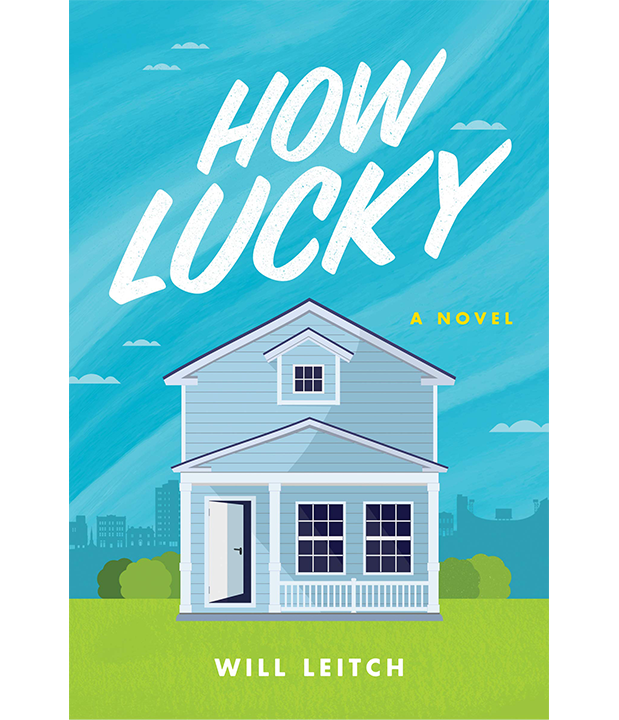
This gets harder when I’m working on a novel, I’ll confess, because I find it beneficial to go to an entirely different place, outside my home, to work on the heavy novel business. (Jittery Joe’s here in Athens is where much of How Lucky was written, pre-pandemic.) But it’s really all about time management and setting real boundaries. At some point you have to stop and live to fight another day.
What’s the biggest difference between writing a novel and writing a nonfiction book? It is easier to write the first draft of a novel, because you are not so stubbornly stuck to what, you know, really happened. It’s so exciting at first, because you can make the people do whatever you want them to instead of what, in real life, they actually did. The problem is that we accept motivations and irrationality in real life that we never would in fiction. When someone in real life does something for no reason or out of character or illogical, we just all shrug and move on: Life’s a rich pageant! But in fiction, everything requires an explanation. People simply will not accept a plot hole in fiction even though life is nothing BUT plot holes. Roger Ebert once wrote that people are okay with unicorns and space aliens and dragons, but if someone speaks with an accent in a movie that seems SLIGHTLY off, it will take them out of the movie entirely. Fiction requires so much more believability than real life does.
What advice would/do you give to writers who are about to become parents? Don’t rush it, but don’t forget what you want. I mean, I didn’t write a book for 10 years, in large part because the children required so much of my time and energy. (I finally feel comfortable putting them in a room now without them setting something on fire, which does help.) I wouldn’t have been ready to do any serious, sustained writing the first year of my son’s life, not just because of the imbalance it would have caused in my marriage, but also because my brain, frankly, was mush: I had a freaking infant!
But the way to think about it, honestly, is just to think of writing as a job. If I didn’t write, my children wouldn’t eat in the same way that if, when I was a kid, my father had not gone back to being an electrician and my mom had not gone back to being an ER nurse, I wouldn’t have eaten. Even if one’s circumstances aren’t that stark, I think there’s value in treating them that way.
If I don’t write, I’ll be of no use to anyone, just like my wife would be miserable if she weren’t working at the job that she loves. We want everyone in this house to be happy. So make sure you make that happiness — your work, whatever it is — a priority, a central priority. You’ll be happier, and your partner will be happier, and your family will be happier. This is hard enough without that.


