avatarAdam James

Free AI web copilot to create summaries, insights and extended knowledge, download it at here

6787

Abstract

d.</p><p id="0068">And because of their relative homogeneity, ego-Networks can easily become echo-chambers.</p><p id="7e3e">If the hub of an ego-network goes away the network falls apart. In an ego-network, the person is the purpose, and without that person, the connections are gone. My marriage (wonderful as it is), ended a lovely phase of networked connectedness in my life, because the purpose of our interactions (my need for help with child-raising) ended and the network drifted apart.</p><h2 id="1732">Eco-Networks Fit Between Socio-networks and Open Networks</h2><p id="8853">An Eco-Network is a relative newcomer to the network-science labelling game. I don’t even know where I got the term from. It’s not in the book I pulled the others from, which is what I’d expected. I know I’ve come across it in a few places over the course of my network reading but haven’t been able to re-find them — so if anyone reading this can find them, please share with us!</p><p id="77ca">In any case, an eco-network sits somewhere between a socio-network and an open-network. A socio-network (the ‘network in a box’) generally has a centrally defined, narrow purpose (think ‘mission statement’ or ‘avoiding organizational bankruptcy’); a clear and precise definition of inclusion (think ‘everyone on our payroll’ or ‘the roll-call list’); a relatively centralized and hierarchical command system; and officially-sanctioned and controlled information and resource flows (balanced by secret, un-sanctioned information flows). Whereas an open network is unbounded, random, directionless and incoherent (think Twitter, Facebook, Instagram).</p><p id="0b65">So we could think of an eco-network as skirting the boundary between rigid pseudo-control and a free-for-all. In my mind, an eco-network is the social equivalent of that strange attractor within a system that generates ordered patterns out of chaos. To me, an eco-network has the potential to generate a collective path from our current world — a world presently oscillating between destructive authoritarian rigidity and chaotic collapse — to a new world, built on an evolved understanding of order/structure, connection, and thriving.</p><h2 id="9d53">What IS an Eco-Network?</h2><p id="56e0">But what does all that MEAN, practically speaking?</p><p id="a65c">Well, it helps to think about ecosystems. For one thing, both eco-networks and ecosystems only thrive with ample diversity.</p><p id="05c0">For another — in both cases, flows of resources (whether money, information, skills, trust and shared inspiration or nutrients, shared environmental context, water and sunshine) are complexly reciprocal, as opposed to transactional. In a forest ecosystem, no-one barters with the squirrel to get it to poop out worm and fungi food. And in exchange for the squirrel poop, worms and fungi don’t break the elements down fine enough so that plant roots can absorb them because the trees or the pooping animals pay them to — they do it because that’s what they do, it’s part of their organic process. The trees and other plants only grow if there are adequate nutrients and water — and when they do, they create food some of the animals need to survive (and poop out), some of which become food for other animals, and it all requires water, water retention, healthy soil — and so on. There is an organically-driven flow of value, based on adequate diversity, that is not directly transactional.</p><p id="3124">There is no need for direct transactions because each community member’s survival depends on the in-flows (food, etc.) and out-flows (poop, etc.) of all the members. Transactions are too small a dynamic to support the complexity and adaptivity of an ecosystem.</p><p id="c510">The ecosystem forms an interdependent network of a huge variety of life forms, moving a broad range of nutrients freely through a complex system of flows that sustains the whole thing. Pull out too many parts, or just block up too many of the flows from one component to another and the whole thing collapses. And when I say ‘flows’ here, I mean ‘connection’/’relationship’. You could have all the pieces of the system/network, but if they weren’t able to interact, you wouldn’t have a network, let alone a living system.</p><p id="6f03">In an ecosystem, there is also no ‘boss’, no centralized command and control. The whole thing works because of how the community fits together, not because someone designed it that way. A social eco-network is similar. There may be players with larger impacts and greater input into direction, but that doesn’t mean they master-mind and control the whole thing.</p><p id="248a">Another thing a social eco-network and a ecosystem have in common is boundaries. They may be fuzzy, but they are real and discernable. For instance, there is diversity, but the diversity isn’t infinite (like it could be in an open network) and it certainly isn’t random. Whales don’t occupy forests, butterflies don’t do arctics, polar bears don’t co-exist well within rainforests.</p><p id="c77f">With ecosystems the boundary is environmental, the community members all thrive within a similar environment. With an eco-network, the boundary is purpose. And the boundary is what holds the community together.</p><h2 id="66e9">The Point of an Eco-Network</h2><p id="04f0">So — ultimately — the main distinction between an ego-network and an eco-network is this — the eco-network exists to support a purpose, not a person or an organization. It supports a broad purpose that is greater than any of the individuals involved, but which benefits all the individuals involved. It’s also a purpose which can’t be served nearly as effectively by individuals (or individual organizations) acting on their own, without the diverse and reciprocal flows of support and information that characterizes an ecosystem.</p><p id="4069">The glue, then, is not ONLY strong personal bonds (as in an ego-network) — though it won’t ever work without a lot of them — it is ALSO an intention that is larger than the personal bonds. It is an intention to be one part of a larger, purposeful, whole. An intention to help develop that whole and the individuals within it in ways that are generative for oneself as well as for the larger purpose.</p><p id="984c">An eco-network, then, has: a purpose; diverse membership; complex reciprocity; multiple ‘centers’ with multiple roles; and a robust and free flow of information, resources, capacity and care to where they are needed most. A flow that both includes and transcends the bonds of personal connection, and that emerge from the interactions.</p><p id="453e">Far from being a popularity contest, an eco-network is a puzzle we can do together. It’s a fun but serious game of learning about fits and flows — about

Options

how to amplify the impact of what each member has to offer. It’s a dance between the individual and the collective, an ever-shifting experiment with order emerging from chaos.</p><h2 id="da50">But So What?</h2><p id="4717">Why do I think any of this matters?</p><p id="41bb">I believe it matters because our imaginations matter. All of our actions and behaviors are driven by and reflect our deepest beliefs and values — and these are all gestated in the womb of our imaginations. What we can’t imagine, we can’t create. And the only way we ever create something new, for which there is no current model, is if we imagine it first. I believe it matters that we pull our imaginations a step past what we already know, do and envision — into a higher level of generative capacity — in a way that affirms and includes everyone, not just the social butterflies.</p><p id="8817">And I believe that if we tease out a clearer understanding of the values and intent of network weaving, if we tempt our imaginations into this fresh, promising new territory, we go further to affirm and generate the kind of world we want to live in together. We affirm that weaving an impactful and resilient change network:</p><ul><li>Is not a contest — it’s more about discerning the right network for ourselves (so we don’t end up like a polar bear in a rainforest), finding our natural place, supporting the flow of nutrients where they need to go, expressing our unique contribution and helping others do all of that as well.</li><li>Means supporting others, whether they’re able to support us or not, serves the overall purpose we’re all trying to promote.</li><li>Requires a lot of different roles, as well as understanding and appreciating the roles that are different from our own.</li><li>Means going beyond developing our own personal relationships, and helping others develop relationships that enhance maximum flow of value throughout the network.</li><li>Requires recognizing and acting on the recognition that there is a limit to how much can be accomplished in a transactional context, and that system change is built on an abundance of relationships across differences.</li></ul><p id="ebb9">Stimulating this kind of understanding and imagination requires many tools and approaches — <a href="https://help.sum-app.net/portal/en/kb/articles/what-is-social-system-mapping">Mapping</a> is the tool Tim and I personally contribute to the puzzle. Powerful, adaptive eco-networks are the shift we’re trying to support.</p><p id="8454">What contributions are you interested in making and to which greater purpose?</p><p id="1780">By <a href="undefined">Christine Capra</a>, March 2018 <i>Originally published at <a href="http://greaterthanthesum.com/not-networking/">greaterthanthesum.com</a></i>.</p><blockquote id="ae3b"><p>In case you liked what you just read and you’re getting value out it, I encourage you to <b>click the 👏 button </b>and <b>hold down to 20–50 claps </b>as this will help concepts and ideas above get more exposure.</p></blockquote><p id="f809"><b>Related:</b></p><div id="5ad0" class="link-block"> <a href="https://readmedium.com/types-of-trust-in-networks-6fd7de879d28"> <div> <div> <h2>Types of trust in high-trust Networks (of Community of Practice kind)</h2> <div><h3>If trust is the glue of a network we can’t have too many honest and authentic discussions about it — by Christine Capra…</h3></div> <div><p>medium.com</p></div> </div> <div> <div style="background-image: url(https://miro.readmedium.com/v2/resize:fit:320/1*aguSzTEUAI2rFqltiShAgg.jpeg)"></div> </div> </div> </a> </div><div id="2094" class="link-block"> <a href="https://stories.platformdesigntoolkit.com/7-key-platform-design-principles-d84cc78b9218"> <div> <div> <h2>The 7 Key Principles of Platform Design</h2> <div><h3>To design Strategies that mobilize, in the XXIst Century</h3></div> <div><p>stories.platformdesigntoolkit.com</p></div> </div> <div> <div style="background-image: url(https://miro.readmedium.com/v2/resize:fit:320/1*KBo_EgHlsm5LObwH_20egQ.jpeg)"></div> </div> </div> </a> </div><div id="4106" class="link-block"> <a href="https://readmedium.com/networks-are-not-communities-1df2ac5ac6c4"> <div> <div> <h2>Networks are not Communities</h2> <div><h3>by Henry Mintzberg</h3></div> <div><p>medium.com</p></div> </div> <div> <div style="background-image: url(https://miro.readmedium.com/v2/resize:fit:320/1*eeRI3JaIW05lwVvM3DCYnA.jpeg)"></div> </div> </div> </a> </div><div id="04e6" class="link-block"> <a href="https://readmedium.com/exploring-the-ecosystem-d03b07448b83"> <div> <div> <h2>Exploring the ecosystem</h2> <div><h3>Reflections from the Network Convergence retreat</h3></div> <div><p>medium.com</p></div> </div> <div> <div style="background-image: url(https://miro.readmedium.com/v2/resize:fit:320/1*uskvlPFCIMzpSHOxzsPabg.jpeg)"></div> </div> </div> </a> </div><div id="683e" class="link-block"> <a href="http://workfutures.org/post/178981762658/evolution-of-the-platform-organization"> <div> <div> <h2>Evolution of the Platform Organization</h2> <div><h3>I was recently honored to present a keynote in Qingdao China at the 2nd International Renhanheyi Model Forum, held on…</h3></div> <div><p>workfutures.org</p></div> </div> <div> <div style="background-image: url(https://miro.readmedium.com/v2/resize:fit:320/0*8IQVkfRVoJWIJRip)"></div> </div> </div> </a> </div><div id="4ea5" class="link-block"> <a href="https://newnetworkleader.org/"> <div> <div> <h2>The New Network Leader</h2> <div><h3>Four Network Leadership Principles</h3></div> <div><p>newnetworkleader.org</p></div> </div> <div> <div style="background-image: url(https://miro.readmedium.com/v2/resize:fit:320/0*pV3j7vJQJd1GcDGd)"></div> </div> </div> </a> </div></article></body>

Make Your Garden into Your Main Food Source to Survive Societal Collapse

How does your garden grow?
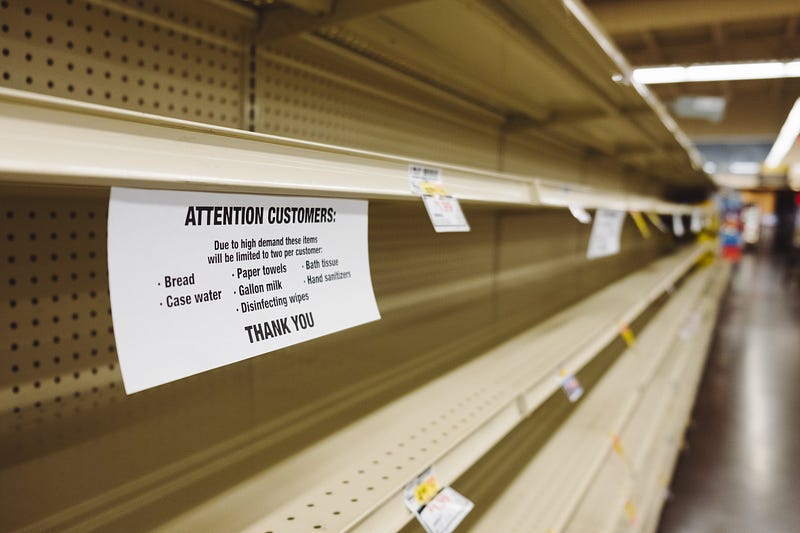
Photo by Wesley Tingey on Unsplash

Most of you have only ever known a life where an abundance of food is readily available and fresh water is on tap. We live in an era of luxury where everything works at the flick of a switch or push of a button. If this is all you have ever known, it gives the illusion this is how life will always be — easy! A way of life alien to virtually all of human civilization throughout history. We are the anomaly. So you probably don’t know how to make your garden into your main food source (like I didn’t). And why should you!?
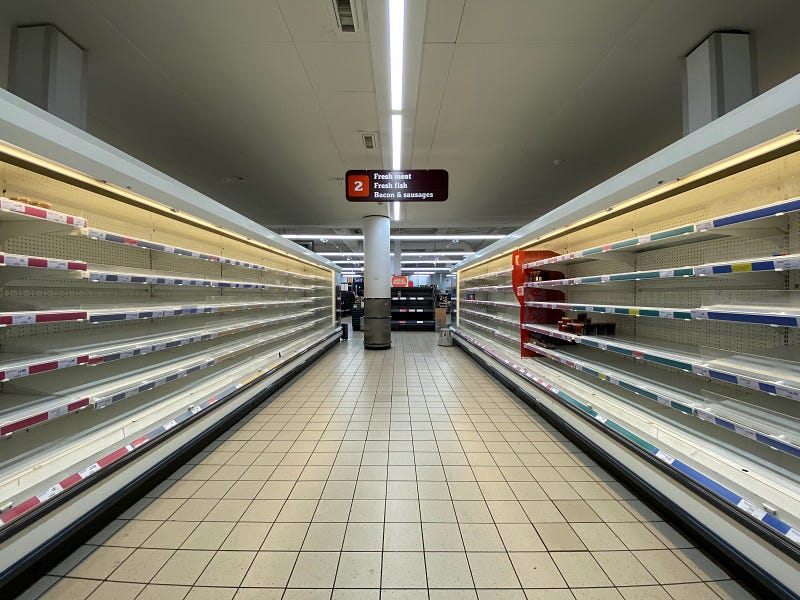
Photo by John Cameron on Unsplash

The recent pandemic gave rise to problems unforeseen by many of us. One of those problems was food shortages. And with the threat of environmental disasters and climate change, the possibility of food shortages in the future is a real concern. Plus, for the food that is available, inflation has it shooting up in price, all while the demand for food increases with an ever-growing population.

Have I persuaded you to make your garden into your main food source yet?

Okay, you don’t have to be a doomsayer or a prepper to want to make your garden into your main food source, free from the supermarket-food chain. You might merely want to be self-sufficient and reduce your carbon footprint, or save money on food. But let’s run with this possible scenario: there are food shortages, and you sniff the air to see what’s coming — the eventual collapse of the food-chain supply. This buys you a little time to think and prepare for the worst.

So what can we do?

Stockpiling will only delay the inevitable

It’s all well and good stockpiling food, but that will only get you so far, with your cache eventually running out. And when food shortages happen, the likelihood is the government will ration the amount of food each household can buy, preventing people from hoarding supplies. So what can we do? We need to produce our own food.

Grow to survive and make your garden into your main food source

Only an infinitesimal number of us have the knowledge and skills to grow our own food anymore. This once life-sustaining knowledge, passed down through generations, each adding newer and better methods to plant, grow and harvest food, is lost to the many. We now rely on the logistics of complex food-supply chains to deliver food to us. But we can change that!

Can you answer these questions to survive?

What soil do we need to grow vegetables? What crops do we rotate? What grows in our climate? How do we till the land without a plow or machine? Should we till the land? What should we plant? When should we plant? When should we harvest? What are natural pesticides? What crops complement each other by planting them next to one another? How should we irrigate our crops? What distance should we plant to ensure roots search out water? Do you need to use raised beds?

How much land do I need?

We don’t all own big plots of land we can convert into the fertile ground to grow food. Some of us are lucky enough to have a garden. A 4,000 sq ft garden of calorie crops should be big enough to give a family of four 2,600 calories a day each. You’ll need tight beds and high-yield root crops to do this.

The Dervaes family produces a staggering 6k lbs of food per year on their 4,000 sq ft of land, enough produce to feed them all and sell the rest as a business.

Here in the Uk, we don’t have as much space as in the US, so if the shit hits the fan, you might not be able to make your garden into your main food source. Time to make friends with your neighbors.

You could make an agreement with your neighbors to knock down the bordering fence that separates both gardens and make a communal garden. You could extend this to a terrace of houses. After all, when you’ve got to eat and you’re starving, everything changes.

What food do I need to grow to survive?

You want to grow root-based foods such as potatoes, sweet potatoes, beets, carrots, pumpkins, squash, true yams, etc. Roots stay in the ground after a harvest and are hardier than above-ground vegetables. Plus, stored in the right conditions, they stay fresh months after they’ve been harvested, which is more than can be said for the tomato. Kept in the right conditions, pumpkins, and squash will last for 6 months or longer.

Tools you’ll need to survive

I’m not going to list every tool to own — only the bare essentials to get you started.

You probably have most of these tools in your shed already, but you'll certainly need them if you don't

The short-handled spade. You’re not going to be able to do any gardening without one of these. When you pick up a short-handled spade, you want one with a D-handle and footrest to put your body weight on if you’re digging ground that’s particularly tough.

A spading fork. This is necessary to aerate the ground and break up compacted earth. You’ll need one of these for double-digging — but more on that later. Along with a shovel or spade, the spading fork will punch holes deeper into the ground than any rotary tiller, and this holds moisture in the ground and allows air to get to the root, to prevent it from rotting. A spading fork is kinder to the soil than a plow or machine; it will help to preserve the layers of soil and cause minimal disruption to the microorganisms, and won’t compact the earth. They also do a stronger but heavier contractors version of the spading fork.

There’s a whole family of hoes for various different needs in hoeing. I’m only going to suggest two, but the book Grow or Die: The Good Guide to Survival Gardening (which I strongly recommend), lists all the various hoes needed for gardening.

Your standard hoe is needed for weeding, hilling (shaping soil around a plant), and digging shallow furrows for planting seeds and bulbs. Make sure you keep the blade well sharpened and have the gooseneck bent to the right angle for chopping into weeds at their root. Along with the regular hoe, there is the Scuffle hoe.

The Scuffle hoe is used when you have looser soil. It uses an oscillating blade that cuts into weeds that are just below the surface. You can’t go deep like you can with the standard hoe, but you can cover much more ground in a short space of time. This tool is for regularly weeding ground that is already well maintained and in need of shallow weeding for maintenance.

Wheelbarrows once had their rightful place in people’s gardens. But since paved gardens are in vogue, and lawns are on the way out, the humble wheelbarrow has lost its spot in the garden. A wheelbarrow is a staple tool for any gardener growing her own food. It’s essential for double-digging and carting the dugout top layer of soil from your first trench to fill the dugout layer of your last trench; and transport compost, leaves, harvested crops, tools, and anything that needs to get from one place to another.

The bow rake. I’m sure you know what this is used for: leveling dug beds, burying seeds, and pulling up young, newly grown weeds.

Water barrels have become a trendy feature and a focal point in people’s gardens. But when things collapse, she with the water barrel that works best is king. Forget aesthetics and buy the one that collects ample water, keeps the pests out, and stops algae. This one can be connected to other water barrels

Hard rain areas, insects, and debris can clog up the pipes in your barrel and contaminate your water. If your water barrel doesn't have a screen with it, you need to buy one. They’re small, mesh screen filters that fit on top of or right inside the barrel that prevent algae and debris from passing into your water supply. They filter all but the most minute particles.

There are other nuanced tools, but these are the essentials to get you growing and make your garden into your main food source.

To Fertilise or Compost, that is the question

Water? Check! Soil? Check! Fertilizer? Erm…

Nitrogen, phosphorus, and potassium (NPK) are all needed for healthy, flourishing plants. Without these nutrients, your crop will suffer from stunted growth.

A good fertilizer contains 10% each of all three of these life-enriching elements (NPK) in a bag. There’s no denying fertilizer makes plants grow quicker and in the soil where other plants fail to thrive. At first blush, it may appear a better option than its organic counterpart: compost. And it’s certainly the way to go if you are in survival mode and in need of putting food on the table quickly. But growing crops for a quick yield is different from growing to feed yourself for years to come. And for the long term, fertilizer may not be the way to go.

Apart from the NPK in fertilizer, it can have filler that contains heavy metals and other toxins. These will damage the soil and kill off organisms that play a role in healthy plant life. And this is the reason organic food tastes better: it’s healthier! We’ve all eaten the strawberry on steroids, bigger than a child’s hand and pumped up with water, only to be disappointed by its bland taste when we bite into it.

Fertilizer has a blind spot when it comes to other macronutrients needed in the soil. There are interactions with microorganisms such as fungi, worms, and other earth creatures that play a role in creating fertile ground for your crop to grow. And fertilizer burns the little earthworms and stops them from doing their magic. And this is what compost has over fertilizer: it feeds the soil and earth life as well as the plant, creating harmony and balance in an ecosystem rich in nutrients to grow healthier food for you to eat.

As well as traditional organic fertilizers like manure, urine is used for its high levels of nitrogen. A person’s urine content depends on their diet, and a diet high in salt can produce urine that would damage the ecology of the soil. It’s best, then, to dilute the urine at a 6 to 1 ratio of water to urine, to avoid any damaging effects from salt in the urine.

Another natural way of adding nitrogen is by planting shell beans between your crops.

In my next article, I look at the survival crops to grow to keep you alive, and then the more indulgent crops to give you variety.

The book Grow or Die: The Good Guide to Survival Gardening answers all the essential questions you need to make your garden into your main food source

Disclosure: Some links are affiliate links

Food
Gardening
Culture
Survival
Preppers
Recommended from ReadMedium