
Creativity
Make Your First Mark
The fragile nature of ideas
Have you ever had that experience where you’re lying in bed, right on the edge of sleep, and an incredible idea pops into your head? An idea so good that your breathing quickens, and your heart starts pounding, and you’re certain that if you can just turn this idea into something real, it’s guaranteed to be a huge success?
If you’ve had this experience as often as I have, you know two things: First, you should write that idea down straight away. Because as vivid as it might seem at the moment, you’ll forget it. And second, that idea isn’t going to seem nearly as spectacular in the morning.
The problem with ideas is that they don’t exist yet. They’re ambiguous, ineffable, apparitions. Smoke in which we imagine we see patterns. When we try to share them with other people, we’re forced to rely on clumsy, insufficient words or imprecise, stilted analogies. We can never quite get to the real thing.
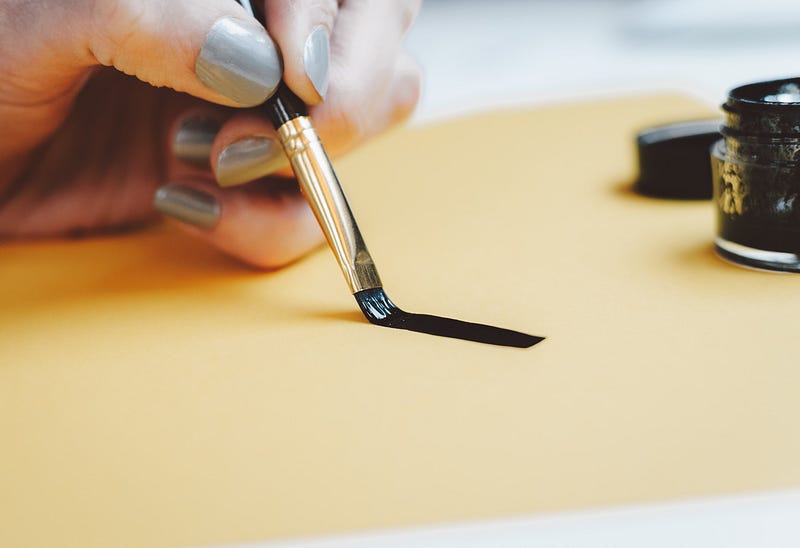
The only way to start the process is to make a mark. We need to create some approximation of what’s happening in our heads, even if it’s just a few words or a few chords or a few lines of code. That first approximation will fall frustratingly short of its inspiration. Often it will be so far from what we want it to be that we’ll feel ashamed of it. We start to worry that people will mistake this first attempt for the thing we felt so passionate about, and so we don’t take it any further. This is how good ideas die.
But if we can nurture that fragile creation through its first few steps in life, it starts to take on a reality of its own. Jony Ive, former head of industrial design at Apple, the genius behind the iPhone, and a man who knows a thing or two about ideas, put it this way when he described the brainstorming process with Steve Jobs:
Steve used to say to me — and he used to say this a lot — ‘Hey Jony, here’s a dopey idea.’
And sometimes they were. Really dopey. Sometimes they were truly dreadful. But sometimes they took the air from the room and they left us both completely silent. Bold, crazy, magnificent ideas. Or quiet simple ones, which in their subtlety, their detail, they were utterly profound.
And just as Steve loved ideas, and loved making stuff, he treated the process of creativity with a rare and a wonderful reverence. You see, I think he better than anyone understood that while ideas ultimately can be so powerful, they begin as fragile, barely formed thoughts, so easily missed, so easily compromised, so easily just squished.
The reason your ideas don’t seem so great in the cold light of day is that your mind is fully awake. Instead of luxuriating in the beauty of a new idea, you’re busy trying to bridge the gap between idea and reality. This bridge is almost always unsteady and poorly built and offers a thousand different opportunities for your idea to fall into the ravine.
Creativity is the art of walking your idea across this bridge without damaging it. Of treating it gently enough that it isn’t crushed, and being tenacious enough that it doesn’t stop halfway and give up. Creating requires that you endure the discomfort of reality falling short of your imagination until it doesn’t anymore. There’s no way to do that but to start. So make your first mark.