
Make Up Your Damn Mind!
It's hard to make decisions, but a bad choice is not the end of the world.
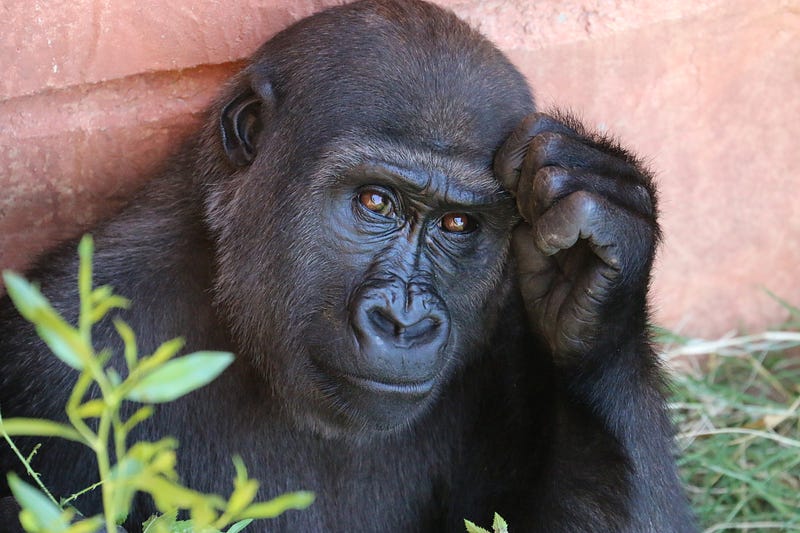
Oh, the choices! Oh, the possibilities! Oh, the chances of triumph or disaster!
Last night I sat next to a woman in a Korean restaurant who reviewed the menu like she was studying for the Bar Exam. Every item in the dish was reviewed exactly.
She threw out questions to the table and then when the waiter came, she grilled him like she was prosecuting a murder case.
I came so close to whomping her over the head with a menu. And of course, when the food came, she didn’t like it.
Later that night my sister dropped by in a brand-new hot car. “See what I just bought?” she beamed. “Why?” I demanded, knowing she already had a perfectly good car. “I saw this car in a parking lot. I talked to the owner. I went home and did a search. I called my bank, and the dealer delivered the car.
“It was easy!” (I would have had a heart attack!)
Two very different approaches to making choices: head and heart
Some of our choices are informational. “I am voting for Ms. X because I like her stances on women’s health and transportation safety.”
- Head — When it comes right down to it, we can get a certain amount of factual information to help us make choices, but in the end, it is usually a crap shoot.
Some of our choices are more emotional. “I agree with Mr. X on the issues, but I just don’t like him.”
- Heart — We have to trust the information, but what our “gut” tells us, what we’ve learned from past experience, and what we have preferred, are based in feelings, which can overcome whatever we know factually,
Sometimes making up our minds satisfies us, and we rest easy with the decision. Other times, we obsess until our brains are almost fried.
There are high stakes choices, like, “I’m going to marry him,” or “I’m going to buy this house.” Then there are the small ticket items like, “Yes. I’d like fries with my burger.” or, “I don’t know what to watch on TV.”
Would you rather?
A wonderful children’s book by the celebrated British writer and illustrator, John Burningham, is called, Would You Rather? In it, children have to choose among creepy, scary, gross, and embarrassing alternatives:
Would you rather be made to eat: spider stew, slug dumplings, mashed worms, or drink snail squash?”
“Would it be worse if your dad danced at school, or your mom made a fuss in a cafe?”
I read this book to my five-year-old again and again. I wasn’t as interested in what she chose, as how she chose it, and was fascinated by the ways she made up her mind. She often made different choices, sometimes on the basis of mood, sometimes on the basis of memory. In my psychotherapy practice I saw kids who struggled with all kinds of approaches to making decisions, not making decisions or acting totally on impulse.
I learned a lot from them about how we manage decisions and choices. You may see yourself in some of them.
- Matthew was “off to the races.” He elaborated on four choices. He got very specific on what slug stew would really taste like. He was usually able to narrow it down only by half, but then he caved and gave up.
- Sometimes we set up too much information, so that it’s hard to focus. When I read him only two choices, Matthew was able to choose easily. It’s the difference between looking hopelessly into our closets and sighing, with the general, “What should I wear today?” vs. the more specific, “Should I wear the blue blouse or the red one?”
- Annie looked totally overburdened. She wanted me to tell her the “right” choice. The imagining was not at all fun for her. She explained her fear that she might make a mistake. It shut her down. It was entirely consistent with the timidity that brought her to therapy.
- Stephen projected the possibilities far beyond the story. “Well, have you ever barfed?” “Let’s see, what would make me barf more?” He could take a good half hour just to cover a few pages.
- And then there was Zoe, who had no idea what she thought and kept saying, “Skip to the next page.” “No, skip that.” “I don’t want to pick.” When I asked what was wrong, she said, “This is supposed to be a fun book, but if I have to keep making up my mind, it’s work!”
- When we talked about what was fun about making choices, she told me she never made any. Her parents ran the show, right down to the color socks she wore. My work with her was starting to get her parents to back off and help her with the anxiety of making her own choices.
We grownups aren’t too different.
Every day we are confronted with so many choices. We face down the next minute, hour, day and life to determine how our ideas will advance our goals — those things we want or think we should achieve.
Our goals range from almost dreamlike wishes and fantasies that feel impossible to achieve, to items on a dictatorial list that tell us exactly — step by step — how we will inch towards achieving what we think we want.
Sometimes we are certain of what we want and why. We know what we have to do to get it. And we have confidence in a plan that, with discipline, will ensure that we reach our destination.
But come on, it’s not as easy as that. Often our goals become tyrants in our lives. We want to look different, act different, be different. We want to be more. We want to be less. And it would be great if it was easy.
So, we get stuck between the dreaming and the coming true.
And we end up feeling lousier about ourselves and our futures than we felt before we vowed to change.
These approaches can make our decisions easier.
- High stakes, mid-stakes or low stakes — Often we make life more complicated if we don’t differentiate “the big picture.” Are we considering earth shaking, life altering information, or what cereal to have for breakfast? We’ll save a lot of energy once we know what is really important to us. This is hard because some of us have a very ruminative style. It is often driven by a belief that something bad will happen if we make any wrong choice and requires a gentle awareness of when we are in no danger.
- Know whether the choices are more technical/ administrative or social/ emotional. Technical choices will involve gathering facts, consulting experts, attaining opinions. Social/emotional are rooted in feelings. While talking with a trusted friend may be useful, many decisions are complicated and painful and can have long term consequences. They cannot decide for us.
- Pros and Cons — Rather than having so many possibilities swim in your mind, put them on paper. I use 3 index cards — A pro, a con, a maybe. Jot your ideas down. They don't have to be neat or match each other. Just narrow your focus. When something I've written is irrelevant, I cross it out. I might carry the stapled cards together for a day or a week of a month. I read them over and make notes. The process of narrowing allows for progress, and it can help you feel in control of the process, even though you don’t know your answer yet.
- What’s the worst thing that could happen? Try to get your emotions (particularly anxiety) in line with real world possibilities. We ramp up our expectations about what could happen if we take a wrong turn. We have to talk to those scary voices, to tell them to settle down.
- Time limits — Most of the time, we think the quality of our decision depends directly on the amount of time we obsess about it. Give yourself an appropriate time window and stick with it. Those of us who are impulsive may push the window wider and tolerate the discomfort of sitting with a choice longer than we are used to. Those of us who obsess, may try to find a shorter point where we say, “Enough.”
- Know that there will always a better choice. It’s never going to be perfect. But there’s always a worse one too. Take yourself off the perfection hook. Most decisions can be reversed or revised. We get “second shots.” Relationships can reunite. Cars can be traded in. It is almost never the end of the world.
- Dare to make the wrong choice. You’ll learn from it!


