
Make the Most Out of Your Quarantine by Learning to Use Leverages
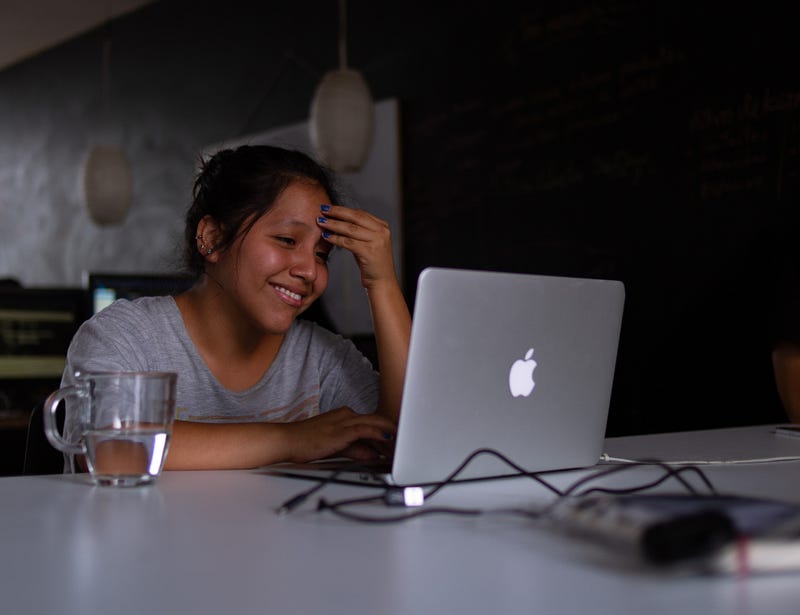
Before we begin, let me be straightforward to you. I’m not the most suitable person to tell you how to be more productive during the quarantine. I have been really unproductive.
But productivity isn’t a synonym for “making the most out of one’s time”. At least for the purposes of this post, I define productivity has time efficiency, or output (how much work has been done), while defining making the most out of one’s time as effectiveness, or outcome (how close you are to achieving your goal).
Two Things About Productivity in a Pandemic

Now I want to clarify two things about productivity.
The first is that it’s okay if you have been unproductive. Really.
I may be biased because I have been unproductive myself, but usually I’m not too kind to myself when it comes to not meeting my own expectation.
This new lifestyle is not natural. The human brain is capable to adapt to almost any set of circumstances, except for some (at least not with difficulty), like social distancing. Humans need to be social. And humans also need NOT to be social, for example, when they are stuck all the time with the same people.
So probably you have felt depressed. Probably you have felt angry. I know I did. Keeping yourself busy helps, but not that much.
Surely, there are people who say that a truly successful person is productive despite all the adverse circumstances. Fuck them 😊. Not the successful people, the people who say that successful people are some kind of superhumans. We are all just humans, no one is perfect, and everyone is living through a different crisis.
The second thing is what I have already mentioned as the difference between output and outcome. Productivity is not all that important. Often, it’s not enough. I know a friend (totally not me) who took drugs in the past to increase their productivity, and they worked pretty well (for this friend of mine), they worked 5 times more efficiently (I know because they told me, as they are the ones who took the drugs), but at the end of the day, they are still a failure (dude trust me, I’m not talking about myself).
It’s easy to feel good when you are productive. It’s easy to feel that you really have accomplished something. But these are just feeling. While being more productive usually does increase your chances to reach your goal, this isn’t always the case. Furthermore, even when this is true, you can’t be sure that the way you are being productive is actually the most productive (i.e. efficient) one. Maybe there are simpler ways. Feelings don’t tell you that.
Happiness Is in the Moment, After the Pandemic

One of the good things about my quarantine, is that I meditated every single day. As of this writing, I have a streak of 74 consecutive days of mindfulness sessions. This is also true for workout sessions, journaling sessions, and non-fiction reading sessions.
Now that I finally bragged about my routine and made you think that I’m awesome, I will tell you a secret: 74 consecutive days of mindfulness didn’t turn me into a zen monk.
I certainly admire those who claim that they found their inner peace even in this crisis, but I know I didn’t. And neither you did.
So I will be a bit controversial, and you might not necessarily want to follow my advice, but here’s the thing: finding happiness in the here and now is great, but not here, and not now. We are in crisis mode and we are allowed to be unhappy.
BUT
We may want to make sure that, after the crisis, we are more prepared to BE happy in the here and now.
In trying to be happy now, or better, in trying to ignore your negative feelings, you may mistakenly indulge in some pleasurable behaviors, like eating more than you should, watching more porn than you should, and binging more Netflix than you should. I know I am. I’m binging South Park right now, and it’s a long-ass series (this might also partially explain my constant swearing).
While I will keep binging South Park until I finish all 23 seasons (I’m currently at season 10), I know that my time could be used in a better way.
And by that I don’t necessarily mean productive.
I tried to be productive. I failed. I wasn’t on drugs, as my totally real friend did in the past.
Find the Right Leverages to Kickstart Your Post-Pandemic Life
In a recent post I wrote about a project, LevelApp, on which I tried to work in this period. This post is still fresh in my mind, since I wrote it like eight hours ago, and for those who care, I still haven’t slept since. I’m still energized after about 30 restless hours, but my muscles are a bit sore.
I’ve probably worked 80 hours on LevelApp. Anyone would argue that these are 80 hours of productive work. But wouldn’t have been any different if I used these 80 hours to binge 16 seasons of South Park?
Maybe not. I will probably never finish LevelApp, and I’m thinking to never pick up coding again in general. So this time has been probably lost. And yes, some may argue that I’ve still “learned something”, but even in that case, there are more efficient ways to learn life lessons.
Still, I think I have done other things that were a better use of my time. My magic routine (meditating, working out, journaling, reading) is an example. But I have also used some time for some thinking. I brainstormed some ideas for future projects.
One thing I did was talking with a professor about running a startup together. Why a professor? Because that person knows a lot of people. This is what I call a leverage. No, actually, I’m not the only one who calls it like this, but that last sentence sounded cool.
A leverage, in its broadest meaning, is anything that accelerates the pursuit of your goals. One year ago I already tried to open a startup. I was alone with a friend, we were both two nobodies, and we failed miserably. We didn’t have any leverage. We had to start from scratch and so we got fucked hard by those more powerful than us.
I did a post-mortem, and I realized that one of the many reasons for this failure was the lack of a solid network, and the lack of networking skills.
At this point, I had two options. Either I improved my networking skills and built a network from scratch, or I could find an acquaintance with an already established network, and use their network directly. You can call it a cheat. You can call it a quantum leap. It’s a way to skip some steps in the pursuit of a goal. It’s a leverage.
This was an example of leveraging a person’s network. Venture Capitalists are an example in which a person’s money is used as leverage to accelerate the growth of a startup. You can leverage a person’s skills, network, money, time, and so on.
The Kid Who Moved the World

I met an 18-year-old kid some time ago. As any 18-year-old kid, he didn’t know shit about anything. But he was a fucking millionaire.
I will refer to him as Chris. Chris started by asking his parents for some money (money leverage). They lent him the money, and he used it to hire a programmer, Bob (skills leverage). He took some freelance gigs and passed them onto the programmer regularly. He started making some money, then he got bored as shit of finding gigs and he hired another person to do that, Laura (time leverage). He was making serious money now, so he began attending rich people parties. He met a lot of people full of ideas, and he proposed to partner with a guy with an idea for a financial website, Eric (idea leverage). At another party, Chris met a very influential person, John, and he pitched him Eric’s idea. John had a very well established network (network leverage). Chris hired Philip to hire more people and manage other aspects of the business (time leverage).
Now Chris doesn’t do shit but he makes a shit ton of money each day. You may think that I misused the word leverage, since Chris actually just hired people like a normal employer. I want to make you understand the amount of effort Chris put into his work from the beginning. All he needed to do in order to become a millionaire, was to ask a small loan from his parents, hire some people, find some initial freelance gigs (without actually working), and go to parties. No late-night coding sessions. No stress, no worries, no burnout.
Obviously, we can’t be all like Chris. He was very lucky. If this formula worked every time, I surely would have already used it.
You probably would never have guessed it, but I hate Chris. Not because I’m jealous, but because he has a shitty personality. But I have to admit, he seriously did something. Usually, when I’m unmotivated, I think about his story. I think that if he made it, anyone probably can.
Now, what has this anything to do with productivity, happiness and making the most out of your time? Am I trying to make a point in this huge mess of an article?
It’s time to unleash my first bullet list on Medium. It’s so weird that I haven’t done it already, I love bullet lists more than any sane person should. Anyways, there are three fundamental ways to use your time:
- You can pursue short-term happiness, or pleasure, by over-eating, watching porn, or binging South Park.
- You can put a lot of effort into a project, maximizing the number of productive hours, maybe taking drugs like my totally real friend but surely not like me.
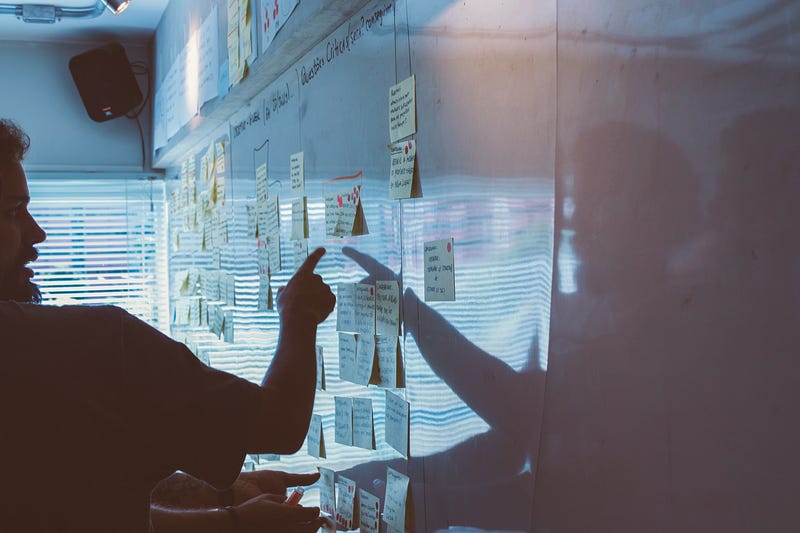
- You can take a piece of paper, a pen, and your mind, and brainstorm some ideas on where you can find leverages so you can pursue your goals without necessarily being more productive.
If you have been paying close attention to my words, and carefully analyzed any subtle clues in this post, you may have hinted that the last point is the most important, while you should minimize the impact of the other two. I’m not saying to eliminate them, just minimize. I’m not the one to tell you that you shouldn’t binge Netflix.
This message is so simple, yet it’s so surprisingly powerful. Think about it. I guess that you are working on some kind of project right now. Are you sure that putting more productive hours in is the best way to achieve your goal? What if you could magically increase the resources at your disposal? Usually, all it takes is knowing a person. What would Chris do?
That said, I hope you are well and healthy, and that your loved ones are too. I hope we can get out of this health crisis, financial crisis, and psychological crisis as soon as possible. Meanwhile, I’m sure you can find some smart ways to make the most out of this time.