avatarBetsy Denson

Free AI web copilot to create summaries, insights and extended knowledge, download it at here

3847

Abstract

mes triple, duty as parents, spouses, and siblings.”</p><p id="adf0">Like the Habsburgs, Cleopatra likely had a jaw underhang and prominent chin. But subsequent generations took her image farther and farther away from this. For some reason we needed her to be the classical Elizabeth Taylor and so we made her fit the mold.</p><figure id="9fe8"><img src="https://cdn-images-1.readmedium.com/v2/resize:fit:800/1*xA-vpMeQd359RFLESmHn_A.png"><figcaption><a href="https://commons.wikimedia.org/wiki/File:Cleopatra_Before_Caesar.png">WikiCommons: Cleopatra Before Caesa</a>r by Jean-Léon Gérôme, oil on canvas, 1866.</figcaption></figure><p id="6a77">Another ancient ruler whose influence had a huge impact was Emperor Ashoka <a href="https://www.britannica.com/biography/Ashoka">who ruled the Indian subcontinent from c. 268 to 232 BCE</a>. He was a great warrior until he renounced war and sought to influence through ideas and the spread of Buddism.</p><p id="0187">According to ancient texts, Ashoka also suffered from a skin disorder and some form of epilepsy. An article from <a href="https://www.ncbi.nlm.nih.gov/pmc/articles/PMC4314928/">the National Institutes of Health</a> speculates that he had von Recklinghausen disease. The same article related that “one of the earliest representations of Ashoka, about 100 years after his death at one of the gates of Sanchi Stupa, shows Ashoka fainting when visiting the Bodhi tree and being held by his queens.”</p><p id="db66">However, in other reliefs on the same gates, like below, his power is more obvious. And later, more modern, representations don’t show “a man of short height, large head and a paunchy abdomen,” but a more slender man with more chiseled features.</p><figure id="d469"><img src="https://cdn-images-1.readmedium.com/v2/resize:fit:800/1*E1EbEhQmRRA71OyyiaiL1Q.jpeg"><figcaption><a href="https://en.wikipedia.org/wiki/Ashoka#/media/File:Ashoka's_visit_to_the_Ramagrama_stupa_Sanchi_Stupa_1_Southern_gateway.jpg">Ashoka’s visit to the Ramagrama stupa Sanchi Stupa 1 Southern gateway. By Photo Dharma from Sadao, Thailand</a></figcaption></figure><h1 id="eab8">“I like her not!”</h1><p id="858e">Portraits served another purpose as well — to serve as a picture to a potential bridegroom.</p><p id="3051">There is a lot of speculation about what the real Anne of Cleves looked like. In 1537 John Hutton sent a report home of his wife hunting expeditions for King Henry VIII. His assessment of Anne?</p><p id="def2" type="7">‘There is no great praise of her personage or beauty’</p><p id="c552">To get a better idea, Henry dispatched Hans Holbein the Younger to go paint her so he could see for himself. Of course, Anne didn’t get to peruse an image of the increasingly portly king to see if she’d take a liking to him.</p><figure id="e193"><img src="https://cdn-images-1.readmedium.com/v2/resize:fit:800/1*lPhq7eUXl73XqJNmQms9EA.jpeg"><figcaption><a href="https://commons.wikimedia.org/wiki/File:AnneCleves.jpg">WikiCommons: Anne of Cleves</a></figcaption></figure><p id="1552">The painting got Anne to Henry who thought Hans was too generous. He is rumored to have said upon seeing her in person: “I like her not!” Like a big old baby. They got married anyway and although Anne of Cleves was the Queen of England for only six months, she outlived all of Henry’s wives.</p><p id="2ac2">Another wedding by portrait was Portuguese Princess Catherine of Braganza who married Charles II (of England, not Spain).</p><figure id="8daa"><img src="https://cdn-images-1.readmedium.com/v2/resize:fit:800/1*oCbTiv17YyprkmtRiY-voQ.jpeg"><figcaption><a href="https://commons.wikimedia.org/wiki/File:Catherine_of_Braganza.jpg">WikiCommons: Catherine of Braganza</a></figcaption></figure><p id="2328">While Catherine had plenty of cheerleaders — she was an advantageous match with a dowry that in

Options

cluded two valuable port cities — others found her looks lacking when she reached England. From <a href="https://artuk.org/discover/stories/catherine-of-braganza-the-lost-stuart-queen">ArtUK</a>:</p><blockquote id="caea"><p>On her arrival in England, Catherine’s appearance was commented on unkindly. She and her ladies-in-waiting were dressed in old-fashioned garments, while Charles allegedly exclaimed that Catherine resembled a bat because of her hairstyle.</p></blockquote><p id="64f0">Other people <a href="https://www.cornellpress.cornell.edu/restoration-theater-slavery-and-barren-queen/#:~:text=When%20twentieth%2Ftwenty-first-century%20artist%20Audrey%20Flack%20created%20a%20statue,Asian%20imports%20that%20the%20Portuguese%20had%20long%20relished.">described her “dark complexion” unfavorably</a>. However, she’s very white in the royal portrait of her by artist Peter Lely. Intentional? I’m guessing yes.</p><figure id="3376"><img src="https://cdn-images-1.readmedium.com/v2/resize:fit:800/1*-PNF7lU5L3Q_SfIsuzdIGw.jpeg"><figcaption>Catherine of Braganza, Credit: <a href="https://artuk.org/visit/venues/the-royal-hospital-chelsea-6961">The Royal Hospital Chelsea</a></figcaption></figure><p id="5f9c">To add insult to injury, Lely also painted Charles’ favorite mistress with her illegitimate son as the Madonna and Child.</p><figure id="ad2b"><img src="https://cdn-images-1.readmedium.com/v2/resize:fit:800/1*BaP04gBCcKPtGT121BUzTw.jpeg"><figcaption>Barbara Palmer, née Villiers, Credit <a href="https://artuk.org/visit/venues/national-portrait-gallery-london-6228">National Portrait Gallery, London</a></figcaption></figure><p id="f03f">In fact, Barbara was considered such a beauty by all that Lely just used her features on other portraits of ladies of the court.</p><h1 id="415a">Presidential power</h1><p id="994e">One of my favorite things to ponder in portraiture is how U.S. presidents have taken charge of their image. They get final approval of their official paintings so it’s interesting to speculate how they wanted to be seen.</p><p id="96f1" type="7">There’s the warm-lit, wise-looking President Thomas Jefferson.</p><figure id="c5aa"><img src="https://cdn-images-1.readmedium.com/v2/resize:fit:800/1*CwQKUs0-xhTPCk8Ovxfubg.jpeg"><figcaption>Portrait by Rembrandt Peale in 1800. Credit: <a href="https://www.whitehousehistory.org/galleries/presidential-portraits">White House Collection</a></figcaption></figure><p id="608b" type="7">And Tom Selleck, I mean President Andrew Johnson.</p><figure id="6f38"><img src="https://cdn-images-1.readmedium.com/v2/resize:fit:800/1*czRixk0cEnhTY0BQgVk8Uw.jpeg"><figcaption>Andrew Johnson, Portrait by Eliphalet Frazer Andrews in 1880. <a href="https://www.whitehousehistory.org/galleries/presidential-portraits">Credit: White House Collection.</a></figcaption></figure><p id="57b2">And President Barack Obama <a href="https://npg.si.edu/object/npg_NPG.2018.16">whose colorful 2018 White House Portrait by Kehinde Wiley</a> broke the mold for presidential portraiture. I wonder how much the subject and artist talked about what they wanted to create. It’s novel and fresh and to me, a commentary about how the President wanted his whole tenure to be seen by future generations.</p><p id="9141">Nowadays digital images make it almost impossible for anyone to maintain control over their likeness. But when people could use the “filters” of the past, it’s fascinating to see what they came up with.</p><p id="62c9" type="7">A picture is worth a thousand words is the old adage. But we all read them differently.</p><p id="a823"><a href="https://betsydenson.medium.com/">Betsy Denson</a>, 2022</p><p id="525f"><b><i>If you decide to join the Medium Partner Program please consider <a href="https://betsydenson.medium.com/membership">using this link</a>.</i></b></p></article></body>

“Make It Look Like Me, but Not Really” — Before Photoshop, There Was a Willing Artist

Whether for vanity, propaganda, or the preservation of power, alterations in the appearance of historical figures was common
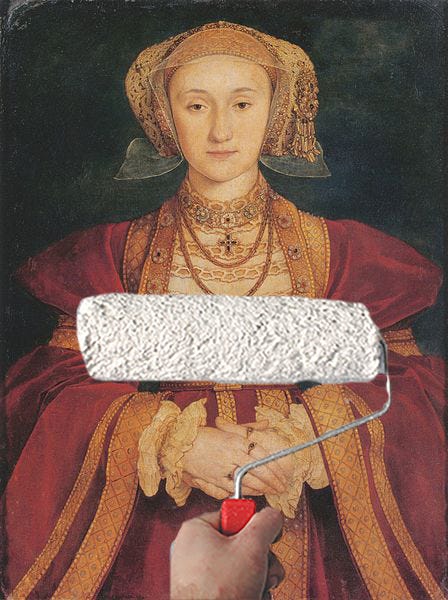
WikiCommons: Anne of Cleves; Paintbrush by Malte Luk from Pexels

Nowadays there’s a filter for that.

But before photography, a subject was dependent on the artist for how they would be represented. Sometimes a subject wanted to be portrayed in a flattering light and sometimes they didn’t have a say. Other times the image of a person was created after their death to bolster a reputation or reinforce a ruler’s authority.

I’m actually surprised that more paying customers didn’t take advantage of it. Before we consider some of the “airbrushed” images, take a look at a portrait of Spanish King Charles II.
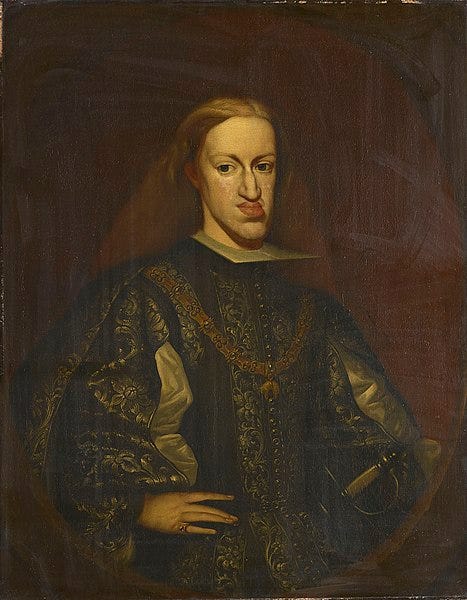
WikiCommons: Charles II

An article in Smithsonian Magazine explains the inbreeding that happened in the royal Spanish Habsburgs resulted in increasingly worse birth defects. Charles was dubbed “the bewitched,” for his “overlarge tongue, epilepsy, and other illnesses.”

In a letter, British envoy Alexander Stanhope said this of the king’s features:

“He has a ravenous stomach, and swallows all he eats whole, for his nether jaw stands so much out, that his two rows of teeth cannot meet.”

Still, every portrait of him does not gloss over his prominent chin and narrow face. Perhaps it didn’t matter to him how he was perceived. After all, he was already on the throne.

Contrast that with another inbred king, the Egyptian King Tut.

NPR reports that scans of his mummy showed someone with a cleft palate and a curved spine, among other issues. Genetic testing revealed that Tut’s assumed father, Akhenaten, married his sister. And King Tut also married a sister. They were unable to produce viable offspring.
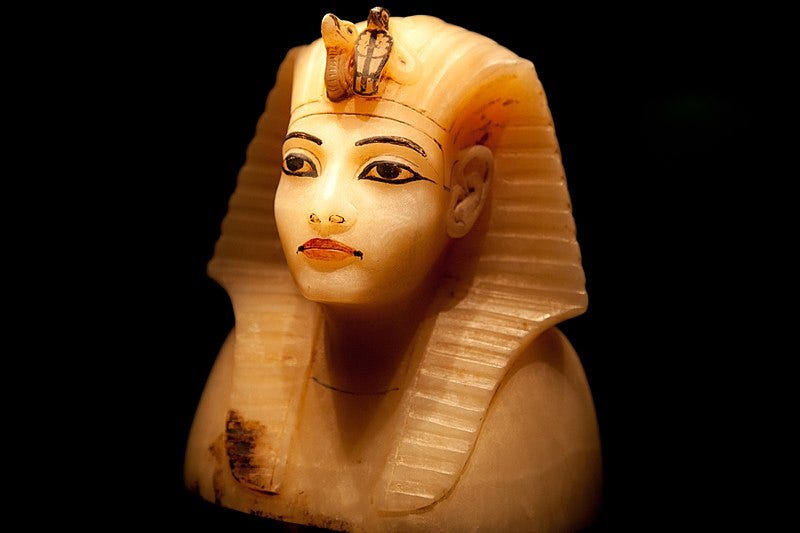
WikiCommons: Canopic Jar of Tutankhamun

You would not know of the king’s true physical features by looking at the representations of him in his tomb. The Egyptian pharaohs were descendants of the gods though, so they had a vested interest in portraying perfection.

Another Egyptian ruler who apparently suffered from the effects of inbreeding was Cleopatra. According to an article in Maclean’s, “the 16 roles of Cleopatra’s great-great-grandparents were filled by only six individuals, all of whom did double, and sometimes triple, duty as parents, spouses, and siblings.”

Like the Habsburgs, Cleopatra likely had a jaw underhang and prominent chin. But subsequent generations took her image farther and farther away from this. For some reason we needed her to be the classical Elizabeth Taylor and so we made her fit the mold.
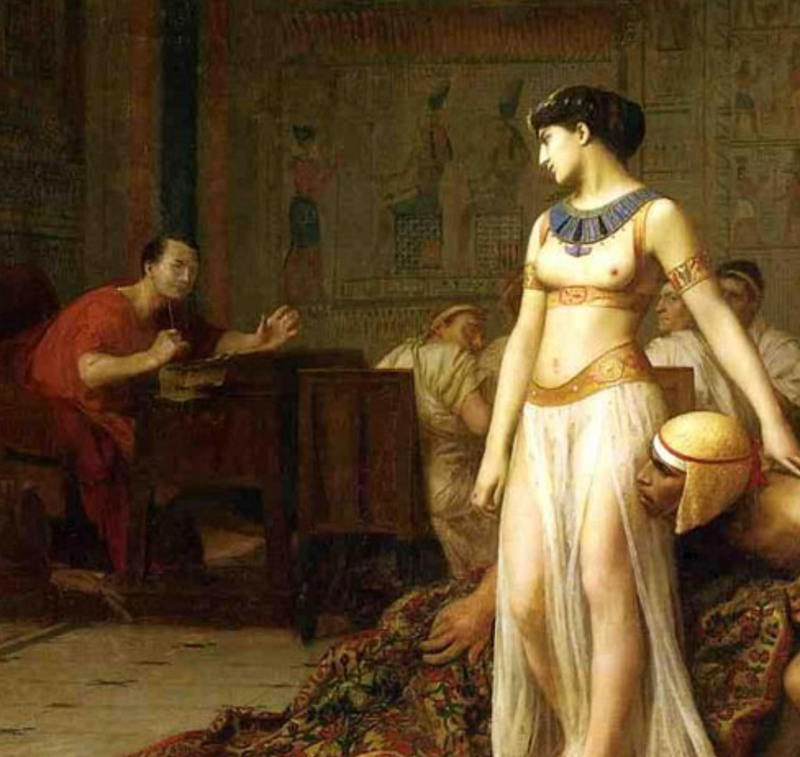
WikiCommons: Cleopatra Before Caesar by Jean-Léon Gérôme, oil on canvas, 1866.

Another ancient ruler whose influence had a huge impact was Emperor Ashoka who ruled the Indian subcontinent from c. 268 to 232 BCE. He was a great warrior until he renounced war and sought to influence through ideas and the spread of Buddism.

According to ancient texts, Ashoka also suffered from a skin disorder and some form of epilepsy. An article from the National Institutes of Health speculates that he had von Recklinghausen disease. The same article related that “one of the earliest representations of Ashoka, about 100 years after his death at one of the gates of Sanchi Stupa, shows Ashoka fainting when visiting the Bodhi tree and being held by his queens.”

However, in other reliefs on the same gates, like below, his power is more obvious. And later, more modern, representations don’t show “a man of short height, large head and a paunchy abdomen,” but a more slender man with more chiseled features.
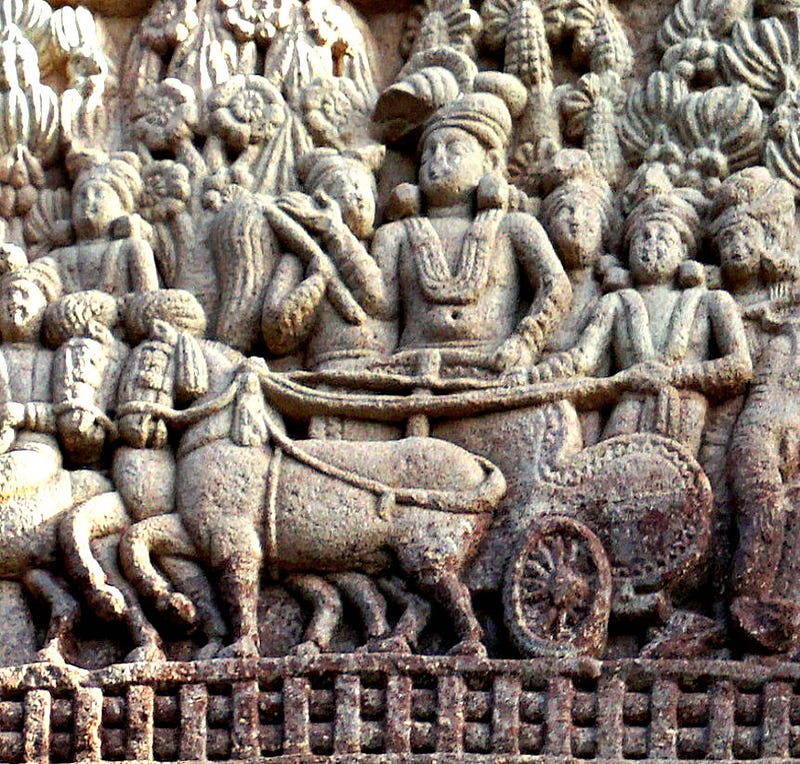
Ashoka’s visit to the Ramagrama stupa Sanchi Stupa 1 Southern gateway. By Photo Dharma from Sadao, Thailand

“I like her not!”

Portraits served another purpose as well — to serve as a picture to a potential bridegroom.

There is a lot of speculation about what the real Anne of Cleves looked like. In 1537 John Hutton sent a report home of his wife hunting expeditions for King Henry VIII. His assessment of Anne?

‘There is no great praise of her personage or beauty’

To get a better idea, Henry dispatched Hans Holbein the Younger to go paint her so he could see for himself. Of course, Anne didn’t get to peruse an image of the increasingly portly king to see if she’d take a liking to him.
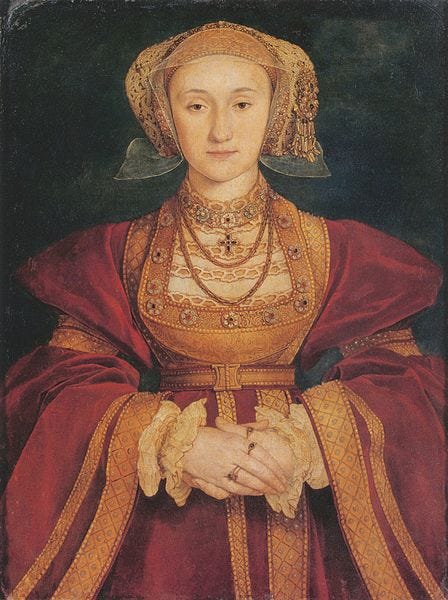
WikiCommons: Anne of Cleves

The painting got Anne to Henry who thought Hans was too generous. He is rumored to have said upon seeing her in person: “I like her not!” Like a big old baby. They got married anyway and although Anne of Cleves was the Queen of England for only six months, she outlived all of Henry’s wives.

Another wedding by portrait was Portuguese Princess Catherine of Braganza who married Charles II (of England, not Spain).
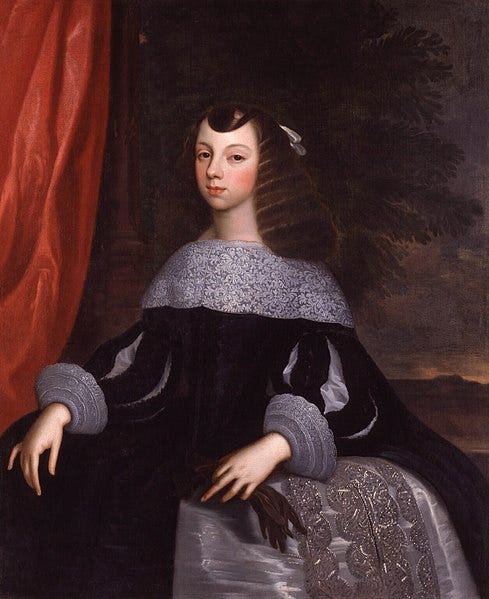
WikiCommons: Catherine of Braganza

While Catherine had plenty of cheerleaders — she was an advantageous match with a dowry that included two valuable port cities — others found her looks lacking when she reached England. From ArtUK:

On her arrival in England, Catherine’s appearance was commented on unkindly. She and her ladies-in-waiting were dressed in old-fashioned garments, while Charles allegedly exclaimed that Catherine resembled a bat because of her hairstyle.

Other people described her “dark complexion” unfavorably. However, she’s very white in the royal portrait of her by artist Peter Lely. Intentional? I’m guessing yes.
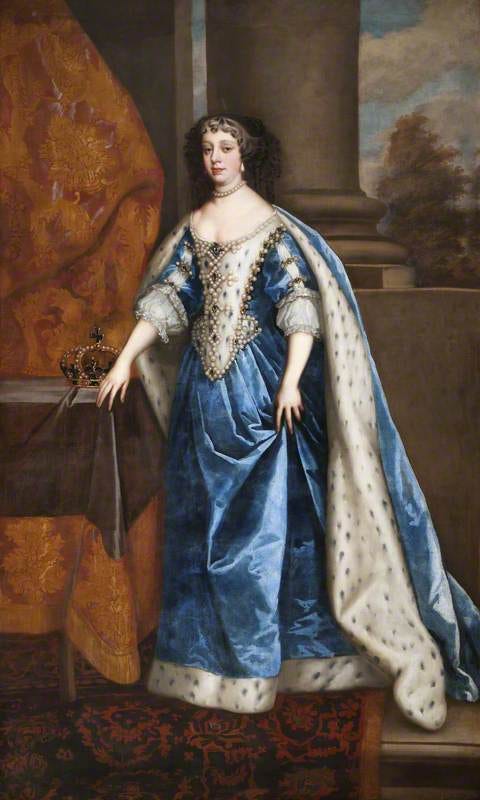
Catherine of Braganza, Credit: The Royal Hospital Chelsea

To add insult to injury, Lely also painted Charles’ favorite mistress with her illegitimate son as the Madonna and Child.
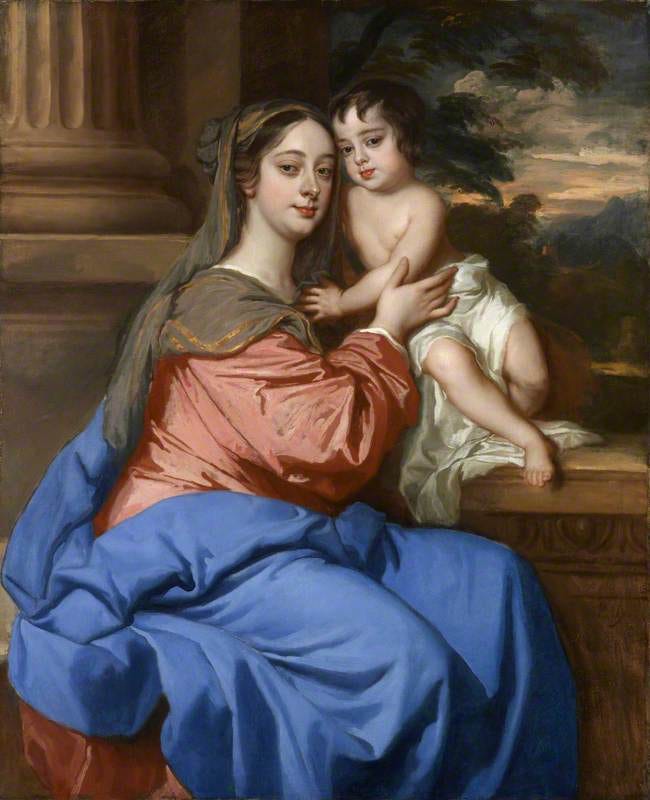
Barbara Palmer, née Villiers, Credit National Portrait Gallery, London

In fact, Barbara was considered such a beauty by all that Lely just used her features on other portraits of ladies of the court.

Presidential power

One of my favorite things to ponder in portraiture is how U.S. presidents have taken charge of their image. They get final approval of their official paintings so it’s interesting to speculate how they wanted to be seen.

There’s the warm-lit, wise-looking President Thomas Jefferson.
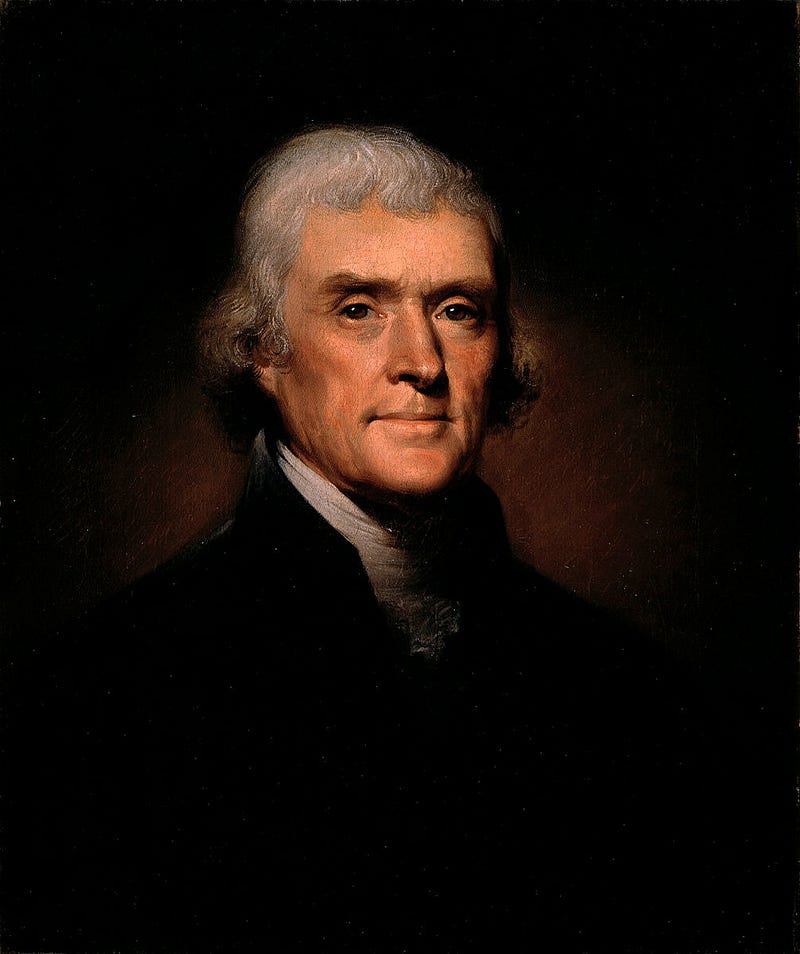
Portrait by Rembrandt Peale in 1800. Credit: White House Collection

And Tom Selleck, I mean President Andrew Johnson.
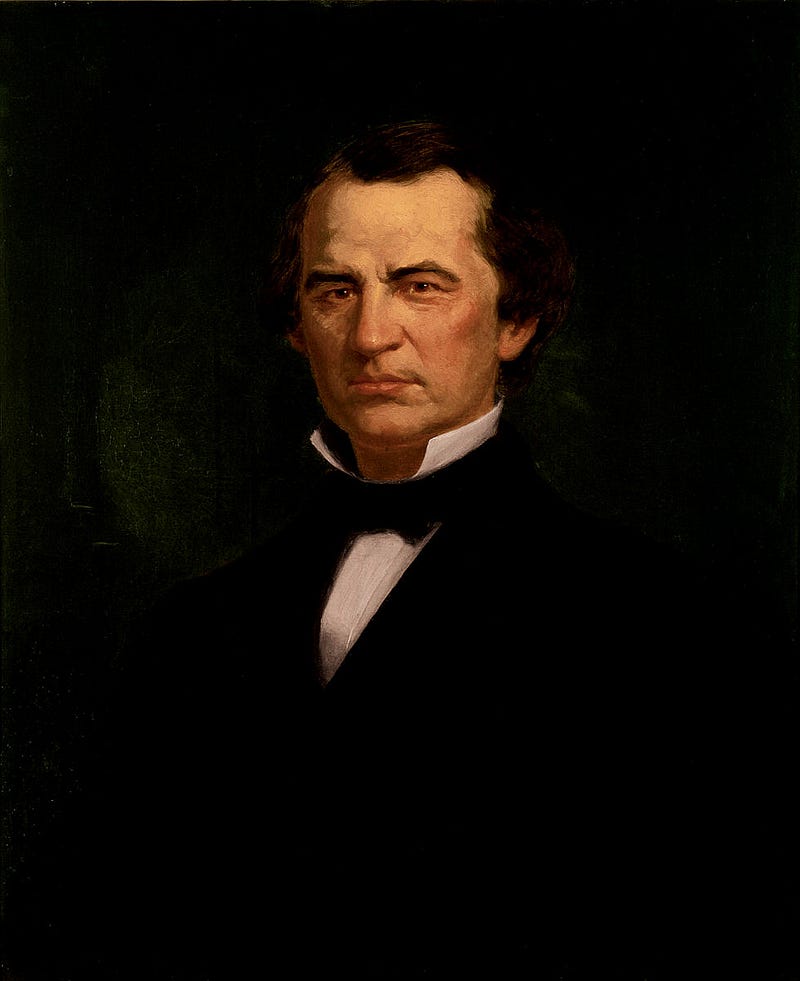
Andrew Johnson, Portrait by Eliphalet Frazer Andrews in 1880. Credit: White House Collection.

And President Barack Obama whose colorful 2018 White House Portrait by Kehinde Wiley broke the mold for presidential portraiture. I wonder how much the subject and artist talked about what they wanted to create. It’s novel and fresh and to me, a commentary about how the President wanted his whole tenure to be seen by future generations.

Nowadays digital images make it almost impossible for anyone to maintain control over their likeness. But when people could use the “filters” of the past, it’s fascinating to see what they came up with.

A picture is worth a thousand words is the old adage. But we all read them differently.

Betsy Denson, 2022

If you decide to join the Medium Partner Program please consider using this link.

Art
History
President
Photography
Art History
Recommended from ReadMedium