
Majoring In Philosophy Is Underrated
Thoughts of a Philosophy Major Four Years After Graduating

Pointless. No jobs — “good luck finding one”. Waste of time. Useless.
All words I have heard used to describe philosophy as a major in college.
Its applications go far beyond what most people think.
Harrison Ford. George Soros. Bruce Lee. Very different individuals, yet all very successful people who have degrees in philosophy.
“To live without philosophizing is in truth the same as keeping the eyes closed without attempting to open them.” — René Descartes
What Do You Learn?
Philosophy is about finding the answers that are difficult and in many cases impossible to find. This is perhaps the reason that many people label it as a major with no potential or applications outside of itself.
Philosophy’s content is history, writing, logic, science, math, and critical thinking. If philosophy is useless, then consider all other majors to be useless as well.
Philosophy involves the foundations of thought, and why those foundations are in place. Each of us is involved in philosophy from the moment we are capable of the conception and understanding of rational thought. But what if you had more ways to describe the thoughts in your head, and therefore the world around you?
Life would open up. It would become something with potential and meaning instead of something that passes us by every day.
Philosophy content is about experiments of thought. Philosophy literally means “love of wisdom.” Is what you know not your own wisdom? Is what someone else knows not also wisdom? Even if it is different from what you know? Even if it is “wrong”?
When we are able to verbalize ways of describing the world, we can connect with other people and understand not only what people think, but why they think that way, and how that compares to what we think and why.
Why Is This Useful Though?
Thought happens literally 100% of the time. Whether we are asleep, awake, bored, or consumed, we are thinking, subconsciously or otherwise. If we don’t know how to deal with them, they can take over our lives, with seemingly no way to get away.
That’s the thing, though. We can’t get away. The world is full of the unknown, more than we can even comprehend, and the average person decides what they want to believe.
Why you believe is more important than what you believe about the unknown.
How Do You Learn?
You learn by reading, like anything else. You learn by doing, like anything else. You learn through research, synthesis, and analyzing said research for patterns of thought, connections between eras, and application to current, real life situations through aforementioned thought experiments.
I thought about beginning the next sentence with perhaps, but I don’t think it captures what it truly means at its core.
The most important aspect of learning, understanding, and ultimately doing philosophy is critical thinking.
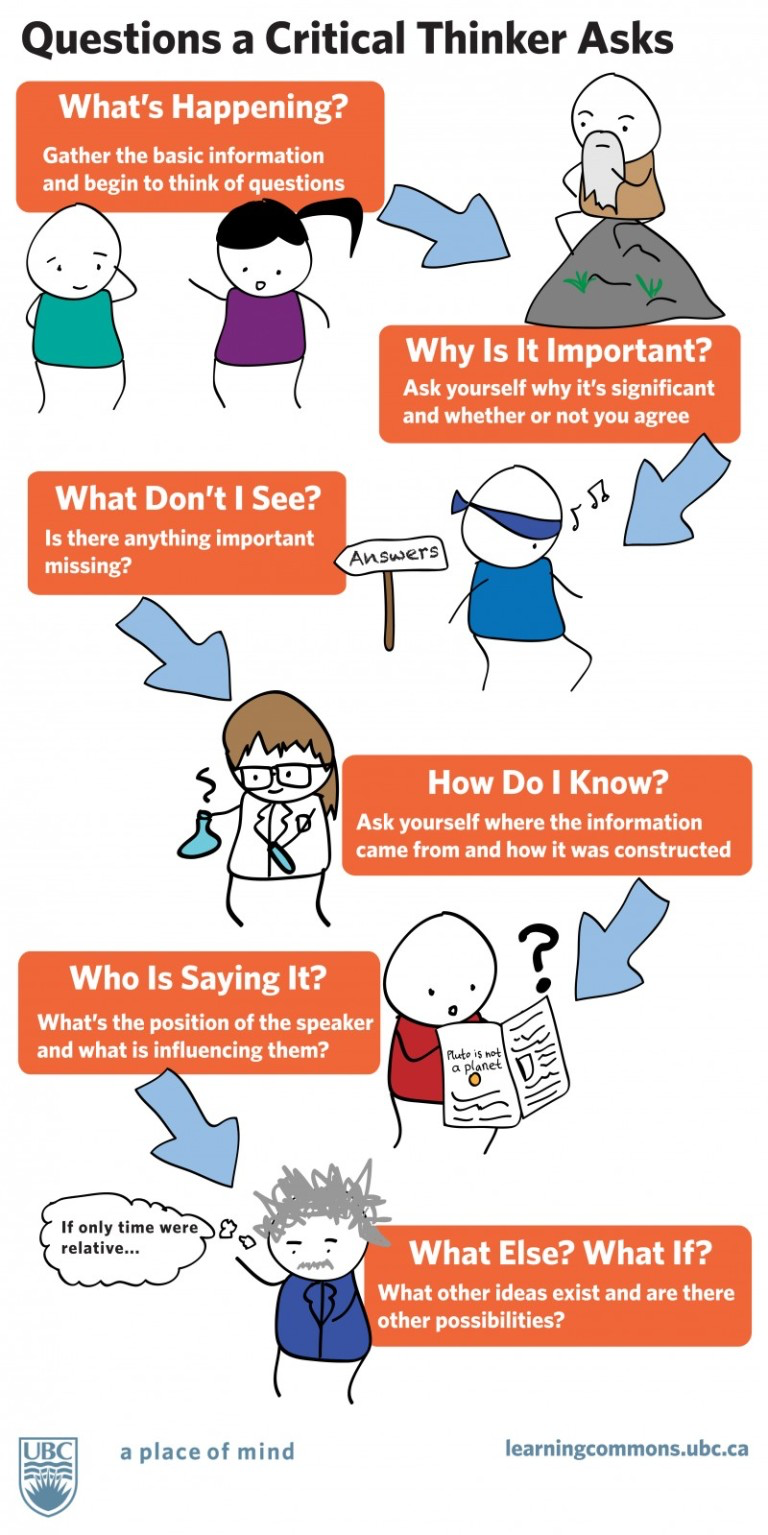
Critical thinking skills are among the most difficult to develop in Industry 4.0, meaning fields involving cloud computing and artificial intelligence. This means that for the future, these skills will be crucial in being able to perform high-level jobs that are becoming more important in the 21st century.
This holds even more significance when we have to use writing to get our critical thoughts across. By learning how to do this through doing philosophy, it doesn’t matter what career you pursue, broad skills have proven to be more applicable than specialized skills for me.
It’s unproductive for me to sit here and give you information that may not even apply to half of the people who read this, so I want to leave you with one final piece of information I have learned in my experience as a philosophy major (and current elementary school teacher).
Without philosophy, we won’t develop the crucial curiosity that leads to a “love of wisdom”.
If young people today don’t choose to chase something bigger than themselves or have the courage to ask questions that they don’t (or can’t) know the answers to, then humanity will wither away.
This is not to say that people in other walks of life can’t be curious or love wisdom and knowledge, but the fewer that choose this ideal and learn foundational skills for the future, the less the future will find themselves knocking at the door of the past and trying to understand what was, what has changed, and what needs to continue to change.
*Thank you so much for reading and lending me your time! Please check out my other stories and find out more about me below! Connect with me on Twitter, too!