
![https://cdn-images-1.readmedium.com/v2/resize:fit:800/1*[email protected]">](https://cdn-images-1.readmedium.com/v2/resize:fit:800/1*AgVdfFQh3Cikux7Lm909CA@2x.jpeg%22%3E)
Major Explosion Rocks Russia’s Topol-M ICBM and Iskander Missile Production Facility!

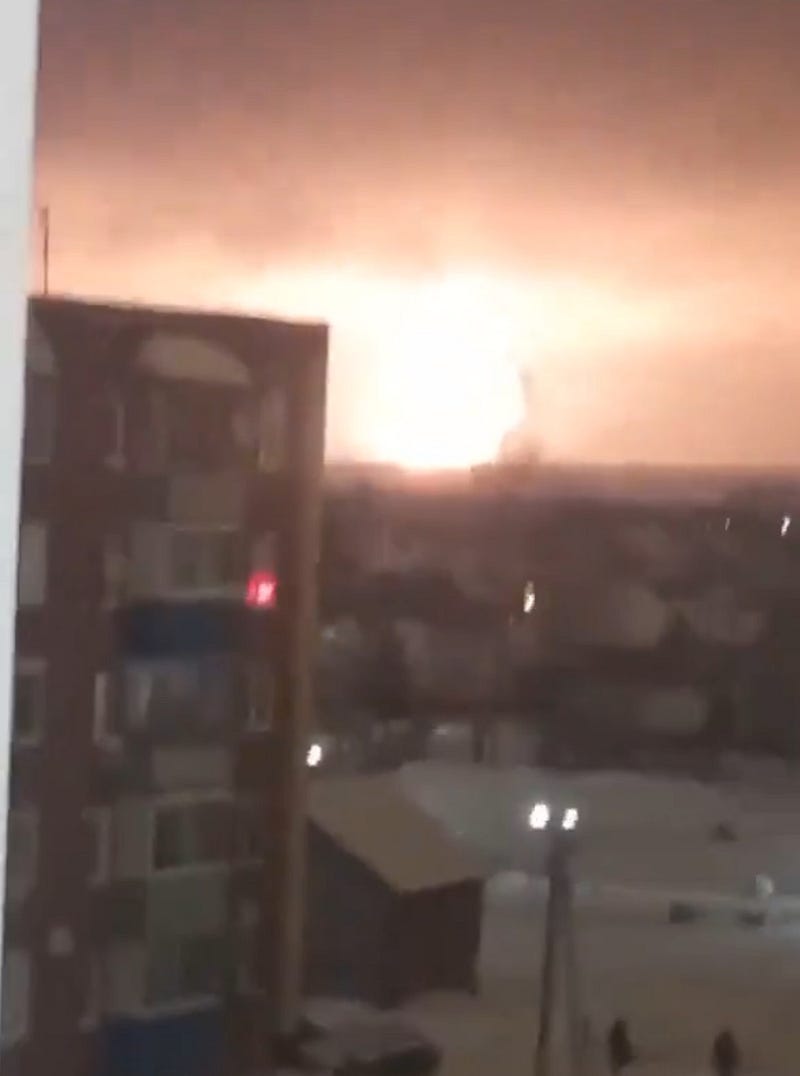
On February 7, a significant explosion occurred near Votkinsk, a city about 1,000 kilometers east of Moscow, known for its strategic importance in Russia’s military production. The Votkinsk Machine-Building Plant, a facility integral to the production of some of Russia’s most sophisticated missiles, including those deployed against Ukraine, became the focal point of widespread attention. Despite official statements from Russian state media, citing emergency services, that characterized the event as a “scheduled test of rocket engines,” the absence of prior announcements and the scale of the explosion suggested otherwise. The incident, which did not reportedly result in casualties, raises suspicions of possible sabotage or a direct drone strike, likely by Ukrainian secret services, though proof remains elusive.
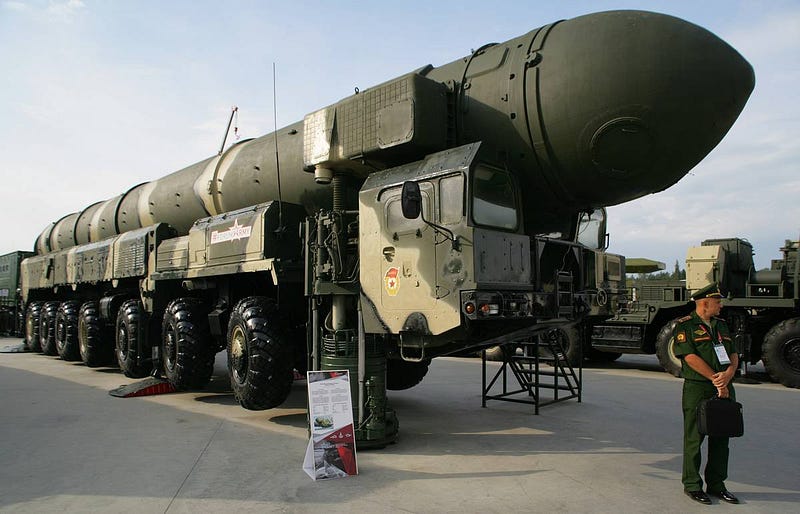
The Votkinsk plant has a storied history within Russia’s defense sector, having produced nuclear weapons components and served as the manufacturing site for missile systems such as the Topol-M, Yars, and Bulava, as well as the bodies for Iskander missiles. This facility, highlighted during a 2011 visit by Russian President Vladimir Putin, is pivotal to Russia’s strategic capabilities, with Putin noting its critical role in the defense industry and its anticipated receipt of substantial orders under new state armaments programs.
The significance of the Votkinsk Machine Building Plant extends beyond its current contributions to Russia’s arsenal. Established by a 1957 resolution of the Central Committee of the Communist Party of the USSR, it became the Soviet Armed Forces’ primary ballistic missile producer. This transitioned to producing the RS-24 Yars ICBM, Russia’s latest development, and the Bulava SLBM, marking the plant’s evolution and its role in shaping strategic military capabilities.
A quick heads-up: Medium’s been tweaking its algorithms and it’s getting trickier for my stories to land in your feed. So, if you enjoy my work, please make some noise! Hit that clap button, light up the highlights, or drop a comment. Every interaction helps keep the stories flowing. Thanks for your support!
From its inception, the plant has been at the forefront of missile technology, delivering the first short-range attack missiles in 1958 and evolving to produce more powerful tactical and intercontinental ballistic missiles. This includes the production of the RT-2PM2 «Topol-M», Russia’s recent ICBM, developed post-Soviet Union dissolution. The facility’s dual role in producing missile components and assembling missiles underscores its importance to Russia’s military-industrial complex.
The recent explosion at the Votkinsk plant, while officially described as part of a scheduled activity, invites speculation about its true nature, especially in the context of the ongoing conflict with Ukraine. The lack of prior notification and the immediate assumption of an accidental or scheduled event do not align with the observed scale and impact of the explosion. This discrepancy, coupled with the strategic significance of the facility, strongly suggests the possibility of targeted sabotage or a drone strike, reflecting the escalating tensions and the sophisticated nature of modern warfare.
Considering the facility’s role in producing advanced missile systems used against Ukraine, the incident could be interpreted as a direct response to Russia’s military aggression. This act, if confirmed as sabotage or a drone strike by Ukrainian forces, signifies a bold and strategic move in the complex chessboard of the Ukraine-Russia conflict. It highlights the increasing capabilities of Ukrainian intelligence and military forces to strike deep within Russian territory, challenging the perceived invulnerability of key Russian military-industrial assets.
While there is no concrete evidence pointing directly to Ukraine’s involvement in the explosion near Votkinsk, several critical factors warrant a closer examination of the incident’s circumstances. Firstly, the Votkinsk Machine-Building Plant, given its role in producing sophisticated missiles for Russia’s arsenal, would undoubtedly have been subject to the highest standards of anti-explosion and security protocols. The nature of its production not only demands but necessitates stringent safety measures to prevent any form of accidental detonation or fire, suggesting that an internal accident would reflect a severe oversight or neglect of these protocols.
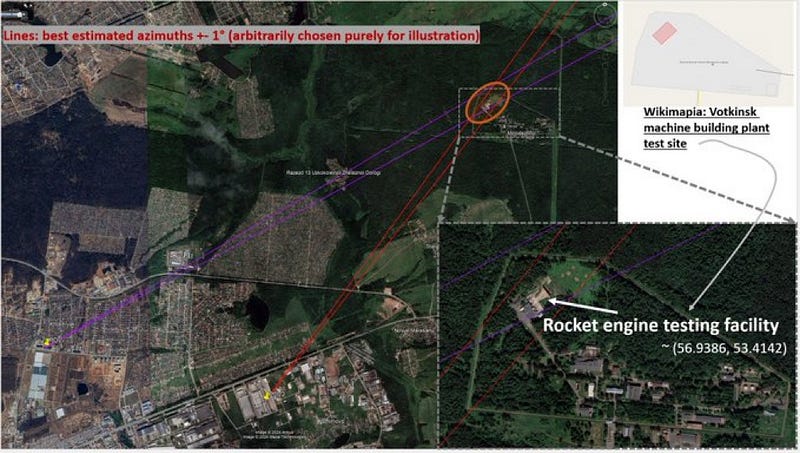
Secondly, the strategic importance of the facility in Russia’s defense framework would almost guarantee it is protected by the most advanced air defense systems available, such as the S-400, Buk systems, or Pantsir. The presence of these sophisticated defense mechanisms around a key military production site underscores the improbability of an unchallenged aerial attack unless it involved highly advanced technology capable of evading detection.
The speculation surrounding Ukraine’s development of long-range, invisible drones adds a layer of complexity to the analysis. Reports have suggested that Ukraine has been working on enhancing its drone capabilities, potentially extending their operational range to strike deep within Russian territory. The fact that the Votkinsk plant lies almost 1500 kilometers from the Ukrainian border, yet experienced such a significant incident, could indicate the use of advanced, long-range drones by Ukraine. This theory gains weight considering the strategic value of disrupting Russia’s military-industrial capabilities, which are crucial for sustaining its offensive operations.
Ukraine’s strategy, as gleaned from patterns observed over recent months, appears to focus on systematically targeting the Russian military-industrial complex and its logistical lifelines. By striking oil refineries, fuel depots, and now potentially a key missile production facility, Ukraine seems to be aiming to cripple Russia’s ability to sustain prolonged military operations. This approach not only hampers immediate military efforts but also aims to weaken Russia’s economic stability by disrupting its energy exports, a vital source of revenue.
The incident at Votkinsk, therefore, might not be an isolated event but a part of a broader strategic campaign by Ukraine. If Ukrainian forces are indeed behind this, it demonstrates a significant escalation in their capability to project power and disrupt Russian military production deeply within its borders. Such actions would represent a calculated risk, intending to demoralize and destabilize Russian military efforts by showing that even the most secure and strategic assets are not beyond reach.
However, it’s crucial to maintain a balanced perspective. The absence of direct evidence means the possibility of an internal accident cannot be entirely dismissed. If it were an accident, this would indeed suggest a worrying lapse in Russia’s adherence to its safety protocols, potentially indicative of broader systemic issues within its military-industrial complex. Such lapses, especially in facilities of strategic importance, could have far-reaching implications, undermining the reliability and readiness of Russia’s military capabilities.
In conclusion, the explosion near Votkinsk, regardless of its cause, marks a pivotal moment in the Ukraine-Russia war. It reflects the changing dynamics of conflict in the 21st century, where technological advancements and strategic innovation redefine the boundaries of engagement. As we continue to monitor these developments, the resilience, ingenuity, and determination of those involved will undoubtedly shape the future of the region and the international order.
I encourage you to engage with this discussion, sharing your thoughts and analyses in the comments below. Let’s foster a robust dialogue on the strategic implications of these events and their potential impact on global security and stability. Your interaction, through clapping and commenting, not only enriches the conversation but also helps us navigate these complex geopolitical waters together.