avatarToya Qualls-Barnette

Free AI web copilot to create summaries, insights and extended knowledge, download it at here

3578

Abstract

quote id="5e30"><p>“This 12-month record is exactly what we expect from a global climate fueled by carbon pollution,” Dr. Andrew Pershing, vice president for science at Climate Central said. “<b>Records will continue to fall next year, especially as the growing El Niño begins to take hold, exposing billions to unusual heat.</b> While climate impacts are most acute in developing countries near the equator, seeing climate-fueled streaks of extreme heat in the U.S., India, Japan, and Europe underscores that no one is safe from climate change.”</p></blockquote><h1 id="f7b6">Is This Just Weird Weather, or Climate Change?</h1><p id="2bab">One of the biggest (and dumbest) arguments against climate change is that these temperature extremes can just be chalked up to “weird weather this year”.</p><p id="732c">While it’s true that some variation is caused by cyclical weather patterns (see El Nino above), there is now a measure of how much of our exteme climate is likely to have been caused by humans through fossil fuel and other emissions.</p><p id="5282"><a href="https://www.climatecentral.org/tools/climate-shift-index">The Climate Shift Index</a> was created to show just how much influence human activity has on weather.</p><blockquote id="ef7b"><p>The CSI is a categorical scale, with the categories defined by the ratio of how common (or likely) a temperature is in today’s altered climate vs. how common it would be in a climate without human-caused climate change.</p></blockquote><p id="62b2">To simplify this, let’s look at another number.</p><p id="a456">Of the 7.8 billion people who experienced warmer than average temperatures this year, the weather for 7.3 billion of those people was 300% more likely to have occurred due to human activity.</p><p id="55c8">In other words, it is 3x more likely that the GHG emissions caused warmer temperatures than other natural causes, like El Nino.</p><p id="1394">Now, I understand that many people will find this a) difficult to understand and b) hard to believe because humans, as a species, have a tough time with probability based math. We like things to be black and white, right and wrong; not a set of possibilities that might, could have, or probably will cause global warming.</p><p id="35cb">But think of it this way.</p><p id="feb1">The 1990’s Bulls had a 300% increase in the probability of winning when they had Michael Jordan on their roster each night.</p><p id="1aac">Could they have won without Jordan? Absolutely they could have. Just like areas of Earth could have seen these higher temps without GHG emissions.</p><p id="2028">Is it likely to happen every night? Probably not. Just like the global higher temps are unlikely to be seen without GHG emissions.</p><h1 id="ac38">Impacts Beyond Humans</h1><p id="b910">As I’m sure you are aware, climate change impacts all living creatures on Earth, not just humans. However, we are blindly ignorant of the mechanisms of this negative impact.</p><p id="6cc5">I’ve written before about how high heat impacts the <a href="https://readmedium.com/climate-change-will-kill-the-weakest-and-youngest-of-everything-66f16ed8afc8">young and weak first</a>, and the <a href="https://phys.org/news/2022-11-climate-endangered-african-wild-dogs.html">African wild dog is no exception</a>.</p><p id="73ff">Wild dogs normally give birth at a time when the pups can be raised in cooler months. But the higher temps have pushed that back by about three weeks, forcing them to give birth later and later each year.</p><p id="9a97">At first glance, that’s not a big deal, ri

Options

ght? The babies are born later but still raised in the cooler months. The problem is that the seasons of cooler temps is not only getting pushed back later, but it is also ending sooner.</p><p id="3a96">This inadvertently results in wild dog mothers giving birth at just the wrong time.</p><p id="13d1">Now, someone might suggest that they just move to cooler regions. After all, they are wild animals and can go where they please.</p><p id="9ed6">Well, that’s another issue altogether, as wild dogs are now confined to just 7% of their historical range. It’s not like they can just get up and move to a neighborhood park in what was originally their hunting grounds decades ago.</p><p id="c9ee">Why does this matter? Because wild dogs are acting as a proxy for other keystone animals. But it’s hard to get the right data.</p><blockquote id="8156"><p>Because monitoring large carnivore populations over several decades is challenging and expensive, such long-term data either don’t exist or have not been assessed for most large carnivores.</p></blockquote><blockquote id="a1d5"><p>Every time we look for an impact of temperature on African wild dogs, however, we uncover something new and unexpected. <b>Climate-driven impacts on large carnivore behavior, populations and life histories may well be more widespread than previously thought.</b> Because large carnivores play an important role in shaping ecosystems, such impacts have much broader implications.</p></blockquote><blockquote id="cee9"><p>With <a href="https://www.ipcc.ch/report/ar6/wg1/">continued temperature rises projected across their range</a>, the effects of climate change on this already endangered species — and others like it — are of great concern.</p></blockquote><p id="832c">The whole situation is a kind of “climate trap”. Too hot to breed and too many humans around to move.</p><p id="806b">And it’s just the beginning for the animals, too. <a href="https://www.un.org/en/climatechange/science/climate-issues/biodiversity">Biodiversity </a>loss is being touted as an equal to climate change, with both issues clamoring for solutions that actually go <a href="https://jamanetwork.com/journals/jama/fullarticle/2811131">hand-in-hand for each crisis</a>.</p><h1 id="7e95">The Takeaway</h1><p id="05b3">Humanity is finally reaping what we have been sowing since the beginning of the last century. Billions of tons of CO2e, along with myriad other emissions (NOx, SOx, aerosols, etc.) are finally having the impact that was warned about for decades prior.</p><p id="a9da">There is no sustainability.</p><p id="d724">There is no remediation.</p><p id="0d05">There is only adapting to an ever warming world.</p><p id="34c8">We’ll be lucky to merely start reducing global GHG emissions by 2050, which means climate change will be here to stay for at least the rest of the century.</p><p id="b3f7">Best be prepared for the inevitable.</p><div id="e5fb" class="link-block"> <a href="https://anguspeterson.medium.com/subscribe"> <div> <div> <h2>Bypass the algorithm. Control your inbox.</h2> <div><h3>Bypass the algorithm. Control your inbox. Stop letting Medium force content you don't want into your feed. Subscribe…</h3></div> <div><p>anguspeterson.medium.com</p></div> </div> <div> <div style="background-image: url(https://miro.readmedium.com/v2/resize:fit:320/0*Tkvm3Ht3q7tN0uL9)"></div> </div> </div> </a> </div></article></body>

Magic Shrooms, a Field of Frogs, and a Sultry Jazz Singer
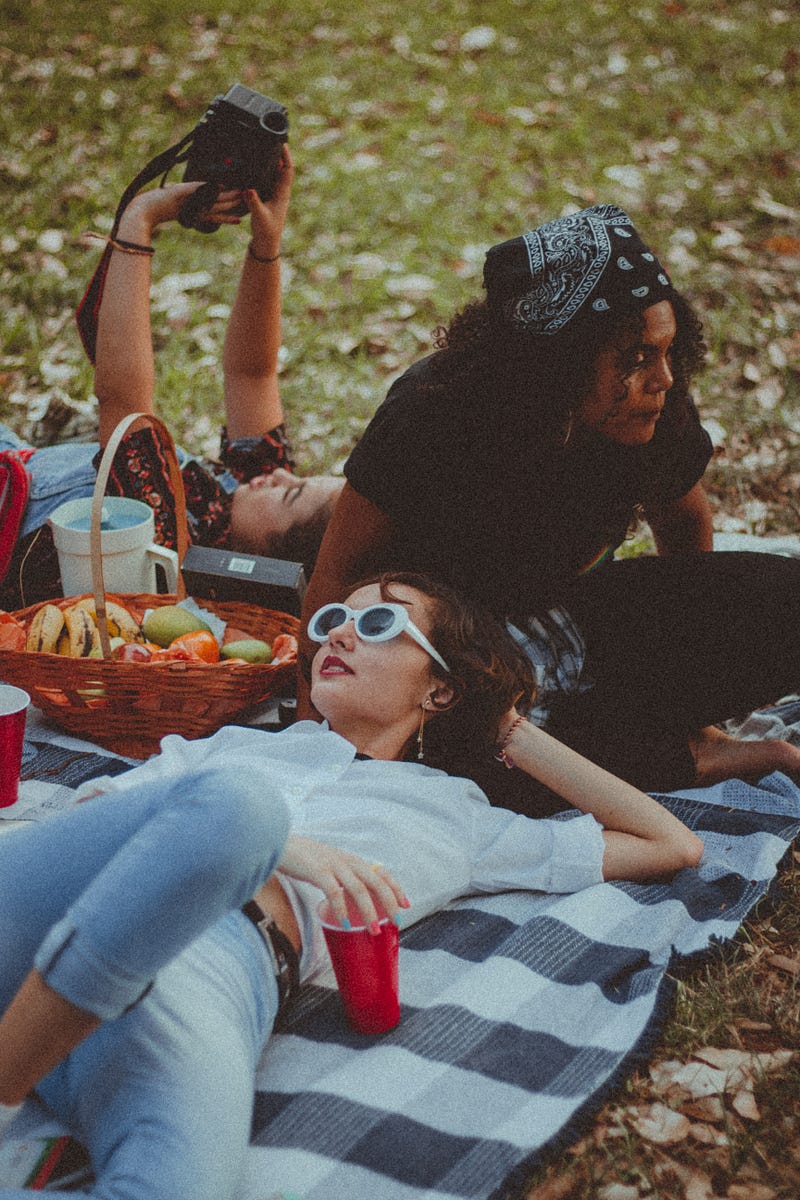
Aline Viana Prado (pexels)

We set the alarm for three o’clock on a Saturday morning — only slept four hours the night before.

Hawaiian locals said we’d need to be there by dawn — no earlier, no later. The magic mushrooms shouldn’t be fully awake for the picking — neither were we.

I was still blooming in my early twenties and my cousin was a beautiful, fully blossomed sunflower in her early thirties. Eleven years apart, we were equally silly and adventurous — not always the best combination.

We’d hashed it over for months before committing to hunting down shrooms for recreational purposes. I guess hiking up to the highest point of Diamond Head wasn’t enough excitement at 762 feet above sea level.

I got stuck on a small, rickety walking bridge on top of the volcanic crater a few inches from the edge, and froze, looking down over the entire island.

A spectacular 360-degree, three-dimensional view of the Pacific Ocean, Royal palms swaying in the breeze set against a powder blue sky, so stunning and postcard-worthy, it took my breath and wobbly legs away.

Limbs frozen stiff. I couldn’t move until a friend helped me down the narrow steps onto the other side — I had never experienced such anxiety. Freaked me out.

If life had to end, there was no better way to go. I left my heart in Honolulu over 30 years ago — living there for two years was one of the best highlights of my life.

We had both tried magic mushrooms on the mainland in L.A. but held this fantasy of finding them fresh from the garden of Oahu’s good earth. Warned most island mushrooms were poisonous, we weren’t exactly sure what we were looking for, but set out on our own expedition, anyway.

Halfway across the island Hawaii’s mythical god of the sun, who according to folklore, snared the sun’s rays to extend daylight in ancient history, spoke to us through layered shades of a blood orange-red Oahu sunrise.

We became mesmerized into hazy doubt that our desire to enhance nature’s inherent beauty was even necessary. Which brings me to a broader point.

Why, as humans, can’t we let beauty be in all its wondrous glory?

We lived in paradise encircled by white sandy beaches of clear turquoise water, jasmine-infused breezes, and the aloha spirit inherited from the only royal family who lived as a monarchy on American soil.

Yet, we were hunting for magic mushrooms to enhance one of Earth’s naturally brush-stroked art galleries.

Awakened by our dawning epiphany, we had no business looking for something we knew nothing about — we agreed to turn around and go to the afternoon concert at Diamond Head Park instead.

Except we didn’t have tickets.

We drove around to the back of the park to size up a grassy field that looked like emerald ice pics sparkling with morning dew, the length and width of two football fields.

A chain-link fence separated the park from the field. Folks already inside claiming their spot with blankets and chairs appeared as miniature figurines from where we stood on the corner. We pondered in silence for a moment.

Squinching her eyes, surveying our options, my cousin said, “We can climb the fence.”

“You think so?”

“Yeah, it’s not that high.” Her influence occasionally overrode my common sense. She entered the field first — started a fast walk turned trot. I was slow to follow.

“Come on.”

I felt a strange movement at my feet the moment I stepped into the wet grass.

Ribbit, Ribbit, Ribbit. Frogs leaping, hopping, and croaking all around us. We had entered their habitat, and they had a few choice croaks for humans invading their territory.

I screamed. The fence seemed a million miles away. My cousin, almost there — looking back, laughing at me with my arms flailing, hopping like a hurdle jumper.

Something about creatures flying, flitting, and hopping around gives me the heebie-jeebies. I like my creatures grounded where their movements and mine are easier to maneuver or control.

When we reached the fence, two security guards had just left their station, where we landed near the stage. With their backs turned, we only had a few minutes to climb over. The crowd couldn’t help but notice. For a moment we were the entertainment, accompanied by the warmup band already on stage.

A couple sitting near the fence helped us over and let us sit on their blanket to blend in the moment the security guards turned around. They offered us food and passed their flowers. That’s Aloha — the Hawaiian word for love, affection, peace, compassion, and mercy, used as their greeting, too.

Can you think of a better way to say hello?

After saying Mahalo to our new Ohana or family, we excused ourselves to buy shaved ice for everyone. They saved us a ticket price, primed our taste buds for flavored ice to quell the munchies and quench our thirst. The least we could do was return the favor.

In anticipation, we positioned ourselves so we could see the star of the show from the side entrance to the stage — barefooted and toking on a joint. He walked across the stage without a care in the world puffing and smiling, then passed it to a stagehand.

There’s something about Hawaii that makes one feel happy and free.

The band started playing one of his hit songs, “We’re in This Love Together.” In my mind, everyone in the park, instantaneously connected. Inside this one, long-reaching love altogether crooning in one voice to a favorite tune.

Thankful for each other, the gods that curbed our intention, and a sultry jazz singer, under the brilliance of an Oahu sun. I was 18 the first time I saw Al Jarreau perform at the Whiskey A Go Go, a famous nightclub in West Hollywood.

Taken to the club by an older friend, my besties and I were skeptical about how we would like a jazz-pop musician. By the time we left, we were huge fans for life. He was phenomenal.

Short Bio:

Al Jarreau was an American jazz singer and musician, a seven time grammy award winner. He was the only musician to win awards in three different categories; jazz, pop, and R&B.

Sunrise: March 12, 1941 — Sunset: February 12, 2017

RIP Al Jarreau.

I’ll leave you with this tune.

This Happened To Me
Life Lessons
Memoir
Nonfiction
Music
Recommended from ReadMedium