
Magic of spices | Antioxidant capacity of food and how is it measured (ORAC value) | Medicinal properties |
Can incorporating spices into your diet improve your overall health.
What is a spice?
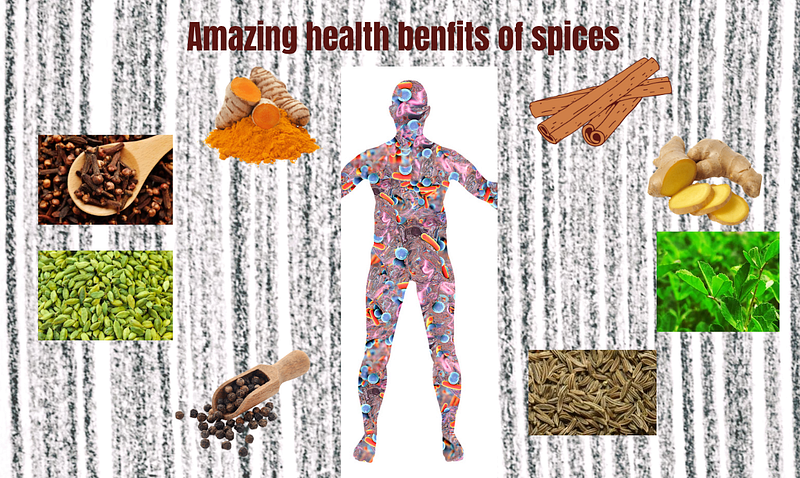
A spice is a dried seed, fruit, root, bark, or vegetable substance primarily used to season or flavor foods. Spices add aroma, flavor, and color to food, and have been used for culinary and medicinal purposes for thousands of years in various cultures around the world.
Many spices contain antioxidants, anti-inflammatory compounds, and other beneficial nutrients, and have been used for medicinal purposes for centuries.
Spices can be used whole, ground, or as essential oils, and can be added to foods both before and during cooking.
Incorporating spices into your diet is a great way to add flavor and nutrition to your meals, and can help improve your overall health and well-being.
What is Antioxidant capacity of foods (ORAC value)?
ORAC stands for “Oxygen Radical Absorbance Capacity.” It is a measure of the total antioxidant capacity of a food or substance, and it reflects its ability to neutralize free radicals and prevent oxidative damage to cells.
Free radicals are unstable molecules that can cause damage to cells, tissues, and organs if not neutralized. Antioxidants are compounds that can neutralize free radicals, and the ORAC value of a food reflects its overall antioxidant content.
What is the comparison of Antioxidant food capacity/ORAC value of top 10 spices:
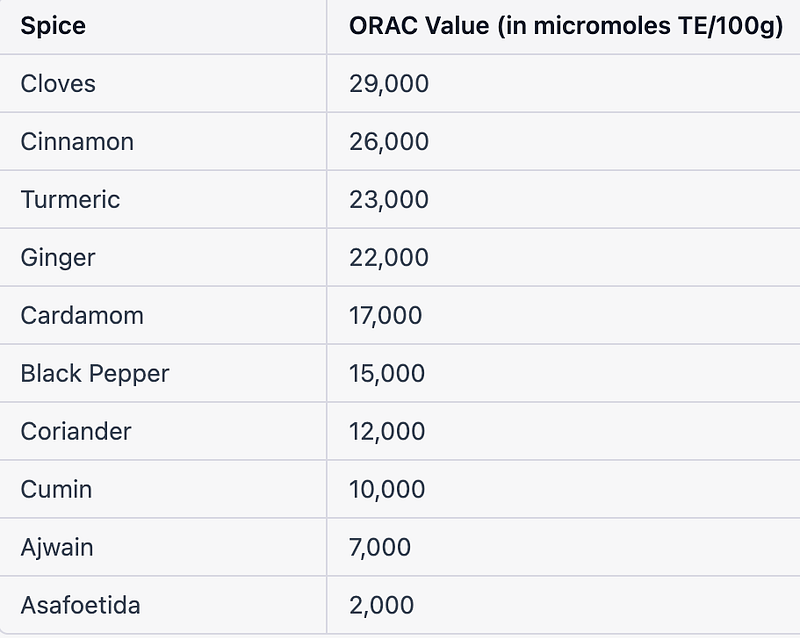
While the ORAC value can be a useful tool for comparing the antioxidant content of different foods, it is just one aspect to consider when evaluating the overall health benefits of a food.What are the amazing benefits of
What are the amazing benefits of top 12 Spices:
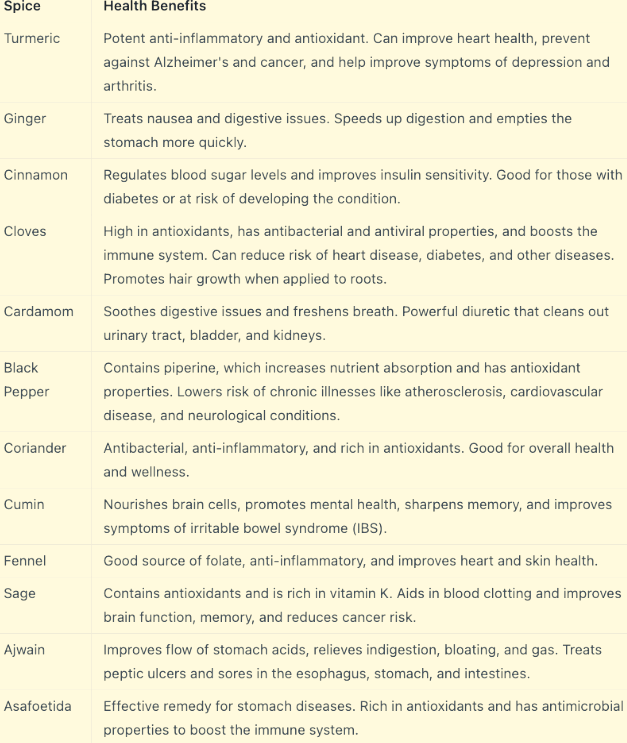
- Turmeric: contains ‘curcumin’ — which has scientifically proven health benefits. It is a potent anti-inflammatory and antioxidant. It has the potential to improve heart health and prevent against Alzheimer's and cancer. It may also help improve symptoms of depression and arthritis.
- Ginger: Used for centuries to treat nausea and digestive issues. Helps speed up the digestion process and empty your stomach more quickly.
- Cinnamon: Ability to regulate blood sugar levels and improve insulin sensitivity. A great spice for those with diabetes or at risk of developing the condition.
- Cloves: Very high in antioxidants, have antibacterial and antiviral properties - boost your immune system. By removing free radicals from your system, cloves can help reduce your risk of developing heart disease, diabetes, and other diseases. The compound eugenol found in clove oil helps promote hair growth when applied to the roots.
- Cardamom: Soothe digestive issues, such as indigestion, bloating, and constipation. Used in India for centuries to freshen up breath. Is is also a powerful a powerful diuretic which helps clean out the urinary tract, bladder and kidneys.
- Black Pepper: Contains a compound called Piperine, which has has a positive effect on nutrient bioavailability — increases the amount of nutrients absorbed into your bloodstream. Piperine is considered a type of antioxidant that helps to lower the risk of chronic illnesses like atherosclerosis, cardiovascular disease, and neurological conditions.
- Coriander: Antibacterial, anti-inflammatory properties and is also a great source of antioxidants, making it a great spice to add to your diet for overall health and wellness.
- Cumin: Packed with a bunch of minerals and vitamins such as riboflavin, vitamin B6, zeaxanthin, and niacin consuming cumin is beneficial for the brain. It helps in promoting better mental health and sharpen the memory by nourishing the brain cells. In one study it was has been shown to improve the symptoms of irritable bowel syndrome (IBS).
- Fennel: Good source of folate, which is needed for healthy red blood cell formation. Increasing your intake of folate-rich foods may improve symptoms of anaemia. It is also an Anti inflamatory and can help with Heart health and skin health.
- Sage: Sage has several types of acidic compounds in it that also act as antioxidants. Chlorogenic acid, caffeic acid, rosmarinic acid, ellagic acid, and rutin have all been linked to benefits such as lower cancer risk, memory improvement, and improved brain function. It is also rich in vitamin K, which aids the body in clotting blood. It is taken in small amounts as it provides a high amount of nutrition without a lot of calories.
- Ajwain: Active enzymes in Ajwain improve the flow of stomach acids, which can help to relieve indigestion, bloating, and gas. The plant can also help to treat peptic ulcers as well as sores in the esophagus, stomach, and intestines
- Asafoetida: Asafoetida is an effective remedy for several diseases of the stomach. Also rich in antioxidants and has antimicrobial properties to boost your immune system.
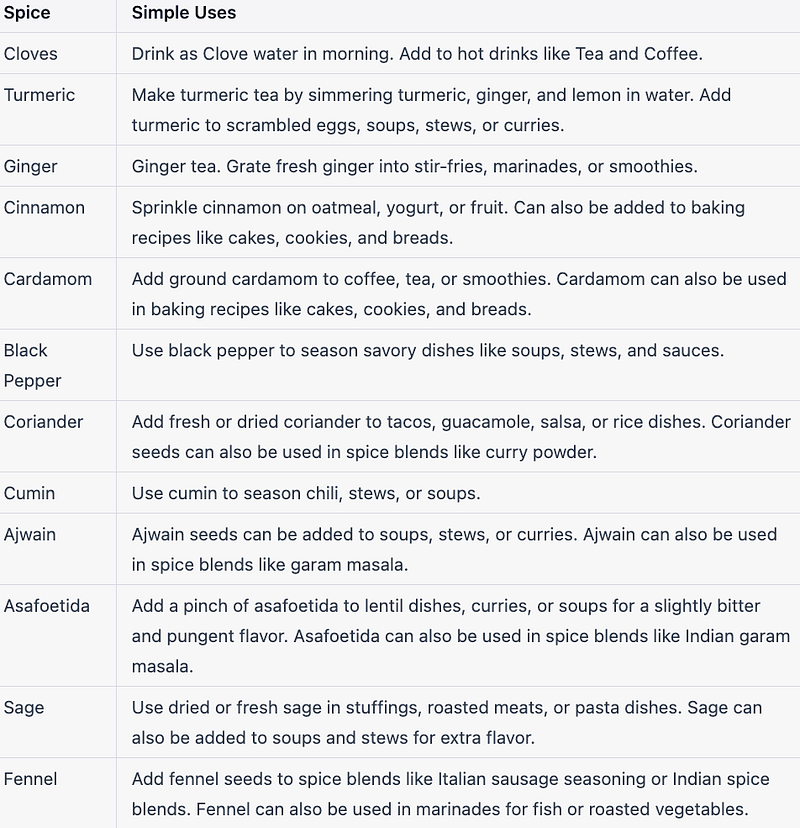
What are some simple way to use these spices?
Note: My intent with my writings is to create health awareness. Please always consult a medical professional before consuming anything. Thank you for reading.


