
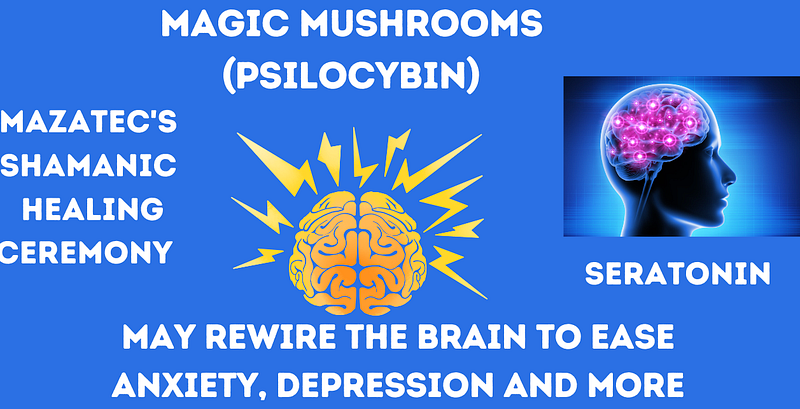
Magic Mushrooms | How psilocybin, the psychedelic in magic mushrooms, may rewire the brain | Treatment- resistant Depression.
What Is A Mushroom?
Mushrooms are fungi. They belong in a kingdom of their own, separate from plants and animals.
How were Magic Mushrooms discovered?
As the story goes, an impoverished family picked what they thought to be small mushrooms, in a London Park and prepared a stew.
Later in 1920s, Wasson (a banker) became interetsed in ethnomycology (historical uses and sociological impact of edible mushrooms). He travelled to Mexico and after a long search finally found someone willing to initiate him in Velada (healing vigils carried out by Mazatec curanderos).
He became (perhaps) the first westerner to intentionally ingest a hallucinogenic fungus and published his experience in a 1957 Life article — “Seeking the Magic Mushroom” This became sensational news at that time!
What is psilocybin?
Psilocybin is an ingredient found in ‘magic mushrooms’ which occurs naturally and can also be created synthetically.
Psilocybin is considered a psychedelic substance, which means it may change a person’s cognition, perception of time and emotions.
Why is there renewed interest in magic mushrooms?
There has been a renewed interest in magic mushrooms due to the promising results of recent clinical studies on the therapeutic effects of psilocybin, the active ingredient in magic mushrooms.
These studies have shown that psilocybin can have rapid and lasting effects on reducing symptoms of depression, anxiety, and PTSD, and has the potential to help individuals with addiction, obsessive-compulsive disorder, and end-of-life anxiety.
Additionally, the growing body of evidence on the safety and efficacy of psilocybin has led to a shift in public perception and a re-evaluation of its potential therapeutic benefits. The increased funding for research and investment in this area has also contributed to the renewed interest in magic mushrooms.
Research on Psilocybin:
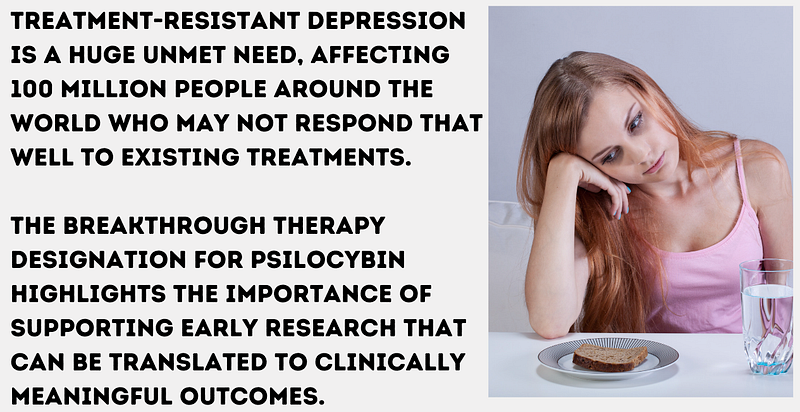
Psilocybin demonstrates great potential in the treatment of cluster headaches, anxiety, anorexia, obsessive-compulsive disorder, and many cases of drug dependence.
How does psilocybin affect our brain?
Psilocybin works by binding to the same receptors in the brain as serotonin — the “feel good” hormone.
Low serotonin levels are common in persons who suffer from mental health conditions such as depression or anxiety or those who have post-traumatic stress disorder, cluster headaches, anorexia or drug misuse.
Serotonin has a role in the regulation of both physiological and psychological states, including sleep and positive emotions like contentment, happiness and optimism.
The majority of patients are treated with medications known as selective serotonin reuptake inhibitors, or SSRIs, which increase the amount of serotonin in brain. However, according to the experts, it may take weeks before any improvement is seen.
Depressed people seem to be continually self-critical, and they keep ruminating, going over and over the same negative, anxious or fearful thoughts
With psychedelics such as psilocybin, scientists can see changes in brain neuron connectivity in the lab “within 30 minutes,” said pharmacologist Brian Roth, a professor of psychiatry and pharmacology at the University of North Carolina at Chapel Hill.
“One of the most interesting things we’ve learned about the classic psychedelics is that they have a dramatic effect on the way brain systems synchronize, or move and groove together,” said Matthew Johnson — Johns Hopkins Medicine.
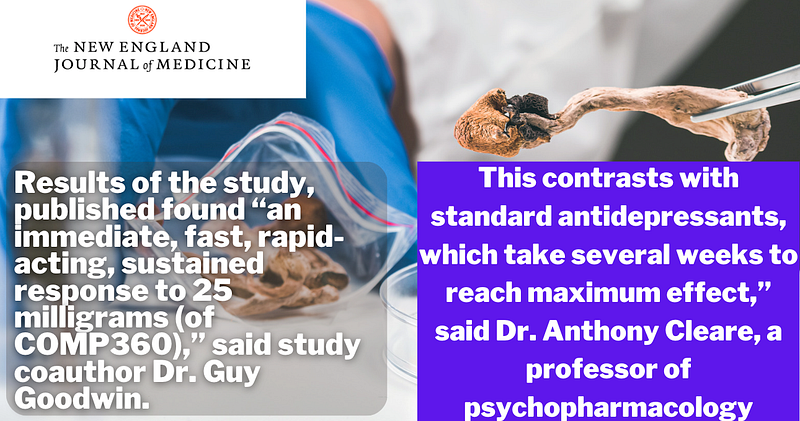
The most popular species of psilocybin mushrooms is Psilocybe cubensis, which is usually taken orally either by eating dried caps and stems or drunk as a tea (1–2.5 grams).
According to experts, while the study’s findings are encouraging, there are still many unanswered problems, and it is uncertain if this medicine would be effective. But there is renewed scientific focus and research continues.
What are the effects of taking magic mushrooms?
The effects of taking magic mushrooms can vary depending on several factors, such as the dose, the specific type of mushroom, and the individual’s state of mind and physical health. However, common effects of magic mushrooms include:
- Hallucinations: Magic mushrooms can cause visual and auditory hallucinations.
- Altered perception of time and reality: Time may seem to slow down or speed up, and familiar objects may appear distorted.
- Emotional changes: Magic mushrooms can cause intense emotions, including euphoria, joy, and excitement, as well as fear, anxiety, and paranoia.
- Changes in thought patterns: Magic mushrooms can cause thoughts to become disorganized and less linear.
- Increased sense of connection to nature and others: Magic mushrooms can cause a feeling of interconnectedness with the natural world and other people.
Note: The effects of magic mushrooms can be unpredictable and may vary greatly from one person to another. Additionally, the use of magic mushrooms can lead to an altered state of consciousness, which can be hazardous for individuals with a history of mental health issues.
How many universities are doing research on magic mushrooms?
There are a number of universities and research institutions around the world that have recently begun studying the therapeutic effects of psilocybin, the active ingredient in magic mushrooms. These include universities such as Imperial College London, John Hopkins University, and New York University, among others. Additionally, there are a growing number of private companies and non-profit organizations that are also conducting research on psilocybin and its potential therapeutic benefits.
Are magic mushrooms illegal?
The legality of magic mushrooms varies by country and jurisdiction. In some places, they are illegal and classified as a controlled substance, while in others, they may be legal for medicinal or spiritual purposes. It is best to check the local laws and regulations regarding magic mushrooms in your specific location.
Note: In USA, Psilocybin and psilocin are listed in Schedule I of the Controlled Substances Act, making it illegal to cultivate or possess psilocybin producing mushrooms for either personal consumption or distribution. However, they can be used for scientific research under tightly-controlled conditions with a special license from the Drug Enforcement Administration.
Note: My intent with my writings is to create health awareness. Please always consult a medical professional before consuming anything. Thank you for reading.