avatarMagenta Qin

Free AI web copilot to create summaries, insights and extended knowledge, download it at here

3883

Abstract

tps://cdn-images-1.readmedium.com/v2/resize:fit:800/0*2rJtI-PcmK1fNs6e"><figcaption>Photo by <a href="https://unsplash.com/@santesson89?utm_source=medium&amp;utm_medium=referral">Andrea De Santis</a> on <a href="https://unsplash.com?utm_source=medium&amp;utm_medium=referral">Unsplash</a></figcaption></figure><h2 id="5516">Three Teachings Mixed into One Tradition: Confucianism, Taoism and Buddhism</h2><p id="ef1c">In addition to Confucianism, let us now delve into the realms of Taoism and Buddhism.</p><p id="954e">Taoism, an indigenous tradition of China, encompasses both philosophical and religious aspects. It revolves around the profound concept of living in harmony with the Tao, <b>often described as the mysterious and impersonal force underlying all reality</b>.</p><p id="bf2d">To depict various facets of the Tao, Taoist teachings employ symbolic representations like the <b>bagua and taijitu</b>. These symbols serve as visual aids, attempting to convey the intricate nature of the Tao.</p><p id="2b35">Furthermore, Taoist principles have influenced the development of diverse practices and rituals, extending beyond the boundaries of the Taoist tradition itself. <b>These encompass meditation, astrology, qigong, feng shui, and internal alchemy, among others.</b></p><p id="d282">A central objective of Taoist practice lies in self-cultivation, which leads to a profound understanding and appreciation of the Tao. Through this journey,<b> individuals aspire to achieve a more harmonious existence, aligning themselves with the fundamental principles of the universe.</b></p><figure id="3b6e"><img src="https://cdn-images-1.readmedium.com/v2/resize:fit:800/0*rFm_8Pbtykqw6HDJ"><figcaption>Photo by <a href="https://unsplash.com/@alschim?utm_source=medium&amp;utm_medium=referral">Alexander Schimmeck</a> on <a href="https://unsplash.com?utm_source=medium&amp;utm_medium=referral">Unsplash</a></figcaption></figure><p id="5094">Buddhism, originated in eastern India, was gradually spread throughout much of Asia via the Silk Road. At its core, Buddhism places great emphasis on attaining liberation from suffering. While a comprehensive exploration of its intricacies lies beyond the scope of this blog, it is worth noting that Buddhism has made significant contributions to the spiritual landscape.</p><p id="a5e0">In China, a fascinating amalgamation occurs, wherein the three teachings find harmony. Confucianism, with its humanistic ideals, coexists alongside Taoism’s naturalistic principles, and Buddhism’s spiritualistic pursuits.</p><p id="aa46"><b>It is often said that every Chinese individual embodies elements of all three teachings at different stages of their lives.</b></p><p id="97be"><b>As one advances in age and faces challenges, particularly in sickness or failure, a Taoist perspective may take precedence.</b></p><p id="2950"><b>During youth, good health, and prosperity, one tends to adopt a Confucianist mindset.</b></p><p id="cd00"><b>Finally, in times of seeking solace and spiritual comfort, a Buddhist inclination may emerge.</b></p><figure id="a4c2"><img src="https://cdn-images-1.readmedium.com/v2/resize:fit:800/0*AvjM4jMXSdOIPCrT"><figcaption>Photo by <a href="https://unsplash.com/@lahirusupun?utm_source=medium&amp;utm_medium=referral">Lahiru Supunchandra</a> on <a href="https://unsplash.com?utm_source=medium&amp;utm_medium=referral">Unsplash</a></figcaption></figure><h1 id="54e1">Atheism</h1><p id="c30e">Unlike Western countries, China is often characterized as a <b>non-religious nation.</b> The Chinese people, in general, tend to place less emphasis on distinguishing between religious and philosophical schools of thought. Instead, they hold a more simplistic belief that deities embody principles of justice and safeguard their interests.</p><p id="9989">This perspective reflects a unique cultural outlook, where the distinc

Options

tion between religion and philosophy may not hold the same significance as in Western societies. Rather than engaging in intricate theological debates, the Chinese people find solace in the notion that deities serve as guardians, ensuring fairness and protecting their well-being.</p><h1 id="200c">Introversion</h1><p id="2113">Introversion can be understood as a personality trait characterized by a preference for solitude, introspection, and a reduced need for extensive social interaction. Interestingly, this concept can also be applied to describe the collective personality of a nation.</p><p id="ea6e">In the context of Chinese history, there existed an initial belief in the concept of <b>“tian xia,” which encompassed an indefinite perimeter. As a result, the cultures found at the borders were gradually absorbed inwardly, influenced by the powerful impact of Chinese culture.</b></p><p id="fa2d">In contrast, <b>Western culture tended to spread outward from a central point.</b> It diffused through various means, including religion, colonization, and military might. This expansionist approach stood in contrast to the inward-looking nature of Chinese culture, which primarily relied on internal forces for self-development.</p><p id="727f"><b>Chinese culture, with its inclusive nature, allowed for the integration of diverse ethnic groups within its borders. On the other hand, Western societies often engaged in numerous wars, driven by the pursuit of commercial benefits.</b></p><p id="628c">These contrasting approaches highlight the divergent paths taken by Chinese and Western cultures in terms of their outlook, development, and how they interact with the world.</p><figure id="7f56"><img src="https://cdn-images-1.readmedium.com/v2/resize:fit:800/0*x-kiureyA-g-ncyJ"><figcaption>Photo by <a href="https://unsplash.com/@ditchflower?utm_source=medium&amp;utm_medium=referral">rachel</a> on <a href="https://unsplash.com?utm_source=medium&amp;utm_medium=referral">Unsplash</a></figcaption></figure><h1 id="407a">Peace and Doctrine of the Mean</h1><p id="36e3">Peace and the Doctrine of the Mean are both from Confucianism. They emphasize avoiding conflicts and violence, and the pursuit of balance and harmony in all aspects of life.</p><p id="46e2">In the context of the Doctrine of the Mean, <b>peace is seen as the result of cultivating virtues and maintaining a harmonious equilibrium.</b> It emphasizes the importance of <b>moderation, avoiding extremes, and finding the middle way in one’s thoughts, actions, and relationships.</b></p><p id="809f">To achieve peace, individuals are encouraged to practice self-reflection and self-discipline. They should strive to cultivate virtues such as benevolence, righteousness, wisdom, and sincerity while avoiding excessive behavior or attitudes. By finding a balance between different qualities and virtues, individuals can attain inner peace and contribute to the society.</p><figure id="5b13"><img src="https://cdn-images-1.readmedium.com/v2/resize:fit:800/0*SXUyfBYYwDAwkQdD"><figcaption>Photo by <a href="https://unsplash.com/@tjholowaychuk?utm_source=medium&amp;utm_medium=referral">Tj Holowaychuk</a> on <a href="https://unsplash.com?utm_source=medium&amp;utm_medium=referral">Unsplash</a></figcaption></figure><h1 id="ad9a">Recap</h1><p id="6f9a">Historically, China is unified by Qin Dynasty. This unification greatly influenced both political ideology and everyday life.</p><p id="517c">While Confucianism was officially promoted, the philosophies of Taoism and Buddhism also exerted significant influence on Chinese culture. These three teachings shaped the Chinese worldview, fostering an inward-looking perspective, promoting moderation in behavior, and emphasizing the pursuit of peace.</p><p id="3ab3">In the next part, I will illustrate what the Western culture looks like overall.</p></article></body>

Magenta’s semi-retirement life starts: comparison between Chinese and Western culture(Part 2)

Even though feudal autocracy has been overthrown, I still perceive its lingering influence in modern China. The loyalty once reserved for the emperor has transformed into a form of reverence for the monarchy.

In the previous part, we talked about the necessity of cross-cultural comparison and the history of comparison between Chinese and Western culture in China.

In this part, I will illustrate the traditional Chinese cultural characteristics in the following sections:

  • Oneness
  • Atheism
  • Introversion
  • Peace and Doctrine of the Mean
Photo by Annie Spratt on Unsplash

Oneness

One Territory, One Ideology and One Politics

In 221 BC, Qin Dynasty unified China.This momentous event brought about the standardization of weights, measures, writing scripts, and even modes of thinking. Along with this, Confucian books and Confucian Scholars were buried. Since then, supremacy of monarchy and Legalism has been rooted into every one’s mind.
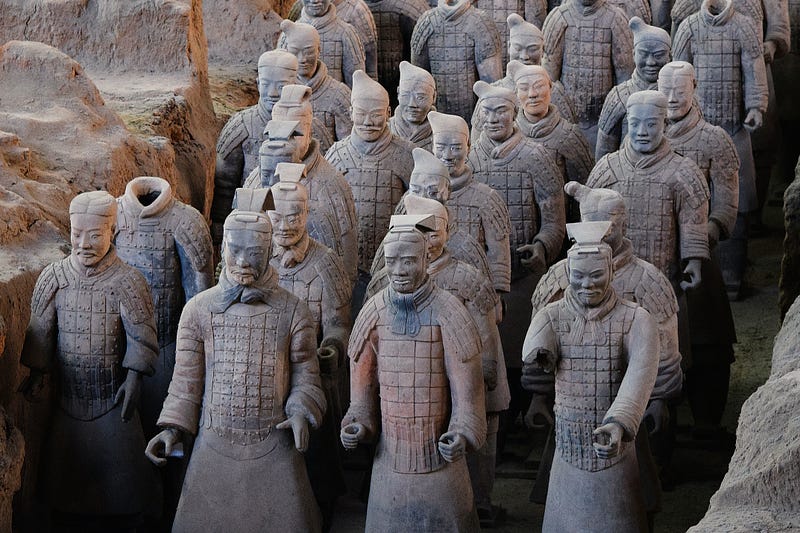
Photo by Aaron Greenwood on Unsplash

Nevertheless, Qin Dynasty quickly declined under the terror of Qin’s laws and absolute monarchy. It was soon replaced by the Han Dynasty.

However, the arrival of the Han Dynasty did not bring about a significant alleviation of terror. In fact, under the reign of Emperor Wu, Confucianism was established as the official ideology of the nation, while other philosophical schools such as Taoism and Legalism were labeled as heretical.

Since then, Confucianism had been the mainstream of Chinese philosophy for more than 2000 years. It played a crucial role in unifying both ideology and the political system through the imperial examination system, which served as the sole pathway to political success for young men.
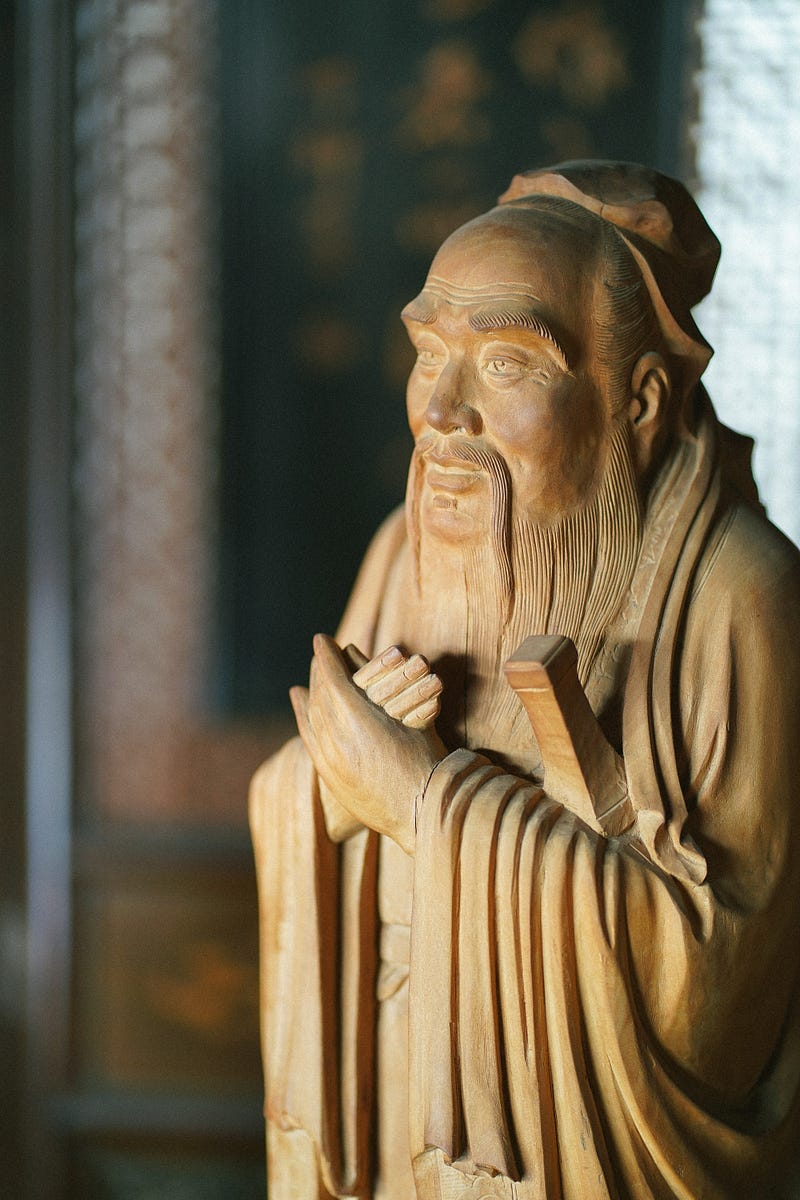
Photo by Yosuke Ota on Unsplash

Confucianism places great emphasis on self-cultivation, prioritizing family values, fostering tolerance, and promoting loyalty to the emperor.

Even though feudal autocracy has been overthrown, I still perceive its lingering influence in modern China. The loyalty once reserved for the emperor has transformed into a form of reverence for the monarchy. This phenomenon extends beyond ancient times and persists in contemporary China.

During my time in school and in my professional environment, I have observed that most of my classmates and colleagues exhibit a deep reverence towards their teachers or team leaders, akin to the way civilians revered the emperor in ancient times. They hesitate to question or doubt the words of their teachers or leaders. In their minds, obedience takes precedence above all else.
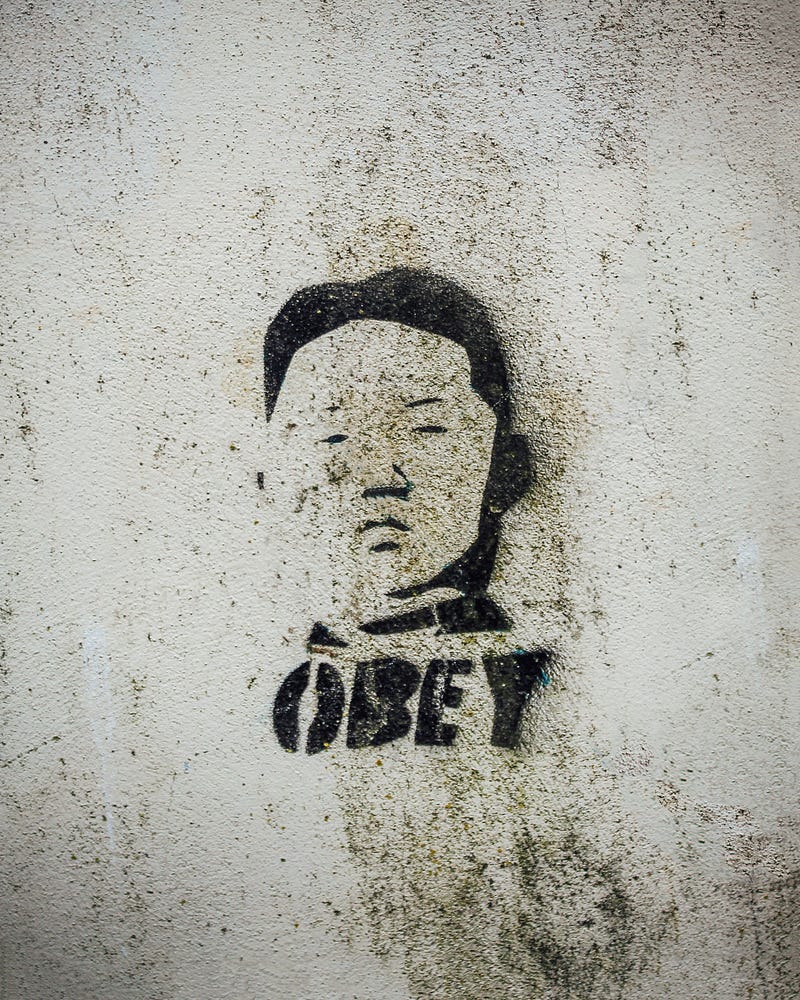
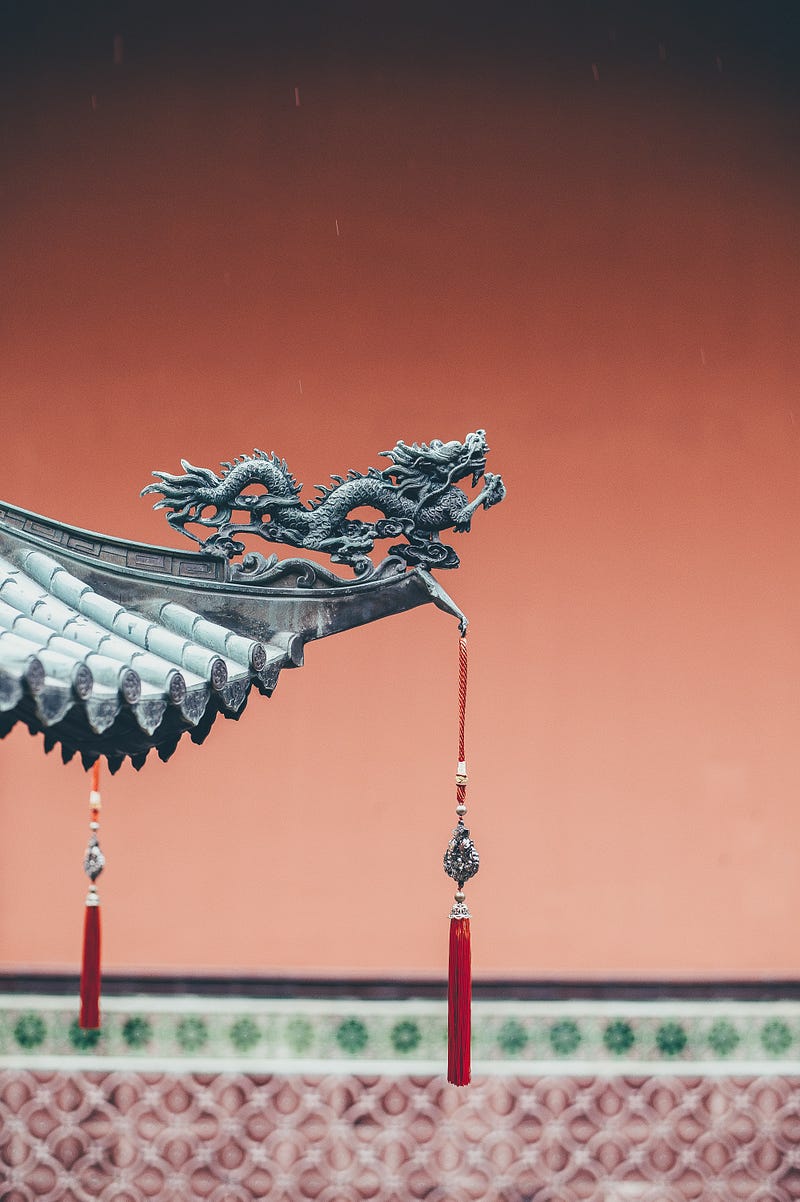
Photo by Andrea De Santis on Unsplash

Three Teachings Mixed into One Tradition: Confucianism, Taoism and Buddhism

In addition to Confucianism, let us now delve into the realms of Taoism and Buddhism.

Taoism, an indigenous tradition of China, encompasses both philosophical and religious aspects. It revolves around the profound concept of living in harmony with the Tao, often described as the mysterious and impersonal force underlying all reality.

To depict various facets of the Tao, Taoist teachings employ symbolic representations like the bagua and taijitu. These symbols serve as visual aids, attempting to convey the intricate nature of the Tao.

Furthermore, Taoist principles have influenced the development of diverse practices and rituals, extending beyond the boundaries of the Taoist tradition itself. These encompass meditation, astrology, qigong, feng shui, and internal alchemy, among others.

A central objective of Taoist practice lies in self-cultivation, which leads to a profound understanding and appreciation of the Tao. Through this journey, individuals aspire to achieve a more harmonious existence, aligning themselves with the fundamental principles of the universe.
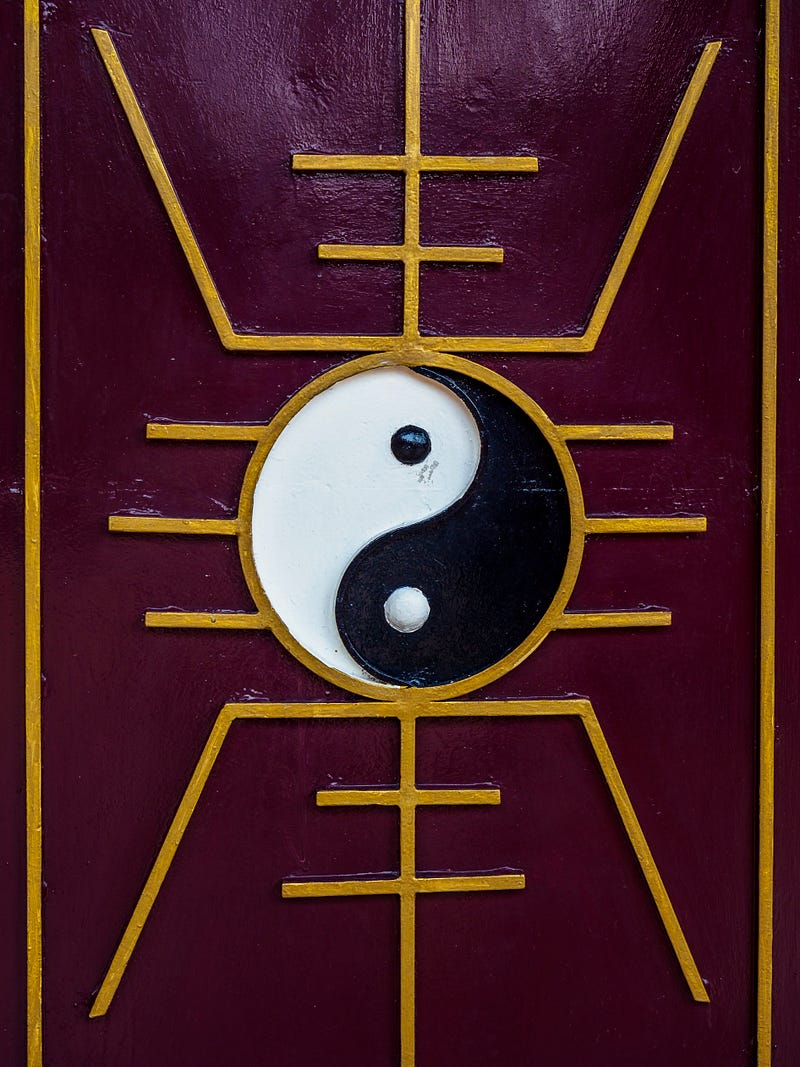
Photo by Alexander Schimmeck on Unsplash

Buddhism, originated in eastern India, was gradually spread throughout much of Asia via the Silk Road. At its core, Buddhism places great emphasis on attaining liberation from suffering. While a comprehensive exploration of its intricacies lies beyond the scope of this blog, it is worth noting that Buddhism has made significant contributions to the spiritual landscape.

In China, a fascinating amalgamation occurs, wherein the three teachings find harmony. Confucianism, with its humanistic ideals, coexists alongside Taoism’s naturalistic principles, and Buddhism’s spiritualistic pursuits.

It is often said that every Chinese individual embodies elements of all three teachings at different stages of their lives.

As one advances in age and faces challenges, particularly in sickness or failure, a Taoist perspective may take precedence.

During youth, good health, and prosperity, one tends to adopt a Confucianist mindset.

Finally, in times of seeking solace and spiritual comfort, a Buddhist inclination may emerge.
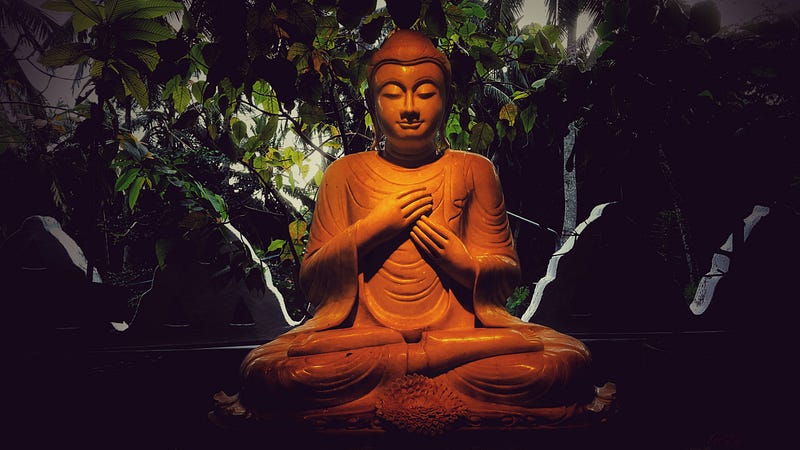
Photo by Lahiru Supunchandra on Unsplash

Atheism

Unlike Western countries, China is often characterized as a non-religious nation. The Chinese people, in general, tend to place less emphasis on distinguishing between religious and philosophical schools of thought. Instead, they hold a more simplistic belief that deities embody principles of justice and safeguard their interests.

This perspective reflects a unique cultural outlook, where the distinction between religion and philosophy may not hold the same significance as in Western societies. Rather than engaging in intricate theological debates, the Chinese people find solace in the notion that deities serve as guardians, ensuring fairness and protecting their well-being.

Introversion

Introversion can be understood as a personality trait characterized by a preference for solitude, introspection, and a reduced need for extensive social interaction. Interestingly, this concept can also be applied to describe the collective personality of a nation.

In the context of Chinese history, there existed an initial belief in the concept of “tian xia,” which encompassed an indefinite perimeter. As a result, the cultures found at the borders were gradually absorbed inwardly, influenced by the powerful impact of Chinese culture.

In contrast, Western culture tended to spread outward from a central point. It diffused through various means, including religion, colonization, and military might. This expansionist approach stood in contrast to the inward-looking nature of Chinese culture, which primarily relied on internal forces for self-development.

Chinese culture, with its inclusive nature, allowed for the integration of diverse ethnic groups within its borders. On the other hand, Western societies often engaged in numerous wars, driven by the pursuit of commercial benefits.

These contrasting approaches highlight the divergent paths taken by Chinese and Western cultures in terms of their outlook, development, and how they interact with the world.

Photo by rachel on Unsplash

Peace and Doctrine of the Mean

Peace and the Doctrine of the Mean are both from Confucianism. They emphasize avoiding conflicts and violence, and the pursuit of balance and harmony in all aspects of life.

In the context of the Doctrine of the Mean, peace is seen as the result of cultivating virtues and maintaining a harmonious equilibrium. It emphasizes the importance of moderation, avoiding extremes, and finding the middle way in one’s thoughts, actions, and relationships.

To achieve peace, individuals are encouraged to practice self-reflection and self-discipline. They should strive to cultivate virtues such as benevolence, righteousness, wisdom, and sincerity while avoiding excessive behavior or attitudes. By finding a balance between different qualities and virtues, individuals can attain inner peace and contribute to the society.

Photo by Tj Holowaychuk on Unsplash

Recap

Historically, China is unified by Qin Dynasty. This unification greatly influenced both political ideology and everyday life.

While Confucianism was officially promoted, the philosophies of Taoism and Buddhism also exerted significant influence on Chinese culture. These three teachings shaped the Chinese worldview, fostering an inward-looking perspective, promoting moderation in behavior, and emphasizing the pursuit of peace.

In the next part, I will illustrate what the Western culture looks like overall.

China
Chinese
Culture
Philosophy
History
Recommended from ReadMedium