
POETRY | GREEK MYTHOLOGY
Made in Darkness
Poetry from Myth
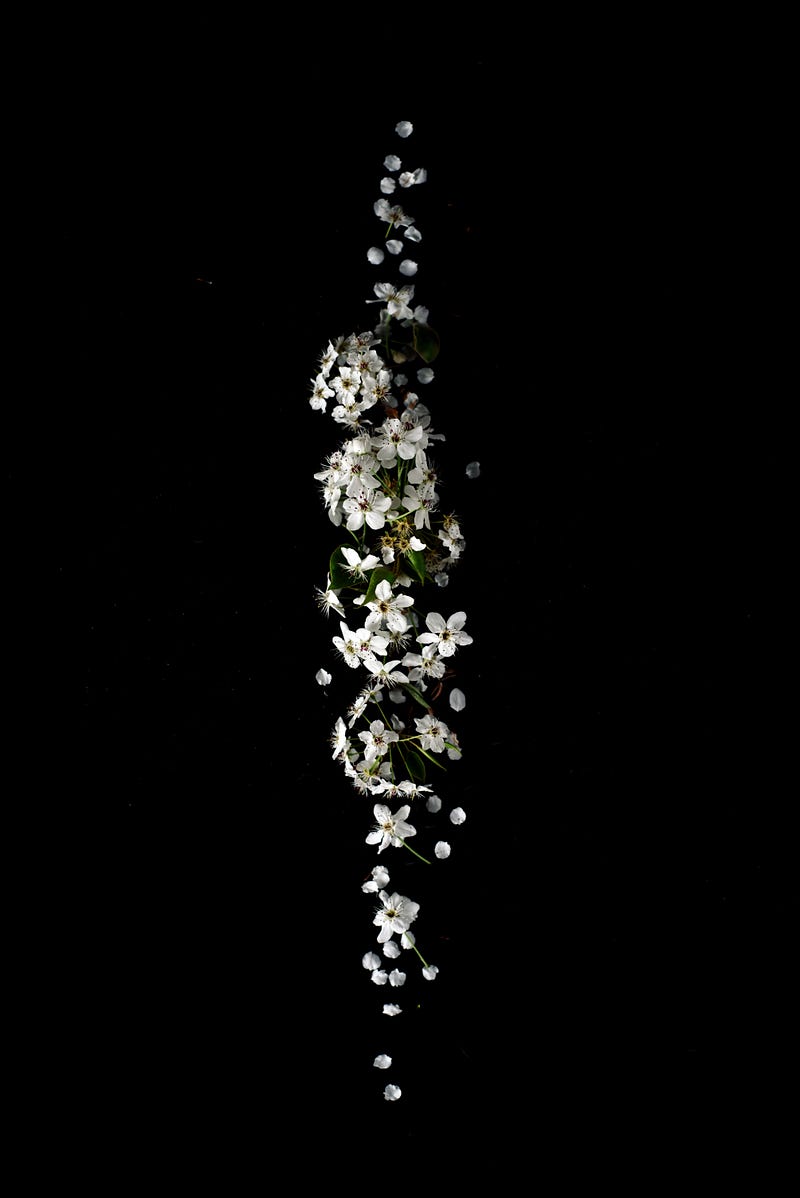
Her affinity with sunlight does not offer her protection; nor does the dandelion pollen on her cheek mark her as exempt from a deep call, beckoning beneath her grass-kissed footprints on the hillside
They say she was taken against her will, yet perhaps she yielded gladly, Pale blossoms tumbling from her arms to receive a darker pleasure Hades’ chariot, erupting from earth a strange subterranean bloom
Her laughter claimed, her light eclipsed by a deeper womb than that which bore her there, fed on darkness in the form of seeds, Seeds of scarlet, seeds of unborn desires No longer who she was, She cannot return to only needing sunlight
Myths and fairytales have beguiled my imagination ever since I was a child. Some, like the Greek myth of Persephone and her abduction down into the Underworld by Hades resonate more deeply, asking me to return to her story again and again. I first read a version of the myth when I was about five years old. Over the decades, she keeps dropping by for cups of tea, reflecting different symbolic offerings, insights and questions to me; reflecting back my own shifts, my own deepenings. I’m obsessed with all things to do with her myth. Pomegranates. The concept of the Underworld and its symbolic meanings. The question of the true nature of her abduction. What it felt like for her. And how her time in the Underworld … changed her. The transformation from virgin, Goddess of Spring to wife and Queen of the Underworld.
For where there is transformation, there is always a story.
Lately, I’ve become intrigued by the potential for myth and fairytale to interrogate, subvert and re-imagine the feminine experience. Through a feminist lens, the threads of patriarchy and power can be unpicked, women’s silence and compliance within these constructs can be replaced with eloquence and agency, and new narratives can be unearthed, placing the women in these stories centre-stage. As writer Ursula Le Guin observes:
“In the last thirty years or so, as women have taken to writing as women, not as honorary or artificial men, it’s become clear that they see a rather different world, and describe it by rather different means. The most startling difference is that men aren’t at the centre of it …”
“Once upon a time” is not just a time long ago, but also today or tomorrow. As women writers, we have the ability to travel backwards and forwards through myth and fairytale: to explore possibilities, mine for new meanings, re-write our futures.
Thank you to Christina M. Ward for welcoming me to POM — and I look forward to reading, sharing and contributing more poetry.
Melissa Coffey is an Australian writer, poet & editor. Her print publications include memoir and creative non-fiction essays. Her short stories and poetry are published in numerous international and Australian anthologies (sometimes incognito), and explore desire, female sexuality and gender politics.
Follow Melissa Coffey for thoughtful essays and provocative poetry & fiction. Not a Medium member? Join with my referral link & a small portion of your subscription directly supports my work as a writer. Access all my stories & so much more. Find your voice & others you’ll want to hear.
More on Reimagined Mythology:


