
Machines — 1
Emotional Intelligence, Consciousness, Soul, & Sentience
In this series of blogs we will begin with a basic understanding of what machines are, and then move on to understand what the terms Emotional Intelligence, consciousnes, soul, and sentience mean, when it comes to machines.
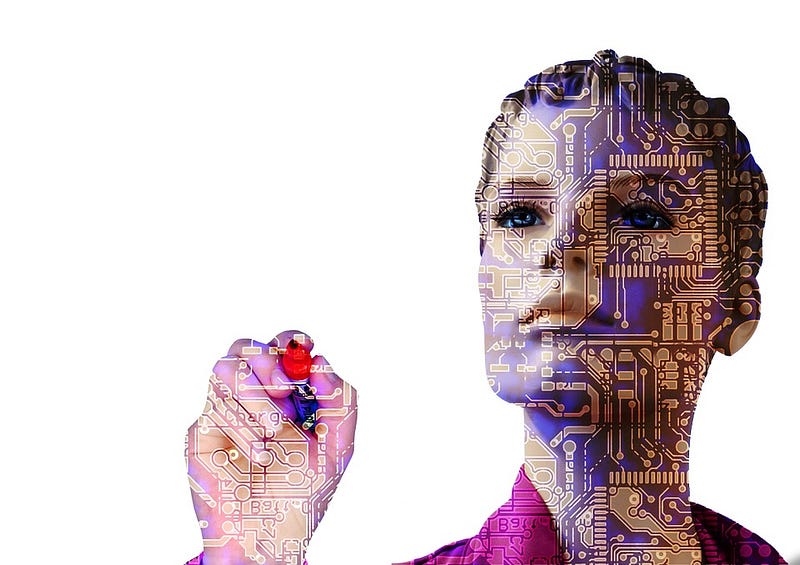
So, let us jump straight in, and try to tackle these complex terms one by one:
Emotional Intelligence refers to the ability of individuals to identify, comprehend, and regulate their emotions and that of others. EI has been linked to improved communication, teamwork, and leadership.
According to best selling author, historian, and world’s leading public intellectual — Yuval Noah Harari, Homo Sapiens won over Neanderthals because of higher EQ, rather than higher IQ or higher physical strength.
Another example which can explain this case can be understood by observing the various growth paths or lack of growth, of a group of graduate trainees in acertain company, over a few decades. All fresh graduate trainees in a company like Google are likely to have similar IQs, which is why they were selected in that company in the first place. However, after a few years only a few of them will climb the ladder and go to higher positions. That is because they have similar IQs but very different EQs.
Now let us take a step back and understand what do we mean by emotions. Emotions are a feeling deriving from one’s circumstances, mood, or relationships with others.
This means that to get machines to be emotional all that one needs is more better ways of supplying inputs to the machine and more complex coding, but it is possible. The ability of machines to develop emotions, like ‘Klara’ in Kazuo Ishiguro’s ‘Klara and the Sun’ will enable us to diminish boundaries between humans and machines, hence helping machines to finally pass the Turing Test.
Lets us not forget that a subjective input is just a complex case of many objective inputs, and qualitative is just a complex case of what we identify as quantitative. So it is all about better inputs, better coding, and higher processing speeds.
Several studies focus on creating machines that can recognise basic emotions such as happiness, anger, sadness, fear, and disgust, and respond appropriately. For instance a robot equipped with facial recognition technology can detect emotions in human faces and adjust its behaviour accordingly. Indeed, such machines rely on machine learning algoriths that have been trained on vast amounts of data to recognise patterns and determine which facial experessions correspond to which emotions.
Besides, researchers are working on machines that can develop EI through experience and interaction. The goal is to enable machines to understand the context of human emotions and react appropriately. Try it with the Amazon Alexa or Google Mini, in your home if you don’t believe me.
Such machines will not only recognise basic emotions, but they will also be able to infer more complex emotions like jealousy, compassion, resentment, and empathy. These machines will essentially possess emotional reasoning capabilities.
The ethical side of things: Empathising with the technoskeptics and technophobes, I can easily understand their argument about these EI robots being a threat to humans and their pets.
However, placing control and choice in the hands of the human owner of such robots can take away the fear.
For instance:
- If you have the means to own and have a real dog as a pet, then by all means do so, but then if you do not because of any reason then the option of having a robot pet dog might not be that bad. Over here please remember that the muscles, bones, skin and fur could also eventually be replicated just like the software — in this case the brain of the dog.
- If you have the time, means and resources to visit your parents in their old-home everyday, then nothing could ever replace that, but if not, then it is better if you had the choice of buying them a robot friend with high EI, than them remaining lonely.
- Same could be for patients in a hospital — an EI robot friend that talks to you and listens to you, empathises with you, and is compassionate with you, when fellow humans are either too busy, or not compassionate enough, or their is just a shortage of human staff in the hospital!
When we consider the above scenarios, it is quite easy to see that EI robots are not the villians that they are painted to be in most of literature and movies. Infact they could be better than the average human. It all depends on who is programming those robots.
In the next blog Machines — 2, we will discuss about Consciousness in machines.
Influences:
- ‘Klara and the Sun’ by Kazuo Ishiguro
- ‘Homo Deus’ by Yuval Noah Harari
- ‘Sex Robots and Vegan Meat’ by Jenny Kleeman