Summary
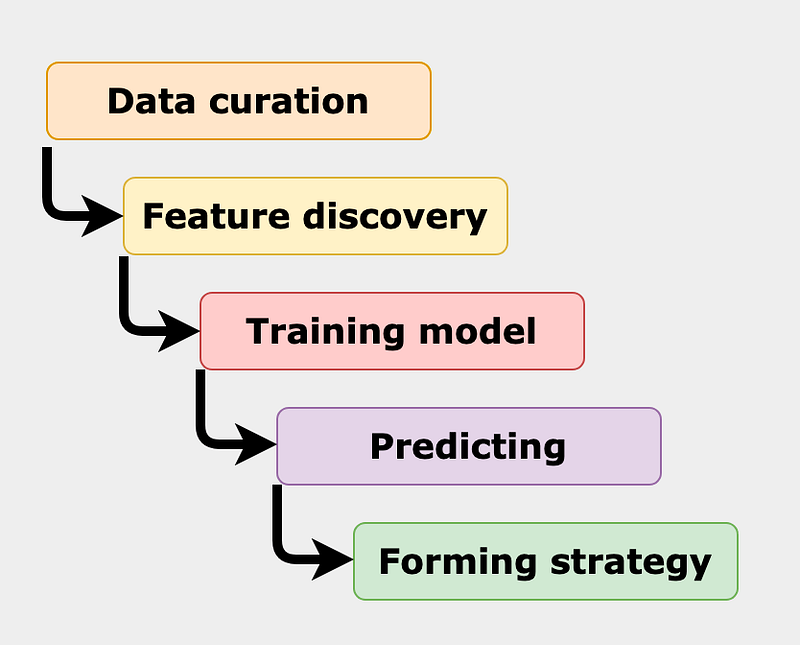
This content provides a guide on building a machine learning boilerplate for algorithmic trading, covering steps such as data curating, feature discovery, model training, prediction, and strategy formation.
Abstract
The provided content is a follow-up to a previous post on machine learning in quantitative trading. It outlines the process of creating a machine learning boilerplate for algorithmic trading, which includes five main steps: data curating, feature discovery and analysis, model training, prediction of expected variables, and strategy formation with backtesting. The article emphasizes the importance of understanding and implementing this workflow for successful machine learning applications in algorithmic trading.
Opinions
- The article assumes that readers have prior knowledge of machine learning concepts in quantitative trading.
- The importance of each step in the machine learning workflow is highlighted.
- The article encourages readers to remember the workflow for effective machine learning applications in algorithmic trading.
- The article suggests that following the outlined steps will lead to successful machine learning boilerplate creation.
- The article does not provide in-depth details on each step but offers a general overview of the process.
- The article implies that understanding and implementing the workflow is crucial for mastering machine learning in algorithmic trading.
- The article recommends using a specific AI service for cost-effective performance and functions similar to ChatGPT Plus (GPT-4).