
Machine Learning Models To Improve Birth Delivery Choices and Outcomes
Here’s The Problem
Society does a poor job of preparing women and families for pregnancy and birth. We live in a censored, clean field of view and anyone who knows about birth knows that this is problematic when things start to get real. IYKYK.
As a result of my own experiences, I have a goal to ensure that the birth process is destigmatized, embraced and that women are properly supported through it. As a consequence of our censored view of the human experience, it may be very shocking to see what your body is capable of (but instead it should be celebrated).
A quick aside — I encourage you to research the fundus. This is a beautiful mechanism that is certainly not talked about enough. In short, it is the muscle that thickens during labour and is used to push baby earthside; its thickening is as much the purpose of contractions as the opening of the birth canal. When contractions are put in this context, it makes women feel powerful and in control versus succumbing to submission.
“How much more strength might [women] have if they have an accurate picture?” — Carla Hartley, birth expert
So here’s the challenge— the birth process for women has a very personal and deep connection to their sense of identity, especially in the first few months of raising their new baby. So I wish it were as easy as accepting that so long as your baby arrived and is healthy, it really didn’t matter how the baby got here. But if you know a mom, especially a new mom, you know it is not so easy to forget. If the delivery is traumatizing, it has a profound impact on their emotional well-being especially in those early days when there is already so much stacked against them. The ‘fourth trimester is hard enough, especially with the breakdown of communal living and raising of children, especially during COVID. So it is my belief, that if we can improve the birth process by means that are available to us, we can enable and empower these women to get off on the right foot and build them up for success in whatever ways possible.
If you or anyone you know is feeling overwhelmed from pregnancy, birth or related loss please check out this resource to get started in finding support.
Here’s The Opportunity
Maybe if we have the right tools that assure the baby and mother are safe and healthy, we can allow for more room for women to experience the birth at the rate her body is calling for, instead of intervening. I am curious about how this area of medicine and life could be improved by adding additional ML/AI tools.
ML/AI can give additional insights into what is normal or what may be a leading indicator that something could go wrong during labour. Using several features (factors in the woman’s life and health history), the model could predict a probability that an intervention would be required based on previous data points. Rather than using a ‘hard coded’ average or an individual’s prior experiences/knowledge, the model would provide tailored insight into the real-time patient and their specific features.
This tool could allow doctors and midwives to better assess their patients and therefore refrain from interventions longer — OR, and as equally important, decide on the intervention much sooner in the process rather than continuing the trauma the mother endures.
Literature Review
Focusing solely on cesarean sections/deliveries (c-sections), I am curious if there is an opportunity to avoid using them or to use them earlier in the process if necessary, based on what a model predicts. There has been some study done in the area of ML/AI and birth already, which my article seeks to summarize below.
Enabling pregnant women and their physicians to make informed medication decisions using artificial intelligence by Lena Davidson & Mary Regina Boland focuses on identifying 3 areas where AI methods could be used to improve the understanding of the pharmacological effects of pregnancy. This study is a literature review but scopes areas of future study very well. They found that AI has been applied to address pharmacological exposures during pregnancy and this includes the entire pregnancy process: preconception, prenatal, perinatal, and postnatal health concerns. They identified future focus areas for AI application to understand the pharmacological effects of pregnancy (1. obtaining sound and reliable data from clinical records, 2. designing optimized animal experiments to validate specific hypotheses, 3. implementing decision support systems that inform decision-making). They concluded that applications of AI to other aspects of pregnancy, maternal, and fetal health can inform the necessary research to delve more deeply into how pharmacologics affect pregnancy.
Predicting the Use of Labor Induction Intervention by Clifford Silver Tarimo et al., looked at a machine learning approach for predicting the use of induction. They studied over 21,000 deliveries where 41% were induced. They found that Random Forest exhibited the best performance in terms of accuracy (0.75) and AUC-ROC (0.75) in predicting the use of labor induction intervention in pregnant women. The features that were found to have the most importance were: parity (defined as the number of times that she has given birth to a fetus, alive or not, age of 24 weeks or more), maternal age, body mass index, gestational age, and birth weight as predictors for induction. The findings of this study were that the ML method offered better performance compared to the conventional Logistic Regression model in predicting the use of induction.
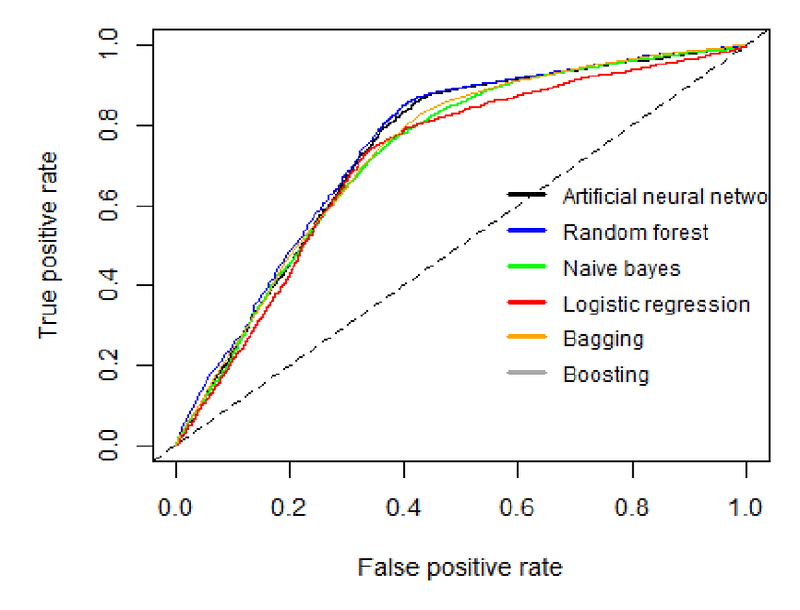
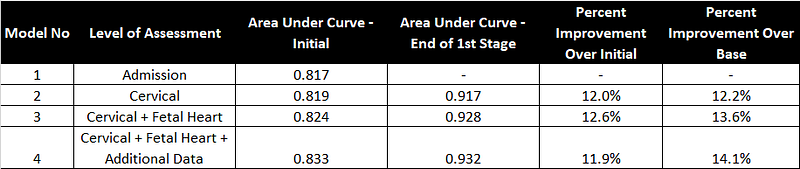
Real-time data analysis using a machine learning model significantly improves prediction of successful vaginal deliveries by Joshua Guedalia et al., used real-time data from the first stage of labour in an ML model and found that this significantly improves the prediction of successful vaginal deliveries. They studied 94,480 deliveries comprised of 180 million data points during the first stage of labour and used 4 different levels of assessment for accuracy. They found that the use of real-time assessment improved the model over the baseline of admission data (12.2% on average) and this study demonstrates that using vitals as a feature of the model can provide better results in predicting the success of a delivery vaginally.
Prediction of vaginal birth after cesarean deliveries using machine learning by Michal Lipschuetz et al., used machine learning to predict whether a vaginal delivery would be successful after a c-section (VBAC). The rationale of this study was to apply an ML algorithm to assign a personalized risk score to help in decision-making and contribute to a reduction in cesarean delivery rates. The data set included 9,888 deliveries with 1 previous cesarean delivery, where a subset of 7,473 deliveries attempted vaginal delivery with a success rate of 88%. Based on this data a machine-learning-based model was developed to predict when a vaginal delivery would be successful.
A predictive model was built which found that when features that are available during the first prenatal visit are used, the model returned an AUC-ROC score of 0.745 which increased to 0.793 when features that are available in proximity to the delivery process were added.
A later classification model was built with a risk stratification tool to classify deliveries into Low, Medium, and High-risk groups for the need for repeat cesarean delivery. The results in the table below show overwhelmingly that a VBAC can be successful for a Low and Medium risk mother.
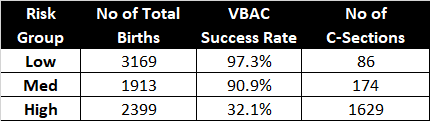
Application of the model to those who elected a repeat cesarean delivery (2,145) demonstrated that 31% (665) of these mothers would have been allocated to the Low and Medium-risk groups had a trial of labour been attempted.
This is not an exhaustive literature review however these studies demonstrate the ability to apply ML/AI to improve outcomes for mothers when data is available. The takeaway is that we can use ML to predict outcomes of delivery; the next step could be to use AI in a predictive way for future births.
If I Ever Decided to do a PhD
Based on the above literature review, I think we could continue to grow the application of ML/AI in the space of pregnancy and childbirth, given the right access to large datasets.
When daydreaming about data science projects, if I could I would like to build a Classification Model to predict whether or not a mother would expect to need a cesarean section to successfully deliver their child that incorporates additional features such as socio-economic and emotional wellness factors such as:
- Does the mother meditate during pregnancy?
- What are the mother’s feelings during pregnancy?
- What is her support system like?
- What is her mindset towards birth?
- Is she in a birthing support group?
- Who is her care provider? (midwife, birthing center, family doctor, OBGYN)
- Vitals during pregnancy
- Vitals during stages of delivery
It would be interesting to predict at what point the stage of labour the features predict the outcome to be cesarean delivery. For instance, if all variables lead to ‘Yes’ cesarean at the 1st Stage already, then the doctors and midwives could cease their attempts at vaginal delivery much sooner than they might otherwise (assuming that the mother and baby are not in distress already and it is the more minor features that are starting to impact the mode of delivery). Additionally, the model may be able to prolong the decision for mothers who truly do not want a cesarean delivery in the hopes that marginal features may improve with more time/different approaches.
The outcomes of this study would intend to shine a light on the bigger societal questions and promoting empowered self-advocation, especially during pregnancy. This model could be used to empower the mindset (assuage fears of something going wrong) that women are built for birthing should they be enabled to embrace the process. If we know that medically speaking everything is okay, can we get out of our own way and believe that they can do it?
TL;DR
- Pregnancy and Birth are glorious processes of the human body.
- Society has blinded us to the raw, natural process of birth and it is stigmatized. This sets women up for a rude awakening and they are not enabled to endure the processes. Especially first-time mothers have no idea what they are getting into — and have no line of sight to the fact that they can do it. We thus view these processes as ‘something wrong’ because IYKYK it sure doesn’t feel ‘right’.
- ML/AI can give additional insights into what is normal or what may be a leading indicator that something could go wrong during labour. This tool could allow doctors and midwives to tailor insight into the real-time patient and their specific features. The outcome would be less trauma to the mother and baby and a better chance at good emotional well-being in the early stages of raising a newborn (i.e. the ‘fourth trimester).
Conclusion
Anything we can do to set the mother up for success, both physically in recovery and also mentally for the harder part of actually raising a newborn, deserves merit and attention. The more we have female voices at the table, especially concerning creating technology, the more we will feel advocated for and the better the solutions ought to be.
Like many medical issues, we are compared to averages and those might be taken as absolute truth. Coupled with the fact that doctors are strapped for time and energy, decisions get made that maybe could be different. An ML/AI model could be a tool to help empower women in their “informed consent” journeys.
First things first — more women’s voices at the tables asking questions. Especially when it comes to women’s health.
What problems do you see in your world? Which ones are you passionate about? What would the world look like if those problems were improved?
I acknowledge that this is not everyone’s experience and that I am using large ‘catchalls’ in my description of the issues here. This article does not seek to speak for everyone nor is it intended to be a thorough examination. This article seeks to highlight some opportunities that currently exist and I invite others to contribute to this space by writing articles based on their own experiences.