
Lying To Yourself vs. Lying To Yourself
Sometimes the science has you scratching your head

With the well-deserved reputation that deception has earned one would think that deceiving yourself would automatically be a bad thing through and through. However, psychologists say it is not so black and white.
In the red corner:

Self-deception, as psychologists call it, is touted to confer certain benefits according to a growing body of research.
Apparently buying into our own b.s. that we’re more talented or intelligent than we really are can also hoodwink others into thinking the same thing. All thanks to the confidence with which we then present ourselves.
Researchers also believe that while the tendency to self-deceive is inborn in some, others develop it as a coping mechanism.
However, in all fairness, the men of science do acknowledge it can also get ugly as self-deception tends to turn into a nasty, out-of-control habit made worse by the recognition the deceiver gets for his imagined qualities.
In the blue corner:

The long-term physical and emotional toll extracted by the lying lifestyle can’t be easily dismissed.
Even though you’re fully invested you’re never really able to shake the feeling deep down that you are a “fake”. To escape the truth, you’ll constantly have to justify bad behavior- yours or someone else’s.
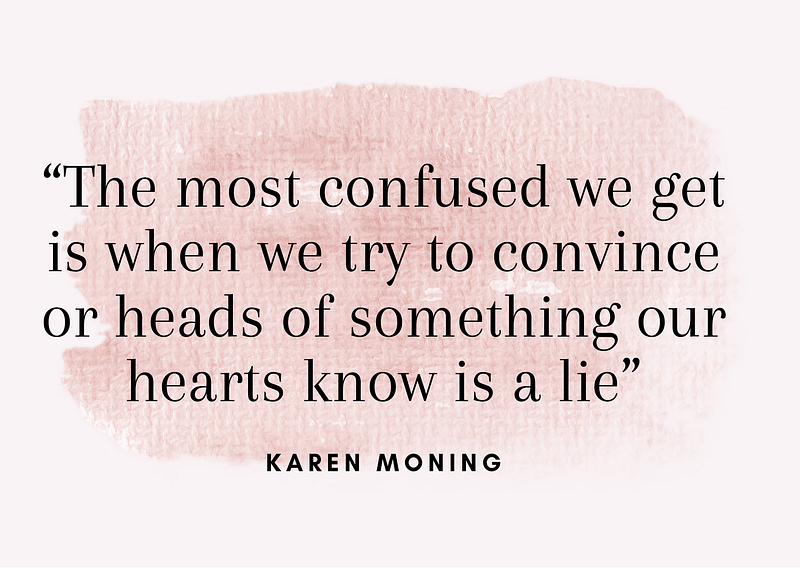
Self-deception leaves you with an inability to entertain a different point of view making you inflexible which, only adds to your confusion about the goings-on in your life.
Verdict:
The short-term payoffs of lying to yourself compared to the long-term ill effects seem to leave little doubt that truth is a more appealing long-term strategy.
Please check out this inspiring piece by Jean Elizabeth Glass Thanks for sharing, Jean.


