
Memoir
Lunar Whites
How one short story came back to haunt me
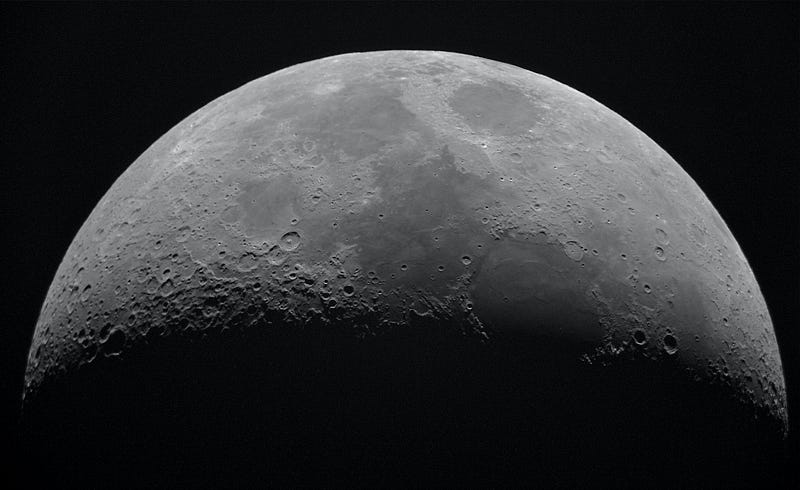
All I wanted to do from an early age was write stories. At school, I wrote one about men playing cricket on the moon. I thought it was good.
My English teacher didn’t. Receiving the manuscript back from her with NONSENSE written across the top in big red letters along with my mark. 1/10.
‘You were meant to be writing about your summer holidays,’ she said stabbing it with her finger, leaving a grubby print on the page like a watermark. ‘You got a mark for handing it in.’
I was furious. It’d taken me two weeks to write the story. Most of it was at night sitting in one of the toilet cubicles outside my dormitory because it was the only place where I could think. I was so angry that in a rare display of bravery, I told Miss Jefferies my reasons.
Largely that I didn’t have a summer holiday, because I was stuck at home all day waiting for my father to come back from work. I had no friends to play with because all my friends were boarders. I had no brothers or sisters, my cousins lived abroad, and my only real relative, my grandfather, was ill.
She agreed it must be hard for me after the death of my mother, but insisted that composition titles must be adhered to in the same way school rules were. ‘Otherwise, everything falls apart. Which is why I’m putting you in detention to rewrite it.’
I rewrote the piece entitled My Summer Holidays. Only I didn’t use my own life. I used Adam Green’s, one of the rich day kids who had two brothers, a sister, a dad, a mum, a nice house in the country, a dog and a cat. Plus the luxury of going home every evening to a nice meal, a warm house and a comfy bed. I got 7/10. Revised down to 5/10 as it was a detention piece.
‘What a stupid system,’ I muttered to myself as I left the detention room that was always full of boarders.
The day kids invariably got out of it when their parents complained to the school that Tommy or Jerry couldn’t possibly stay behind because he had to go to Grandmamma’s for tea. This meant that the overheated detention room next to the library was in effect just a homework club for boarders, whose own grandmothers — if they were still alive — had probably forgotten about them years ago.
At the beginning of the next term — the stupidly named Spring Term, even though it was still winter — Miss Jefferies asked us to write another piece. This time entitled, My Christmas Holidays. So I did it. I wrote about Christmas with my dad, my ill grandfather, and my new ten-speed racer.
Christmas may have been awful for them. (‘Most depressing Christmas ever,’ my father recalled years later). But for me, it was the best. Spending the whole holiday riding around the country lanes near where I lived on my new bike with a permanent smile across my face.
‘It would have been nice if Mum was still alive,’ I wrote as a closing line to the composition. ‘But you can’t have everything.’
I got 8/10 and a GOOD at the top of the page. And that was the last story I ever recall writing. After that, I just remembered doing the necessary work to pass exam after exam after exam all the way up to A-levels.
‘If I’d been left to write,’ I told my best friend on the day we left school, ‘I could have had ten novels under my belt by now. I could be famous.’
Instead, I spent those potentially creative years copying out huge sections of textbooks in the hope that the date of the Norwegian Conquests (1107), or what colour potassium permanganate turns in water (purple, or is it blue?) might one day come in useful. Without anybody ever explaining why we were doing it.
After school, the meaningless study continued when I went to university to study Agricultural Science. My sixth-form tutor stupidly advised me that my subjects, grades and background were suited to a career in agronomy. Which was NONSENSE because I wanted to go to drama school. But that was deemed RIDICULOUS by my tutor, so I ended up studying farming at Notts Uni.
I scraped through and at the end was given a certificate with 2:2 written on it with my dad and his new wife in attendance. (My grandfather, unfortunately, couldn’t make it as he was dead, lasting only a few more weeks after that infamous ‘most depressing Christmas ever’, expiring one evening while watching Family Fortunes at his care home in Leeds.)
At the end of the graduation ceremony, everybody applauded each other for wasting four years of their lives, before going off to waste the rest of it working for some agriscience multinational.
As for me, I wandered down the Job Centre the next day and signed on the dole. I simply couldn’t face the conveyor belt any longer and so stopped it dead in its tracks and did absolutely nothing for the next two years. I opted for the easiest, most brain-dead option and loved every minute of it. No expectations, no ambition, no future.
I eventually got a job in a bar when I started to get low on cash. This lasted a full three years before getting sacked for skimming the takings off the loose peanut sales.
For every bowl I sold, I pocketed the money from the sixth. Nobody ever cottoned on because I always filled the bowls of the other five a fifth less than I was meant to, so the stock levels were always perfect. And the customers never complained I’d diddled them out of nuts because everybody was pissed.
I only got caught because I made the colossal mistake of telling one of the chefs one night at a party. I was thinking of leaving the bar anyway, so I told him what I’d been up to. He was so drunk and coked out of his head, I simply assumed he wouldn’t remember anything. The next day he went squealing to the boss.
I was called into her office and shown video footage from the bar’s CCTV cameras of me slipping two quid into my pocket — the price of a bowl of loose peanuts. I denied everything, arguing it was a tip. She knew I was lying because I had GUILT written all over my face in thick permanent marker.
An hour later I returned and admitted everything, promising to pay back the £300 I’d stolen if she didn’t involve the police. Of course, that figure was way below what I’d actually stolen, but I wasn’t going to jail for stealing peanuts. I may have been a petty thief. But I wasn’t stupid.
I then changed tack and started selling books.
It was an unexpected turnaround, all starting one Sunday morning when my friend asked at the last minute if I wanted to use his market stall at a trendy craft market as he had to rush off to see his family — ‘Sell any crap you want,’ he said, ‘no one knows the difference.’ So I took a load of old books down and sold the lot.
Six months later I had my own second-hand bookshop. I had the knack for acquiring great books that people wanted: 1st editions, obscure print runs, signed copies, proof copies, foreign publications, and limited editions. You name it, I found them. House clearances, charity shops, book fares, jumble sales. Everywhere I went, I ran into boxes stashed full of Kerouac, Burroughs, Hemingway, Faulkner, Ginsberg, Whitman, Vonnegut, Brautigan, Steinbeck, Thompson, Fitzgerald, Bukowski, Miller. All the books my American popular culture-obsessed readers clamoured for.
With my shop sandwiched in between the student union building and a trendy row of retail outlets selling records and vintage clothes, plus a few pubs and coffee shops, I couldn’t lose.
The books flew off the shelves and the money flowed into my pocket. My shop was small with a low rent and as I paid almost nothing for the books, I sometimes made £500 per week in pure profit. Selling more copies of On The Road, Junkie, Post Office, and Cannery Row in a week than the bookshop in the city centre sold in a year.
After a while, the hunt for books became more exciting than the books themselves. My arm would twitch just above the elbow on the way to a house clearance or book fare when I felt a good haul was on the way. And more often than not I was proved right.
The only thing missing was that I wasn’t writing, which had been one of my promises to myself when I opened the shop. I’d imagined endless days sitting at my desk drinking coffee and writing. Occasionally tending to a customer or restocking the shelves. But it hadn’t turned out like that. There were always people in the shop. Always questions to be answered. About books or about life in general. It became a meeting place for all sorts of people and discussions could go on for hours, often continuing in the pub after I had closed the shop.
And when I wasn’t entertaining, there was the endless hunt for books. Sometimes driving 200 miles in an evening just to go to a house clearance of an old English professor who’d died, and who had left a treasure chest of books for me to loot.
So it was extraordinary that on my first Christmas Eve as a bookseller, just as I was packing up the shop for the year to take a well-earned break, who should walk in?
A huge black shape doddering into the shop like a walking mattress. The stench of Vosene, crab paste sandwiches and cigarettes forced its way up my nostrils like a powerful dose of smelling salts. Her legs were now so fat that her feet were barely visible. Just two rounded appendages that fitted into her grey shapeless shoes like the rubber pads you attach to the legs of heavy pieces of furniture so they don’t damage the floor.
Her face looked like a dried-out sponge pudding, the hole where the pudding splits apart, a gaping mouth. Gasping for breath after a lifetime of cigarettes, gin, damp rooms and salty food.
She didn’t close the door. Just stood there in the centre of the shop scanning the shelves and squinting as though someone was shining a torch in her face. Moronically raising and lowering her head in the air like it was a crane. Wearing what looked like the same clothing she had worn every day at school come winter, summer, rain or shine: a navy blue double-breasted jacket, navy blue ankle-length skirt, black tights, grey flat-soled shoes, grey hair tied back in a bun, no makeup, no jewellery, no glasses.
I wanted to say something but nothing came. And for a moment I was moving towards the conclusion that it wasn’t her at all. Just another pudding-faced old woman.
But it was her. Not only could I tell from her smell. But by the way she gripped the cane in her right hand. The same way in which she had once held her infamous red Sheaffer ink pen that ripped across the surface of my precious stories. Her fingers may now be fatter and more gnarled, but the manner in which she held the cane was the same. As though striking out the earth with huge lines wherever she went.
‘Miss Jefferies?’
Her head turned towards me like it was on a pivot. ‘Yes?’
‘It’s Adam Reeves,’ I started. ‘You taught me in year five. Overgrange. 1984. I once wrote a story about men playing cricket on the moon.’
‘Ah yes,’ she said quickly. ‘Lunar Whites. I remember it.’
‘You remember it?’ I cried out.
‘Why wouldn’t you think I’d remember it?’ she continued. ‘Because I’m old? I remember it very well. A silly little story, but not bad for a ten-year-old.’
‘So why did you give me 1/10 and a detention?’
‘Because you didn’t stick to the title.’
‘It was a good story. You just said so yourself.’
‘A good story doesn’t always win prizes Adam,’ she continued. ‘Not if it’s not what people want to read. If I’d asked you to write a science fiction story about the moon, it might have won. But I didn’t. I asked you to write about your summer holidays. You ignored the rules, so you got punished for it. Just like you got punished for speaking in chapel, disobeying prefects, stealing milk from the canteen, or running away.’
‘It wasn’t my idea,’ I clarified, remembering the night I camped out with Bobby Keane and Ryan Peters in the woods near the school using fertiliser sacks as sleeping bags.
‘It doesn’t matter whose idea it was. Because what happened?’
‘I got punished.’
‘Exactly. And did you ever do it again?’
‘No.’
‘Did you ever write a story about men playing cricket on the moon again?’
‘No, I wrote about naval invasions in the Crimean, chemical reactions involving potassium permanganate, U-shaped glacial valleys in North Wales, and a million other pointless essays on a million other pointless subjects. When all the time I wanted to write stories, perform in plays, play double bass in a band, join the ballet class, run away, or better still burn the place down. If you want my honest opinion.’
She was nodding slowly like one of those model dogs you get on the parcel shelf of cars. Then she seemed to slump a bit. Sagging to one side as though she had been shot, her breath short and shallow.
‘Well,’ she said recomposing herself. ‘I better be going. I was actually going to the Day Centre next door. I’ve been meaning to drop in here for a while to have a look at the books. Of course, I had no idea, it was your shop. But well done, anyway,’ she said weakly. She looked up and gave me a half smile. Then left.
A few days later, I went next door to the Day Centre to see if she fancied a cup of tea or something, talk about books.
‘Never heard of her,’ the warden said when I enquired. ‘Jefferies, you say. Definitely not. I know everybody here.’
I persisted, telling him that she might be new. But the warden was quite sure. ‘Nope. There’s no Jefferies here.’
I decided to ring up my old school to see if they had her address, but when I mentioned my request to the old secretary, Mrs Hobbs, who’d been there in my day and remembered me, she fell deathly silent.
‘Adam,’ she said. ‘Miss Jefferies was very old.’
‘Yes, I know, I saw her a few days ago.’
There was a long silence. One of those terrible silences when you know something is very wrong. ‘Adam. Miss Jefferies died twelve years ago.’
‘That’s impossible,’ I stated. ‘I saw her on Tuesday. We talked. She remembered my story.’
‘Adam.’ There was some coughing and I wondered why she also hadn’t retired. ‘Adam,’ she repeated. ‘Miss Jefferies died in Australia in 2002. She emigrated there after retiring. Maybe there’s been some mix-up.’
‘Mrs. Hobbs,’ I asserted. ‘There’s no mix-up. It was her. I spoke to her. She spoke to me. Plus, nobody else could have known the title of my story. It’s quite impossible in fact,’ I said realising I was raising my voice.
‘What was it?’ asked the secretary.
‘What was what?’
‘The story?’
‘Oh. It was called Lunar Whites. It was about men playing cricket on the moon in the future. I was supposed to be writing about my summer holidays. I got a detention for it.’
‘Adam, are you sure it was her?’
‘Yes, it was her.’
There was a pause. ‘Look, Adam, I have to go, somebody is waiting. Good to speak to you again. Goodbye.’
It’s been four years since that Christmas and I still don’t believe in ghosts. Whoever came into my shop that evening wasn’t Miss Jefferies. It was true what Mrs Hobbs said. Miss Jefferies died in Adelaide in 2011 after suffering a stroke.
Yet every time the door of my shop opens, I glance up expecting it to be her lumbering into my shop. Of course, it never is. It’s always just another customer looking for a book. Or looking for the Day Centre next door.
Related stories


