

Mythology, Indian Philosophy
Luminous Stranger
An ancient Indian tale from the Kena Upanishad
“Now the light, which shines above this heaven, Above all, above everything, In the highest worlds beyond which there are no higher, Verily, that is the same as this light which is here within the person” — Chāndogya Upaniṣad (3.13.7)
What is luminous, what is subtler than the subtle, in which are centred all the worlds and those that dwell in them, that is the imperishable Brahman.” — Muṇḍaka Upaniṣad (3.2.2)
High atop Mount Meru, Agni, God of Fire, Vayu, God of wind, and Indra, God of the Heavens were having a little party. Having just won a major battle against the asuras, the demons, they slapped each other on the back, sipped some of the magical elixir, soma, and congratulated each other on their prowess and valor.
The clouds above, guided from below by both Vayu and Indra, shifted, drifting through scenes of the great battle so that the whole world could relive the moments of sweet victory yet again.
The wind felt a little crisper today, and the sacrificial fires around the world burned a little brighter now that the demons had been ousted.
Off in the distance, emerging from a craggy dip in the trail leading to Indra’s domain, Agni noticed a golden glow spilling across the path.
“Look.” He pointed in the direction of the peculiar aura.
Indra’s and Vayu’s laughter and braggery suddenly ceased. They stared, transfixed.
The brightness intensified until the demi-gods could just make out a being of such luminosity encased within the golden shroud that even Agni’s brightest fire burned cold in comparison.
“Who is that?” asked Vayu.
Agni, incensed that anybody — god, demon or otherwise — could outshine him, strutted off to find out. His long hair streamed behind him, mingling with trails of smoke.
Squinting his six eyes against the brightness, he approached the stranger. “Who are you?” he demanded.
“Who are you?” the stranger replied.
“I am Agni, fire,” he replied. “I am the radiant one, gloriously great, the fire that burns in the sun and in the flames in the sacrificial fire pits around the world. I can burn anything!”
The glowing stranger held up a thin piece of straw. “Burn this then.”
Agni, insulted at being asked to incinerate a measly piece of straw, glared at it, and concentrated his efforts. But the straw did not burn. He focused again, but, nothing….
The straw was not even singed, not even a puff of smoke appeared. Abashed, he backed away, returning to his friends.
“So, who was it?” Vayu asked.
“Go find out for yourself,” Agni said.
So, Vayu climbed into his chariot led by a thousand purple-hued steeds and headed off to meet the newcomer. Leaping down from his vehicle, stirring up a small tornado with his anger, he glared at the stranger with every one of his thousand eyes, yet was still unable to make out who it was.
“Who are you?” he demanded.
“Who are you?” the stranger asked in reply.
“I am Vayu, Lord of Prana. For me the dawn spreads her radiant garments every morning. I breathe life into every living being and move the clouds in the sky. I can whip hurricanes into existence and smooth the surface of a pond to glass.”
“Blow this then,” the stranger said, holding up the piece of straw.
Tossing his head, Vayu blew with all his might, intending to blast the stranger right over the cliff along with the piece of straw. But, nothing….
The straw didn’t even quiver. The luminous halo around the stranger didn’t even flicker. So, Vayu beat a hasty retreat, embarrassment flushing his normally pale blue cheeks.
“Indra, you must go see who it is,” Vayu said.
So, Indra, the chieftain of the gods, the greatest of all the warriors in the heavens, wielding his dazzling weapon of lightening, hopped astride his white elephant, Airavata, and galloped off to meet the stranger.
The closer he came, the brighter the light became, until he could hardly make out the source.
Just within the meniscus of the glow, he glimpsed the form of a dazzling beautiful woman, golden of complexion, lustrous ebony hair streaming across her shoulders.
Draped in a gem-studded sari that glittered with the light of the very stars pulsing into creation, Uma, the Goddess of the Mountains, sister to the great river Ganges, Keeper of Spiritual knowledge beheld him.
“Oh Goddess,” Indra began, “There was a stranger here just a moment ago. Can you tell me who he was?”
Uma smiled at him, “Don’t you know, dear Indra? That was Brahman — all-pervading reality, the internal light which shines in all of us and in everything. Don’t you realize, Indra, that you have been taught a lesson?”
Indra suddenly realized that the demi-gods had, pridefully, believed themselves to have vanquished the demons by their efforts alone.
But they had forgotten the power of that eternal source of creation itself, and had slipped into the pitfall of their own egos.
They had forgotten that divine awareness leads to a place where fire cannot burn, where wind cannot blow, where the energy of existence pulses within, around and throughout every particle of matter in existence.
If Agni and Vayu had only looked within themselves when the stranger had asked them, “Who are you”, they would have recognized that they were one and the same with universal creative power and eternal bliss.
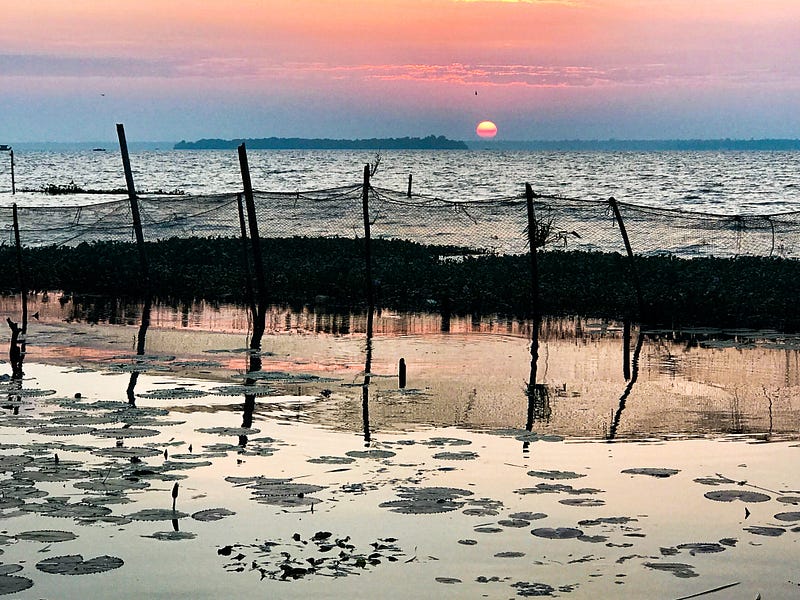
The Upaniṣads, rich with wisdom about the nature of reality, are some of India’s oldest texts. Most of the principal Upaniṣads were composed somewhere between 800 B.C.E. and 100 B.C.E.
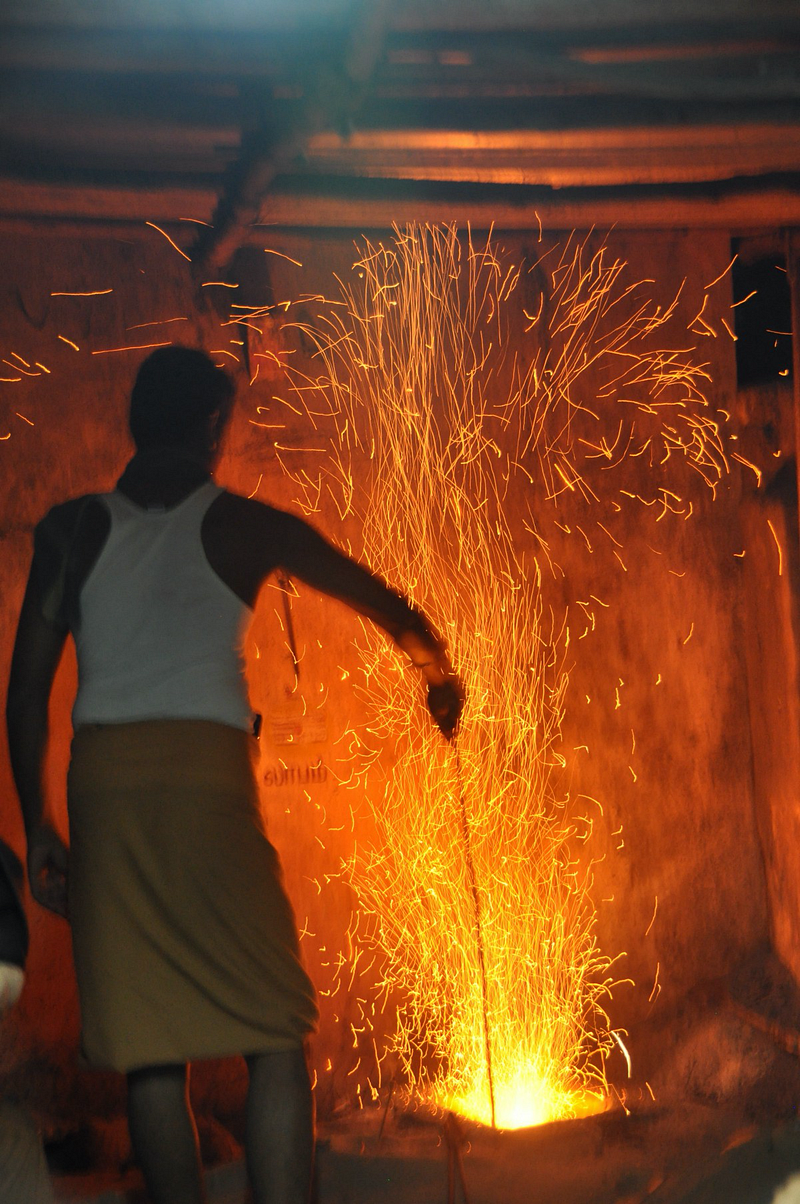
The word Upaniṣads literally means to “sit down near.” In saṇskrit, Upa=near, Ni=down, ṣad=sit. These tales take the form of a student sitting at a teacher’s feet and are conversations between teacher and student, or husband and wife, or father and son, etc….
These teachings probe the idea of ātman or “Self” and our connection with Brahman, which was conceived of as ultimate reality, a nameless, formless essence which pervades everything.
Ātman is derived from an, “to breathe,” and is thought to be the essence of a being, what is left when all other physical parts of us are gone.
This story is my fictional re-telling of a story in the Kena Upaniṣad (3.3), which was composed around 100 B.C.E.. Although this is a later Upaniṣad, the ideas expressed in it have much more ancient roots.
Agni (god of fire), Vayu (god of wind) and Indra (who controlled light and lightening) were respected first in ceremonies since they were said to be the first to have met and understood Brahman.

Umā, the Goddess of the Himalayas, sister to the Goddess Ganges (who flows through the sacred river) was chosen in this tale to reveal spiritual knowledge to the gods.
I have always felt a fondness for the idea of Umā, and my beautiful kitty now bears her name.

Erika Burkhalter is a yogi, cat-mom, photographer, and a lover of nature and travel. She has been studying and teaching the ancient yogic texts for many years and holds an MA in Yoga Studies as well as a MS in Neuropsychology. Erika has traveled within India seven times to study yoga, to see the ancient sites, for graduate school study, and to take her yoga students on retreats to see the land where yoga originated.
I hope you enjoyed these ancient teachings from India. You might also like:
Story and photos ©Erika Burkhalter. All rights reserved.


