
Lume is Not For Female Pleasure
Are odor-removing products supporting feminism?
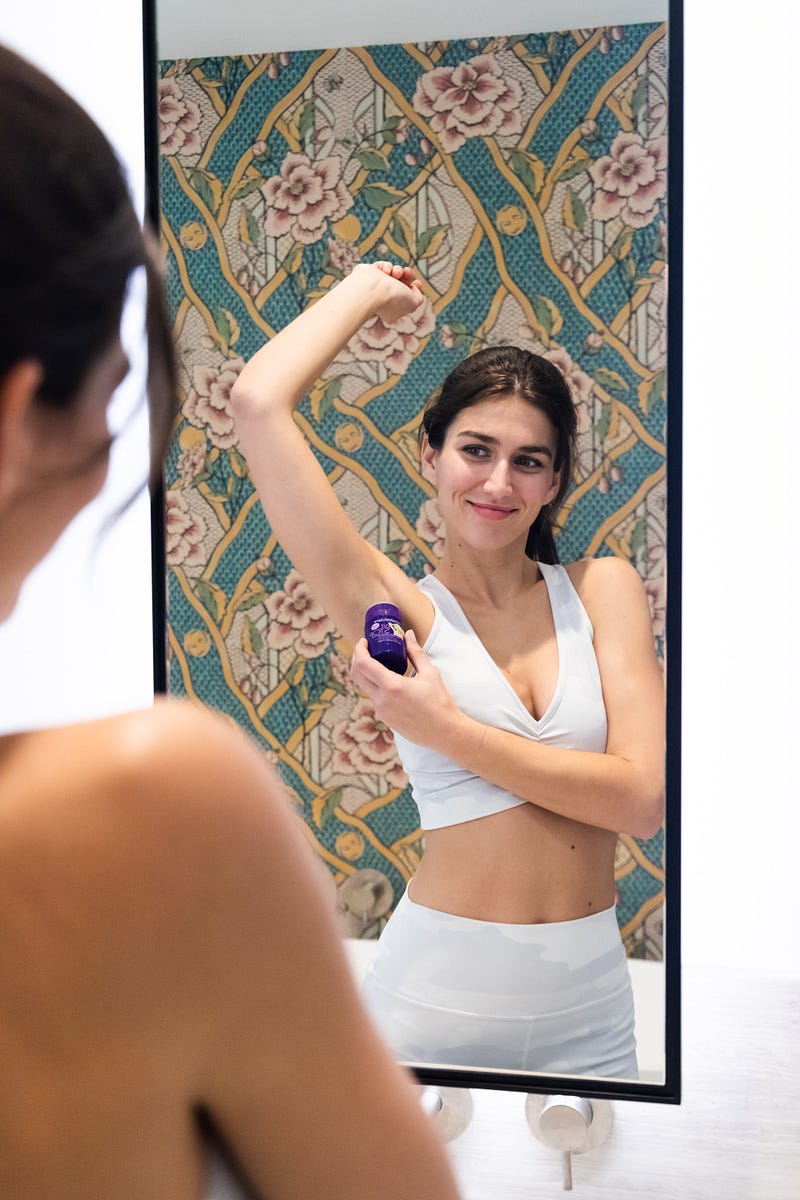
I was first introduced to Lume several years ago when I received a sample tube in the mail as a gift from a friend.
I’d confessed to her that my pubescent teenage girl recently developed a spectrum of odors, often intense, the kinds that make your nose wrinkle with discomfort.
When the tube arrived I introduced it to my daughter, opening the container and pushing a small amount onto her finger. I suggested she rub the white substance in her armpits. I mentioned she could even use a bit on her inner thighs. “Take it to school,” I advised. “You can use it to freshen up during the day.”
I placed the Lume into a small bag of toiletries she kept in her backpack and hoped she’d put it to use. I forgot about it for the rest of the school year until I cleaned her backpack and found it in the toiletry bag unused.
My daughter has a developmental delay and is autistic. She is a gentle and sweet soul who steps to the beat of her own drum. She loves fashion and wears trendy outfits like cropped sweaters and skinny jeans with rips up and down the legs.
A mop of thick, curly blonde hair sweeps over the left side of her clear, round glasses while her perfectly shaped right ear is visible to all to see because half of her head is shaved. Her nails are always painted in a color that matches her mood and her closet is full of trendy pleather purses and charm bracelets. When she wakes up early enough before school she asks me to brush pale pink eyeshadow on her lids and does her best not to blink while I apply mascara.
In many ways, she is a typical teenager. She loves Taylor Swift and spends hours wearing her Beats headphones. She sleeps in and talks back. She also smells like many teenagers, from her arms to her socks and everywhere in between.
Every parent experiences the moment when they are within a particular distance from their child to sniff the unpleasant odor of their hormonal kid. Cozying up on the couch to watch a show before bedtime or when they pile in the car after soccer practice.
Every parent experiences an awkward conversation with their child when they tell the little person they love more than anything that they stink worse than a dumpster.
Every parent then adds Dove Invisible Solid or Gillette Clear Shield sticks to their Walgreens shopping list and encourages frequent showers and regular sock changes. With time, most kids integrate hygiene activities into their daily routines, sometimes with such enthusiasm that they use all of the hot water and smell like a bottle of Axe Body Spray.
Not my kiddo. She’s the queen of faking good hygiene, from dipping her toothbrush in running water before placing it back in the holder to re-wearing her underwear for several days.
Our conversations about her hygiene occur often.
“Bud. You smell like bad cheese.” I say.
She shrugs. “So what?”
“People are uncomfortable when someone smells,” I tell her. “It makes them not want to sit or stand next to you. It can even make them feel sick to their stomach.”
She thinks for a moment and shrugs again. “I don’t care.”
My daughter will be seventeen this year and she is nearly immune to societal pressures and standards. I’m thrilled we aren’t worried about her going to drinking parties in the woods and she never compares her body to other girls but I cringe when we get emails from her teacher that she smelled funky. I imagine the teacher holding her breath while helping my kid with her math lesson and the kids in the lunch room sliding their food trays to the end of the table.
I accept her differences and embrace many of them but I really wish that she would take initiative to manage her bodily odors.
After the gift tube of Lume lube, I hadn’t thought about the product until it was featured in every other ad on my social media accounts this winter.
I pay little attention to most of the ads I see and spend at least one Sunday evening a month telling Facebook they are irrelevant to me. Lume’s new campaign made me stop my scroll.
In the video, the friendly and relatable gynecologist founder leans her face close to the screen, her long, dirty blonde hair nearly covering the tubes and sticks of deodorant in her hands.
I intuit that she has a secret for me. I click on the video to hear what she has to say which is this: Lume is so awesome that using it is going to improve your intimate relationships.
It will improve your sex life.
I wrinkle my nose at the assertion and decide at that moment that Lume sucks. I am tired of products encouraging women to change how they look to please their partners. I think about crafting a snarky yet educated-sounding comment under the Lume ad about how ridiculous it is that changing or entirely removing a woman’s scent is the answer to a better sex life.
“There are lots of ways a woman’s sex life can improve,” I imagined myself penning. I begin a mental list:
- My partner listens to me when I share that I had a hard day.
- My partner doesn’t go in the bathroom right near our bedroom and fart really loudly before coming into the bedroom and rubbing my back.
- My partner apologizes after making a rude comment and does it without me prompting him.
- My partner shows up on time. Any time. Anywhere.
- I stop looking at social media images of women much skinnier and younger than me.
- I accept that my body isn’t perfect but I deserve to be loved.
- We get a better lock on our bedroom door.
- I get a few days off from parenting and working long enough to stop making mental lists in my head about responsibilities and shit that makes me mad.
- and many, many more that I won’t list because my mom reads what I write.
Lume thinks they are being clever. They’ve been around long enough that they needed to find a new angle. They probably partnered up with a fancy firm and sat in a conference room with all glass windows and thought that they were the smartest marketing people on Earth for coming up with this pitch. Later they drank glasses of scotch with Don Draper and Mel Gibson because they know what women want.
I stewed about the ad that night and then every time I looked at my Facebook and Instagram accounts that were bombarded with Lume’s improved sex life pitch. I complained to my friends who are in the same demographic as me and regularly pummeled with ads for ways we can apply and ingest products to make us youthful, attractive, and of course, rid of any of our natural scents.
Women are asked to change their natural selves every day to please others.
We are taught to be ashamed of our bodies from their shape to their smell. And Lume, this ad campaign smells of the rotten patriarchy.
I stood at the sink brushing my teeth, my hair pulled back in a ponytail. I’d just washed my face and applied night cream under my eyes.
My daughter stepped out of the shower and I handed over her towel, which she wrapped around her chest, tucking underneath her armpits. I watched her in the mirror as she methodically dried each part of her body before applying Bath & Body flowery-smelling lotion on her arms, chest, and legs.
I took a deep breath, taking in the overpowering scent which was preferred to the pungent sweat odor her body produced from a long day at school and a pre-dinner workout at the gym.
Before dinner, I’d gotten a whiff of her.
“Buddy, how about you take a shower before dinner tonight,” I suggested. “You’ve got the time.”
“Nah,” she shrugged. “I’m good. I’ll do it after.”
As she passed me I held my breath, unable to smell both her sweat and the cooking stir-fry at the same time.
She and I small talked as she dressed and I finished my night-time routine, which included packing the myriad of toiletries that had migrated to the sink counter back into a drawer.
I placed her Bath & Body Works lotion into the drawer, knocking over a tube. I picked it up. It was the Lume. I never threw it away despite my growing distaste for the product. I held it in my hand and thought about my continued efforts to help my daughter understand that her unkempt appearance and unpleasant odors make others feel uncomfortable. Make me feel uncomfortable.
I thought about what body smells appeal to me and which don’t. I love the smell of my husband’s cologne and the perfume I made in France with notes of vanilla and sandalwood. I hide my bottle of Bath & Body Works lotion, Tuberose, because it is discontinued. I take big whiffs of our clothes when they come out of the dryer.
I realized most of the scents I love are not natural body odors. Not since my kids were babies have I placed my nose against their skin and inhaled. Is this because I am a cog in the wheel of the patriarchy?
I had to ask myself, was that board room full of marketing pros and Lume executives a bunch of dudes, or were women sitting in rolling chairs with legs crossed, nodding their heads excitedly about how they could bring their product to the masses and eliminate stinky body odor for the benefit of all people, no matter their gender?
Could sex improve by using Lume and my partner listening to me when I tell him about a bad day? Maybe. Can we only move toward a more feministic society and equality for women if we stop forcing them to change their natural bodies and erase their odors? Maybe.
My kid wished me a good night and I turned out the lights but not before I put the Lume tube back in the drawer.
Read more from me:


