
The Tragic Death of South Africa’s Lucky Dube
A Legend Rises Out of Apartheid
On October 18, 2007, international reggae star Lucky Dube (pronounced “do bay”) was gunned down in his home country of South Africa in a suburb of Johannesburg.
Many Americans have never heard of this man. Perhaps if more Americans listened to his music and followed his words, we would be in a much better place today.
The man certainly impacted my life, and only partially by his music.
The Beginning of the Tour
I was a young, white college student bartending in Lawrence, Kansas in 1991, when Steve Topping, Lucky’s U.S. road manager asked me to work as equipment and stage manager for a South African reggae band that was on tour in North America, Lucky Dube and the Slaves.
I had some experience as a stagehand and had grown bored behind the bar. However, my experience with reggae, like many Americans, was limited to Bob Marley’s Greatest Hits that played on the jukebox. I was itching for a change and needed some cash so I took the job.
I knew nothing of the band. I wasn’t even sure of my job description. I got on a large, empty tour bus with Steve and we went to the airport to pick them up.
“There they are,” Steve said, as I looked up and saw thirteen, jet black South Africans walking towards the bus.
Many sported dread locks. They spoke excitedly to each other in a language I didn’t recognize; I would later learn it was Swahili. There was no doubt which one was Lucky Dube.
He was soft spoken but you could tell by the way the other band members were around him that they had nothing but respect for him.
Everyone waited while Lucky got on the bus first and walked up and down the aisle burning sage. I learned later this was to rid the bus of any evil spirits or bad vibes. Only after he was finished and came back off the bus, did the rest of the band get on.

I loaded their gear and most of them didn’t pay much attention to me. In front of that airport on a busy road, I found myself transported to a new, foreign world as I stepped on the bus to join the group.
The first few weeks were a blur as I tried to learn my job. We jumped from reggae festivals to music halls to small bars that could hardly call themselves music venues. I struggled to find out what it exactly was that I was supposed to do but I eventually started getting the hang of it.
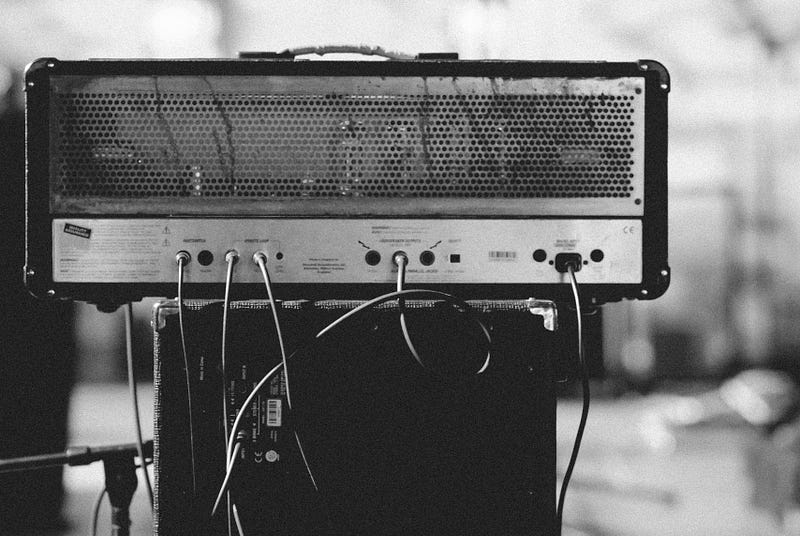
Each night, I set up the band equipment, wrapped and unwrapped seemingly miles of cables and cords, and troubleshot sound and equipment problems that frequently arose during the performance, then loaded everything back in the bottom of the bus.
I would get back to the hotel at 3 a.m., wake up at 6 a.m. to load the band’s bags onto the bus, travel to the next town, and do it all over again at the next venue. But, eventually, I slipped into a routine and learned to catch naps in my bunk on the bus or sitting on an amp on the side of the stage.
A Transformation
That is when my life started changing. My anxiety decreased as I became more accustom to my job and I was able to steal moments when I actually stopped and listened to Lucky and the music.
I watched the crowds and the way they reacted to the performance. I watched the band and dancers in perfect sync with the man center stage and I gradually became in awe of what I was seeing and hearing.
The songs were about oppression, truth and coming together as one. The songs are even more amazing when you consider the context in which the songs were written.
Lucky and most of the members of his band had grown up under apartheid in South Africa and had risen to popularity in a system that did everything it could to prevent people like them from gaining any position of influence in the country.
Yet, they did accomplish that and became influential not only in South Africa but around the world.
An Incredible Group of Musicians
As we traveled across the country, I got to know the band. We spent hours between North American cities on that tour bus. Outside the bus, we were surrounded by American culture but inside of that bus, I was the outsider learning how to live among South African Zulus.
One of the guys I was drawn to was Thuthukani Célé. Even saying his name was foreign to me requiring pressing my tongue to the roof of my mouth and making a sound that no English word contained.
Thuthu (pronounce Too Too) had scars up and down his arms and he told me tales of growing up on the streets of Johannesburg and being beaten by white cops for being in the wrong place at the wrong time.
When I asked him why he wasn’t filled with resentment for the treatment he had received, he simply said, “Curt, I have no room in my heart for hatred. Only music.” I have never had more respect for a young man than I had for Thuthukani Célé.
The Privilege
As we played reggae club after reggae club, there were times when I was discriminated against for the color of my skin. Many resented a white man getting the honor of working so closely with such a great man as Lucky Dube.
Not everyone treated me like that, as a matter fact, just a few. But it was enough to feel what it was like not to be able to enjoy a moment or even do your job because the color of your skin.
But, my oppression was only momentary. I could step off that bus or out of that club and find myself once again in the privileged white world I had always known. People of color who have experienced true racism do not have that luxury.
I have heard many people say, “I never had white privilege. I was born poor and worked my way out of poverty.”
This statement reeks of white privilege. You had the ability to work your way out of poverty because you were not refused a job because the color of your skin. You were part of a system that did not exclude you from opportunity and privilege. Those of us who grew up with white privilege don’t even know how to recognize it when we are benefiting from it.
The Culmination of the Tour
It was the hours on the bus talking to the bandmates and the night after night of watching the band perform that impacted my life, my decisions and my actions from that moment on. I am not always perfect but I try to keep an open mind and self-evaluate my actions to make sure personal biases are not creeping in.
The tour culminated with Sunsplash in Jamaica, one of the best known reggae festivals in the world. By then, I was an absolute fan of Lucky Dube, the musician and the man.

A Tragic Crime
In 2007, he was shot and killed in South Africa. Not for political reasons, not for speaking the truth and not for being black. He was shot and killed during a robbery and carjacking.
But, he was killed indirectly because of a system that kept many of its people from advancing. Crime is often the result of economic desperation and perpetuated by individuals who were kept from opportunities, if not by an official policy such as apartheid, but by an equally dangerous system of covert racism.
Many musicians have had promising careers cut too short by untimely deaths. I can’t help but wonder what kind of world we would live in had more people had the opportunity to experience Lucky’s music and performances for longer than we did. I do know my life is different because of Lucky Dube and his wonderful band The Slaves.

Reflection
Almost thirty years later, I am now a math teacher in Wichita, Kansas. Sometimes when I am teaching, something will trigger a memory.
I close my eyes briefly and I am transported back to that tour bus and can see and hear those thirteen individuals talking loudly, laughing, singing and dancing in the aisles overcome with the energy of a recent performance as we bumped along the road to another city in another state.
I had no idea exactly how much my life was transforming during those moments.
I then open my eyes and look out at the diverse students in my class and I wonder what experiences await them. I can only hope the world is changing enough to include each and every one of them in every deserved opportunity.


