
A Change of Heart on a Controversial Psychedelic
LSD’s Renaissance in Mental Health Treatment
The drug showed promise in the mid-20th Century, then was outlawed. Early in the twenty-first century, research resumed.
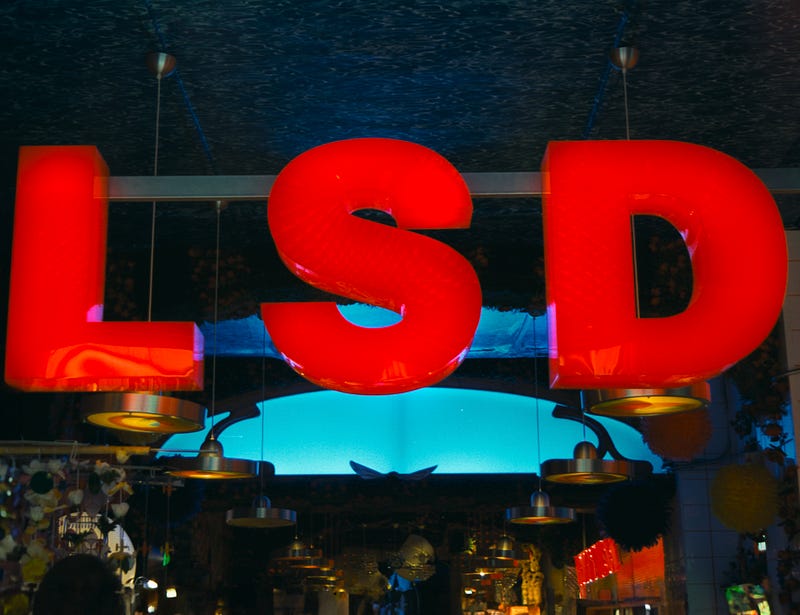
Psychedelics are compounds that have been used in shamanic and spiritual ceremonies for millennia. Celebrations of these drugs exist throughout popular culture. The drugs’ effects have been described as life-changing and spiritual, permitting users to find new ways to life’s challenges.
It’s no secret that indigenous peoples all over the world have combined psychedelic drug use with emotional support.
Having visited Chiapas, a state in rural Southern Mexico, several times, I was invited to work with a shaman to improve my mental health by taking a psychedelic that causes similar reactions among people to those of LSD known as ayahuasca. This type of psychedelic use has deep spiritual and cultural connections.
I listened as my Chiapas friend told me about her challenges when she had a child that she didn’t want. She thought about taking some drastic actions after the baby — a girl — was born. She undertook the ayahuasca experience, her attitudes and beliefs about having a child underwent reconstruction and now she cherishes it.
Ayahuasca is a naturally occurring mixture of substances obtained by boiling the stems of the liana Banisteriopsis caapi with the leaves of the shrub Psychotria viridis. The plants contain a chemical known as DMT.
DMT produces a psychedelic effect like LSD, but both drugs do not have the same chemical makeup. The former is natural, and the latter is synthetic.
Since the 1960s, LSD, a powerful psychedelic, has altered minds among those who’ve chosen to take it. Popular culture embraced the drug and its powers. Its fruit spread through many channels, from literature to art and décor to dress, as described in my previous analysis of the drug.
Soon medical professionals experimented with it, revealing its beneficial qualities. Timothy Leary was the most celebrated psychedelic appreciator, as his name was synonymous with references to LSD in books, movies, television, and music.
LSD Personal Understanding
My interest in LSD began when I was a teen. Two life events affected me and changed me concerning these drugs.
Each event relates to my deep engagement in the counterculture that developed quickly beginning in the late 1960s.
Each had a deep psychological impact and has been difficult to process so I still attempt to resolve them many decades later.
At fifteen, I was told by a woman ten years my senior that LSD shouldn’t be an option for me. A former boyfriend of hers had gone into psychosis and never recovered after taking it. She also recognized how impulsive I was, informing me that her former boyfriend was also. The man had anxiety, dysphoria, and confusion, which are tell-all signs of a “bad trip.” As a youth, I came across lots of blotter acid and was fascinated with cartoon images such as Micky Mouse, an image that if eaten would likely be pleasant, but the danger of a bad trip lurked for some people. I learned that danger applied to me.
At sixteen, my picture appeared on the front page of the Miami Herald’s local news section, as part of an article about a student who was arrested for selling LSD. At that moment hidden cameras at a church across the street from the high school snapped, so it appeared as if I was buying the drug (Meriwether, 1972).
This particular drug dealer routinely gave me cookies from his lunch bag. The day of the drug deal my request for sweets caught me between a deal involving a narcotics agent and the dealer. I had no idea I interrupted them, much less than knowing hidden cameras were installed from a church across the street, a clandestine careless attempt at catching a riveting photojournalistic opportunity using minors as bait, no less.
As the cameras snapped, my image was recorded with the drug deal in the background and me in the foreground, the most prominent in the series of shots as I asked the dealer for sweets from his lunch bag.
The newspaper photographs (there was a series of them) showed me reaching out toward a lunch bag as the most prominent figure in the frame. As I think back on how the newspaper ever got away with photographing minors secretly and publishing their pictures in the paper, I am pleased that this type of careless journalism wouldn’t happen today.
In my 20s when I lived in San Francisco, I tried the drug for the first time. No shaman and no counseling. While the results were somewhat blissful — my vision sharpened as it created moving patterns from stripes and designs on objects, turned the corners on walls inside out, and caused my brain and body to be out of sync when I walked about a mile from a nightclub to my apartment. I was solely focused on my steps that had be carefully thought out. My mind was blank, except for the sharp visual concentration on my surroundings.
By my 30s, I became drug and alcohol free, underwent intensive counseling, working not to regret a tumultuous youth, and focused on my education and obtaining a career in education.
I endured and here I am on a mission to illustrate the change of heart that has come with the drug as some studies show promising benefits beyond those used with antidepressants in treating depression and other mental health issues.
Currently, I deal with challenges with an enormous effort that includes additional counseling, frequent meditation, and spending much of my time writing, photographing, and post-processing in Photoshop.
Antidepressants assist with my mental difficulties in processing a turbulent past. A minimal intake of medication does lessen the severity in which I view actions and reactions in my relationships.
However, I feel that the current system of treating mental health issues isn’t adequate, and I realize there have to be better treatments.
The problem with current antidepressant medications is twofold: they don’t work for some and stop working for others.
I comprehend completely the need for the use of psychedelics combined with psychotherapy. Many mental health professionals believe this type of combination therapy is essential to manage a myriad of psychological and physiological conditions.
LSD History
To understand the history of LSD, a timeline described by Reiff et al. (2020) addresses the following events:
In 1938, Swiss chemist Albert Hofmann synthesized the first synthetic hallucinogen, lysergic acid diethylamide (LSD), while working with the pharmaceutical company Sandoz. In 1943, he tried LSD, which resulted in “an uninterrupted stream of fantastic pictures, extraordinary shapes with an intense, kaleidoscopic play of colors.”
In 1947, Sandoz began to market LSD under the trade name Delysid as an adjunctive psychotherapy medication and as an agent for experimental study on the nature of psychoses.
In 1963, Timothy Leary began experiments under the Harvard Psilocybin Project to determine whether psilocybin was an effective adjuvant agent in psychotherapy. Leary also experimented with LSD and eventually became a polarizing figure who was dismissed from Harvard, along with his colleague Richard Alpert.
From the 1950s to the 1970s, behavioral and personality changes, as well as remission of psychiatric symptoms in various disorders.
In 1970, the bans for both the research and the use of LSD resulted in it being designated a Schedule One drug. This classification indicates the potential for abuse of LSD, and that it had no use medically. LSD possession, manufacture, or distribution became illegal.
LSD continued to be used during the next few decades; however, most use at this time was not documented as part of research to find out if there were any benefits to its use. Interest in the benefits of the drug sparked in the 1990s.
“Despite the limitations, there was continued research into brain mechanisms of action for psychedelic drugs with potential clinical applications which began during the 1990s and early 2000s” (Belouin & Henningfield, 2018).
Recently, legislative and regulatory changes have occurred that permit studies on the drug with special permissions granted by the United States Food and Drug Administration (FDA) because some studies have shown the benefits of LSD when it is used in conjunction with therapy,
DaCosta et al. (2022) found that human studies with psychedelics have shown promise, demonstrating rapid and sustained clinical benefits of these compounds for a variety of psychiatric disorders, including many that people are using antidepressants for today.
The problem with current medications is twofold: they don’t work for some and stop working for others.
Ethics Challenges
Large studies have been impeded by researchers’ ethical challenges in getting consent from participants.
Since LSD is so unpredictable any one patient will not know what to expect both during the time it is administered to any associated experiences thereafter.
Jacobs (2023) posits “that prospective patients cannot undertake a rational reflection of whether PAP is right for them, given that materially relevant facts about the treatment remain epistemically inaccessible to patients before treatment has begun.”
Little is known scientifically about the psychedelic experience in terms of notifying participants in studies about what effects the drug will produce. The primary obstacle in the initiation of research on the drug in human trials is the mental changes from the effects just after ingesting the drug are unpredictable to describe in a consent form, as they can vary widely so that it’s nearly impossible to relate any similar previous human experience to its use.
In other words, the validation of knowledge concerning the transforming effects of LSD and other psychedelics is not understood, as the users’ senses will be unlike any that they have previously experienced.
An LSD experience is unique to each individual. Being able to sign a consent for treatment with the drug is simply not ethical because patients have no idea what they are signing onto.
Despite qualms about patient consent, it is generally believed that LSD users can shift their behavior and thought processes so that changes in their values, personality, beliefs, and behavior might be beneficial to them.
The Research on Combining LSD Therapy with psychological counseling
Several small studies about combining psychotherapy with patients who are medicated with LSD show that larger studies are necessary.
A group of Swiss and German researchers, Gasser et al. (2014), conducted a trial to examine the safety and efficacy of LSD-assisted psychedelic psychotherapy to reduce the anxiety of participants who had various life-threatening diseases.
The study found that “when LSD is consumed at high doses (>200 micrograms), the stable tendency to attend to, experience, and report negative emotions such as fears, worries, and anxiety across many situations did not change from normal situations.” Mean state anxiety, a temporary emotional state of apprehension, nervousness, and physiological effects resulting from anticipation of stressful situations, decreased in the high-dose LSD group compared with the low-dose (placebo) group.
Additionally, Inserra et al. (2023) found that even if LSD may exacerbate anxiety acutely (both in “microdoses” and “full doses”), that is a temporary experience, as the drug induces long-lasting anxiolytic or antianxiety effects” (Inserra et al., 2023).
Wolf et al. (2023) found evidence from preclinical studies and some support from human studies that psychedelics enhance neuroplasticity, which is related to the brain’s ability to adapt to new challenges and increased learning.
The researchers also discovered that LSD doses (25–50 micrograms) reduced oscillatory power when both eyes closed and eyes opened in resting conditions, resulting in improved clarity and stability in visual perception when eyes were both open and shut. Furthermore, the drug also produced a positive mood, elation, energy, and blissfulness, although heart rate and blood pressure increased under its effect.
Finally, the study concluded that the neurophysiological effects raise the possibility that very low doses of LSD may produce subtle behavioral and perhaps therapeutic effects that do not rely on the full psychedelic experience (Murray et al., 2022).
LSD Supported Therapy Sessions
Studies involve a series of therapy steps. Each study has a distinct approach.
Taking a look at an example helps one get an idea of what might be involved in LSD therapy sessions.
Reiff et al. (2020) lay out the treatment plan for an LSD psychotherapy treatment.
- Preparatory — the therapist or co-therapist team engages the patient to explore his or her life history, challenges, and expectations of the treatment.
- Medication — (one to three sessions with moderate to high doses of LSD) After taking the drug the patient talks as the therapist listens attentively, responding using his/her professional training and experience.
- Integration — Numerous sessions that include therapist and patient interpretation of the psychedelic experience to identify meaningful long-term changes about insights and thoughts or ideas that arose during the psychedelic session.
Most similar studies conducted thus far do not include a large number of participants. “Five novel experimental placebo-controlled studies have been conducted in Basel, London, and Zurich in a total of 95 normal subjects. (Liechti, 2017).
The small number of studies and low sample sizes illustrate the need for more randomized clinical trials of psychedelic therapy, with larger and more diverse samples.
The FDA requires drug studies to be conducted in four phases. Phase 4 requires thousands of volunteers.
Conclusion and Hope
In January 2024, Medical News Today announced that LSD offers relief for patients with Generalized Anxiety Disorder (GAD). “ The results from a recent clinical trial showed that the MM-120 — a hallucinogen better known as LSD — could become a potential new treatment for GAD, a condition that affects millions of people worldwide. The trial highlights that the drug candidate, particularly at the 100 µg dose, demonstrated effectiveness, significantly reducing anxiety symptoms” (“LSD Could be Effective,” 2024).
The GAD LSD study is in the second part of Phase 2, meaning that there were only several hundred participants. The drug did pass Phase 1, which indicates that it has been tested for safety and dosage. If the drug study is cleared after Phase 2, it will still take a few years for the next two phases to be completed.
As science progresses and laws loosened regarding the study of LSD benefits for treating a variety of ailments related to mental health, the future is sure to be bright for effective treatments.
Perhaps, one day, I’ll be able to add LSD treatment to the therapy I receive. If so, I look forward to fewer struggles with impulsiveness, impatience, racing thoughts, sleepless nights, and general anxiety about the actions and reactions I engage in each day without much difficulty.
Thank you for reading my story.
References
Belouin, S. J., & Henningfield, J. E. (2018). Psychedelics: Where we are now, why we got here, what we must do. Neuropharmacology, 142, 7–19. https://doi.org/10.1016/j.neuropharm.2018.02.018
da Costa, S. C., Oesterle, T., Rummans, T. A., Richelson, E., & Gold, M. (2022). Psychedelic drugs for psychiatric disorders. Journal of the Neurological Sciences, 440, 1–9. https://doi.org/10.1016/j.jns.2022.120332
Gasser, P., Holstein, D., Michel, Y., Doblin, R., Yazar-Klosinski, B., Passie, T., & Brenneisen, R. (2014). Safety and efficacy of Lysergic Acid Diethylamide-Assisted Psychotherapy for anxiety associated with life-threatening diseases. Journal of Nervous and Mental Disease. 202(7), 513–520. https://doi.org/10.1097/NMD.0000000000000113
Jacobs E. (2023). Transformative experience and informed consent to psychedelic-assisted psychotherapy. Frontiers in Psychology, 14, 1108333. https://doi.org/10.3389/fpsyg.2023.1108333
Inserra, A., Piot, A., De Gregorio, D., & Gobbi, G. (2023). Lysergic Acid Diethylamide (LSD) for the Treatment of Anxiety Disorders: Preclinical and Clinical Evidence. CNS Drugs, 37(9), 733–754. https://doi.org/10.1007/s40263-023-01008-5
Liechti, M. E. (2017). Modern clinical research on LSD. Neuropsychopharmacology, 42(11), 2114–2127. https://doi.org/10.1038/npp.2017.86
LSD could be effective for treating anxiety. (2024) Medical News Today. https://www.medicalnewstoday.com/articles/lsd-effective-treating-anxiety-clinical-trial#Potential-implications-for-future-anxiety-treatment
Meriwether, H. (1972, March 3). Hidden Camera Catches Gables High Drug Deal. The Miami Herald, B1.
Murray, C. H., Tare, I., Perry, C. M., Malina, M., Lee, R., & de Wit, H. (2022). Low doses of LSD reduce broadband oscillatory power and modulate event-related potentials in healthy adults. Psychopharmacology, 239(6), 1735–1747. https://doi.org/10.1007/s00213-021-05991-9
Reiff, C. M., Richman, E. E., Nemeroff, C. B., Carpenter, L. L., Widge, A. S., Rodriguez, C. I., Kalin, N. H., McDonald, W. M., & the Work Group on Biomarkers and Novel Treatments, a Division of the American Psychiatric Association Council of Research (2020). Psychedelics and Psychedelic-Assisted Psychotherapy. The American journal of psychiatry, 177(5), 391–410. https://doi.org/10.1176/appi.ajp.2019.19010035
Wolf, G., Singh, S., Blakolmer, K., Lerer, L., Lifschytz, T., Heresco-Levy, U., Lotan, A., & Lerer, B. (2023). Could psychedelic drugs have a role in the treatment of schizophrenia? Rationale and strategy for safe implementation. Molecular Psychiatry, 28(1), 44–58. https://doi.org/10.1038/s41380-022-01832-z


