
Low Air Quality Impacts Mental Health: 8 Tips on How You Can Cope
My exposure to the impact of climate change had been minimal up until this past week. The experience is sad in itself, but I was feeling really down and wondered whether the low air quality was a factor. It is.
I track my mood daily. This data helps my psychiatrist do his job, but the practice also helps me keep a finger on how I’m actually feeling from day to day.
I had a phenomenal time last weekend. In fact, it was the best weekend I can remember since moving from Boston, MA to Bethesda, MD (part of the DMV) 4 years ago.
On Monday, I crashed. Generally, Mondays aren’t my best days, but the drop was extreme and came out of nowhere it seemed. I did my best to shake it off and carry on with the day.
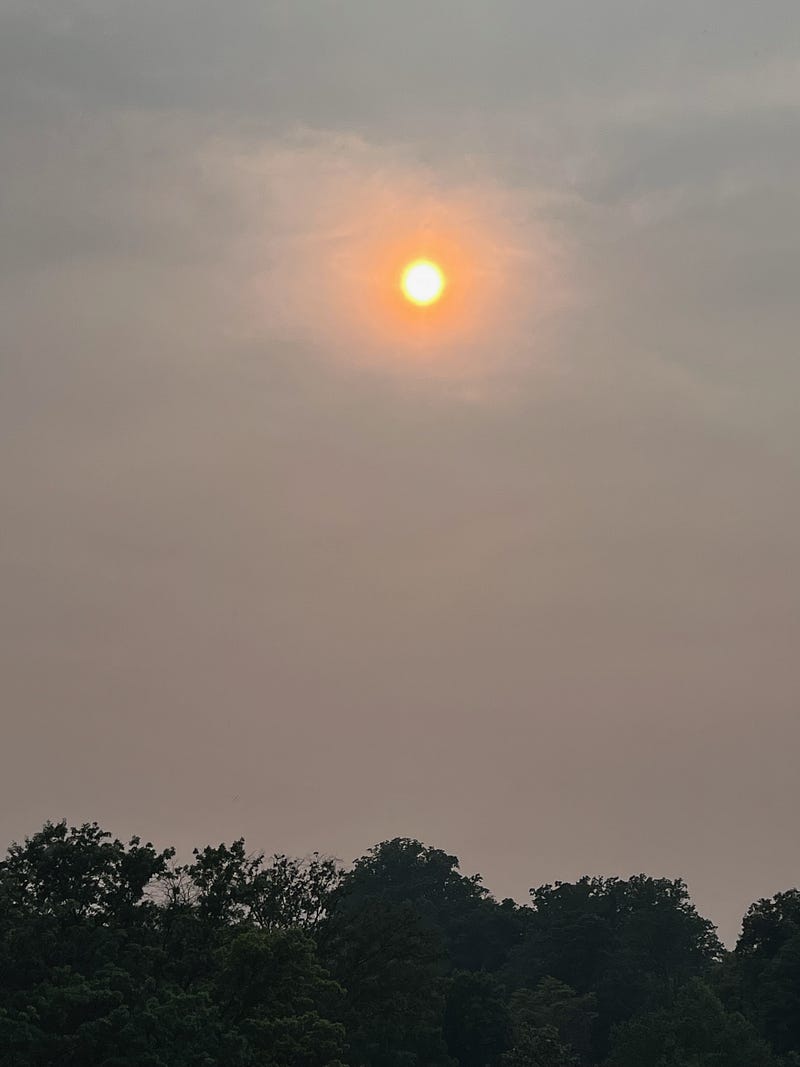
When I walked outside Tuesday morning, feeling like poo, I looked up at the sky and stopped. The sun was a fluorescent orb giving off a peachish, pink color. I took out my phone and took a photo.

I have been in “research” mode, and as usual, that means hyper-focus on one topic while other news takes a back seat. It wasn’t until Tuesday afternoon that I learned about the Canadian wildfires. Except for the bizzaro-looking sun, the environment in Bethesda seemed status quo.

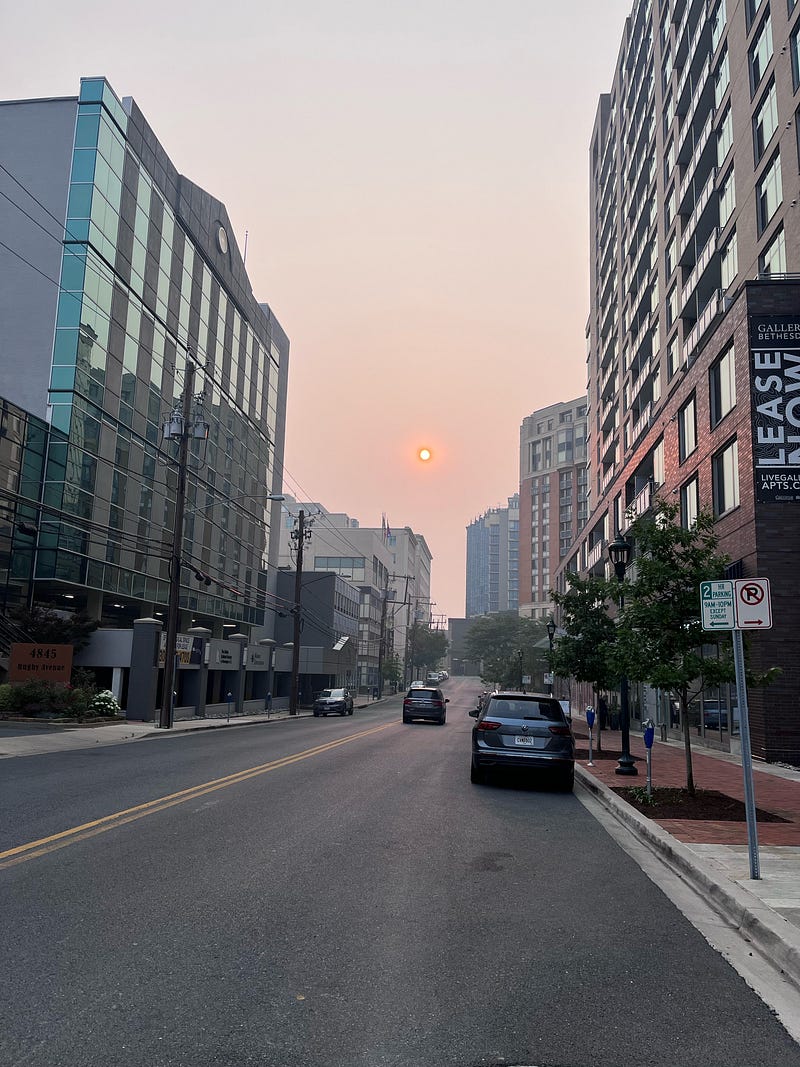
On my way out the door on Wednesday morning with my little, flat-faced dog the combination of the same other-worldly sun, there was the acrid smell of burning. The Weather Channel referred to “hazy” conditions. Revise — smokey conditions.
My mood was in the shitter. I was sure that it was my emotional sensitivity to the fact that I was actively experiencing — breathing in — the devastating result of climate abuse. I felt swathed in the death of wilderness.

This morning I woke up and as expected our air quality was down to “Very Unhealthy.” The smell of smoke was so strong that I could smell it in my hair when I got back inside.
I put myself down at my dining room table to write my Morning Pages as usual. “I don’t wanna… anything.”
Obviously, I kicked myself in the ass, otherwise, you wouldn’t be reading this.
I was curious if there was any connection between the depressy-anxiety I’d been feeling the last few days and the low air quality — and, “low” and behold there is.
Although the smoke situation in the eastern part of the US is supposed to clear up beginning tomorrow, I am aware that we have been lucky. A good part of our country, and the world, experience chronic low air quality.
The Research
Air pollution is a serious problem that can have a negative impact on both physical and mental health. In recent years, there has been growing evidence that air pollution can also lead to mental health problems, such as anxiety, depression, and schizophrenia.
- A study published in the journal “Environmental Health Perspectives” found that people who were exposed to high levels of air pollution were more likely to develop anxiety and depression. [2013]
- Another study, published in the journal “Nature”, found that air pollution can damage the brain and lead to problems with memory, attention, and decision-making. [2018]
- A third study, published in the journal “The Lancet”, found that air pollution is responsible for over 6 million deaths yearly, including 2 million deaths from mental health problems. The study found that air pollution can damage the brain and lead to problems with memory, attention, and decision-making. These problems can increase the risk of anxiety, depression, and other mental health problems. The study also found that air pollution can lead to social isolation, which can also increase the risk of mental health problems. The study’s findings suggest that air pollution is a major public health problem that has a significant impact on mental health.
Of course, this makes sense. The brain is an organ that relies on oxygenated blood. Less clean air in, less function out.
I feel validated, but that doesn’t fix the low mood by itself. I got busy writing, but I can’t expect to do that for the next 24 hours straight.
8 Tips for Coping with Poor Air Quality
If you are concerned about the impact of air pollution on your mental health, there are a few things you can do to cope:
- Get enough sleep. When you’re well-rested, you’re better able to cope with stress and anxiety. Aim for 7–8 hours of sleep each night.
- Manage stress. Find ways to manage stress, such as yoga, exercise, or meditation.
- Eat a healthy diet. Eating a healthy diet can help to improve your overall health and well-being. Make sure to eat plenty of fruits, vegetables, and whole grains.
- Talk to someone you trust: a friend, family member, or therapist. Sharing how you’re feeling can help you to feel less alone.
- Stay busy. Distraction can be a quick cure, just make sure it’s not self-destructive.
- Learn about air pollution. The more you know about air pollution, the better equipped you will be to protect yourself from its harmful effects.
- Get involved in efforts to reduce air pollution. There are many things that can be done to reduce air pollution. By getting involved in these efforts, you can help to improve the air quality for yourself and for your community.
- Don’t give up. If you’re struggling with the impact of air pollution on your mental health, don’t give up. There are many things you can do to cope and to improve your health.
Please take good care of yourself if you’re struggling with low air quality due to climate change. Clean air should be a human right.

If you appreciate my writing, you can express your support by Buying Me a Coffee.


