
Loving to Hate the Lockdown
‘We all preferred the world we found, to the one we left behind’
I have always been an adamant believer in film’s capabilities not only to reflect but also to influence the way real-life society thinks and behaves.
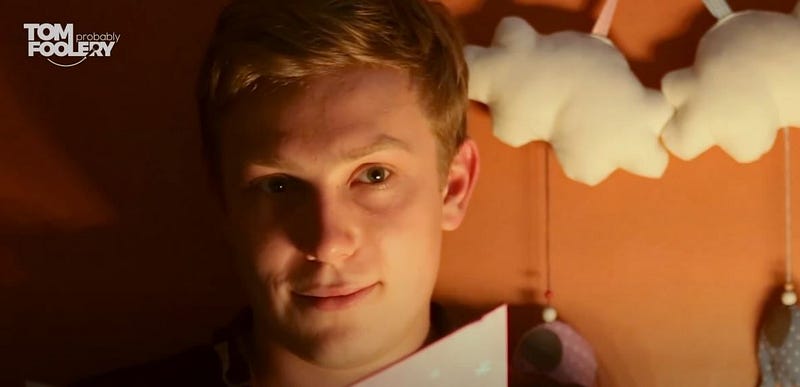
Unsurprisingly then, it was a short film recently released online called The Great Realisation (2020) that encouraged and inspired me to finally engage with my conflicted opinions surrounding this ensuing pandemic and lockdown.
An apt postmodern retelling of the 2020 Coronavirus pandemic narrated through the bittersweet poetic prose of a father reading his child a bedtime story, TGR’s message powerfully resonates on account of its bitterly pessimistic portrayal of our pre-pandemic world, while simultaneously envisioning the promising utopia that Earth could resemble beyond this virus.
Prior to watching this film, I was personally encumbered with feelings of guilt and selfishness.
Why? Because while over five million confirmed cases of the virus had been diagnosed worldwide, sole traders and small businesses were threatened with losing their livelihoods, governments and industries faced bankruptcy and our National Health Service was being pushed to its limits, I was wishing in many ways that the lockdown would never end.
There are of course many things regarding regular everyday life that I miss. I was finally starting to make some progress with searching for work after previously attracting limited success, but have now lost almost all of this.
I cannot visit my family one-thousand miles away nor those living just a mile down the road.
I miss my Saturday teaching job, socializing with friends, visiting the cinema, and dining at restaurants with my family.
My mood tends to fluctuate between optimism for the future and empty despair due to being trapped within this seemingly endless cycle of monotony.
These struggles are of course not exclusively mine. Nor do I share them out of self-pity or for the sake of providing mere context about my life.
I mention all this to show that despite being burdened with all these grievances as countless others also are, my thoughts surrounding this situation perhaps divert from the mainstream.
So what change did this film trigger in my line of thinking?
Following the Government’s decision to implement a nationwide lockdown, society’s general standard of living improved as much as it was uprooted. This sounds as though it ought to be an oxymoron, but it’s not.
Across the past few weeks, I have spent invaluable time with my family and started to finally engage with the various items on my to-do list that everybody admittedly has but understandably neglects or delays doing under the rush and stresses of everyday life.
I have started to write more, play with my dog, research local history, meditate, make short films, and reconnect with people whom I haven’t spoken with for months.
All these things and more had sadly become backgrounded in my life after graduating from university, after which time my primary preoccupation was with tracking down employment, a familiar tale for all recent graduates.
It has always been drilled into society that in order for people to achieve happiness, success, and purpose they must constantly be embroiled in a mission to be at the top of their games.
Nothing ever appeared capable of disrupting this cycle, that is until Covid-19 came along. Nonetheless, all the pain and sacrifices we have endured have not been entirely in vain.
I look now and I see the National Theatre releasing filmed versions of its plays online, our planet becoming greener, people applauding in the streets for our healthcare professionals, children singing on the News and a war veteran a century-old successfully raising millions of pounds for a major global cause.
Witnessing such heart-warming acts of kindness and heroism, I could not help resorting to the same naïve curiosity synonymous with the child in TGR, asking myself:
‘Why has it taken an event so horrific to bring out the best in society?’
Would any of these beautiful occurrences have ever happened without the pretext of a global catastrophe? Might we reminisce someday on this part of our history and realize that it was when we had nothing to do that we achieved the most.
People have now started to greater recognize that it is not the relentless pursuit of fortune, the latest fashion or technology trends, or career success that truly satisfies us.
Human happiness stems from respecting and caring for one another, often symbolized by comparatively small gestures such as those we have all witnessed across these past few weeks.
It is not social media influencers and celebrities we ought to devote all our attention to, but instead our scientists, healthcare workers, shopkeepers, rubbish collectors, transport workers, and teachers.
All the ‘little people’ making a big difference whose good deeds typically pass us by unnoticed.
So the question remains of what lessons we are to extract from this film and the philosophies it conveys.
Is humanity supposed to abandon its greedy and morally corrupt world in favour of an altruistic, biblical existence wherein everybody loves and cares for one another? No, it is not. Nor is the film really suggesting this as a plausible or desirable outcome.
Society does not advance by entertaining romantic idealisms of ending the old and ushering in the new, but rather by being acutely self-aware of its faults and possessing the genuine will to amend these not in the distant future, but in the here and now.
Of course, everybody wants this virus to disappear and for lockdown to eventually end, and now I can clearly see that I never truly wanted otherwise.
But what I am saying is that people should not just want for life to simply return to the way it was before. While this pandemic has been tragic and unfortunate, it has also prompted a necessary reawakening for us all.
Ultimately, we all have a choice between experiencing a ‘Great Realisation’ or choosing to resume blindly living as we did previously, stubbornly refusing to see past our own individual desires, grievances, and prejudices, thereby rendering all the aforementioned good deeds futile and superficial.
Perhaps a quote from the TGR summaries this whole chapter of human history and the lessons I have personally learned from living through lockdown the best:
‘Well, sometimes you’ve got to get sick, my boy, before you start feeling better’.