Lovely Juvely, Munchy Crunchy
Food makes us talk like love-drunk fools
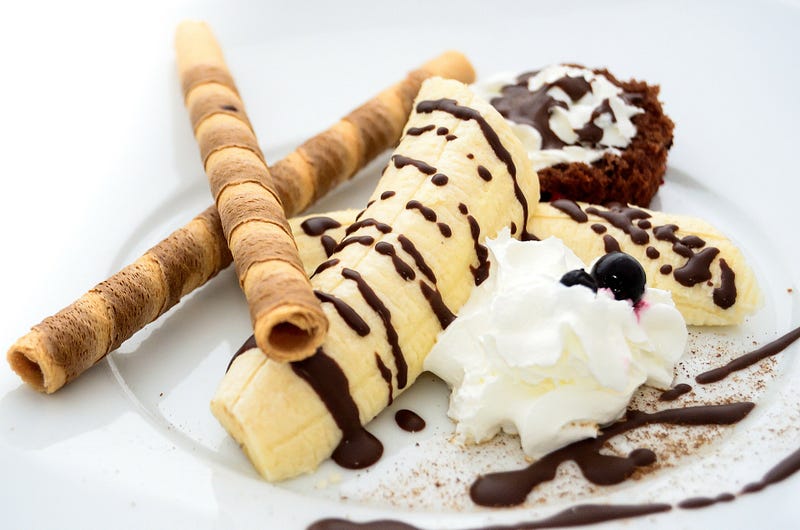
One of my all-time favorite food personalities is the UK’s Nigella Lawson. Often criticized, usually by chefs and professional, especially in the early days, for her very simple almost-recipes, she has become a lasting influence on food writing, food talking and the culture of eating — hard-nosed chefs have found themselves changing the way they present their recipes, perhaps without even realizing it.
Nigella gave us permission to enjoy food. It wasn’t all about the rare ingredients and viciously complicated cooking techniques for her. It was about the taste. Deliciousness, enjoyment of every mouthful, and getting the food in an eatable condition as quickly as possible — these comprised her philosophy.
She ate her food right there at the kitchen bench and my, did she relish each mouthful! Plenty of other TV chefs did this, and do this, but Nigella gave them (and us) permission to really show our joy.
There’s something about food that turns us all into poets.
I just love listening to the way Nigella uses her formidable grasp of English to bring her viewers into the experience. In one episode, she describes ‘the pavlova’s billowy base’ and you can almost feel it. As she scoops her meringue base onto her prepared baking tray, she says:
‘I adore how the snowy marshmallow spills onto the sheet in all its Alpine glory.’
Now, who else talks like that about food?
Here’s another example:
‘I’m going to start off by using a word that I love, which is I’m going to slake some corn flour in milk. This gives a satiny lusciousness to the chocolate filling.’
In the same episode she gives us ‘A lake of cream.’
Nigella doesn’t just give us perfection in food talk, either. Here and there, some luscious philosophy on life sneaks in:
‘In life, I have no truck with bitterness. In the kitchen, I’m drawn to it.’
Now, we all go a little doolally about certain foods or other sensory experiences that really affect us. And Nigella can certainly come across as a little… much. A fun TV show from the UK called Outnumbered featured a girl, around 6 years old, who often played ‘Nigella’ and ‘Hell’s Kitchen’ (another TV show featuring the much harsher-tongued Gordon Ramsey excoriating his restaurant staff on a weekly basis) with her dolls. She would pretend one doll was Nigella, and copy the language: ‘slurpy skirpy, lovely buvely, tasty masty’ . Then the Gordon doll would turn up and start screaming ‘you call this beeping sauce? I’m going to beeping destroy your beeping career. It’s beeping beep!’ and so on— it was quite funny, and all apparently unscripted.
Some of us are not so poetic…
Despite Nigella’s influence on cooking conversation, there is still plenty that wannabe chefs and food personalities could learn about using language to draw the reader or viewer in — including myself. I realize I am overfond of the word ‘yum’, which, while true, is also not particularly descriptive. I recall one candidate on Masterchef Australia some years ago who couldn’t get past the word ‘beautiful’. It became irritating on the ear. ‘I’ve got some beautiful lemon and I’m going to use these beautiful prawns and make a beautiful little sauce and a salad with some beautiful greens…’ It went on and on.
Then there are the people who insist on using the ‘eats well’ phrase — one of my pet hates. I get it. It’s descriptive. But it just sounds wrong to me. ‘It eats well.’ What? ‘It looks gooey. I’ll be interested to see how it eats.’ No!
It’s a bit like the term ‘mouth-feel’ which I wish would retire back to the odds-and-ends drawer as soon as possible, to be lost forever. I dislike it. Even though, again, it’s descriptive. Surely there is more elegant language we could use?
If you can’t describe what you’re doing and what your ingredients are with a little differentiation, you won’t get far as a describer of food, either in cook books or in food journalism. Even video isn’t always enough. It might look amazing, but what does it taste like? What’s its texture? Where are the surprises and the contrasts? What worked well and what could have been tweaked? A great resource to get you started (if you don’t feel like being quite as poetic as our Nigella) is this list of words to describe food.
Start at home — horrify and fascinate your friends and family by lyrically describing what you’re doing as you cook, as well as the finished product. I dare ya!


