avatarEdnan Bedreddin

Free AI web copilot to create summaries, insights and extended knowledge, download it at here

4743

Abstract

&utm_campaign=google.com&utm_referrer=google.com">Iraqi Kurdistan</a> as a quasi-independent Kurdish region presented an opportunity to breathe new life into Kurdish culture, music included. This era saw a renewed emphasis on Kurdish folk music, ushering in an evolution that continues to the present day.</p><p id="d4b3">During this renaissance, various Kurdish artists felt compelled to reinterpret “The Young Khalil,” striving to capture its essence with traditional Kurdish instrumentation. Notably, there was a desire to address the cultural incongruities in Kawis Axa’s recording, which had been performed with Arab and Jewish musicians unfamiliar with Kurdish musical nuances.</p><p id="82f5"><b>Echoes of History: The Story Behind the Song</b></p><figure id="edbf"><img src="https://cdn-images-1.readmedium.com/v2/resize:fit:800/1*A3lraGcL-_Ns7AowXc9LFg.png"><figcaption></figcaption></figure><p id="54cf">Before the Ottomans set foot in Anatolia, numerous independent <a href="https://whiteink.info/a-history-of-hostility-and-bloodshed-the-most-famous-kurdish-emirates-which-fought-back-the-ottoman-occupation/?lang=en">emirates</a> marked the landscape of Kurdistan, each possessing considerable military might that posed a challenge to the advancing Ottomans.</p><p id="16c9">The Ottoman Empire’s westward expansion into Southern Europe demonstrated its growing power and ambition. Simultaneously, the ascendant Safavid dynasty in Persia began to feel a growing concern about the rise of this nascent empire and the potential shift it might bring to the region’s balance of power. While the Safavids were staunch proponents of <a href="https://www.britannica.com/topic/Shii">Shia Islam</a>, the Ottomans adhered to the <a href="https://www.islamweb.net/ar/article/66723/%D8%A3%D9%87%D9%84-%D8%A7%D9%84%D8%B3%D9%86%D8%A9-%D9%88%D8%A7%D9%84%D8%AC%D9%85%D8%A7%D8%B9%D8%A9-%D8%A7%D9%84%D8%AE%D8%B5%D8%A7%D8%A6%D8%B5-%D9%88%D8%A7%D9%84%D9%85%D8%B9%D8%AA%D9%82%D8%AF%D8%A7%D8%AA">Sunni</a> tradition.</p><p id="20b3">Kurdistan became the strategic battleground for these two behemoths. Despite the Safavid ruling family being of <a href="https://en.wikipedia.org/wiki/Safi-ad-din_Ardabili">Kurdish descent</a>, many Kurds, influenced by figures like the celebrated aristocrat, historian, statesman and poet <a href="https://snl.no/Idris_Bitlisi">Idris Bidlisi</a>, threw their weight behind the Ottomans. Their involvement was crucial in the Ottoman triumph <a href="https://www.britannica.com/event/Battle-of-Chaldiran">at the pivotal 1514</a> battle, which took place in Kurdistan. This confrontation set the stage for the eventual partitioning of Kurdistan between the Ottoman Empire and Persia, a division formally acknowledged in the 1639 <a href="https://www.britannica.com/topic/Treaty-of-Qasr-i-Shirin">Qasr-e Shirin agreement</a>.</p><p id="dcfe">Kurdish warriors would subsequently make significant contributions to the Ottoman incursions in Syria, Egypt, the Balkans, and Central Europe. Their valor was especially evident during the Russo-Turkish conflicts, notably <a href="https://www.britannica.com/event/Crimean-War">the Crimean War</a> (1853–1856).</p><p id="fe87">The establishment of the Kurdish <a href="https://en.wikipedia.org/wiki/Hamidiye_(cavalry)">Hamidiye brigades</a> “Hamidiye Alayları” in 1891, named in homage to Sultan Abdul Hamid II and inspired by the Cossack model, marked another chapter in this shared history. While their primary role was guarding the Russia-Ottoman frontier, their involvement in certain <a href="https://www.britannica.com/event/Armenian-Genocide">Armenian massacres</a> remains a point of historical contention. Many of these brigade members, despite their martial prowess, hailed from impoverished rural communities and were often conscripted by influential Kurdish lords. In reciprocation for their service, these leaders enjoyed generous rewards and increased influence within the Ottoman administrative framework. It’s plausible that a figure like “The Young Khalil” could have been an unsuspecting villager, thrust into these grand geopolitical machinations. Contrary to some narratives, it’s essential to note that the Hamidiye brigades were ethnically diverse; they weren’t exclusively Kurdish, as Circassian, Arab, Turkmen, and other ethnic units also existed.</p><p id="0f9e"><b>Kurdish Women: Voices of Tradition, Change, and Resilience</b></p><figure id="ce2e"><img src="https://cdn-images-1.readmedium.com/v2/resize:fit:800/1*dyOHMNauUW2ylW2qdJa6FQ.png"><figcaption></figcaption></figure><p id="6d42">Among Europeans — be they missionaries, orientalists, or diplomats stationed in Kurdistan — a consensus emerges: Kurdish women <a href="https://www.jstor.org/s

Options

table/43698618">enjoyed notably more autonomy and freedom</a> compared to their Turkish, Arab, and Persian counterparts. These women, particularly in rural areas, worked alongside their husbands in fields, mingled freely with men, and even participated in Kurdish folk dances, which were always co-ed. The younger ones rarely donned head coverings. It was not uncommon for them to welcome male guests and extend hospitality in their husbands’ absence. The renowned Turkish traveler, <a href="https://ottomanhistorians.uchicago.edu/en/historian/evliya-celebi">Evliya Çelebi</a>, observed that some Kurdish women even took up arms, fighting side-by-side with men to defend their villages.</p><p id="f4da">While these observations largely hold true, one must exercise caution against broad generalizations. Kurdish culture, far from being monolithic, varies across the vast, rugged terrains of Kurdistan, shaped also by the region’s diverse religious or sectarian influences. Notably, the predominantly Sufi interpretation of “Kurdish Islam” is often more tolerant, particularly in matters concerning women’s rights. The secular leanings of the Kurdish political movement, albeit with a few exceptions, have only reinforced this relative freedom for Kurdish women, setting them apart from their counterparts in neighboring regions.</p><figure id="6b3f"><img src="https://cdn-images-1.readmedium.com/v2/resize:fit:800/1*egjTtnUhcJt14Pqgo_Gs8A.png"><figcaption></figcaption></figure><p id="a723">This relative freedom is also reflected in the cultural realm. Kurdish women have been active contributors to folk singing, especially the epics — stories of lost love, of lovers lost to endless conflicts, of valiant Kurdish warriors, and of deep-rooted love for the homeland. Many popular folk songs, like “Derweshe Avdi,” “<a href="https://www.youtube.com/watch?v=3NbrROkmBv0&amp;ab_channel=Aynur">Ahmedo</a>,” and “Siwaro,” to name a few, are believed to be their creations. Historically, figures like <a href="https://nykcc.org/meryem-xan-singer/">Meryem Khan</a> and Nesrin Sherwan, Ayshe Shan have been dominant female voices in Kurdish folk music, and today, artists such as <a href="https://en.wikipedia.org/wiki/Aynur_Do%C4%9Fan">Aynur Dogan</a> and <a href="https://www.youtube.com/watch?v=tEEYjmHt75g&amp;ab_channel=Chopy">Chopi Fatah</a> continue this rich tradition.</p><p id="974e">It’s worth noting that Kurdish women have made remarkable contributions to the development of music in its various forms in the countries where the Kurds reside. To mention but a few shining names in this field: <a href="https://www.youtube.com/watch?v=Wyz2lyb4cUw&amp;ab_channel=PollProduction">Zara</a> and <a href="https://www.youtube.com/watch?v=vwcLQb9nGqE&amp;ab_channel=PollProduction">Yildiz Tilbe</a> in Turkey, <a href="https://www.youtube.com/watch?v=FIC5cdgR8Z4&amp;ab_channel=%D8%A7%D9%84%D9%85%D9%88%D8%B3%D9%8A%D9%82%D8%A7%D8%AD%D9%8A%D8%A7%D8%A9">Shahd Barmada</a> (شهد برمدا) in Syria, <a href="https://www.youtube.com/watch?v=lXiEDR5hIMk&amp;ab_channel=MBCTheVoice">Dumooa Tahseen</a> (دموع تحسين) in Iraq, <a href="https://www.youtube.com/watch?v=Taf0KPSfDZY&amp;ab_channel=%D0%97%D0%B0%D1%80%D0%B0">Zara</a>, За́ра (Зарифа́ Паша́евна Мгоя́н) in Russia, among many others.</p><p id="c80a">“The Young Khalil” stands as a beacon in Kurdish culture, capturing the heart and history of its people. It mirrors the profound connections other nations feel towards their indigenous songs, much like the Irish with “<a href="https://www.classicfm.com/discover-music/danny-boy-lyrics-history-traditional-irish-song/">Danny Boy</a>” or the Scots with “<a href="https://www.britannica.com/topic/Auld-Lang-Syne">Auld Lang Syne</a>.” For the Kurds, this song is more than just music; it’s a testament to resilience, pride, and shared heritage. Its universality underscores that while our stories may differ, emotions and experiences remain a common thread among humanity.</p><p id="4fa9">Herein, we present two renditions from the nineties of the last century: one by the venerable <a href="https://en.wikipedia.org/wiki/%C5%9Eehr%C3%AEbana_Kurd%C3%AE">Shehribana Kurdî</a> and another by the dynamic <a href="https://www.instagram.com/kurmanc.bakuri.official/">Kurmanj Bakuri</a>:</p><p id="782e"><a href="https://www.youtube.com/watch?v=axNc_ANy_ns&amp;ab_channel=TheMerdo94">https://www.youtube.com/watch?v=axNc_ANy_ns&amp;ab_channel=TheMerdo94</a></p><p id="6a69"><a href="https://www.youtube.com/watch?v=cpKTubtW-PI&amp;ab_channel=Kurmancbakuri">https://www.youtube.com/watch?v=cpKTubtW-PI&amp;ab_channel=Kurmancbakuri</a></p><p id="4571"><a href="https://www.instagram.com/kurmanc.bakuri.official/">manc.bakuri.official/</a></p></article></body>

Love, War, and Longing: Unraveling the Kurdish Epic of “The young Khalil”
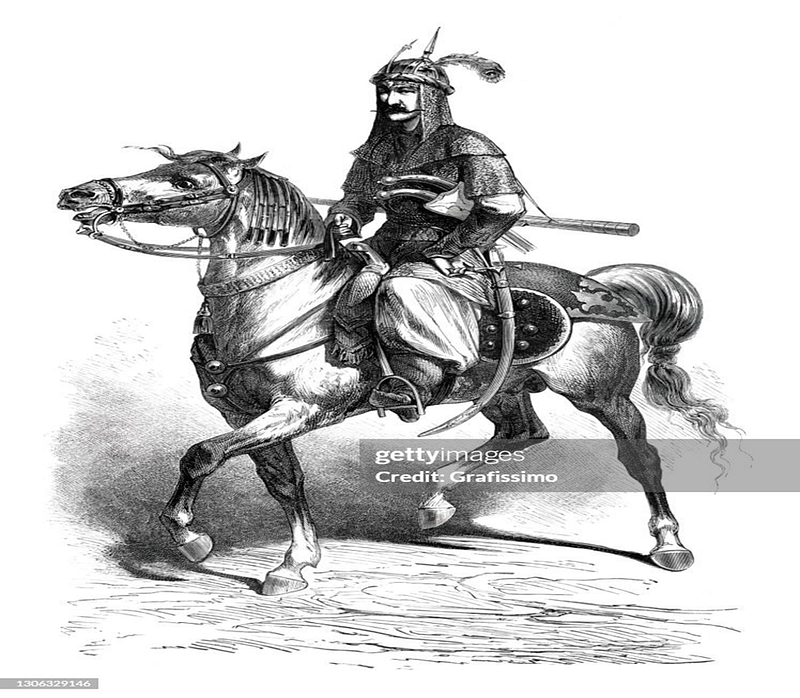
“The young Khalil” is a Kurdish folk song rich in emotion and history. As you delve into its lyrics, you’ll encounter themes of longing, sacrifice, and cultural pride. The following narrative will also explore the song’s roots and its significance in the larger tapestry of Kurdish history. Here lie the soulful words of our song:

The Young Khalil

Oh, my God,

How heavy my heart feels with sorrow!

Hafsa speaks:

Worn by the solitude in foreign lands,

My cousin lies ill, confined to bed.

I would spread luxurious carpets in his chamber,

Soft cushions to support his weary back.

I’d tear my waistband to create reins for young Khalil’s horse,

My bracelets transformed into nails to secure its hooves.

I’d cut my hair to adorn his tent on the elevated pasture,

Let my headgear serve as a rope for his mare.

How joyous my heart would be,

If Khalil would ever ride his steed,

Entering the battlefield in distant lands,

Among the ranks of the Ottoman forces,

And no one would look down and say:

Such a pitiable Kurdish knight!

Oh, my heavy heart,

Life feels empty since young Khalil’s departure.

Oh, my God,

How laden my heart is with sadness!

Young Khalil, head raised with eyes full of grief,

Seeks a breath from his hookah.

Hafsa says,

How I wish to craft a Turkish hookah for my cousin,

Carved from amber or oak,

I’d excel in its creation,

With saw and chisel,

For seven years,

My cousin, forced to fight amongst the Ottomans,

I’d present the hookah, saying in Turkish:

For you, sir!

Oh, my heavy heart,

Life seems devoid of meaning since Khalil’s departure.

Discussing the song’s genre, its origins, and how it has evolved through the ages
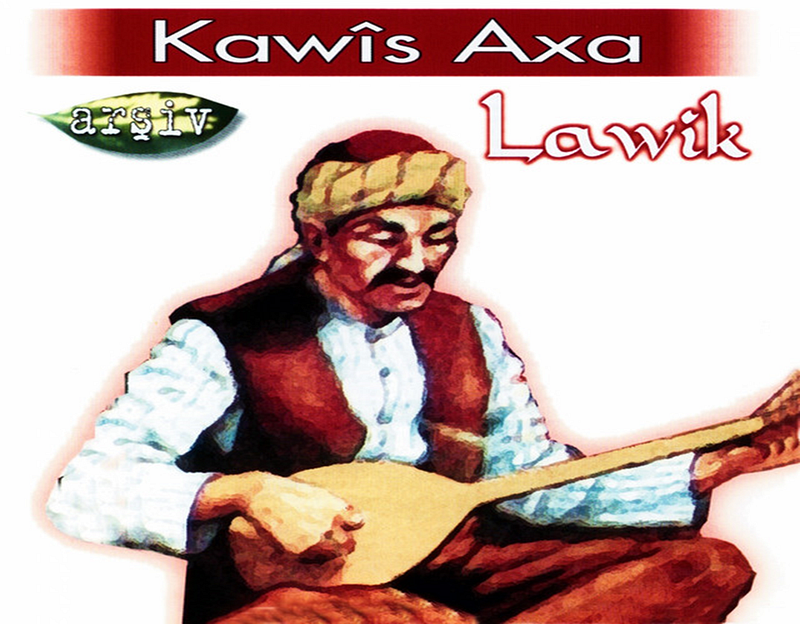
“The Young Khalil” is a folk song that has echoed through the diverse regions and dialects of Kurdistan for many years. Although determining its exact historical origin remains elusive, the lyrics hint at its emergence during the Ottoman Empire era.

Categorized within the “songs of sorrow” genre, it is traditionally performed in an epic style, recounting tales filled with enduring grief and often culminating in melancholic or open-ended conclusions. While it’s commonly believed that this genre was mainly the domain of women, generalizing can be misleading. After all, folk music is an oral tradition, constantly evolving to reflect contemporary realities.

For modern Kurdish generations, “The Young Khalil” has become inextricably linked with the voice of the celebrated singer, Kawis Axa (1889–1936). He committed this song to record in the 1930s at a Baghdad radio station, a product of the British mandate authorities in Iraq. While numerous versions exist, the “Kawis Axa version” remains the most iconic, rivaled perhaps only by the rendition of the legendary Kurdish singer, Shakiro (1936–1996).

The 1990s marked a turning point for Kurdistan and its people. Factors like the Soviet Union’s dissolution — an ally of both Iraq and Syria — the exhausting eight-year Iran-Iraq war, economic reforms, and advocacy for the Kurdish cause by Turkey’s Kurdish-origin president, Turgut Özal, significantly influenced the region’s dynamics. Not to forget, the emergence of Iraqi Kurdistan as a quasi-independent Kurdish region presented an opportunity to breathe new life into Kurdish culture, music included. This era saw a renewed emphasis on Kurdish folk music, ushering in an evolution that continues to the present day.

During this renaissance, various Kurdish artists felt compelled to reinterpret “The Young Khalil,” striving to capture its essence with traditional Kurdish instrumentation. Notably, there was a desire to address the cultural incongruities in Kawis Axa’s recording, which had been performed with Arab and Jewish musicians unfamiliar with Kurdish musical nuances.

Echoes of History: The Story Behind the Song
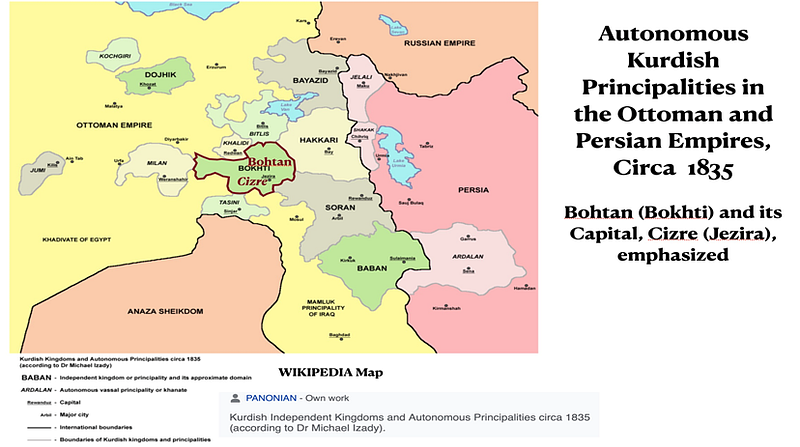
Before the Ottomans set foot in Anatolia, numerous independent emirates marked the landscape of Kurdistan, each possessing considerable military might that posed a challenge to the advancing Ottomans.

The Ottoman Empire’s westward expansion into Southern Europe demonstrated its growing power and ambition. Simultaneously, the ascendant Safavid dynasty in Persia began to feel a growing concern about the rise of this nascent empire and the potential shift it might bring to the region’s balance of power. While the Safavids were staunch proponents of Shia Islam, the Ottomans adhered to the Sunni tradition.

Kurdistan became the strategic battleground for these two behemoths. Despite the Safavid ruling family being of Kurdish descent, many Kurds, influenced by figures like the celebrated aristocrat, historian, statesman and poet Idris Bidlisi, threw their weight behind the Ottomans. Their involvement was crucial in the Ottoman triumph at the pivotal 1514 battle, which took place in Kurdistan. This confrontation set the stage for the eventual partitioning of Kurdistan between the Ottoman Empire and Persia, a division formally acknowledged in the 1639 Qasr-e Shirin agreement.

Kurdish warriors would subsequently make significant contributions to the Ottoman incursions in Syria, Egypt, the Balkans, and Central Europe. Their valor was especially evident during the Russo-Turkish conflicts, notably the Crimean War (1853–1856).

The establishment of the Kurdish Hamidiye brigades “Hamidiye Alayları” in 1891, named in homage to Sultan Abdul Hamid II and inspired by the Cossack model, marked another chapter in this shared history. While their primary role was guarding the Russia-Ottoman frontier, their involvement in certain Armenian massacres remains a point of historical contention. Many of these brigade members, despite their martial prowess, hailed from impoverished rural communities and were often conscripted by influential Kurdish lords. In reciprocation for their service, these leaders enjoyed generous rewards and increased influence within the Ottoman administrative framework. It’s plausible that a figure like “The Young Khalil” could have been an unsuspecting villager, thrust into these grand geopolitical machinations. Contrary to some narratives, it’s essential to note that the Hamidiye brigades were ethnically diverse; they weren’t exclusively Kurdish, as Circassian, Arab, Turkmen, and other ethnic units also existed.

Kurdish Women: Voices of Tradition, Change, and Resilience
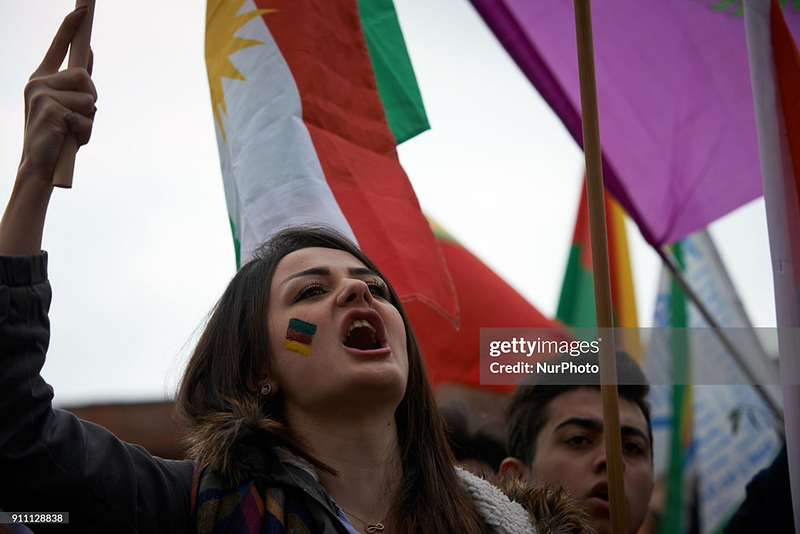
Among Europeans — be they missionaries, orientalists, or diplomats stationed in Kurdistan — a consensus emerges: Kurdish women enjoyed notably more autonomy and freedom compared to their Turkish, Arab, and Persian counterparts. These women, particularly in rural areas, worked alongside their husbands in fields, mingled freely with men, and even participated in Kurdish folk dances, which were always co-ed. The younger ones rarely donned head coverings. It was not uncommon for them to welcome male guests and extend hospitality in their husbands’ absence. The renowned Turkish traveler, Evliya Çelebi, observed that some Kurdish women even took up arms, fighting side-by-side with men to defend their villages.

While these observations largely hold true, one must exercise caution against broad generalizations. Kurdish culture, far from being monolithic, varies across the vast, rugged terrains of Kurdistan, shaped also by the region’s diverse religious or sectarian influences. Notably, the predominantly Sufi interpretation of “Kurdish Islam” is often more tolerant, particularly in matters concerning women’s rights. The secular leanings of the Kurdish political movement, albeit with a few exceptions, have only reinforced this relative freedom for Kurdish women, setting them apart from their counterparts in neighboring regions.
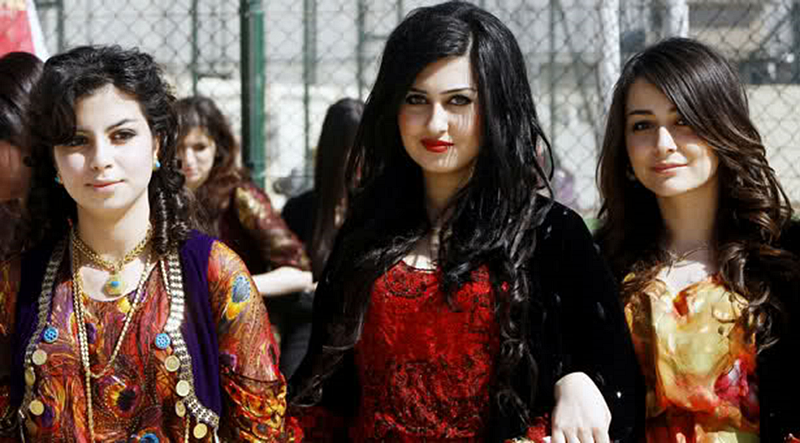
This relative freedom is also reflected in the cultural realm. Kurdish women have been active contributors to folk singing, especially the epics — stories of lost love, of lovers lost to endless conflicts, of valiant Kurdish warriors, and of deep-rooted love for the homeland. Many popular folk songs, like “Derweshe Avdi,” “Ahmedo,” and “Siwaro,” to name a few, are believed to be their creations. Historically, figures like Meryem Khan and Nesrin Sherwan, Ayshe Shan have been dominant female voices in Kurdish folk music, and today, artists such as Aynur Dogan and Chopi Fatah continue this rich tradition.

It’s worth noting that Kurdish women have made remarkable contributions to the development of music in its various forms in the countries where the Kurds reside. To mention but a few shining names in this field: Zara and Yildiz Tilbe in Turkey, Shahd Barmada (شهد برمدا) in Syria, Dumooa Tahseen (دموع تحسين) in Iraq, Zara, За́ра (Зарифа́ Паша́евна Мгоя́н) in Russia, among many others.

“The Young Khalil” stands as a beacon in Kurdish culture, capturing the heart and history of its people. It mirrors the profound connections other nations feel towards their indigenous songs, much like the Irish with “Danny Boy” or the Scots with “Auld Lang Syne.” For the Kurds, this song is more than just music; it’s a testament to resilience, pride, and shared heritage. Its universality underscores that while our stories may differ, emotions and experiences remain a common thread among humanity.

Herein, we present two renditions from the nineties of the last century: one by the venerable Shehribana Kurdî and another by the dynamic Kurmanj Bakuri:

https://www.youtube.com/watch?v=axNc_ANy_ns&ab_channel=TheMerdo94

https://www.youtube.com/watch?v=cpKTubtW-PI&ab_channel=Kurmancbakuri

manc.bakuri.official/

Recommended from ReadMedium