
Love Rules!
Can It Overcome Society’s Roadblocks?
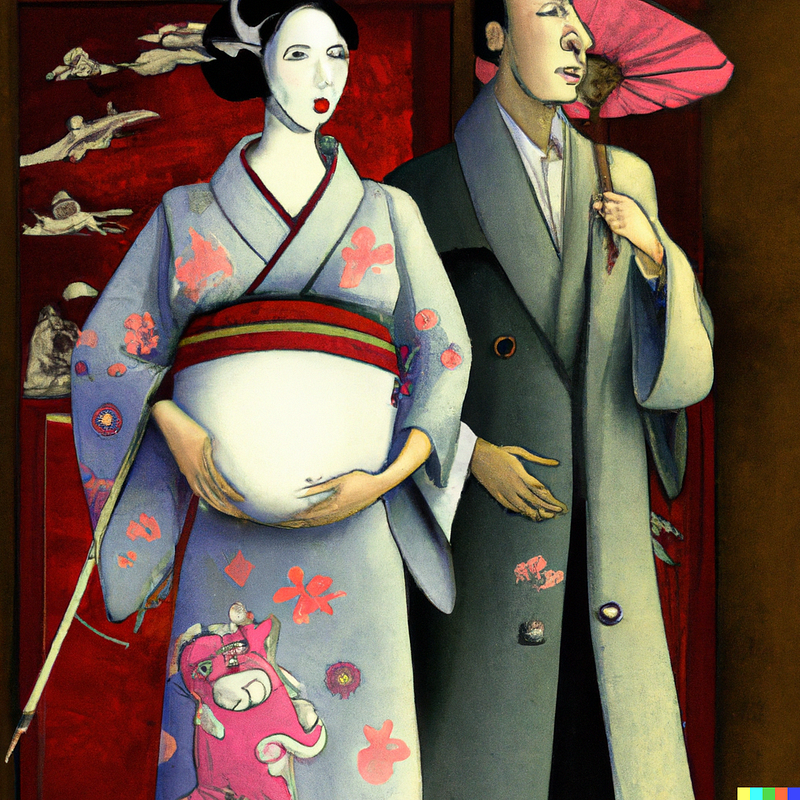
Ichiro’s father, Vlad, a Moscow-born diplomat, was sent to Tokyo in the 1890s to settle land disputes and diffuse tensions between Russia and Japan. His mother, Kiyoko, was a geisha often called for cultural exchanges by the diplomatic corps.
Vlad was tall, poised, and clever. Kiyoko was beautiful, intelligent, and charming. The two shared an immediate chemistry, and then an intense love affair during the buildup to the Russo-Japanese War.
Their affair was more than scandalous. Given the anti-miscegenation laws at the time, it was downright criminal. When Japanese officials learned that Kiyoko was pregnant with Vlad’s child, they immediately escorted Vlad from the country. And they placed Kiyoko under house arrest until Ichiro was born. The two lovers were left only with large holes in their hearts.
What they wouldn’t have given to be with each other. If only for a moment.
Because of Ichiro’s mixed heritage and his illegitimate birth, he had no chance of being accepted into Japanese society in the early 20th century. He was taken from a tearful Kiyoko and placed in an undisclosed orphanage far away from Tokyo. There, he would spend the first sixteen years of his life doing what would now be recognized as prison labor — all while waiting and hoping for any contact from his mother or father.
What he wouldn’t have given to be with his mom and dad. If only for a moment.
Orphanage birth records were tightly sealed in those days, so any search by his parents seemed futile. All they had was hope that fate would reunite them one day. Likewise, it would be impossible for Ichiro to find either of them. When he came of age, he had no way of even knowing their names, let alone anything else about them. All that existed was a third- or fourth-hand rumor he heard that his mother might have worked in hospitality and that his father might have been Russian. Hardly enough to base a search on.
Around the time Ichiro was released from the orphanage, the First World War was breaking out. Japan was allied with France and England against Germany and the Central Powers. Although Japan was not required to provide combat soldiers in the conflict, they did commit merchant marine vessels and crews for logistical support. Ichiro was drafted and assigned duty in the Mediterranean, where he was to deliver food and medical equipment to the Allies. However, his vessel was captured, and he was taken to a POW camp in the Ottomans, where he remained until the Treaty of Versailles was signed in 1919.
With little changed in Japanese attitudes toward multi-race individuals, Ichiro’s prospects at home remained limited. He was strongly discouraged from returning and he was told his fortunes would be better served in Western Europe. He travelled to the more tolerant France, where he accepted factory work. Although a free man technically, he was confined to a small factory town, where he lived in crowded company housing, and was given food in lieu of wages. With a global economic depression going on in the 1930s, it was the best he could have hoped for.
In 1940, when France was captured by the Nazis, Ichiro’s situation grew more desperate. Due to his non-Aryan heritage, he was sent to Germany and placed in work camps supporting the Nazi War machine. As the war progressed, he was moved to Buchenwald, where he worked alongside Jewish and Romani prisoners doing forced labor making munitions.
In the Spring of 1945, Buchenwald was liberated by American troops, and Ichiro was brought to the U.S. However, because of his ancestry, and because the U.S. was still at war with Japan at the time, he was sent to the Manzanar War Relocation Center — an internment camp for Japanese and Japanese Americans — a few hours outside of San Francisco. He remained there until the end of the War.
Job opportunities in the U.S. for ethnic Japanese after World War II were limited. Without family or connections, the best job Ichiro could get was as a guard in Alcatraz — a famous prison located in San Francisco Bay. There, he guarded the likes of Machine Gun Kelly and “The Birdman.”
Alcatraz was a domestic prison, but it was used on occasion as a place to bring suspected Cold War spies. Guards like Ichiro would be asked to apply torture tactics to force secrets from them. But such spies had been trained in their homelands to resist these torturous interrogations by focusing on memories of loved ones to help shut out the intense pain.
In the early 1950s, there was a Soviet spy brought to Alcatraz for interrogation. While Ichiro shined flashing lights in the spy’s face and applied shock treatments trying to extract secrets from him, the spy focused his thoughts on a beautiful woman he once loved.
“KIYOKO!” the spy gasped loudly and desperately, using the memory of young love to shut out the intense pain.
With that desperate cry, a Japanese-American woman popped her head out of the prison’s laundry room where she worked. Hearing her name called by the prisoner, she responded hopefully with “VLAD?!”
Recalling the third- or fourth-hand rumor that his mother might have worked in hospitality and that his father might be Russian, Ichiro began to connect those rumors to the current situation.
“Mother?!” Ichiro gasped lovingly, glancing at the laundry worker.
“Father?!” he cried out to the prisoner, while dropping his instruments of torture.
Both parents simultaneously shrieked, “Son?!” in disbelief as they locked eyes with their long-lost Ichiro. The reunion was emotional and overwhelming. After more than 50 years of separation and hardship, the family finally found a way to be together.
If only for a moment.
Thank you for reading my story. If you are inclined, please clap for me, follow me, and join my email list. I write stories like this every week.


