
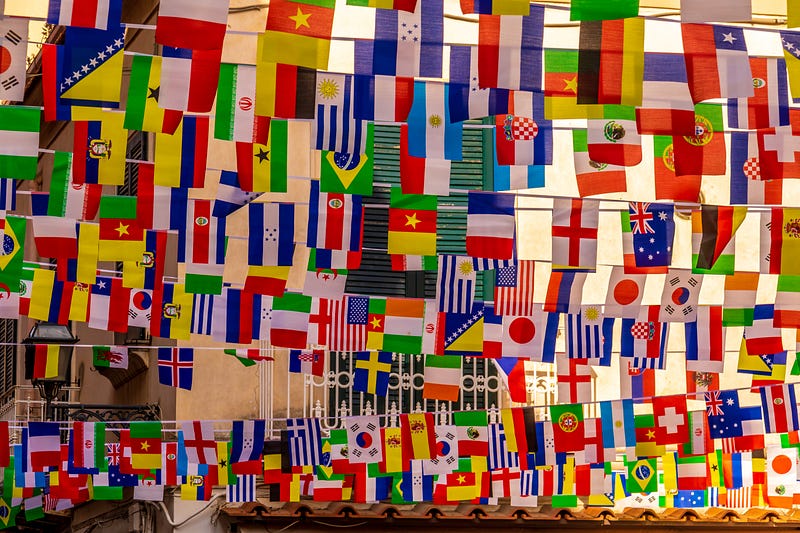
Love beyond the border
How it is to live in a binational relationship
I’m Swiss, born and raised in Switzerland. My boyfriend, Paweł, is Polish. He moved to Switzerland 2 years ago. Our journey started one year and 2 months ago.
As a binational couple, we may have different struggles than other couples. I want to share them with you and also show you how we deal with them.
Language
As Paweł is working in an international team he speaks English at work. He’s learning German though, but not feeling confident yet for deep conversations. I get it, I learned French for over 9 years in school and still don’t feel assured.
While I sometimes practice German with him, mostly we still talk in English. I wasn’t used to speaking English regularly and especially in the beginning I often wanted to look up a word I didn’t know. Paweł encouraged me to just explain it in other words. My English might not always be correct, but I speak way more fluently than before.
Talking about issues or emotions is for sure harder when it’s not your native language. Still we managed a way to talk about deep stuff. It’s just important to give each other more time to think about the right words. We’re still improving, but that’s okay. The language doesn’t just affect our conversations directly, it also shows up in other topics, what you find out by further reading.
Family
I would say I have a profound connection to my family. Since I moved out of my parents' house, I’m visiting them once a week. Paweł on the other hand, left his home country and with this also his family behind. He still manages to visit them up to 4 times a year.
For me, introducing my partner to my family was always a big thing. And being introduced to my partner’s family filled me with pride. In a binational relationship and with the language issues it’s more difficult to form this connection. Sometimes I miss the feeling of him getting part of my family and I’m getting a part of his.
Paweł mostly joins our weekly dinner, but he does it more to make me happy. My family isn’t experienced in English and even when we try to have a conversation in English, far too often we accidentally switch back to Swiss-German, which is for Paweł impossible to understand. So he’s not really part of the discussion, which sucks.
So far I visited his family twice and experienced what he’s going through once a week. His family can’t speak English at all, only a handful of words, which means that I just sat at the dinner table, waiting for my boyfriend to translate. It’s no fun to laugh about a joke 2 minutes later than all the others.
There’s a bright side, though. Connection and inclusion is possible with few or even completely without words. For example, on our last visit in Poland, his parents showed me baby pictures of him. We had a lot of fun looking at them together and his mother was pointing to the other persons in the pictures and told me their names. Also, they know the word coffee and that I’m a huge coffee drinker, so they’re always happy to offer me a cup of coffee. One good way of inclusion is to talk (with translation of course) about a specific topic and compare the two countries. Everyone can contribute to the discussion and in addition, you can also learn a lot.
Friends
Well, with friends it’s actually the same issue as with family. My study-buddy is spending quite a lot of time with us and with her, we always talk in English, so nobody feels excluded. But when we meet a group of friends up to 10 people, it’s more difficult. Just me and a few others speak in English with Paweł. Most of my friends don’t feel confident speaking English, so they just stick with Swiss German. I know it sucks for Paweł, but for us it’s also weird to talk in another language with each other.
Of course I always try to include Paweł in conversations, but it’s not so easy. It’s just important to accept if he doesn’t want to meet my friends, because I know how exhausting it is if you can’t follow the conversation. It works better in small groups of people, so instead of dragging him to a big meeting, I rather invite one friend over for dinner.
Culture and Politics
Switzerland and Poland have developed in different ways. Due to the history of world war II, Switzerland had experienced an uprising afterward, while Poland, with communism, had to face many problems. These effects are still visible today. The two countries, based on their history and development, are facing different problems and as a consequence also different governments and politics.
For sure these aspects affected both our childhood. That’s why I’m more than happy Paweł doesn’t share the conservative views Poland is sadly still representing. Sometimes in discussions about politics we show differences, but I think we’re both quite reasonable persons and believers in science. If one of us arguments logically with facts and not just a belief or saying from childhood, we often come to an agreement. Still it’s necessary to understand how these beliefs and opinions from a country developed. I’m never going to be able to understand what it means to grow up in Poland or to fully understand the problems they are facing, that’s important to remember in discussions about politics.
Food
I want to end this enumeration with my favorite topic.
“The way to a man’s heart goes through his stomach”.
To describe traditional Swiss food with one word, it would be cheese. And for Poland, it would be meat.
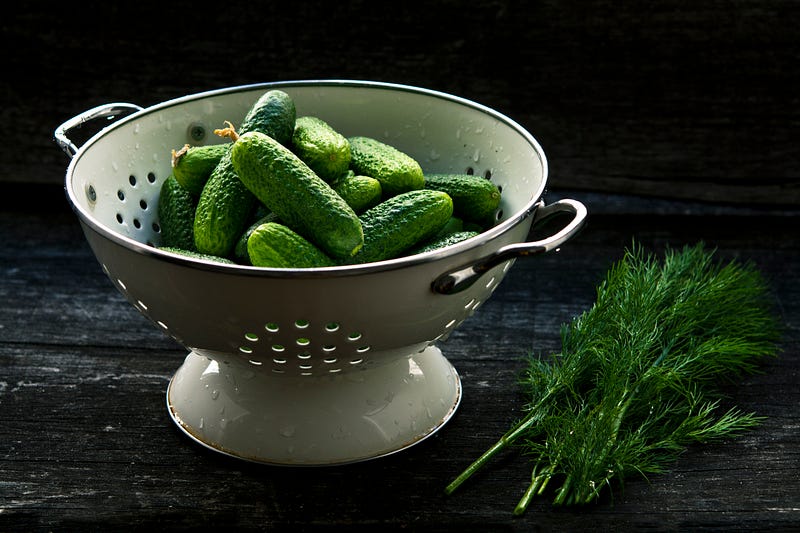
Well, I’m a vegetarian. You can already see where this problem is leading, yes? Paweł’s mama is struggling with what to cook when I’m visiting them. Even without meat, the traditional Polish kitchen is unusual for me. They have a lot of…, well let’s just call it special food. For example Żur or Żurek, which is a sour rye soup. Or a pickle soup, what I supposed to be disgusting, but it’s not so bad after all.
Paweł told me (when he proofread this story) that he sometimes misses the Polish food but he’s happy he went to the country of Müsli and he also loves Swiss cheese. I think food is strongly connected with childhood memories. That’s why I think it’s important to try the traditional food from your partner’s country and it’s maybe a new passion you can share.
Conclusion
We may have some issues leading from our binational relationship like the topics of language and inclusion, but both are things that can be changed. One uncertain thing may be the future. For now, he wants to stay in Switzerland, but who knows how this is going to be in 5 years? Also having kids would lead to many more questions, but let’s just leave this for the future.
Having a partner from another country made me learn way more about my home country than I did in all the years before. We learn and grow from each other and I think that’s the most important part of a relationship. I see it as an enrichment. I practice my English skills, I got insight into a country I would have never explored on my own and we both learn a lot from the different views. Also, I discovered delicious food like Pierogi and learned a few Polish words.
And with this, I say Smacznego and go enjoy my Barszcz (beetroot soup)!


