
Love and Truth: You Can’t Have One Without the Other
Do not accept anything as love that lacks truth — do not accept anything as truth that lacks love

Our youngest says I “forbid” her from getting earrings. I have no memory of doing so — but I often told our kids why I’m not too fond of piercings.
“Don’t put a bumper sticker on a Ferrari,” I often said, deeming piercings, tattoos, and other “alterations to your original design” unnecessary.
Love is the opposite of control, so forbidding or demanding is a certain way to get someone to “go the other way” and desire the forbidden. Combining love with truth is essential.
“Do not accept anything as the truth if it lacks love,” St. John Paul the Great said. “And do not accept anything as love which lacks truth! One without the other becomes a destructive lie.”
Ironically, our youngest waited until college to get her ears pierced and tore an earlobe soon after, so she quit wearing earrings. She’s always worn her hair long, so you probably wouldn’t see her ears either way.
The modern temptation to tell loved ones what they want to hear
Today, we often see people call for tolerance, empathy, and justice in the name of love, Father Joe Campbell argues, but too often, we disconnect these calls from the truth.
Without truth, he adds, “we won’t know how to love others.”
How often, Campbell asks, do young people “get completely off track,” desiring something that isn’t healthy, anything from too much ice cream to making bad relationship decisions.
Do we tell them what they want to hear (love without truth) or fight them with every argument we can think of (truth without love)? Love and truth must go together, he stresses, noting love means “willing the good of another.”
“There is a deeply profound connection between love and truth: you cannot have one without the other,” Campbell said. “If you ignore the truth or refuse even to consider what it may be, you may not only fail to love in that situation. You may even wind up causing great harm.”
Separating love from truth, he said, can lead to “dualism,” the division of something or someone into two opposed or contrasted aspects.
The Church, he adds, teaches our personhood cannot be separated from our bodies, that the two are both part of the same gifts we receive from God.
“Whoever seeks the truth is seeking God, whether consciously or unconsciously”
Born in Poland, St. Edith Stein, also known as St. Teresa Benedicta of the Cross (1891–1942), was Jewish, brought up religiously by her mother.
But at age 14, Edith stopped praying, wanting to rely exclusively on herself.
“She devoted herself to freedom,” St. John Paul the Great recalled. “Edith Stein was a seeker. Her mind never tired of searching and her heart always yearned for hope.
“She traveled the arduous path of philosophy with passionate enthusiasm. Eventually, she was rewarded: she seized the truth. Or better: she was seized by it. Then she discovered that truth had a name: Jesus Christ.”
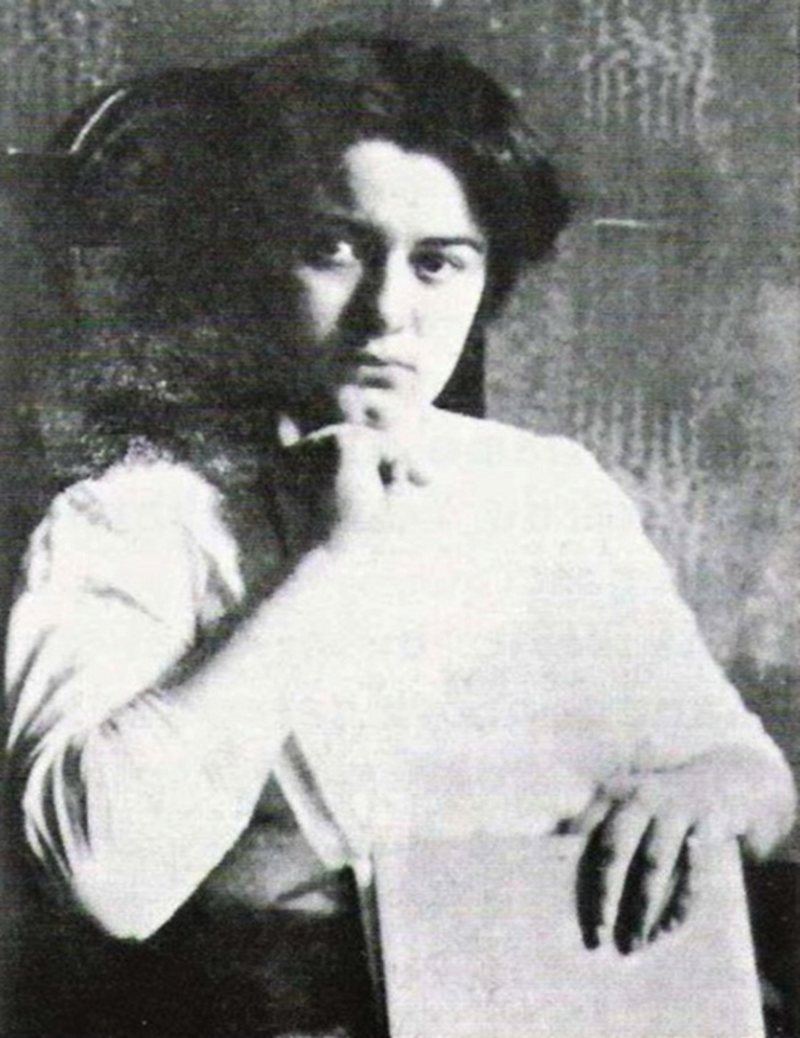
During Stein’s ongoing search for the truth, she learned how to be a nursing assistant, working in an infectious diseases hospital. She completed her doctoral degree in philosophy at the University of Freiburg in Breisgau, Germany, in 1916.
“Whoever seeks the truth is seeking God, whether consciously or unconsciously,” Stein later wrote.
Studying the writing of St. Teresa of Ávila drew her to Catholicism. Shd he was baptized in January 1922 and began a distinguished teaching career disrupted by the 1933 Nazi takeover of Germany.
“The modern world boasts of the enticing door which says: everything is permitted,” John Paul said. “It ignores the narrow gate of discernment and renunciation. I am speaking especially to you, young Christians, particularly to the many altar servers who have come to Rome these days on pilgrimage: Pay attention! Your life is not an endless series of open doors! Listen to your heart! Do not stay on the surface, but go to the heart of things!”
Stein’s spiritual mentor urged her to delay her wish to become a nun. She eventually completed her perpetual vows in 1938. The Church moved Stein from Germany to the Netherlands for her safety, but the Nazis caught up with them in 1942.
“Because she was Jewish, Edith Stein was taken with her sister Rosa and many other Catholic Jews from the Netherlands to the concentration camp in Auschwitz, where she died with them in the gas chambers (in August 1942),’’ John Paul recalled.
Stein understood “that the love of Christ and human freedom are intertwined because love and truth have an intrinsic relationship. The quest for truth and its expression in love did not seem at odds to her; on the contrary, she realized that they call for one another.”
“In our time, truth is often mistaken for the opinion of the majority,” John Paul said. “There is a widespread belief that one should use the truth even against love or vice versa. But truth and love need each other.”
God is both love and truth itself
God is love as well as truth. God “is love” (1 John 4:8.16), giving Himself completely and gratuitously, the Catechism of the Catholic Church teaches (CCC 218–221).
Simultaneously, “God is truth itself, and as such, he can neither deceive nor be deceived. He is ‘light, and in him, there is no darkness (1 John 1:5). The eternal Son of God, the incarnation of wisdom, was sent into the world ‘to bear witness to the truth’ (John 18:37),” the Cathechism adds (CCC 214–217, 231).
Totalitarians, including the Nazis and communists who conquered John Paul’s native Poland in September 1939, triggering World II, frequently asked, “What is truth?” They spoke of “your truth,” “my truth,” and “a truth.” The Bible and the Church say there is only one truth, and it will set you free.
John Paul’s mentor, Blessed Cardinal Stefan Wyszyński, experienced the lies of Nazism and Marxism up close, concluding, “You can expect anything from people for whom the difference between truth and falsehood does not exist. I cannot understand how a system that forces its officials to lie to people does not fear that this talent for lying, this ‘virtue’ in lying, someday may be used against the leaders themselves.”
In his book, Authenticity: A Biblical Theology of Discernment, Father Thomas Dubay explains: “The more one loves, the more he sees ultimate reality. Love puts one into contact with God and with men as nothing else does. The person who loves fully sees deeply.”


.jpg)