Love Affair with Clouds: Reflections on Potential and the Future We Can Never Know
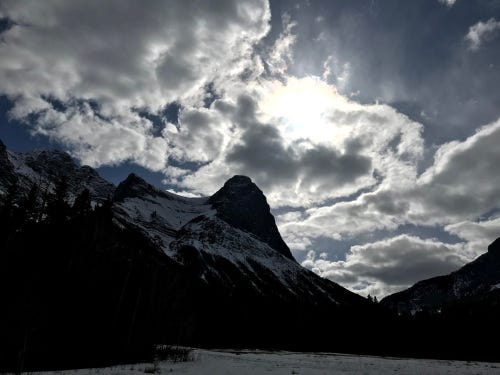
My mother, the photographer Helga Williams, used to say that you should avoid outdoor photography on days where the sky is clear and blue. “Clouds,” she said, “are far more interesting.”

While Mom might have been speaking of aesthetics and visual interest, I’d have to say that the same general theory applies to both life and writing. There’s nothing more boring than a piece of writing in which nothing happens. Likewise, life.
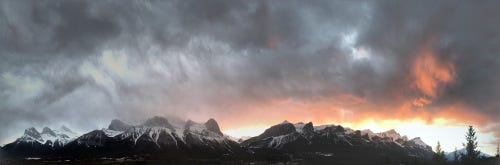
Miserable though the down-times may be, they are often memorable. There’s nothing like a pot catching fire on the stove, the loss of a job, or a dog getting run over to rattle one’s cage. Obviously, the more upsetting the challenge, the more interesting the day becomes. [A cliché, perhaps, but true — to make things interesting in your novel, make things horrendously difficult for your protagonist.]
Can We Get Off the Plane Now?
I remember the most exciting take-off I ever experienced was during a hurricane in Florida. Our plane was trapped on the runway for ages, the clouds so thick, dark, and low it was hard to tell where the tarmac ended and the sky began. My seat was at the back of the plane, right in front of the row where the flight attendants sat.
After a particularly violent gust of wind shook the plane and a fresh deluge of world-erasing rain pummelled us I heard one of the flight attendants say to the other in a broad South Carolina accent, “Lordy, if they weren’t payin’ me there’s no way in hell I’d be on this flight.”
I peered back between the seats and asked if they thought the flight might be canceled after all and, if so, whether we’d all get off. The second, braver attendant smiled sweetly and said, “Don’t worry, honey. The pilot will take off like this…”
She moved her hand in a broad sweep, indicating a giant letter ‘C’ that ended out in the aisle. “You know how these hurricanes have bands of clouds?”
I nodded.
“Well, he’ll thread his way between two of those and find us some less bumpy air.”
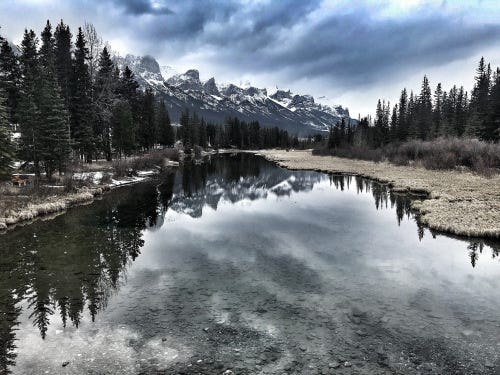
Her co-worker didn’t look too convinced and her description of what was about to happen to us didn’t sound exactly reassuring. I snugged my seatbelt a little tighter across my lap knowing full well that wouldn’t do much good should the worst come to pass.
When we took off fifteen minutes later, the plane banked as we climbed and the buffeting we experienced wasn’t that bad at all. In fact, our miraculous ascent up and out of the maelstrom was sufficiently exhilarating that the passengers burst into spontaneous applause when we emerged into the blue sky above the storm below.
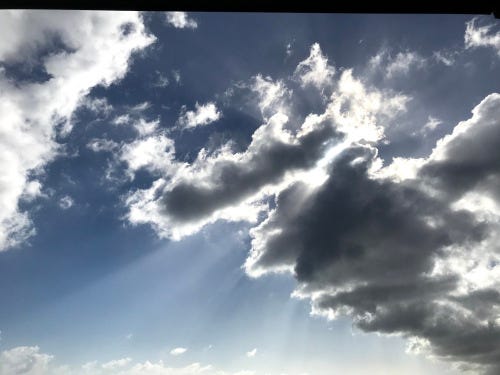
That’s the other thing about clouds, of course, is the darker and more violent they are, the sweeter is the return of the sun.
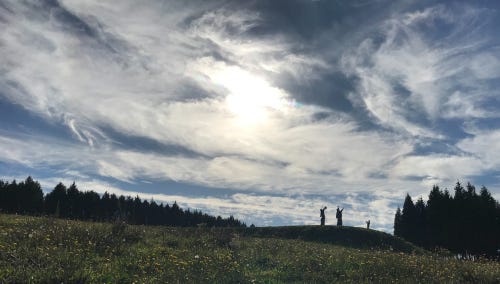
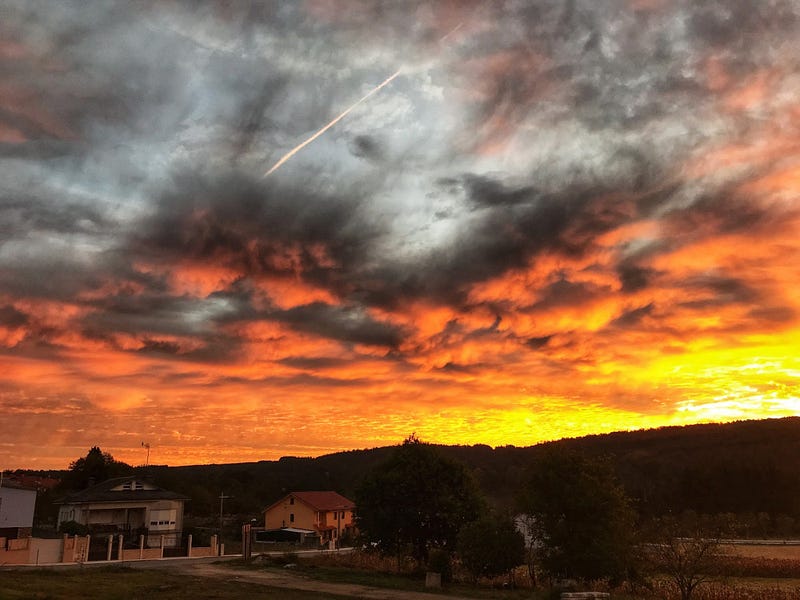
So, too, in life. When things are going along swimmingly it’s easy to forget what it’s like to fall and dislocate an elbow [extremely unpleasant] or realize you have just failed an exam you really needed to pass or hear terrible news from a friend. Breakups, deaths, financial disasters… hives… from the small to the catastrophic, the bad times are what define the good.
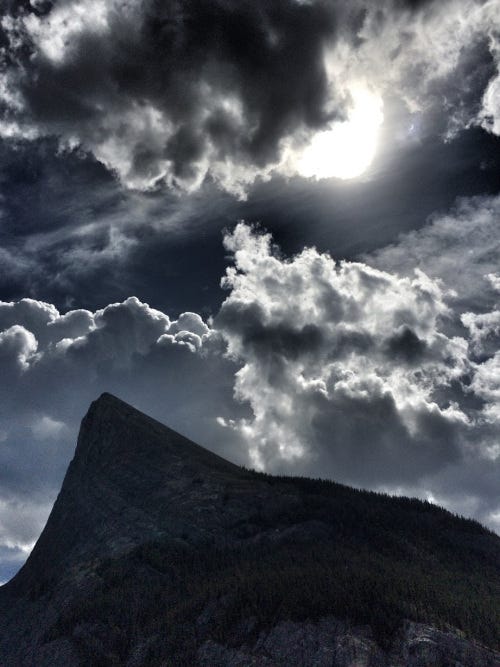
Maybe that’s why there are so many cloud photos in my archives. For one thing, they always remind me of my mother’s words and how often she would say something pithy that carried a much deeper meaning. Her loss is one I’m still working my way through, though she passed away a dozen years ago. And, yes, her loss has made me appreciate all the more those who are with us still.
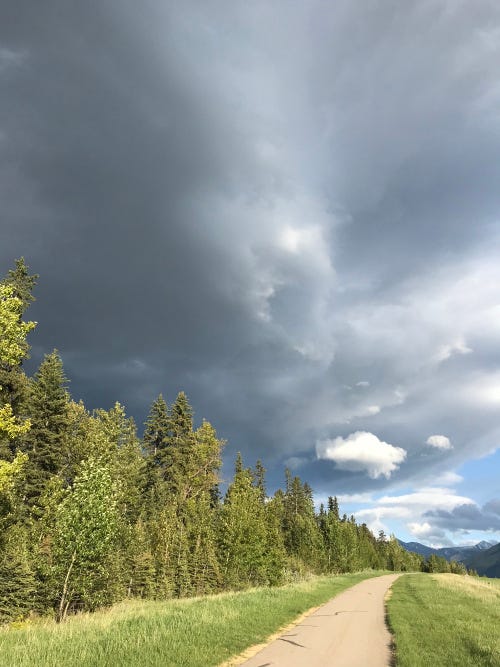
My father (the artist E. Colin Williams) is not only alive and well, but he is also still painting. I’ve always been fascinated by the way he manages to capture the moods of skies through his rendering of clouds in his paintings.
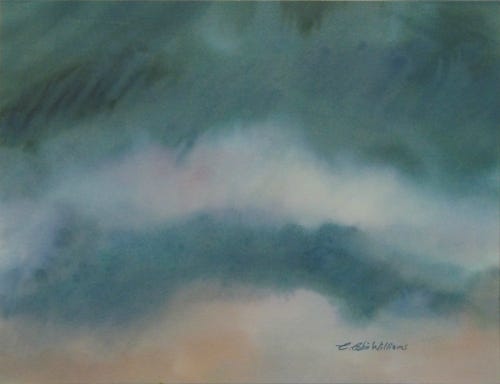
Of course, Dad is not the only artist who has created cloud-centric paintings.
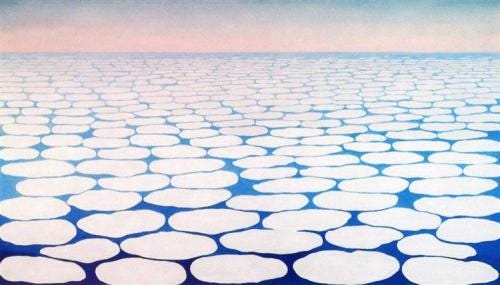
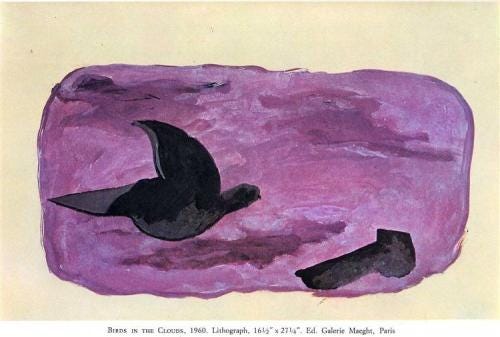
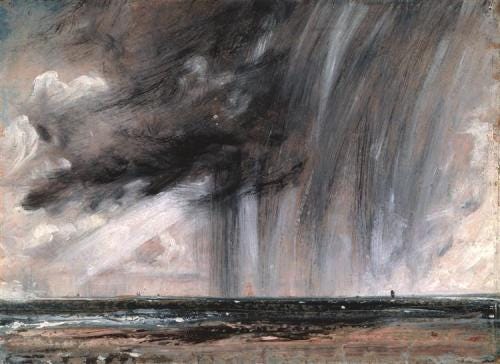
The other thing about clouds is they obscure what lies beyond. Wispy or solid, they change the look of things, sometimes completely screening the horizon beyond. We may think we know what tomorrow will bring, but we don’t. Not really. Which is how it should be in a good piece of writing, too. We may guess at the ending, but the very best stories take us on a journey that compels us to keep turning pages to see how it all turns out in the end.
As for me and my love affair with clouds, I try hard to fully appreciate the balmy moments in my existence and not get too caught up in brewing storms and the uncertain future. For now, here I am — able to write and reflect and consider clouds, the process in itself an unexpected gift on a cold wintery day.