Summary
The text "Love, A Supernova" uses the metaphor of a celestial event to explore the intensity and consequences of love, likening it to the life cycle of a star that ends in a supernova.
Abstract
"Love, A Supernova" is a poetic contemplation that draws parallels between the cosmic phenomena of a supernova and the emotional intensity of love. The poem begins with birds disrupting the tranquility of the night, transitioning into dawn, where the sunlight metaphorically represents the emergence of love. This love is depicted as all-consuming, much like how a supernova reclaims the light it has ever produced, leaving behind a profound impact that alters the surrounding cosmic landscape. The text suggests that the most intense loves, like the biggest stars, eventually implode under their own weight, leading to a transformation where the heart and soul succumb to the gravity of emotional mass. As daylight takes over, the poem concludes by acknowledging that such fiery passion cannot sustain itself indefinitely.
Opinions
- The poem conveys a sense of awe and reverence for the power of love, comparing it to the destructive and creative force of a supernova.
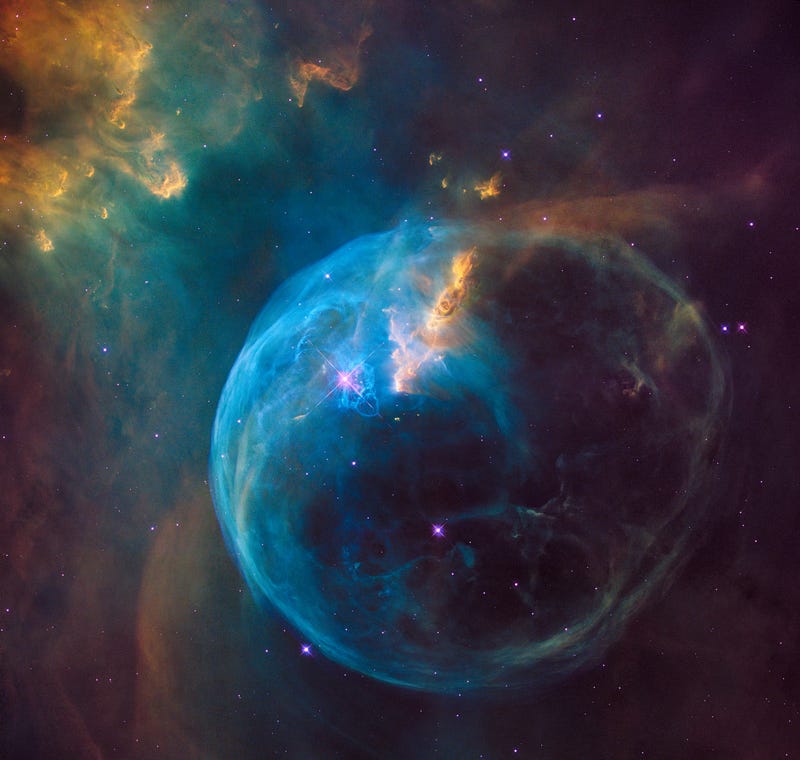
- It reflects on the dual nature of love as both a force that can illuminate and create life (like star-birthing nebulae) and one that can lead to an implosion of the self.
- The author seems to imply that love, in its most intense form, is unsustainable due to its own inherent mass and brightness, leading to an eventual collapse.
- The mention of birds scaring or killing the moon suggests a disruption of the natural order by love, much like how a supernova disrupts the cosmic order.
- The poem suggests that longing, like a supernova, is a direct and intense flame that cannot burn indefinitely, hinting at the transient nature of romantic passion.