
Losing Faith
Why I nearly stood up to a man of the cloth to challenge his ‘living in sin’ insult

Faith is a gift.
A person of faith can weather most emotional storms and can cling tightly to hope, no matter how fragile, even in the face of imminent death.
But what happens when one loses Faith?
More spiritual than religious
I haven’t lost my faith. I still describe myself as Catholic although non-practicing. And for a long time now, I see myself as spiritual instead of a clinger of Catholicism and its dogma.
My family and kin grew up in this faith. They were not fanatics, just ordinary church-going people, heeding the prescribed doctrine as laid out by those who interpret the same.
I was, perhaps, the first “anomaly” in the family’s faith in that I veered away from its traditions.
You see, I started reading at a very young age, not religious books, mind, but any book that I could get hold of. I had an uncle, a student, who boarded in my family home. He had many books: literary classics, popular fiction, books in French and even Russian, and western pocketbooks. I borrowed his books when he wasn’t looking.
(And no, I didn’t learn French or Russian; I just enjoyed looking at the words on paper that I could not understand nor pronounce.)
The more I learned, the more I knew I hardly know anything
Reading heightened my knowing that I would be a writer one day. But it also made me question a lot of things, pushing me further to find answers. I had questions too, about my family’s religion.
But I knew what sensible people know: the more we learn, the more we realize that what we knew was just a drop in the entire cosmos.
Then I stopped going to church to hear mass. I only went to church when there was no mass going on. I preferred to pray on my own, not listen to the sermon that, most of the time, were not compatible with the facts I pick up from reading, observing, listening, and summing it up with critical analysis.
No doubt, there are good servants of the Lord who gave sermons that inspire and strengthen one’s faith. I might, perhaps, just unfortunate to not have come across a man of the cloth whose sermon resonated with my growing spirituality.
‘Living in sin’
The one occasion that left my spirit permanently disenthralled occurred some 16 years ago.
It was during the church wedding of my aunt to her long-time partner. I had just recently arrived from an extended stay in New Zealand, hence, the event was a huge surprise to me.
The wedding ceremony included full mass and communion. The church was being renovated at the time, but no matter. It was this church that saw the baptism of all my aunt’s six daughters and one son. It was also here, as I understood, that her children’s children — those already born at the time — were baptized.
When the priest started his sermon, I remembered feeling cheerful. After all, it was a happy event, with relatives from near and far gathered to celebrate the formal union.
The priest started by saying, “We are gathered here today to celebrate the marriage of Aida and Pablo.”
I thought, what a pleasant introduction. But when he followed it with something to this effect –
“The Lord is happy that this couple, after living in sin for the past 35 years, have decided to tie the marital knot…”
I could not describe the outrage I felt when I heard the phrase, living in sin. I seethed, feeling monumentally angry. How could my aunt have lived in sin?
She was in her late teens when she eloped with this fresh university graduate and son of a farmer. With no house help, this couple raised doctors, engineers, and teachers; together, they worked very hard and sacrificed a lot to grow their farm holdings. They became a model family to our clan and the wider community.
The sermon went on and on, repeating the part about my aunt and uncle having “lived in sin for 35 years” because they were unmarried.
I was shaking. In passionate anger. I could not, would not accept that “living in sin” part. I very nearly stood up to challenge the priest, and ask him to revise what he said.
I looked around, saw the faces of my many relatives. My cousins, my siblings, my mother, and two other aunts. I thought: why were they not reacting the way I was — with teeth grinding, brows knitted, eyes ablaze, and cold hands shaking in torment. They appeared to be accepting the content of the sermon!
Then it occurred to me: they grew up in the religion and accepted that sermons were good for the soul. That the words of the men of the cloth, especially when said from the pulpit, were infallible.
Gritting my teeth, I willed myself to not stand up to God’s servant who was casting aspersion on my aunt and uncle. Because if I did stand up, my aunt and her family would be the focus of gossip in their town, for having an irreverent niece who dared to tell off their priest.
I survived my own rage with extreme effort and later celebrated the occasion with the entire family.
No way, however, could I forget that “living in sin” insult.
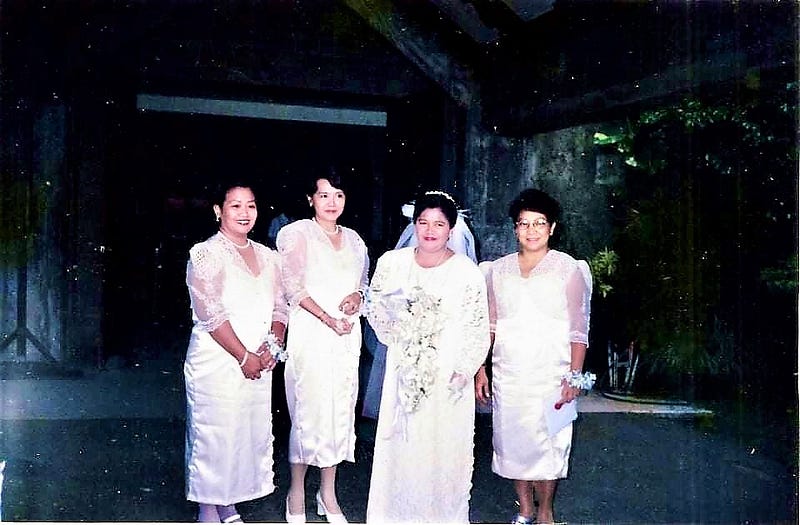
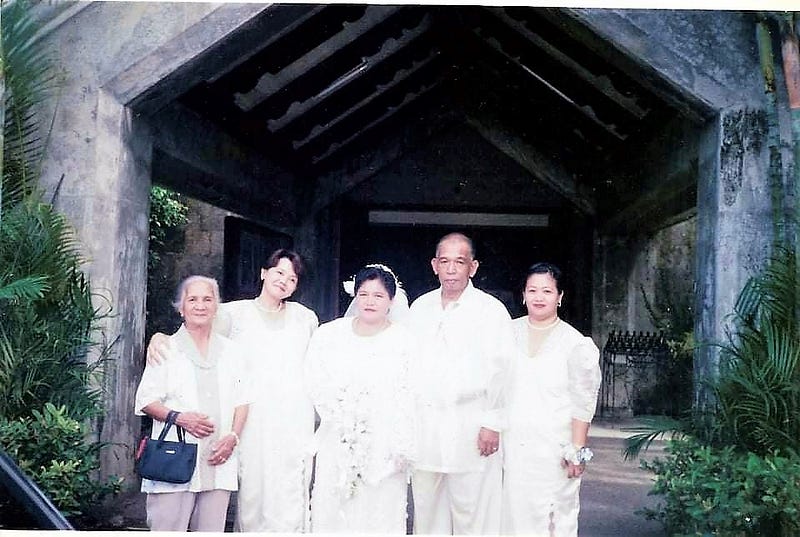
And I have not lost my faith. I will always believe in God, or whatever name He is known to other people of Faith. I also became more spiritual; I set foot in churches of other Christian denominations, without pause.
I could not have lost my faith even if audacity took over me one Sunday morning, long ago, in the house of God.
PS: Not a few of my kith and kin have joined other Christian groups. I may not agree with some of the teachings of those, but I will always be happy for them for finding joy and contentment in their new faith.
Thank you for reading.
If you want to read more of my writings, you may check out the following articles.
You can share your outstanding stories and inspire others. Just click the below image and be a writer for The Masterpiece.


