
LOSS
Losing a Parent is Never Easy
Make time to let people know you love them
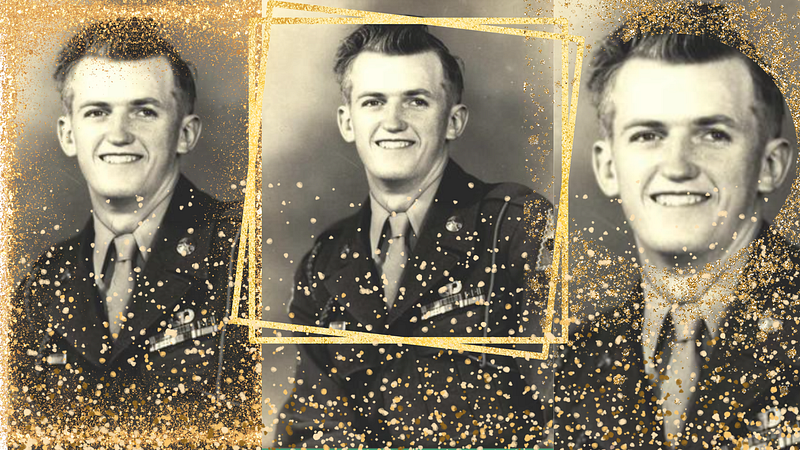
I was counting on more time.
My old man and I couldn’t stand to be under the same roof. We seemed to be at opposite ends of any spectrum you could think of. At least, that’s how I saw it.
My parents were children of the Great Depression. They knew right from wrong, the value of a buck, etc. Pick a cliché for the Greatest Generation; they knew it.
The first crack in Pop’s armor appeared when I enlisted in the Marines.
“Geezus. I wish you had joined the Navy,” he said one day.
“It’s a bit late for that, Pop,” I said.
Although there was friction between us, I’d have done anything for him, including joining the Navy. Yeah, I’d have looked spiffy in my ice cream sailor whites over Marine dress blues.
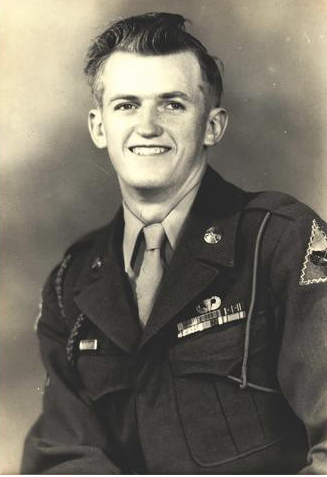
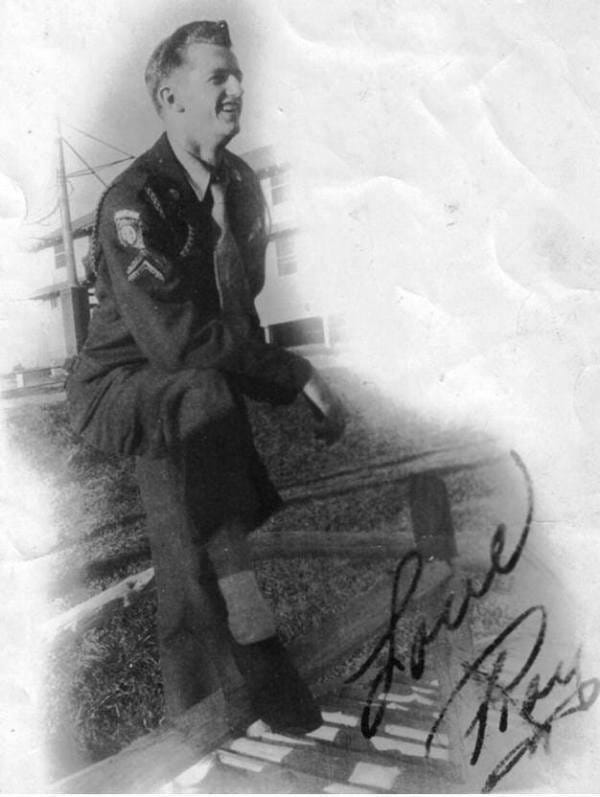
My old man had stories to tell about his service during World War II, but he never shared them. He made two combat jumps with the 82nd Airborne and earned two Purple Hearts and a Bronze Star for valor. I didn’t know about those until I put a shadow box of his medals together.
Several years later, I was stationed at Joint Base Lewis-McChord when my mom called to announce that she and Pop were coming to visit.
I was stunned but pleased to show them around the base and Washington State.
At the time, I had started to collect sports cards. It was, back then, an affordable hobby. The old man was fascinated. I knew he was a baseball fan, but cards? But it was another crack in the armor. We talked a lot about baseball while he was visiting.
The week over, I drove my folks back to the airport. It was time to put a hole in Pop’s armor.
I hugged him, and with tears in my eyes, I told Pop I loved him.
It was all uphill from there.
We started talking weekly on the phone — about baseball and sports cards.
A few years later, I was on the move again. Before leaving Washington State, I bought Pop a present — a 1954 Ted Williams baseball card.
Finally, home in Massachusetts, I sat down with Pop to give him a birthday present — the Willams card. He was stunned.
Pop finally mumbled, “I can’t take this.”
He knew the card wasn’t cheap.
I smiled and said, “I’ll get it back sooner or later.”
We had the same morbid sense of humor. We both laughed.
That comment also proved prophetic.
Two years later, my mom found Pop unconscious on the porch. I was working a night shift gig then, so I didn’t learn what happened until I stopped by the house.
We learned it was a glioblastoma that felled the rock that of our family. Fucking cancer.
My mom’s life changed dramatically. Of course, she was concerned about the diagnosis. But it was more than that. The tumor made it difficult for Pop to combine his thoughts and speech. Mom had a difficult time deciphering what Pop was trying to say. For some reason, I knew what he was trying to say. I became his de jure interpreter.
And the old man was still sharp. We were driving through New Hampshire when I made a wrong turn. He quickly let me know I had missed the turn.
That was life for what we thought would be the next 18 months. The sand was expected to run out.
The old man and I were in the driveway of his house one day, shooting the breeze as best we could. I had the urge to tell him I loved him and did so. For the first time — he responded.
“Yeah, me too.”
I knew what he was saying. That was all that mattered.
I hoped to give him one last gift: a visit to the Red Sox clubhouse to meet the players. The impending players’ strike made matters worse, which eventually shut down the rest of the 1994 season. Some PR flack blew me off, telling me to come back next year.
But I knew Pop wouldn’t make it.
He didn’t. He passed quietly in his home with his family at his side on March 23, 1995. I was still working nights, so I didn’t have a chance to say goodbye. It still hurts.
Our family was short-changed six months. I guess the doc was merely giving us an estimate.
Post Script
When the players’ strike ended in 1995, Major League Baseball scrambled to bring fans back. As far as I was concerned, baseball could kiss my ass.
I sent a letter to John Harrington, then president of the Red Sox, telling him where the players could stick their bats.
To my surprise, Harrington replied with a handwritten letter. I don’t recall the letter’s contents, but he offered his condolences and four tickets to a Red Sox game in closing. I opted to go, inviting a coworker and his dad to the game. I hope it was a memorable moment for them.
If you’ve read this far, thank you for stopping by.
I accept tips, which go directly to Dining for Hunger, a recognized 501(c)(3) organization that looks to end food insecurity. If you can spare a dollar or two, I’d be grateful.
More stories from Bruce Coulter.