
Looking Strategy of Success Investing from the World’s Richest People by Warren Buffett
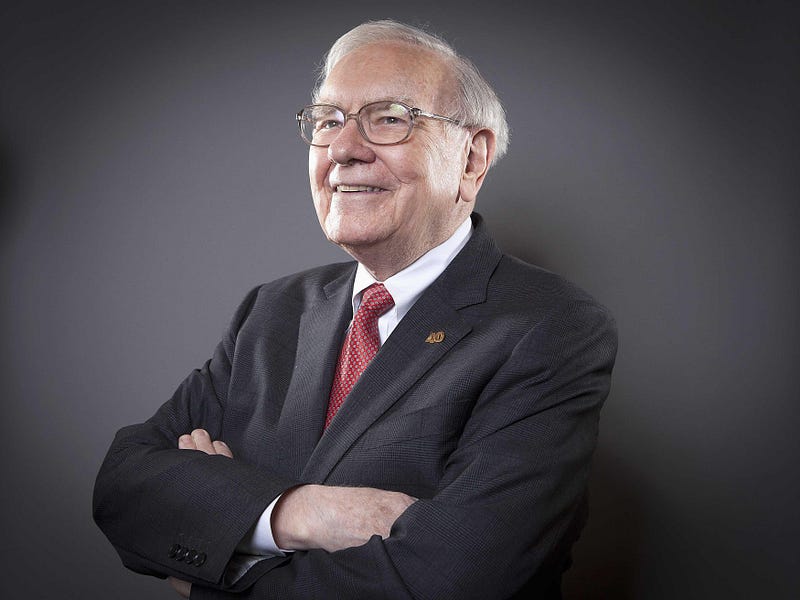
“ Don’t save what is left after spending, but spend what is left after saving” Warren Buffett
Hello Medium readers, who doesn’t know Warren Buffett, an accomplished investor who has proven that money can work for himself. Warren Buffet is also a well-known expert in financial assistance.
Recorded as the 4th richest person in the world, Warren Buffett is a figure who is used as a role model for investors in various parts of the world, both professional investors and those who are still predicated as beginners. Warren Buffett’s success in investing has made many people curious and amazed. This cannot be separated from the precise strategy he uses in investing.
But before seeing how Warren Buffet’s strategy of success in investing, let’s get to know Warren Buffet first
Getting to know Warren Buffett, the World’s Most Famous Investor
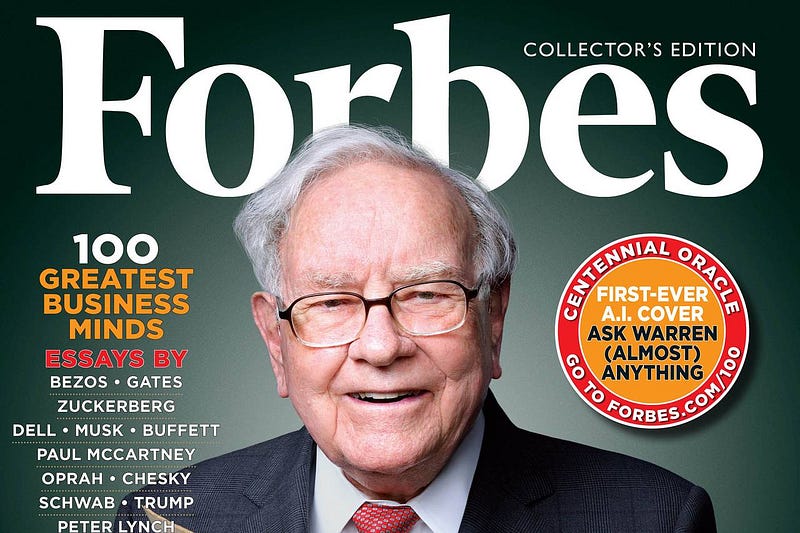
His full name is Warren Edward Buffett, this world famous investor was born on August 30, 1930 in Omaha, the state of Nebraska, United States. He is the second son of three children of the pair Howard and Leila Buffett.
Since childhood, Warren Buffett has shown an interest in the world of stocks and investing, starting when he read a book called One Thousand Ways to Make $ 1000 which he borrowed from the Omaha public library at the age of 7. After graduating from high school, Buffett initially intended to drop out of college and try to start his own business. However, his father, who was a congressman at that time, strongly opposed and forced him to study.
Warren Buffet then studied at the University of Pennsylvania in 1947. Two years later, he decided to move to the University of Nebraska-Lincoln and earned a Bachelor of Business Administration at the university. Meanwhile, his master’s degree was obtained at Columbia University, where investor Benjamin Graham teaches as a lecturer. Benjamin Graham himself is an influential figure who became a role model for Warren Buffett in his youth.
Warren Buffett Knowing Investing from Childhood
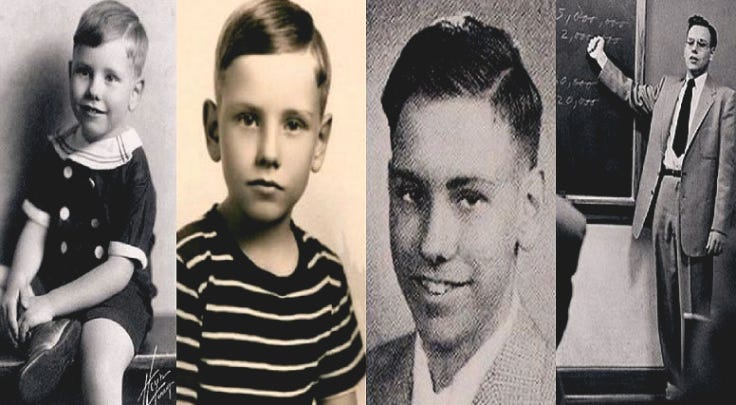
Frequent visits to his father’s stock office made Buffett interested in investing.
When he was 11 years old, Buffett bought his first stock. Warren Buffett bought three stock slots for a local gas company, Cities Service, for US $ 38 per slot.
However, sourced from Medium , Warren Buffett’s first investment did not go smoothly.
Not long after Buffett bought a stake in Cities Service, the company’s stock price fell to $ 27.
Warren Buffett kept holding his shares until he gained around US $ 40 and sold them.
Buffett later regretted this because the stock price rose to more than US $ 200 after Buffett sold his stock slot.
From this investment Buffett learned valuable lessons in investing: Do not be hasty when making decisions and be patient in investing.
Warren Buffett’s Investment Strategy
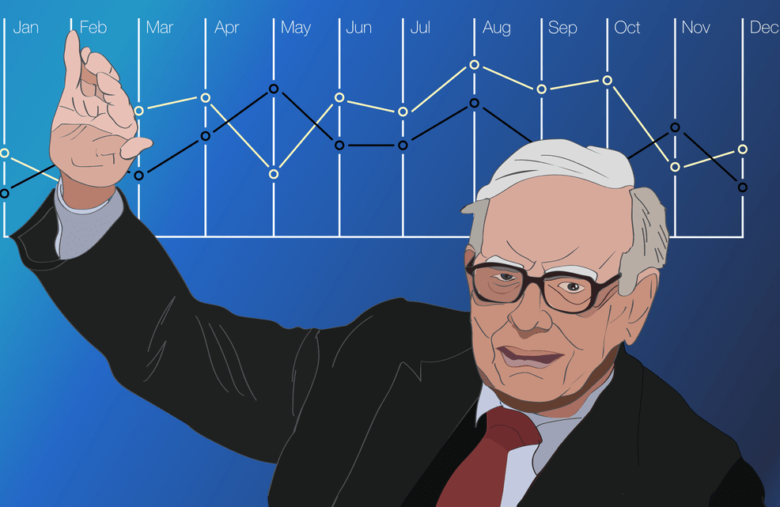
With the title of the largest investor in the world, Warren Buffett has a number of major investment strategies . Let’s take a peek at the strategy carried out by Warren Buffett:
1. Choose Simplicity Not Complexity
Many people believe that investing in market capital was complicated, mysterious and full of risks, so that only those who are knowledgeable and berpendidika n higher the were able to do so. Often they are so dependent on the formula — the formula complicated mathematics, computer programs are sophisticated, charts and technical analysis difficult.
Warren Buffet has shown that these are all myths. The principle in choosing a stock is very simple, that is, choose stocks from companies whose business is solid, easy to understand, has been around for a long time and has proven to be profitable. He never invests in a business he doesn’t understand.
For example, dotcom or hitech companies will be avoided. The principle is to find a company that has good fundamentals, is managed by a solid and honest team, and whose share price is below the price it should be
2. Decide Your Own Investments
Buffett believes that everyone can invest successfully without the help of brokers , stock market experts and so on. The reason is, investors or professional experts want to foster the notion that investing in the stock market is too complicated for most people , because it means good for their business.
How many times have we heard that someone believed in his pension or savings that had sucked up because he was entrusted with a broker or investment manager who traded as much on the wrong stocks to pursue commissions?
It only takes a little knowledge of accounting and financial markets to find a stock that in Buffett’s terms “is looking for a dollar bill selling for 40 cents.” This means everyone needs to focus on investing in value, without having to depend on others . Begin d ith a lot of reading journals and lap oran finances in magazines or newspapers.
3. Be Patient
Think for the next 10 years and not for the next 10 minutes . S aran Buffett, if you are not ready to hold a stock for a decade, it is better not ever buy a stock it. Think of it as buying a stock, and the next day the market will be closed for five years.
Keep in mind that some markets are downright hostile to those who like to go in and out, and quite friendly towards those who buy and hold. It dikare nakan out, but will increase the cost of t ransaksi such as brokerage fees and VAT, also they often miss the moment when the price s AHAM rose massively, due to the “bullet “ it “” stuck “because it was the trigger to buy legitimate am another and the value is getting smaller and smaller due to the large amount of Cut Loss.
4. Buy Business, Not Stock
According to Buffett, one of the most important factors in successful investing is reminding yourself that you are buying a portion of a business that does exist. The stock sheet itself is literally meaningless. Because shares are only a representation of the company.
What you should think about when you jump into buying a company’s stock isn’t technical analysis charts , Bloombe rg news or Wall Street tables and charts . All you have to think about are the “values” and work behind a business . Buffett always considers 4 things before deciding to buy stocks, namely:
1. A business he can understand
2. Companies den gan long-term prospects are favorable
3. Honest and competent management
4. The price (share ) is very attractive
Can be Saved u lk ‘s here that; Buying stocks is part of the business. Therefore, don’t buy stocks because of price movements, and do fundamental analysis before buying any stocks.
5. Buying Low Tech Companies
Buffett strictly avoids the stocks of high-tech companies and internet company stocks, because changes in technology are increasingly fast making this kind of company easily out of date and leaving competitors resulting in a collapse of the business.
He prefers shares of brick companies, paint companies, carpets and furniture companies that have easy-to-understand businesses and easily predictable cash flows . Such companies can survive for another 100 years, because they produce products that are not easily obsolete.
The fall of many dotcom companies such as Etoys.com, Pets.com, RX.Com , World.com etc. strengthened Waren’s alib i. How do you think the premises n Microsoft, Yahoo and Google? Buffett’s advice; do not be tempted to transactions that offer a wealth quickly, which involves a company that is relatively complicated (mi s alnya high-tech companies), these companies are difficult to predict in the long term .
Avoid doing business in a changing industry, and invest in the businesses of the “ old economy “ generation . And finally, remember that it can take decades for companies to become large.
6. Concentrate your stock investment
Almost all experts suggest diversifying, that is , owning many shares of many companies so that if a particular stock falls, it will not destroy your entire portfolio , but Buffett has another opinion.
If you’ve found the right stock, why buy less? So he said. Buy 5 to 10 good stocks at a good price , and buy as many as you can afford. Here he gives an example of buying $ 144 million in shares of Petro China, a Chinese oil company . Unexpectedly, his shares are now worth $ 1.2 billion.
According to him, it is enough for a person to invest all of his assets in 3 good companies ( with a good purchase price of course). In the long run, he will be very rich . This is also exemplified by Buffett by owning 474,998 shares of one company, Berhshire Hathaway, which he has held for decades. Now the price per share is $ 138,000 PER L EMBAR. Please calculate for yourself how much you own from only 1 company. That’s why Warren Buffett is now the richest man no. 4 universe.
7. Don’t Look at the Ticker
“I always do” breakfast “by monitoring the latest prices of regional exchanges, before the market hours start. When trading hours start, every 5–10 minutes, the eye will be looking at the computer to monitor the price movements of my flagship stock “
Is this also done by Buffett as a pau s class investor ? The answer is NO. So how does he monitor the movement of his share price ? HE NEVER DOES IT.
More computers are used to play Bridge than to monitor stock prices. According to him, we do n’t need to pay attention to stock price movements for the short term if we have chosen the right company. If we already own shares in a great business , the short term doesn’t really matter.
How is seand ainya stock prices are not ever monitored, arrived -Arrived free fall due to exchange crash hit bada i recession? Easy. That’s when the right un tuk add another portion of its shares, ka rena price is so much cheaper. According to him, instead of your time being spent staring at stock price movements that make your heart “aerobic ”, it’s better to focus on monitoring the company’s business performance , which includes management, cash flow, income etc.
Warren Buffett never knows how much his company’s Berkshire Hathaway stock will sell now or how much it will sell for tomorrow. He only cares about the selling price of the next decade that will represent the true value of his company
Lessons Learn for Us
Even though Buffett is one of the richest people on the planet. But his life still seems simple . He still drives his old car and still lives in the house he bought in Omaha, Nebraska for $ 31,500 in 1958, and he grabs breakfast at McDonald’s drive-thru most days.
Lessons Learned that we can take from Warren Buffet’s story are some of them
First , Keep Living Frugally
Because by living frugally we can be grateful for everything we have. You don’t need to live in luxury to be praised by many people. Having a luxurious style at the expense of yourself is the beginning of a disaster.
Many people have large debts just because they indulge in their prestige. With a simple life, we will be more grateful. A peaceful and serene heart can make life happy.
Never waste money without a clear purpose. When you can change small habits, you can get a simple life. It’s easy enough to practice a simple life. You only need to practice until living a simple life becomes an ingrained habit.
Second . Start Smart Investing
As with life, various important events will come up, such as going to college, getting married, having a family, to retiring. Not to mention other additional necessities such as taking a vacation, buying a new car or house. Without good financial planning, it is difficult to meet every need if you only rely on savings and a monthly salary.
By investing smartly, we can start preparing for future needs by utilizing the funds we have today . Whatever our financial goals , investing intelligently from an early age is the key to future success
Third, Keep Doing Charity and Kindness to Others
Despite being one of the richest people in the universe, Warren turns out to be Forbes’ most generous billionaire . As quoted by Forbes, the most generous billionaire is Berkshire Hathaway CEO Warren Buffet. By calculation, he is estimated to have set aside USD 40 billion of his property to donate.
This amount is very large from Buffett’s total wealth which reaches USD 73.5 billion. The donations were distributed to several non-profit organizations, including through the Bill and Melinda Gates foundation. Warren believes that as fellow human beings we must help each other and help each other
How about you? How way your financial management?