Looking Backward
The Great Collapse of the 21st Century
The period leading up to and following the near-extinction of global civilization in the mid-twenty-first century is a prime example of what modern sociohistory has come to call the Epimethean Syndrome, a social malady that refers to the widespread, universal false application of human mental function, as opposed to its whole, healthy, and creative use. The namesake of this phenomenon, the brother of Prometheus, Epimetheus, embodied hindsight, afterthought and excuses.
In a few words, the global societies that were dominant at the time could have easily anticipated what was unfolding before their very eyes, and taken steps to avoid, or at least mitigate, the worst effects; but instead, maddened by a frenzy for the accumulation of wealth and power, and spurred on by the relatively comfortable life tantalizingly promised by unlimited consumerism, they persisted in constructing and living by false narratives that ultimately led to the near-ruin of human civilization.
Background While many factions existed, by the early twenty-first-century, with a few outliers, the world was bifurcated into what was conveniently termed the West and the East. The West, led by the Americans, was composed of several major national powers organized around a bastardization of the ancient idea which bore the name democracy. The other camp, the East, led by the Chinese, forwent the illusion of ordinary-citizen involvement in the affairs of government, and instead followed a perhaps more frank, but more ruthless and brutal authoritarian path. Individual peoples around the globe aligned themselves with one or the other; each side considered itself locked in a global struggle and fiercely resisted domination by the other.
Outward differences notwithstanding, the goals of both sides were essentially the same: the accumulation of wealth and power for a very lucky few. This outcome had been largely achieved by the manipulation of large, mostly uninformed populations. In structure, both camps made use of what were essentially exploitation memes that had appeared at the beginning of the industrial era and earlier and had become so internalized and pervasive that even those benefiting from them were only dimly aware of their existence. Though never expressed in so many words, each camp promoted and promulgated a complex, semi-mythologized meta-narrative, and by this means conditioned and exploited their respective unsuspecting and mostly semi-literate populaces.
Residents of the West were told that they — the people — were the arbiters of power, and most important, justice. Groups of citizens in the West chose representatives, who, organized into local and national governments, spoke for them and ostensibly operated society for their benefit. At periodic intervals, “the people” were afforded the opportunity to select new representatives, or keep the old. To further the illusion of self-governance, the formation of “political parties” was encouraged. These curious social phenomena divided the populace into opposing camps, and were roughly organized under the dual rubrics of “worker” and “business.” For many years, these political entities engaged in what was for-the-most-part peaceful opposition, though over the years interactions became ever more contentious, even violent. Since one party blamed the other for all of society’s ills, the ruling oligarchy — society’s real overlords — largely escaped any responsibility. The parties were predominantly funded by various corporate conglomerates, so their efficacy was essentially nil. They were, however, important to the corporate entities and the hidden elite. Like an hallucinogenic drug, they created a powerful chimera: the illusion that “the people” governed themselves,
Notably — and especially in America — Western women, non-whites and other minority groups were barely and only grudgingly included among “the people”: their influence was further minimized by an ingenious set of restrictive civil codes and repressive social mores. Thus was the populace further divided and kept in perpetual conflict.
Through the late twentieth century, the West’s system appeared to have the edge. A mostly white citizenry obediently and fervently “believed” that they were equitably led by majority consensus. Dominated and deluded by a trio of memes contained in the Western meta-narrative —“capitalism,” “free enterprise,” and “freedom” — they were unable, and unwilling, to consider that, in fact, another agenda was playing out, unnoticed, though in plain sight before their very eyes.
Flying the flag of “free enterprise,” in the nineteenth- and twentieth-centuries very large corporate conglomerates had formed, providing enough mass employment, enough income, for most to survive, with some money left over to give back to the corporations in the form of revenue derived from the sale of consumer items. Workers, believing themselves “free,” gleefully worked long hours to amass enough money to buy the products that they themselves produced, but at a price that far exceeded their value in raw materials and labor. To make sure that the process was self-sustaining, an elaborate scheme was developed that relentlessly promoted these mostly useless items to the unsuspecting workers. Technological breakthroughs, especially as they related to communications, enabled these mercantile conglomerates to essentially deliver round-the-clock propaganda to everyone. Every form of communication, every pastime, every activity was monetized, constructed to provide income to the corporate conglomerates, or more correctly, to those who owned and controlled them. “The people,” kept diverted and entertained by a celebrity culture centered on sports and religion, were mostly ignorant of what was happening to them. The myth of “democratic participation” even extended to the structure of the corporate conglomerates themselves: individuals could become “shareholders,” and “invest,” voluntarily giving even more money back to the corporate conglomerates, with the promise of future returns. In reality, their actual influence was tiny, and business decisions were made by and for the elite owners.
In the East, a similar scenario was in place; but with differences. “Democratic rule” was not the dominant paradigm. A different set of memes had developed over the course of at least three millennia; the illusion of self-rule did not resonate with a people who had been ruled by an emperor, king or warlord for thousands of years. Consequently, the controlling memes essential to the East’s meta-narrative were “respect,” “acceptance,” “right behavior,” and “wisdom.” Citizens were expected to be responsible for themselves, to take care of themselves. They were expected to respect authority and customs, behave in society, and know their places. They were required to honor their parents and rulers, and to be wise enough to realize that this mode of existence was the best, not only for them, but for everyone. As long as the East remained relatively isolated from the West, this system sufficed to keep the elites rich and the population quiet and subservient.
But by mid-twentieth-century, the East’s ruling elite saw that change was coming, and that modifications were necessary to their centuries-old system. They grudgingly admired the efficiency by which the West controlled, monitored and monetized its populations, but they realized that such a system was not compatible with the expectations and practices of their populace. They also realized that the West’s riches had been made possible by a relative wealth differential: the level of wealth in the West was much higher than in the East. Literally capitalizing on this imbalance, the West had gotten rich and powerful by virtue of plentiful, inexpensive Eastern labor. What’s more, as the East’s labor force developed, i.e., got richer, their potential as buyers of consumer goods was eyed greedily by Western corporate concerns.
In response, the East set about creating its own corporatization schema, adapted culturally to the sensibilities of its people. Since the West’s communications advances had become global, and more and more of the East’s citizens were within reach of Western advertising, the job of re-setting the East’s worldview was made easier, done for them by the constant stream of Western pro-corporate infotainment and outright propaganda. Thus, the West became the unwitting agent of change, accomplishing what the East could have done on its own only with a great deal of difficulty.
External Factors As global consumerism raged, resources were consumed in enormous quantities and an incredible mass of waste was produced and dumped: into the atmosphere, the oceans, and across the land. It was plainly obvious that the earth was not an unlimited storehouse; yet no thought was given to tomorrow; the Epimethean Syndrome once again.
In earlier years, when the global population was relatively small, the ecosphere was able to absorb and withstand this onslaught, at least temporarily. But the population grew, and the demand by the wealthy elite for ever-increasing profits was relentless. The concomitant effects on climate were devastating. Global temperatures began to rise; ice at the poles and mountain tops began to melt. Water, both for individual consumption and for agriculture and industry was at a premium. Rare metals, vital to the technocratic culture that was rapidly spreading across the globe, were becoming increasingly difficult to obtain. Arable land dwindled, and fires raged, burning millions of acres. Air in the globe’s enormous cities was unbreathable. Nature herself rebelled: a mass extinction of the world’s plant and animal species was underway.

Against this backdrop, in the early twenty-first-century waves of disease swept the globe, killing millions. Epidemiologists from both the East and the West were perfectly aware that the situation was ripe for just such a deadly development. Yet, once again, in accordance with the Epimethean Syndrome, nothing was done to prepare for the eventuality of the global pandemic which inevitably developed. Committees met, resolutions were forwarded to the proper authorities, yet the world did next to nothing, though it was certainly within its capability to thwart the diseases.
Global Collapse While it is difficult to pinpoint the exact moment of the Great Collapse, most contemporary sociohistorians identify the beginnings of the Second American Civil War as the likely precipitating event. By 2040, America was reeling. Once the envy of the world, the mighty “engine of democracy” was faltering. China was in its ascendency, its economy was now supreme; immigration, in the form of poor and uneducated from Central and South America was pressurizing America’s dwindling white population. The rich were still prospering in walled enclaves, but the income gap between them and everyone else was ever-widening. For the first time in the nation’s history, an entire generation had seen a falling standard of living, with no bottom in sight. Shortages of essentials, a thing unheard of in America, were now commonplace. The Pandemic of 2020 had never really gone away; instead new viral mutations appeared almost every year, and the threat of devastation by an even more virulent strain had worn down the nation’s psyche. Paradoxically, but in keeping with the Epimethean Syndrome, millions of Americans refused treatment, believing instead that the disease was some kind of political hoax by the other side. “Freedom” became a malignant catchword: individuals exercised their “freedom” to eschew treatment, even as they spread disease to their families and neighbors.
Always pathologically preoccupied with guns and firearms, Americans became hysterically obsessed with their “freedom” to bear arms, and gun-manufacturers were only too happy to sell them as many guns as they wanted. Consequently, the entire nation was a heavily armed camp. Political demagogues took advantage of the situation, and inflamed and incited the populace with their violent, self-serving rhetoric. It was inevitable that armed conflict would break out.
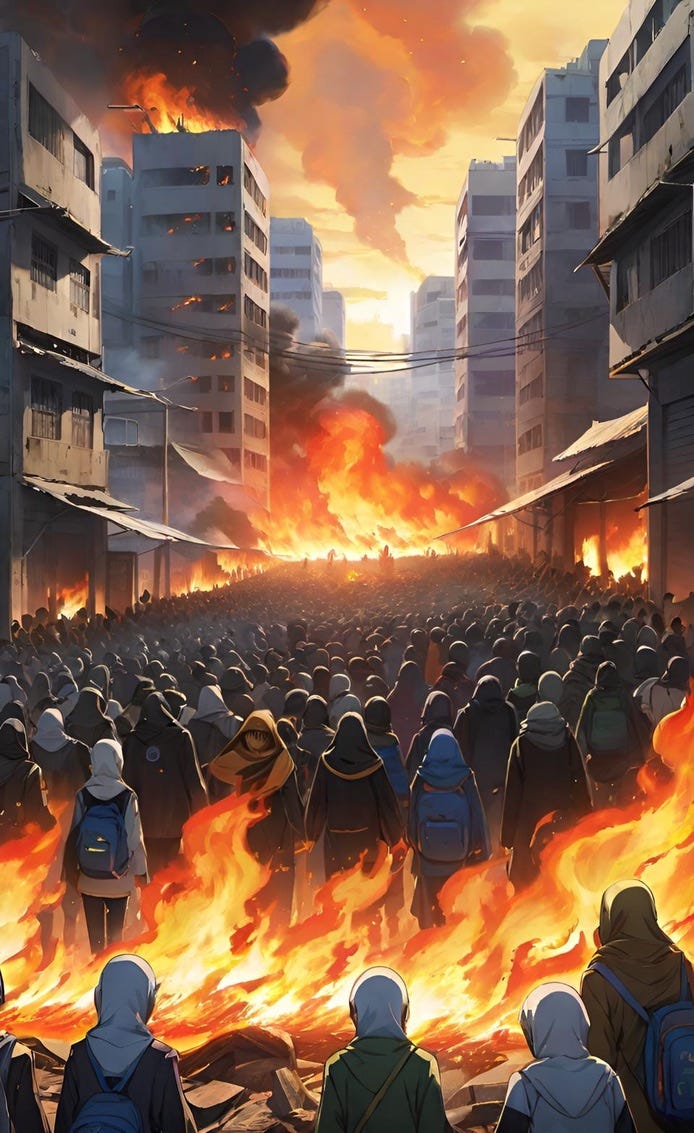
On January 9, 2041, a large armed anti-government contingent assaulted the American seat of government, and dozens of lawmakers were killed. Within hours, the state of Texas declared itself a free republic, and seceded from the American union. A national emergency was declared by what was left of the shattered American government, but many of the military sent to quell the Texas Rebellion defected, and, within weeks, the Republic of Texas became a fait accompli. In short order, the urban populations of nearly every large city rioted, and fires burned across the land. Martial law was declared, and armed citizens warred with one another everywhere.
America collapsed. Attacked and sabotaged, its power grid failed. Essentials quickly became scarce, and food riots were common.
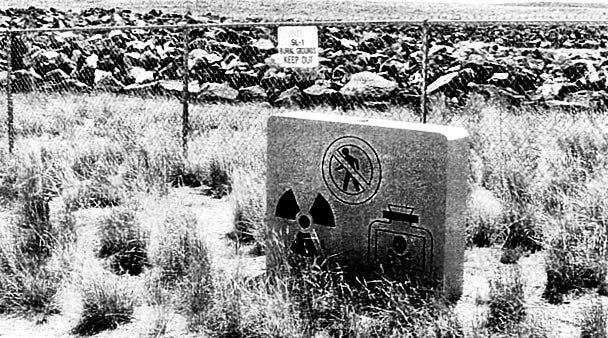
For a few years, the struggling federal government tried to hold the nation together, but to no avail. In response to the emergency, regional federations of what had been states were hastily formed: a Northeast Federation stretched from what was New England down through New York, New Jersey and Pennsylvania; the Confederacy reformed, its boundaries marked largely as they were a century-and-a-half earlier; Pacifica immediately declared itself to be, reaching from SoCal to Puget Sound; the Heartland Federation ranged from Chicago down through what was the “Breadbasket of America.” Surprising no one, Mexico’s young authoritarian president re-established that country’s claim to New Mexico, Arizona, Colorado, and parts of Utah and Nevada — SoCal, though tempting, was beyond Mexico’s military prowess. The area along the Canadian border, Idaho, Montana, the Dakotas, Wyoming, became a No-Man’s Land that few dared enter. Near what was once Cheyenne, an insurrectionist militia somehow got hold of a tactical nuclear weapon, which they inadvertently detonated, destroying themselves and making a huge swath of land uninhabitable. The Canadians mobilized military units and deployed them from the Pacific to the Great Lakes and up the St. Lawrence Seaway, and kept a wary eye southward.
Globally, the European Union, led by France and Germany, went into a defensive emergency mode. The United Kingdom sheepishly petitioned the Europeans for re-entry to the Union. Russian troops surged into Ukraine, the Balkans, and Afghanistan, and massed on the Polish border. India’s authoritarian leader declared war and invaded Pakistan, and the Pakistanis retaliated by launching tactical nuclear weapons at several Indian cities; India responded in kind, to deadly effect. The Chinese swept into Taiwan, and occupied Nepal, parts of northern India, North and South Korea, Myanmar, Laos, Thailand, Cambodia and Viet Nam, and blockaded Japan. Israel, while possessing nuclear weapons, couldn’t use them without destroying itself, and was overrun by a combined force from several Arab nations, with Saudi Arabia at the fore. Australia sat tight, awaiting the arrival of Chinese troops, who obligingly appeared and peremptorily occupied Sydney and Melbourne in short order. The Philippines swore fealty to China, and Honolulu surrendered to an overwhelming Chinese naval flotilla. Africa and South America remained largely as they were, save for the occupation of the Falkland Islands by the Argentines and Cairo by Turkey, both of strategic importance. On both continents, existing authoritarian regimes tightened their grips, and fragile democracies were, for the most part crushed. A military junta seized control of Panama, and attempted to extort huge sums from any nation whose ships desired passage through the canal. Ever the opportunist, China sent naval vessels, and, with the assistance of the Peruvians, landed troops and retook the canal; but not before serious damage had been done. East-west passage was severely curtailed for some years.
The Pandemic Re-emerges As if on cue, in the winter of 2043, amidst a global catastrophe of unthinkable scope, a highly virulent and deadly disease emerged in São Paulo. The ever-present Coronavirus of 2020 had, as anticipated, mutated and combined with a MERS strain to devastating effect. The fatality rate of the new virus approached fifty percent. Efforts were made, but containing the easily transmitted deadly virus proved impossible, especially in light of the chaos that reigned. The Armageddon Virus, as it was quickly named, spread like wildfire. After it had run its course, by 2047 nearly two billion were dead, killed by the virus or by the partner diseases associated with the multitudes of dead bodies.
Civilization, as it had been known for millennia, while not fully ended, came to an extended pause.
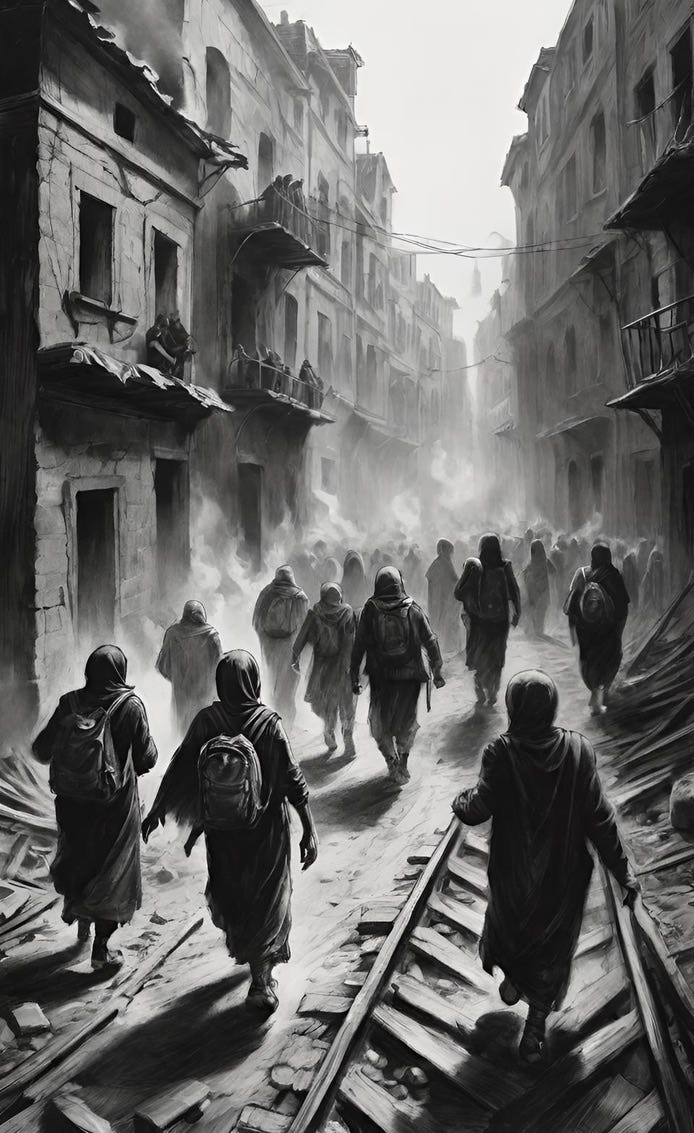
The Aftermath — Interregnum In the half-century or so that remained in the twenty-first-century, chaos reigned. Dense population centers — the world’s cities — had been devastated by the Armageddon Virus: a diaspora of those who were lucky enough to remain alive fled the pestilence and death that reigned there. The survivors of the disease that had ravaged the world were understandably wary of one another. Across the globe, small groups — tribes — warily distanced themselves from the ruins of the cities, eking a living, growing crops where they could, defending themselves against wandering marauders.
Advanced technology, while still existing here and there in isolated pockets ceased to be of prime importance. Tech’s reliance on electricity was its downfall; its use as a means of storing important knowledge was nearly totally abandoned. The survivors soon learned a significant lesson: vitally important information stored on electronic devices was as good as non-existent when batteries ran down, or when the power grid failed. Society slowly awakened to the fact that a civilization that relied on batteries was ephemeral at best, and, given what had happened, a near fatal miscalculation. Luckily, many libraries, full of physical books, still existed: all knowledge was not lost.
While operating a large-scale power grid was, for the most part, impossible, solar and wind-generated electricity was still feasible. But, even though the small-scale manufacturing of equipment necessary to wind and solar power began to spring up here and there, humans once again learned to rise with the sun, and sleep when it set. Flagrant and unnecessary use of power was severely punished. The new emergent society, while not Luddite, was wary of reliance on high technology. In America, the Amish — where they had survived — became a bulwark of knowledge about survival. Their non-mechanized lifestyle soon became a model copied everywhere. Across the globe, similar societies, once considered throwbacks, were ascendant; in the less developed world a subsistence lifestyle was more common, and populations there already knew how to scrape a living from the land. If it were not for world-wide climate change, they would have continued much as before the Great Collapse.
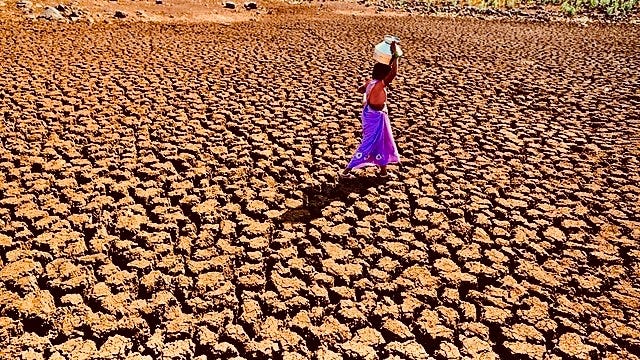
The effects of climate change were felt everywhere. Desert areas got hotter, and were abandoned to the plant and animal life that could scratch out a living there. Wildfires continued, but with far fewer people everywhere, their impact and frequency lessened. Flooding and violent weather were — and are — a fact of life. Though a reduced population needed less food, agriculture was still a vitally necessary skill; consequently, subsistence agriculture flourished. As in the earliest days of humanity, population centers sprung up near areas that were able to support them agriculturally.
Given that the global populace has — at least for now — ceased pouring carbon dioxide and other pollutants into the atmosphere, rivers and oceans, climatologists estimate that in 300 to 400 years the planet will begin to cool, and after another few hundred years temperatures will have fallen to what they once were. This time interval — less than a millenia — while vast on the human scale, is but a geologic instant.
The long-term human ramifications of the Great Collapse are unknown. The planet came close to once and for all ridding itself of the irksome primate creatures that crawl on its surface. Without a doubt, the human psyche has been dealt a devastating blow, and the wound has not yet healed; further complications may yet arise. Barring some new unforeseen catastrophe, human civilization will most likely re-establish itself across the globe. What, if anything, will it have learned from the Great Collapse? Answering this question will fall to some future sociohistorian.
Whether or not anyone remains to read it is anyone’s guess.
For more future histories, visit the list, below.
For some of my other works visit the lists, below. Many thanks for your interest!