
Longing
Count All This — Chapter 1: on the road to ruin
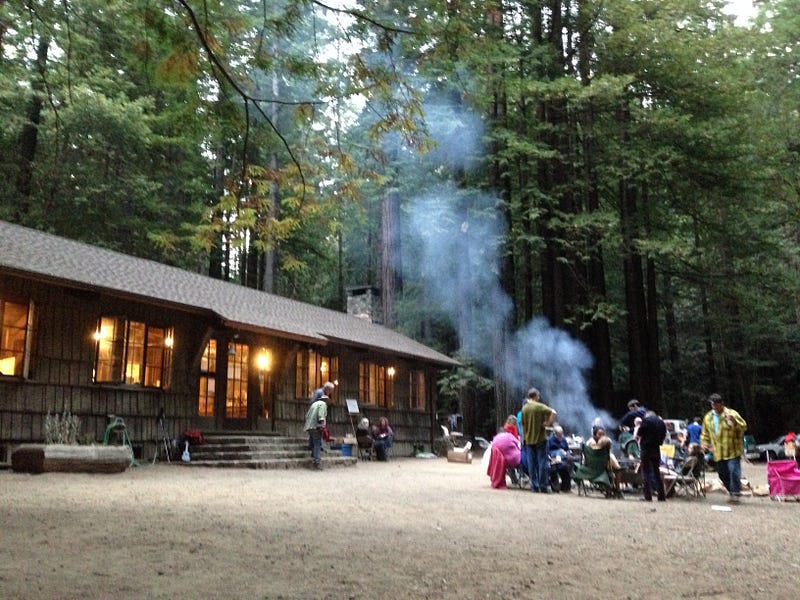
Just when Jo Kasten’s adult son encounters schizophrenia, she discovers she has breast cancer. Meanwhile, her marriage faces a test. Count All This is a story about love and loyalty, addiction and madness. The title comes from the dragon in John Gardner’s novel Grendel: “‘Personally,’ he said, ‘my great ambition is to count all this’ — he waved vaguely at the treasure around him — ‘and possibly sort it into piles.’”
Here’s the first pile.
So much happened that year, it’s hard to remember. I’m going to try to set the events down faithfully, without considering whether they make a good story, or wrap up neatly with a logical conclusion. Was I a good mother? Was my marriage worth saving? Was my son really crazy, or just a high on drugs? Did the earring he dangled from one unpierced ear at the fire circle signal signify nothing, or a mystical connection to the unseen forces that shift beneath our world? You tell me.
The beginning, I suppose, was the night in April when my son messaged me that he had just taken psilocybin, caffeine, methylenedioxy, and methamphetamine. “I am ecstatic,” he wrote. It turned out later to be a pun, because after much frantic messaging back and forth, he revealed that methylenedioxy and methamphetamine are the ingredients of the drug Ecstasy. I expressed alarm, of course, and concern. I asked why he was doing two very powerful drugs at the same time. I warned him about unpredictable interactions. And I think now that if he could have predicted what was going happen next, he wouldn’t have taken Ecstasy and magic mushrooms together, or separately.
Then again, perhaps he would.
That’s the source of my anger, the acrid anger that underpins my sadness about my son. Even knowing the path they would set him on, even knowing that he would lose his backpack, his passport, his driver’s license, his cell phone, his money, his place to live, his coveted chance to go to UC Berkeley, and his mind — even knowing all that, he might still have taken those drugs, driven by a deep curiosity, a dissatisfaction with the status quo, and that sense of invulnerability and longing for adventure that impels so many 18-year-old boys.
But, of course, he couldn’t predict the outcome. He couldn’t even predict my reaction that night. “I’m so glad you aren’t like other mothers,” he typed. “My friends wouldn’t dream of telling their parents what we are doing.” But that only made me mad. Why wasn’t I like other mothers? I scolded. I complained. I felt angry and afraid. I criticized him continually until he signed off of Instant Messenger, ending our communication for the night.
But I didn’t do anything more. I didn’t rush to the apartment where he’d been living on his own for just a few months. I didn’t call the police. I didn’t insist he enroll in a drug treatment program or move back home with us. I didn’t manage to protect or save him. So perhaps I was unlike other mothers, after all. Perhaps I wasn’t as good as they were at being a mom.
“I’m so sorry this is happening to you.” Karen said three months later at the Tall Trees Camp in the Mendocino Woodlands, leaning a little closer to convey her concern, extending a hand to cover mine. “I hope you are getting help for yourself.”
The dining hall was full of people talking and laughing over dinner, clattering plates, eating at heavy wooden tables with bulky benches to match. There were parents with children, mothers with babies, assortments of teenagers— sisters, brothers, lovers, friends. Our small coven of women sat together at the end of the table closest to the front door: my sisters Jean and Jane were here this year, come to support me in my hour of need; my best friend Karen had showed up, too; and sitting with us was Nel, a woman I’d seen every summer at camp for years, but didn’t know very well. All eyes were on me until Karen’s camp boyfriend Steve came up with a plate of food and squeezed in next to her on the bench.
The table was littered with an abundance of dinner: white and tan plates of industrial-strength plastic, little red plastic cups, and big, clear serving bowls full of food. There was beef stew in thick brown gravy, steaming yellow cornbread, little bowls of butter mixed with honey to spread on top, crisp green salad with fresh purple beets. Plastic pitchers of water, cranberry juice, and iced tea were scattered across the rough table, along with squeeze bottles of three kinds of homemade salad dressing: bleu cheese, ginger sesame, balsamic vinaigrette. Besides all this bounty, vegans and vegetarians could go into the kitchen to get servings of nut loaf and vegetable stew. Tall Trees Camp was renowned for its food.
“Is this your cup?” I asked Karen, indicating a small, red, empty container.
“Yes,” she nodded.
“This one?…This one?…” lifting each of the tiny receptacles arrayed around her plate like a plastic brigade. She nodded each time, a smile playing behind her lips. She must have brought her own bottles of red and white wine and stashed them beneath her seat. “Well, maybe I can snag this one for myself,” I said, reaching down the table into another social group to grab a cup when no one was looking. I filled it with water and settled back on the bench.
Nel, who sometimes sat alone in the lodge reading before a small bank of lights aimed at her face in a therapy meant to alleviate depression, resumed the conversation. “I saw Eddy yesterday,” she said brightly. “I was just relaxing in the lodge, and he approached me. ‘Might I inquire what you are reading?’ he said. Very polite. I told him and we had a conversation of about two or three minutes. Frankly, I was flattered that he wanted to talk to me, since we hadn’t had much interaction in the past. Here was this good- looking young man coming over to talk to me. He seemed fine to me,” she beamed.
I was glad Nel thought Eddy seemed fine, but not relieved, because I knew he could seem fine for a few minutes, to strangers, whom he was more interested in talking to lately than friends. Friends were quicker to notice the empty loop of his language, the strange connections, the pulpy bruise of his brain.
“I saw him in the shower yesterday,” said Steve, who had worked with Eddy in the kitchen every summer since he was nine years old. “He seemed pretty out of it.”
I cringed.
“I asked whether he was coming to Labor Day Camp and he said he hoped so, if he wasn’t in jail.”
Steve paused to look at me closely, his bright blue eyes piercing through thick, wire-rimmed glasses. His eyes looked too large behind their lenses; the rough skin on his aging face was sprouting white whiskers. “I told him, ‘We better hope that doesn’t happen. What makes you think you might be in jail?’ He was vague and didn’t really have an answer. Then I started telling him about some of the horrible things I’ve seen in jail.”
Steve works as a guard at the Solano State Prison when he isn’t Camp cook, a cog in the wheel of the the biggest industry in California, which has the highest rate of incarceration per capita in the world — a statistic which doesn’t comfort me.
“Then he asked me why I didn’t do something about it. But that’s like asking a bank teller to do something about capitalism. What am I supposed to do?” I shook my head and shrugged my shoulders. There was nothing he could do.
“What drug is Eddy taking? Do you know?”
Everyone in our group looked at me and waited. A red- headed woman who had been aligned with another group towards the center of the table leaned her left ear in closer to hear my response.
“Well, we don’t know, exactly. He keeps changing his story. But he told us a month ago that he’d been using crystal meth.”
“Oh no,” Steve’s voice dropped. “Unfortunately, that’s one of the worst. We get some crystal meth addicts in there, and all we can do is lock them in a cell by themselves. When they go through withdrawal, they defecate over themselves and everything else.”
A new pain bloomed in my already tender chest as I thought of Eddy’s boyish body curled up on a cot in a prison cell. Brown eyes with a starburst of green around the pupils. Skin the color of red tea with cream. Slender fingers with wide, spatulate nails like his father’s, adorned near the cuticles with pale white half moons. Hands like that could some day catch babies in a labor room; fix delicate equipment with fine, shiny tools; or hold my own when I’m afraid. Wisps of facial hair, a recent addition to his gypsy good looks, seemed painted on in small patches near his earlobes and on the brink of his square but lopsided chin.
Eddy wasn’t in the dining hall. He hadn’t been coming to meals all week. He’d told me, the few times I’d run into him since we’d arrived, that he couldn’t handle the crowds. That meant he was outside in the redwood forest, in the dark, barefoot since he’d forgotten to pack his shoes and lost the pair of flip-flops I had gone into town to buy him.
Perhaps he was huddling alone by the hammock he’d strung between two trees above the creek, chasing scary thoughts around in his brain; or maybe he was sitting near the campfire being stoked for the sweat lodge, worrying the other teens with his circular, unanswerable questions; or he could be seeking out the company of strangers, as he’d done a month before in Santa Cruz, walking up to random houses and asking whoever answered the door if he could come in and talk.
“Just remember, in 10 or 20 years he’ll get through it,” Steve was saying, bringing my attention back to the table. I choked down a sour laugh. Was that supposed to reassure me? Ten or 20 years? I wasn’t sure I would make it through another day.
“I did drugs when I was his age,” Steve went on. “I even had to move home with my parents for awhile. And look at me. I made it. Let’s face it, we all did.”
But Eddy hadn’t “done” drugs for at least a week, unless you counted the marijuana he was undoubtedly smoking with the potheads at camp, and still his brain wasn’t working normally. Steve didn’t know that. And Steve didn’t know about my schizophrenic cousin, who committed suicide by jumping from a water tower when he was 25; about my manic- depressive father, whose crazy highs sometimes delighted and sometimes terrified me as a child, but always embittered my mother, who checked out via breast cancer when she was just 55; or even about the way I feel when walking my bike on the Peninsula Avenue overpass in San Mateo — the one with too- narrow sidewalks and unreasonably short railings separating pedestrians from the traffic hurtling past on Highway 101 below — how my heart beats too quickly, and I avoid looking down into the traffic because of a kind of hungry longing. It isn’t that I’m afraid of tripping and falling. I’m afraid I might suddenly be overtaken by an urge to jump.
Tired of talking, full of foreboding, I stood to take my plate to the dishwashing station in the kitchen.
“I’m so sorry this is happening to you,” Karen said again as I left the table. I smiled, but felt annoyed.
This isn’t happening to me, I thought irritably. It’s happening to him.
That was the first chapter of the novel, Count All This. To continue, follow the free chapter links below or buy a digital copy of the whole book on Amazon, where leaving a rating or review will help others find my story.
>>>NEXT CHAPTER TABLE OF CONTENTS
My writing is free to readers who follow links from Twitter, Facebook, and LinkedIn, but if you’d like to browse more, click here to join Medium for $5 a month and they’ll give me some of that money. For an email when I publish a new story, click here. Find more of my fiction, including another novel, on this List. And for more of the good stuff, follow Fourth Wave, where we’re changing the world for the better, one story at a time. Got one of your own? Submit to the Wave!
Copyright © 2021 by Patsy Fergusson. All rights reserved.


