
Long Distance Highway Robbery
Calling friends and family far away used to be expensive — now it’s only people in hospitals and institutions who are being ripped off.
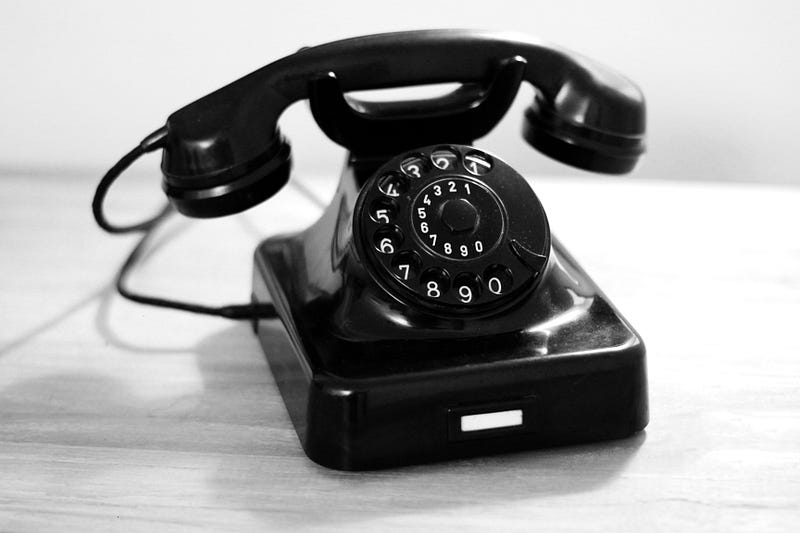
“And I am calling long distance, don’t worry ‘bout the cost ’cause it’s been forty years or more.” — Tom Waits
I was driving recently and I heard the old Madonna song “La Isla Bonita” on the radio. The song, as many do, immediately triggered a memory from when I was younger. As I sang along with the radio, I could hear my Grandpa’s voice as clear as if he were in the car with me.
“Why are you singing on the answering machine?” he grumbled in my memory, his voice thick with irritation. “This is long distance.”
When I was in college my roommate and I loved to make up lyrics to songs and sing them as our outgoing message on the answering machine. For a long time our outgoing message was us singing “La Isla Bonita”.
We changed the words to fit our needs. For example, instead of singing something like, “tropical the island breeze” we’d sing, “won’t you leave a message please”.
We didn’t let our lack of musical talent or inability to hold a tune hold us back either, we belted those songs out with complete enthusiasm. Yes, we were total dorks, but it was fun.
It wasn’t fun for my grandparents, who would call me long distance from Florida once a week. Every time he got my answering machine, my grandpa complained about our long outgoing message increasing his long distance bill.
In those days, long distance was a big thing because you paid by the minute, and it was expensive. Everyone would try to make their calls after 9 p.m. or on weekends when they were cheaper, but it was still pricey, so listening to us giggle and sing waiting for the tone came at a price.
It’s hard to believe now with cell phones and VOIP calling long distance is essentially the same price as making a local call. It wasn’t that long ago that Elaine on Seinfeld didn’t want a phone number with a newly-added New York City area code because she was afraid people would think it was long distance and not call her.
Now no one really worries about whether a call is long distance or not. Unless you’re in an institution.
Jails and even some hospitals are using long-distance calls that are essentially free as a way to exploit those who are vulnerable.
Last year a friend was in jail out of state and tried to call me. It came through as a collect call, but when I tried to accept the charges it told me I needed to set up an account with some contractor to accept the call.
I checked into it, and in order to accept a call they required a lot of personal information, including a social security number and credit check, and a $50 minimum purchase of a calling card for them to bill against.
That’s right, these shady government contractors wanted to do a credit check for the “privilege” of purchasing a calling card and accepting a call. No way I was doing that.
I also saw that they would charge $3.99 a minute for the call. Think about that: $3.99 a minute? That’s highway robbery especially when you know it only costs pennies to make that call.
Someone is profiting big off the families and friends of people who are incarcerated and that’s just ridiculous.
Needless to say, I declined the call, and several subsequent calls. I felt bad about it, but I’m not sharing personal information or paying those prices.
I did a little research and found that this practice is pretty much standard in jails and prisons, but increasingly hospitals are using for-profit contractors to charge sick people and their friends and families exorbitant prices for making or receiving a call.
Hospitals, jails and other institutions are making a profit off of people’s suffering — even more than they already do.
Several states are looking for ways to cap these fees, even as the local cities and counties who operate facilities continue to buy into these lucrative contracts. With the COVID pandemic making in-person visits to insitututions almost impossible, loved ones continue to get the squeeze.
I guess my singing voice isn’t the worst thing about long-distance calls anymore.


