
MUSIC
London Calling — The Clash’s Apocalyptic Vision of Today
Psychic liberation for today’s zeitgeist
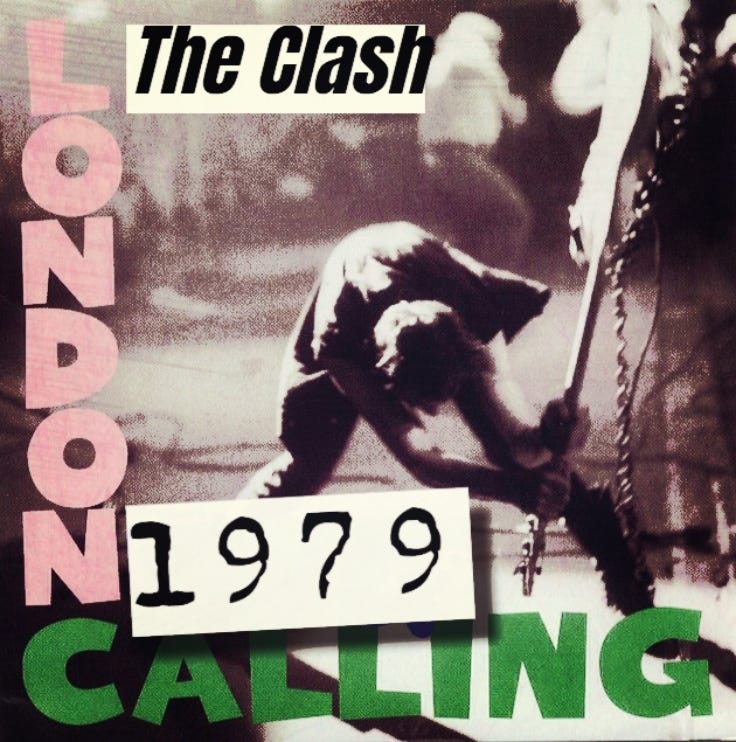
As I prepare to return to my hometown, London, the sound of “London Calling” by The Clash resurfaces in my psyche.
It’s like entering a parallel universe where the sounds and words of 1979 reverberate with prophetic relevance in today’s world.
Rebellious Youth
Back in 1979, that iconic piece of vinyl spun ceaselessly on my turntable. It was an apocalyptic anthem — instant karma for us renegades thumbing our noses at the establishment.
The Clash embodied our rebel spirit. They broke free from the constraints of their punk origins like Renaissance masters transcending their artistic boundaries.
They concocted an intoxicating blend of hard-edged guitars, clever lyrics, and pseudo-reggae rhythms that created a masterpiece of psychic liberation for outliers like us.
This is ‘London Calling’
It’s a clever homage to the ‘BBC World Service’s’ iconic wartime broadcasts during WWII, forewarning the world of the imminent peril from the German front.
The driving beat and punching guitar in the intro even mimics the sound of an emergency news bulletin. It creates a sense of tension and drama as the song opens like a news report.
Joe Strummer, the chief lyricist for the band, was a self-proclaimed news junkie. He channeled the zeitgeist of the era like Nietzsche grappled with existential quests.
It was the Cold War, and things were escalating into a surreal arms race between the USSR and the USA—a bizarre but deadly manifestation of humanity’s inner turmoil. The daily headlines screamed about the relentless competition to wield the most powerful war machine on the planet.
A Global Emergency
As we delve into the lyrics, we hear there’s a sense of urgency transpiring in London. It’s a metaphorical journey through the labyrinth of a world in disarray. It gives us a critique of the shallowness of pop culture and implies that answers lie beyond the superficial.
London calling to the faraway towns — Now war is declared a battle come down
London calling to the underworld — Come out of the cupboard, you boys and girls
London calling, now don’t look to us — Phony Beatlemania has bitten the dust
London calling, see we ain’t got no swing — Except for the ring of the truncheon thing
Climate Change
London is historically vulnerable to the threat of the Thames River’s floodwaters.
It also symbolizes our world’s fragility and an ecosystem teetering on the brink of catastrophe and food shortages. This lyrical sentiment remains remarkably relevant even after four decades.
The ice age is coming, the sun’s zooming in — Meltdown expected, the wheat is growing thin
Engines stop running, but I have no fear — Cause London is drowning
I live by the river
The Cost of Indifference
Like a Freudian unraveling of our hidden desires, the song urges us to reject conformity and embrace authenticity. It then asks us to awaken from apathy and confront crises with open eyes.
The indifference of the masses to this message has sadly caused the consequences we see manifesting today.
London calling to the imitation zone — Forget it, brother, you can go it alone
London calling to the zombies of death — Quit holding out and draw another breath
London calling and I don’t want to shout — But while we were talking, I saw you nodding out
London calling, see we ain’t got no high — Except for that one with the yellowy eye
Cold War Spy Games
Back then, the spectre of nuclear war hung heavy in the air as the superpowers engaged in their deadly spy games. The newspapers bombarded us with stories of the ‘Iron Curtain’ and the malevolent USSR that fuelled a kind of blind animosity.
The song also paints a breakdown of societal systems and an impending energy crisis. It’s a surreal Kafka landscape eerily being played out in our current epoch.
The ice age is coming, the sun’s zooming in — Engines stop running, the wheat is growing thin
A nuclear era, but I have no fear — Cause London is drowning
I, I live by the river
Hindsight’s Rear View Mirror
The lyrics finish with a sense of resilience—an acknowledgment of the crisis and a call for unity in the face of adversity.
We later rallied on the streets with this message, brandishing peace signs, artwork, and defiant student voices.
The song now represents a creative reflection on the challenges of the time and a plea for a positive response, even in the face of disaster. Like many songs written back then, when lyrics actually meant something other than love, sex, and money, it has an uncanny sense of foretelling the future.
In hindsight, those pleas were largely ignored, and our protests were in vain, as forty years later, we see the results.
The question is — will we learn the lesson now?
Now get this
London calling, yes, I was there, too — And you know what they said? Well, some of it was true
London calling at the top of the dial — And after all this, won’t you give me a smile?
I never felt so much alike, alike, alike, alike
Thanks for reading — if you enjoyed this article, you may like the one below similarly.