
Uncertainty Experts: Lockdown lessons from life inside.
“When freedom’s taken away, once you get it back, how you use it becomes a choice; to spend it on your dreams, becomes your opportunity.”
Wisdom from a smart young man I mentored who’s now the owner of a booming business, has always been a successful entrepreneur but was also, once upon a time, a prisoner.
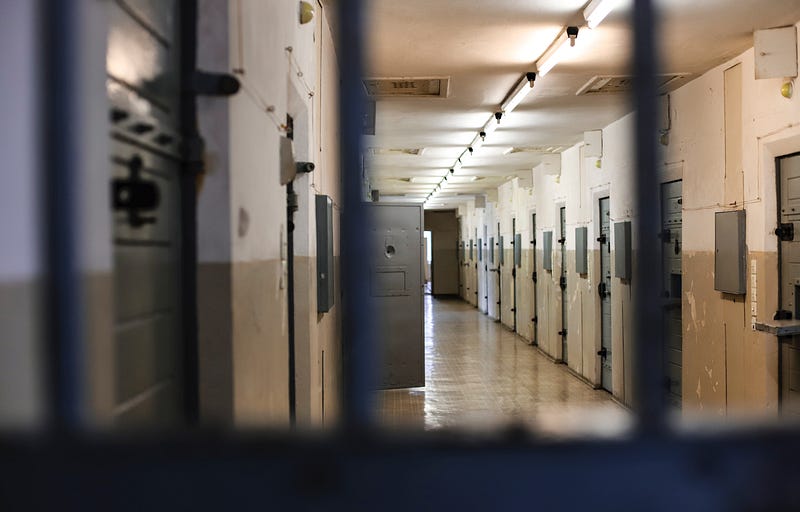
As ever with mentoring young people, I left this conversation suspecting I’d learned the most. It reminded me that often the most resilient people I’ve met, whose wisdom holds real value right now, are what you could call ‘God’s own entrepreneurs.’ Executives in informal economies, schooled in council-estate classrooms, graduates with degrees in disruption.
Through Livity I’ve mentored hundreds trying to turn street skills into business skills. I was often out-entrepreneured as they explained innovative sophisticated operations, built without the formal support I’d received. I’ve never worked with violent criminals or sex offenders, but I’ve worked with many lads who’ve (IMHO) applied a logical response to inheriting a lifetime of uncertainty and periods of imprisonment yet still become successful, albeit within a moral framework you and I might not ordinarily appreciate. But whether it’s unfamiliar or unnerving to you, the way these guys are qualified Uncertainty Experts, with riches to offer our crisis.
As we entered week four of Lockdown, we were beginning to crack. One example I heard was an unexpected spike in domestic violence amongst young couples and working parents all struggling under new intensity. So whilst it might seem counterintuitive to suggest people who were ‘winning at life’ a few weeks ago, now learn from ex-convicts, I guessed that insights into ambiguous and confined times could help others trying hard to hold it together.
So I picked up the phone to some lads I’ve mentored, and called Carl Cattermole, who wrote the ‘Essential’ book Prison: A Survival Guide. I asked them all two questions:
What could they teach newcomers grappling with domestic incarceration?
How did they prepare for a positive post-prison life?
The first guy I spoke to runs a successful boutique in south London. Thoughtful and quick-witted always, as soon as we spoke the insight began to emerge. I’ve summarise them into four:
1.Play the long game, but execute it day by day. Set some medium-term goals to give you focus and strength, but as each day unfolds be flexible and responsive in how you reach them. Working with two interconnected timeframes in tandem really builds resilience.
Or as he put it himself: “The lesson for lockdown is to take every day as it comes, that’s the only way to survive prison. A game plan is essential, but be ready for it to change everyday. You only know where you’re going to be the next day, at the end of each day. If they’re going to move you, and they often do, it’s after 3pm when the phones lock off. So it’s like the daily briefings. By the time you’ve got a handle on today, tomorrow you’re somewhere else. So you need to have two heads at once. A long-term plan, for focus and strength, but so events don’t crush you, it needs to be a plan you can unfold day by day.”
The second young man I spoke to, who’s now got a great coaching business as a personal trainer, put it like this: “All the entrepreneurs I know who’ve been through prison are thriving right now. They’ve got in-built resilience, automatic shock absorbers that means bouncing back isn’t choice, it’s instinct. They detect bullshit, switch off to it and switch on to what needs to be done.”
A point began to emerge that using isolation to journey inwards a little bit, is a hidden gift. Amongst seismic shifts there’s a chance for some real-life realisations to surface, if we can give them the time too. Or as was said: “Green shoots grow through rubble, but not through concrete” The emerging cracks are all part of the puzzle.
2. Find out what matters most, and use it. Pay attention to what feels meaningful and make doing more of that your mantra. Using isolation as an enforced reappraisal of what’s important will help you get through it, but also give you clarity as you move out of it.
Or, as the third young man I spoke to, who’s just been promoted at work, put it: “Prison is an almighty leveller, and lockdown could be too, for some people. You have to think about what’s important, whether that’s the people you love or whatever it is. It forces you to take away the bollocks and focus on what’s important and then get to work on it.”
Being isolated is subtly disorientating and as a solution, we might unconsciously crave endless Gossip Girls or| non-stop Call of Duty, to distract and numb ourselves. I know I’m not alone in experiencing Productivity Panic, but I’m also not alone in suspecting I need to make space to process what I’m going through, and who I want to be after this. As much as I’m realising 15-hour workdays might be a misplaced mechanism for coping, I’m also increasingly taking stock of what it means to be me.
Increased likelihood of burnout as a result of being forced to stay home sounds like a surefire way to make a shit thing shitter. So taking inspiration from some guys who made space to discover a little personal enlightenment while in a much tougher detention, perhaps isn’t as crazy as it sounded a few paragraphs ago.
“If you come out of this and you haven’t learned Spanish or started a business like you planned, that’s not the end of the world, so you probably don’t have to worry. But for me it would have been the end of the world. I had to stick to my promise. I had too much to lose. So maybe connect to that. What’s the fear you felt? What’s scared you during this, what have you realised you’ve got to lose? Connect to fear and you’ve got more chance of holding onto the dream.”
As well as proving what’s possible, this also shows one of many differences between prison and lockdown. There’s a big narrative telling us to be ok with not being productive because it’s ‘a crisis’. But the point that was being made to me was, ‘Actually, if not now, when?’ There’s a point in a crisis when you have to accept it’s now reality and push on? Or, as has been said many times in business circles and it’s now true of you and me, too: never waste a good crisis.
It also picks up another often-mentioned point: that the likelihood of lasting change is related to how long this goes on. So too with prison. My one night stands in a cell taught me very little. My night under Charing Cross proved everyone knows the words to ‘Show Me The Way To Go Home,’ and my night in Brixton Police Station taught me that Scarlet Pimpernel impressions don’t amuse Police Officers. Luckily we’re not relying on my idiotic experiences here. We’ve got people who’ve been through hell and came out with something worth living for.
3.Rather than fight boredom, if you can get comfortable with inner silence and empty space, there’s a better route to lasting benefit from all this than succumbing to the call to cram every moment with starting businesses or teaching yourself Spanish.
Admittedly during his time inside Carl did learn Spanish, but even so, he’s a big fan of the benefits of ‘boredom’ and gave me brilliantly counter-intuitive insights. Ironically (or not) Carl was the first person in lockdown who sounded genuinely free. We’re all familiar with starting conversations with a tentative ‘How are you?”, and then expanding into, ‘Really, how are you?’ To then talk about the collective rollercoaster we’re on. I tried the same with Carl, who caught me off guard. I went in with really how are you? and got, “Pretty good thanks, I’ve seen worse.”
For Carl, learning to be comfortable with empty time was a path to profound creativity and the beginning of becoming a published author, because he embraced empty space allowing him to find what something he wanted to say.
“That dead time is the key thing. The time between tides, whatever that’s called. ‘Boredom’ is scary for most people, so let’s not call it boredom. So called empty space is scary, it forces you to think about yourself, about who you are and what you really need to do. But it’s not empty space, it’s important and productive.”
Perhaps, rather than forcing ourselves to read Proust (my week one) or learn Spanish (my week two) bake sourdough (all of our week three) and getting frustrated when we fail (week four), we’d do better to daydream. Fellow parents will recognise if you fend off “I’m bored” enough, you find your kids unlocking their imagination and hosting a tea party for dinosaurs. We’re the same, we’ve just lost the art knowing how to make magic when finding time on our hands. If we can sit with the space for longer than is usually comfortable (cos we can) we might find something more valuable than what we thought we were looking for.
Back to the first guy I called, who told me a story that really encapsulates the combination of agility of thinking and resilience I saw in all the conversations.
“We were told our business had to shut, just like everyone else, so for a day we did. But this is my life, it’s the last six years and it’s my family’s future. So that night I sat with it and I realised what I had to do. And so, we opened the next day, selling food. I had the council and police in twice, and I sent them away with their tails between their legs. I’m up at 6 every day and the shop hasn’t been shut since. We’re entirely essential. But that’s what anyone would do right?”
Nope, I replied, that’s not what anyone would do. Some have, thankfully. There are loads of inspiring stories of businesses pivoting to new methods. But an overnight reinvention represents an unusual level of bravery and a character unphased by uncertainty, unwilling to give up, creativity and focus entwined, in the hardest moment to concentrate.
I got to thinking, what if this sort of leadership were on display more often in the upper echelons? I know I’m not alone in finding the demands for bailouts from businesses like the airlines, more than disagreeable. Likewise the weak tea of advertising from brands trying to inflict us with their empathy. I wish they could take a leaf from these young guys with just as much to lose and find a way to be useful, reinvent, take a risk, rebuild. Don’t waste the chance of re-awakening by treating it as a pause. Step up to the opportunity of a re-set.
4.So, inspired by what I’d heard about how to cope, I asked how to prepare for what comes next? How to take what’s useful and hold on to it? How to overcome the predictable failure of being a human and just not following through?
One clear way these Jedis of the Justice System stuck to their plans is because they found a truth that mattered. The stakes were high, but they’d used their confinement to get very clear about what was important. The typical attrition of a commitment made on holiday, this was not..
A second clear answer was that people who thrive after prison have truly taken full personal responsibility for their outcomes. Success on the outside is the furthest thing from a given, and any transition is an active process. If we want to avoid returning to BAU, personally or systemically, we have to take responsibility and actively choose our post-lockdown reality.
“There’s a level of responsibility that comes with prison. You did the crime and you face the consequence. The responsibility and onus is all on you, so you have to take responsibility for yourself on a different plateau. This is a chance to take a look at your life, look at what you’ve lost, look at what you’re fighting for, look at what you’d be willing to let go, and after you’ve assessed it all, what’s left is really all that matters. If you protect that, then your protected. In prison we learned there’s no such thing as permanence, ever, it’s a comfort, but it’s a lie.
Thirdly, they decided consciously to look for the lessons to take with us.There’s surely no greater lesson than learning that our previous life was always a paper-thin fiction, infinitely vulnerable to disruption. I want to believe that none of us will take the bullshit of late capitalism’s promises quite so literally any more. As Carl says in his brilliant book: Freedom is hard to take at face value once it’s been taken away from you. The freedom you knew from before just isn’t the same when you return. Slowly you’ll begin to re-learn the matrix of everyday life: for me, it was rediscovering the feeling of sun and rain on my face.”
Carl’s parting words to me were, “Lockdown, like jail, is something we’ll never forget, it will always be with us. But for me it won’t be hard to thaw, but I’ll be sad about the good-hearted people who do play by the rules and are going to get fucked, but maybe it’s a time to reconsider the rules in the first place.”
I think he’s right. As I found in the last piece, this is a chance to reconsider what matters and what we value, not out of sentimentality but in order to build preparation and resilience. Because as much as this crisis was a shock, it was also pretty much guaranteed, as is the next one to come. “The average inmate has more life experience than your typical ABC1, who probably assumes they’ve got the greater intelligence, but maybe, they just have the personality type to make the cogs of the system turn efficiently.” Which to me is less about who’s better prepared, but how we can all better prepare. If we knew the rules we knew were fragile but now we know they’re faulty, then maybe there’s a lot more than coping mechanisms that we could learn from living beyond the rules. Maybe we should be seeking the seedlings of new systems, or even re-learning old ones.
“Lockdown is a bucket of ice cold water for individualists. If people were more communitarian then it would be a better temperature. What I mean is, If you spent more time with your family then it wouldn’t be such a shock to spend so much time with your family. Privilege works both ways. Right now there’s a lot to be said for having grown up in a council estate, sharing a room between three kids and having your uncle on the sofa. That looks like a skill suddenly, crazy as it sounds. Perhaps there’s a privilege to really knowing your family, really knowing your community.”
Maybe that’s the big lesson coming out of all this. Our appetite for change isn’t borne of this crisis; it comes from years of pent-up frustration that the crisis is forcing us to articulate. We must listen to Uncertainty Experts, the ones we normally ignore in favour of the bastions of business as usual; the ones who have suffered from what we’re going to be told that we should welcome a return to. The ones who teach us to realise that the game is rigged and if you keep on playing by the rules, then you play to lose.
You and I are going to pay the price for the two trillion pounds that’s just been released, in ways we can’t even imagine, but one thing is for sure: the roaring return to business as usual is going to be deafening and defining. New rules are already being written by the usual suspects, with the usual winners and losers in mind.
So what will your new rules be? While it’s still quiet, while we stew inside getting used to what was once so uncertain, let’s not get cooked. Let’s invest time to reflect, journey inwards and find strength to fight for something different when all this is over. And before that sounds too grand, the point of this piece is meant to be around humility, reappraising our own points of reference, so let’s draw expertise from those who’ve been here before, think about what we’ve lost, what we love and what we’re willing to fight to hold on to, because maybe that’s who we can be when we come back: awake, ready and redeemed.
— — — —
This is a series of writing attempting to curate a conversation about emerging stronger from CV19. A survey to inform the next piece about what we want to hold onto, and what we’re willing to let go of is here.
— — — —
Find out more about Carl Cattermole.
— — — — — — — — — —
I’m a writer, social entrepreneur and consultant, mostly working on sustainability, social innovation and what I call Professional Rule-Breaking, you can sign up to an irregular newsletter of inspiration & insubordination at www.samconniff.com and my first book is out now: www.bemorepirate.com


