
Living with Doubt: What You Can Do to Silence Your Inner Critic

Have you ever woken up in the middle of the night, and you just can’t get back to sleep because your mind starts listing off all the things you’d hoped to accomplish the previous day, but didn’t?
Or, all the things you wish you could do, but haven’t yet?
Or, the things you wish you could be, but you’re not?
Then your brain, being the cruel entity it sometimes is, convinces you that you’ll never accomplish those goals. You’ll never do those things. You’ll never be the person you want to be.
So you lay awake while all your shortcomings and preemptively dashed dreams play on a continuous loop of doubt and despair.
And in those sleepless hours, it’s unsettling how easily “I want to” becomes “I can’t.”
Doubt is the biggest killer of dreams, goals, and productivity. All of us are susceptible to it, no matter how successful we are, or what we’ve accomplished, or how hard we work.
Doubt comes in two forms: external doubt and internal doubt a.k.a. self-doubt.
External doubt — someone telling us they don’t believe in us — comes from varying sources and in varying degrees of severity.
Whether it’s someone directly telling you they don’t believe in you, or subtly implying it through their actions or attitude, or if it’s the external norms/expectations, societal or otherwise, to which we don’t measure up, doubt makes most of us give up before we even try.

Some of us take that doubt and use it as motivation. We want to prove our doubters wrong, so we double our efforts and work our asses off with an “I’ll show them!” attitude. And while this can help us succeed, achieving a goal out of spite can sour the sense of accomplishment we get from succeeding.
In any case, if we experience enough external doubt, we begin to absorb it.
We begin to believe our doubters.
We hear their voices in our heads whenever we get excited about something. We hear them when we set goals. We hear them when we try…and they get louder when we fail.
And we can only be told “you suck” so many times before we can’t help but believe it.
We internalize it. And it begins to run wild, offering all manner of worst-case scenarios in which our efforts are futile, resulting in one crushing failure after another.
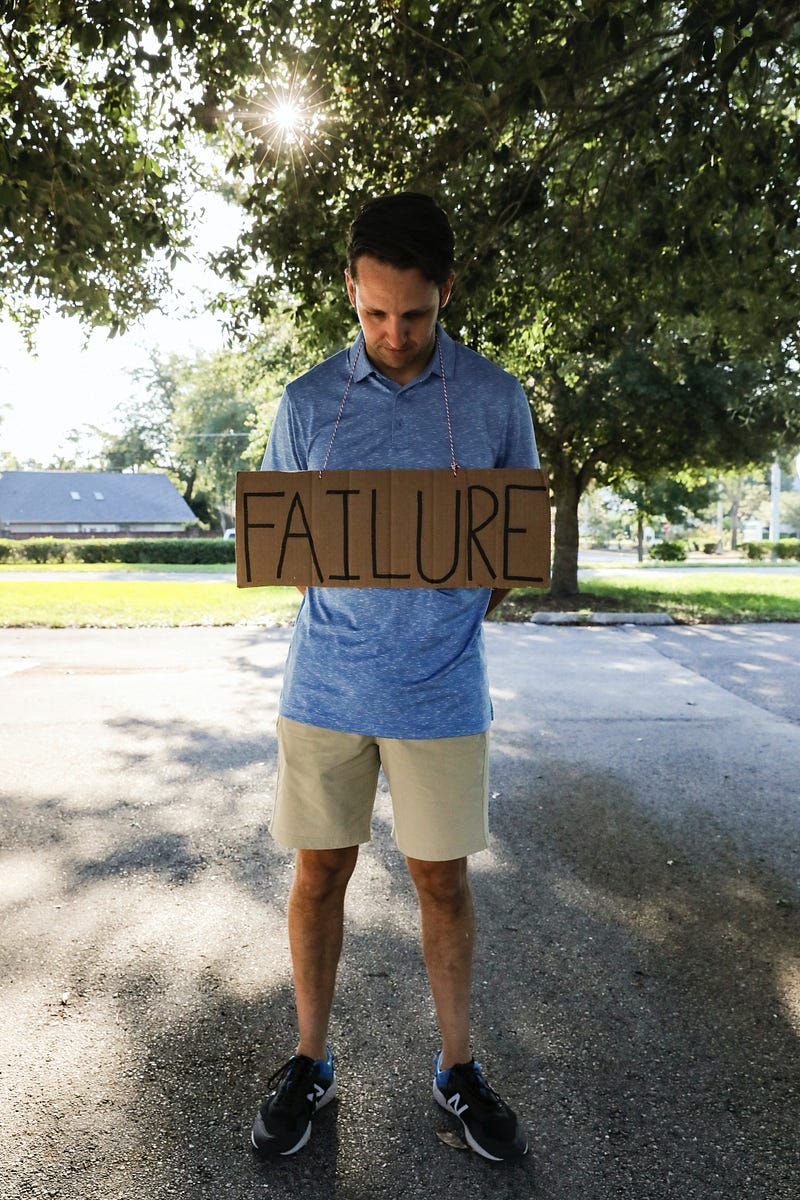
So persistent is our self-doubt that, sooner or later, we implicitly believe what it says. We begin telling ourselves that we can’t.
This is internal doubt. Of the two, it is by far the worst form of doubt as it cripples us from within. It says different things to each of us in individually cruel and varied ways, but the message is the same: “You’re not good enough.”
Some people refer to this voice as the “inner critic.”
My inner critic is a first-rate asshole.
When I go to bed, he’s there, reminding me that I’m not good enough, that I didn’t work hard enough that day, that I’ll never accomplish my goals.
When I wake up, he’s the first thing I hear, telling me that it doesn’t matter that I haven’t had a day off in three weeks; if I take a day off today, I’m a loser and I’ll never accomplish anything. Who needs self-care and downtime to recover? You know, the things we need that make us more productive in the long run because we’re not mentally, physically, and emotionally exhausted.
“Not you,” my inner critic will point at me and say. “Get back to work, you lazy sack of shit.”
As someone who wants to make a living from writing, my self-doubt constantly tells me writing is a waste of time, that I’m not skilled or creative enough to be a full-time writer, and that all the time I’ve spent working on novels, short stories, and blog posts is time wasted. It’s time I should have spent doing something practical.
Only, self-doubt doesn’t tell me what that practical thing might be. It offers no guidance, no words of wisdom, no sense that I’m on the right path.
It only offers criticism and guilt. It mocks. It derides. It urges me to just give up already…so it can then comment on how I gave up too easily and chide me for not trying or sticking it out.
Self-doubt is one of the reasons I overthink things to death.

My inner critic frequently pops up and says things like, “Hey jerkoff, you’re going to die one day, probably soon, you fat fuck, and waaay before you can even begin to accomplish your dreams. Psht, dreams. What a waste of time. How come you didn’t get to the gym today and work off some of that flab and extend your life expectancy, you orca?”
And when I argue that I had errands to run, that I had work, and that I had half a dozen other things to do such as laundry because I’m wearing my last clean pair of underwear, my inner critic scoffs. He doesn’t care about excuses. He reminds me that my doctor has been hounding me about losing weight for the last fifteen years. He points out how long it’s been since I’ve had a date, and that no one wants to fuck a fat guy, much less a fat quadriplegic.
When I sit down to write, because I’ll never be a successful writer or published novelist if I don’t, my inner critic tells me I’m delusional, that it’ll never happen, and that I’m doomed to fail, so why try?
I don’t want to be on my deathbed looking back at my life, and wondering if I could have made a living as a writer, but didn’t because I gave up.
At this point, you might wondering why I’ve spent the first half of this post depressing the unholy shit out of you.
A valid question, and I thank you for continuing to read this far.
I wanted to show you how bad my inner critic was, so that I can share with you the means by which I fight back.

While there are a number of ways you can fight self-doubt (I’m not a daily affirmations guy; I know it helps some people, but I feel ridiculous doing it), what follows are the strategies which help me.
And if you’re someone with a loud-mouthed inner critic, these may help you, too.
1. External Validation.
As hollow as it can sometimes be, hearing from other people that I’m doing something right and/or well helps shut my inner critic up.
For example, when I get a response to a blog post or to a short story I’ve gotten published, that goes a long way toward quieting my self-doubt and me thinking, “This isn’t a waste of time. People aren’t just reading my writing, they’re enjoying my writing. I’m finding ways to connect with them!” And that’s incredibly validating.
2. I remind myself my doubt is fueled by my depression.
Why are our inner critics such assholes?
Because they prey on our insecurities. They know exactly where and how to needle us to inflict the most damage. And they’re fueled by the emotions, such as sadness and frustration, which make us more inclined to listen to and believe that little shit that lives in our heads.
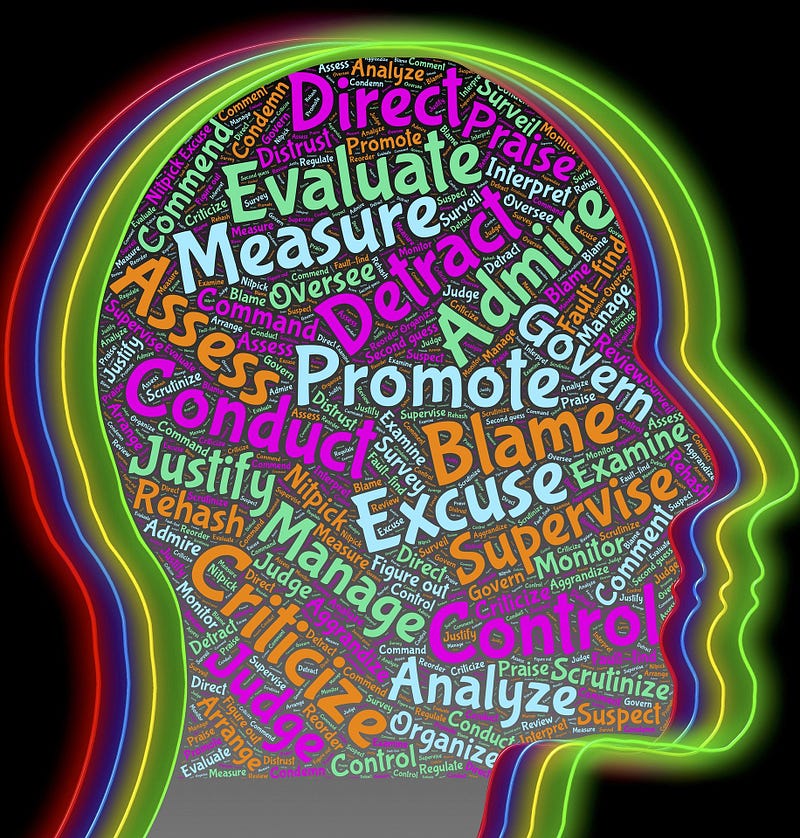
My inner critic runs on a steady diet of depression — the NASA-grade rocket fuel that powers my deepest, darkest thoughts and feelings. When I hear that voice telling me things like I’m not good enough, that I’ll never be good enough, and that the world would be a better place without me, taking a minute to stop and recognize that it’s my depression talking and that I don’t actually feel that way, jump-starts the rational part of my brain.
In the light of reason, those dark thoughts usually scatter like cockroaches under a floodlight.
3. Look at the results.
Whether it’s a creative endeavor or practical pursuit (like losing weight per my doctor’s badgering), looking back at where I started and seeing the progress I’ve made up to this point is a helpful exercise in perspective.
And yes, it’s important to “love the process” as I’ve heard repeated on so many podcasts and read in so many productivity guides. But for a long-term goal, such as writing a novel or losing a third of one’s body weight, the process can be so long and arduous, the goal can seem too far away to be achievable. And without the carrot of an endpoint, the process can lose its meaning.
Reflecting on the progress made, on the results so far, can be the necessary waypoint that keeps us on the path to our goals.
And if your inner critic gets too mouthy, you can stick those results in its craw and shut it up for a while.
4. Make a list of your accomplishments.
I’ve heard this from a number of different sources, so I’m not sure who to credit for this, as it is the most effective means by which I silence my inner critic.
When I’ve had an ass-full of self-doubt, I go over my mental checklist of accomplishments specific to what my inner critic is telling me.
“You’ll never be a successful writer!”
No? I’m up to how many published short stories? How many people read and clapped for my last blog post? And what about that email I got notifying of my “Top Writer” status in two different categories on Medium?
“You’ll never hit your goal weight!”
Not overnight, no. Well, barring an alarmingly large bowel movement, that is. I’m not there yet, but I’m taking steps toward that goal. And I’m back down to my pre-pandemic weight (anyone else put on like 25–30 pounds from sitting at home for a year?).
“You’re not a good teacher, coach, etc…”
Scoreboard, motherfucker!

How many medals did my athletes bring home this season? How many positive student and peer-review evaluations have I received in the last three years?
“Oh yeah? Well…you’re still crippled.”
Nothing I can do about that. Not that it matters, seeing as how I’ve become an independently functional adult without full use of my body for the last 16 years.
I’ll never rid myself of my inner critic. I’ll likely continue to judge myself too harshly, put too much pressure on myself to achieve, and mercilessly beat myself up when I fail.
But having methods to bring me back to rational thinking, things that remind me that all is not lost, and to calm the fuck down from time to time will help me from becoming my own worst enemy.
As a bonus, please enjoy “My Own Worst Enemy” by Lit. Seemed a fitting up-beat end for this post. Also, A Place in the Sun may be over 20 years old, but it’s still one of my favorite feel-good albums.
If you liked this story and/or my writing, sign up for my email list to stay up to date on new stories, upcoming features, and other cool news. I promise not to overfill your inbox like a port-o-potty at Coachella.


