
ESSAY
Living With Agoraphobia
My life in seclusion
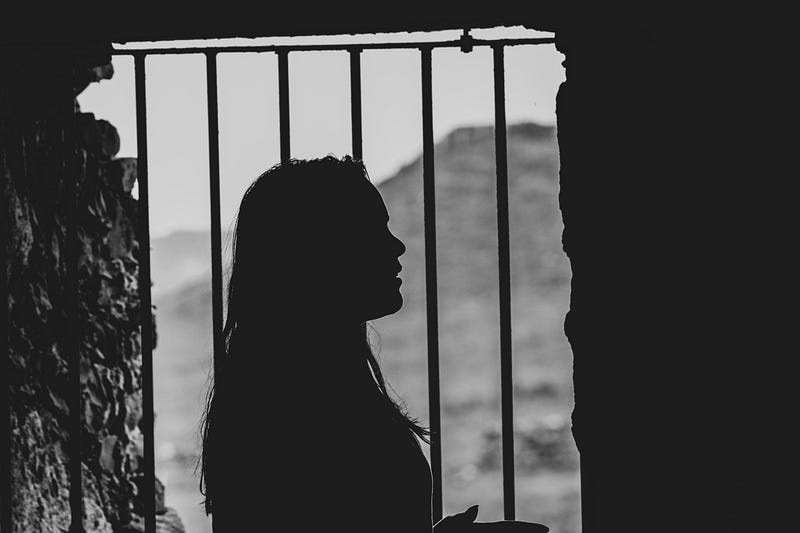
My world is small. My bedroom is my safe haven. Rarely do I wander outside of its walls. My earliest memory of not wanting to enter the world was at age twelve. Now, it affects every portion of my life. It is my entire existence. My marriage has been deeply affected, along with my friendships, or lack thereof. I don’t speak to my family anymore. Instead, I write. It has become a form of therapy for me. A catharsis. Here is a glimpse into a life you may never have known existed. Agoraphobia is the fear of being in a crowded or public place when the option of escape seems impossible. In extreme cases, like my own, it can cause people to become completely home-bound¹. It affects 1.7% of people in the US², and here is my story of survival.
MY APARTMENT
In my third-floor walk-up, I write or edit in bed, or watch one of my many streaming channels. I look at the world through the eyes of the people on screen. Sometimes I feel like I’m a character in the show. I contemplate another existence. Sometimes I feel like the walls are caving in. Other days it is my safe place. I’m in a prison of my own creation. I wake up early every morning, usually around four, that is if my hypervigilance didn’t keep me awake all night. Hypervigilance is a state of awareness where you are constantly on guard and looking for danger³. But I am blessed. I have an incredible husband who understands and supports me. He must feel extreme amounts of pressure being my everything.
PRECIPITATING FACTORS
The feeling of being ‘unsafe’ started very early on. We ran from an abusive household when I was a young child. And my mother was left incredibly damaged because of it. So, things weren’t much better afterward, after we got away. They were merely different. My mother began drinking, and she wasn’t a happy drunk. I was often made fun of and degraded. I was an overweight kid, and she never let me forget it. And now years later, I still deal with issues of low self-esteem. It’s definitely a contributing factor. And it didn’t help that when I left the house, I felt the need to lie about what was going on at home. I was embarrassed and scared that someone would find out and take me away from my brother.
HOW IT BEGAN
It started to develop when I was in the seventh grade. I didn’t want to go to school. I’d wake up and fake being sick. I even tried holding the thermometer to the lightbulb a few times. When my mother caught on, I just started moving incredibly slowly. I’d drag along through each task of getting ready. Eventually, I moved on to temper tantrums or hiding in my room under the bed when it was time to leave for the bus. Sometimes I even took it as far as hiding behind our apartment building as I’d watch the bus drive away.
And it was like that all through school. Of course, it didn’t help that I was tired all of the time. My hypervigilance was prevalent even back then. I’d lay awake for hours in the dark staring at the ceiling. Waiting for something to happen. I just knew that if I closed my eyes, something horrible would occur.
THE PROGRESSION
My agoraphobia progressed into my twenties. It took longer and longer to get ready to leave the house. I’ll never forget a date that I had, I showed up forty-five minutes late. In my thirties, I started canceling things. Dates, concerts, family gatherings. And then Covid hit. The idea of entering a world full of hospital masks and disinfectants terrified me. As of today, I’ve been in my apartment for six months. During that time, I’ve canceled more appointments than I can count. When I cancel something, it is followed by an overwhelming sense of relief. Which in turn is followed by dread just thinking about the next time that I have to leave. I feel isolated, terrified, and full of grief.
MY FUTURE
Agoraphobia is a debilitating disease that can damage marriages and break up families, and it’s largely misunderstood. I want to leave the house. I love the outdoors. I love canoeing, walking on the beach, and camping. And I love people. I’m a social creature by nature. It’s difficult to not blame myself for the situation I’m in. I hope that through exposure therapy, I will begin to change my life. Exposure therapy encourages people to approach traumatic memories in the hope that they will eventually become desensitized to them.
FINAL THOUGHTS
Recently, I found a healthy outlet in writing. And, although I experience Imposter Syndrome on a regular basis, I find it to be therapeutic. Imposter syndrome usually occurs in high-functioning individuals and it can be described as self-doubt of intellect, skills, or accomplishments⁵. I’m forty-six years old and I’ve been living with agoraphobia, in one form or another, for over thirty years. My hope is that through writing, and discussing my mental illness, I can find some respite. I hope to come to terms with my situation. Acceptance and courage are two of my goals. I want more from life, so wish me luck on my journey. I’ll keep you updated.
1. Asmundson GJ, Taylor S, Smits JA. Panic disorder and agoraphobia: an overview and commentary on DSM-5 changes. Depress Anxiety. 2014 Jun;31(6):480–6.
2. Roest AM, de Vries YA, Lim CCW, Wittchen HU, Stein DJ, Adamowski T, Al-Hamzawi A, Bromet EJ, Viana MC, de Girolamo G, Demyttenaere K, Florescu S, Gureje O, Haro JM, Hu C, Karam EG, Caldas-de-Almeida JM, Kawakami N, Lépine JP, Levinson D, Medina-Mora ME, Navarro-Mateu F, O’Neill S, Piazza M, Posada-Villa JA, Slade T, Torres Y, Kessler RC, Scott KM, de Jonge P., WHO World Mental Health Survey Collaborators. A comparison of DSM-5 and DSM-IV agoraphobia in the World Mental Health Surveys. Depress Anxiety. 2019 Jun;36(6):499–510.
3. Richards HJ, Benson V, Donnelly N, Hadwin JA. Exploring the function of selective attention and hypervigilance for threat in anxiety. Clin Psychol Rev. 2014;34(1):1–13. doi:10.1016/j.cpr.2013.10.006
4. Richards HJ, Benson V, Donnelly N, Hadwin JA. Exploring the function of selective attention and hypervigilance for threat in anxiety. Clin Psychol Rev. 2014;34(1):1–13. doi:10.1016/j.cpr.2013.10.006
5. Thomas M, Bigatti S. Perfectionism, impostor phenomenon, and mental health in medicine: a literature review. Int J Med Educ. 2020 Sep 28;11:201–213.
Thank you for reading my essay. I’d love to hear your opinions.
I am a writer and an editor. I mainly edit Fiction, and I specialize in Romance. I write a little bit of everything, whatever is on my mind at the moment. My writing is greatly influenced by my past trauma, and I enjoy speaking openly and freely about my mental health diagnoses. You can follow me here.