
Living off the grid in Spain: The Good, Bad, and Ugly
Diplomas, office skills, and titles, my education did not adequately prepare me for the knowledge and skills that I needed in order to survive off the grid.
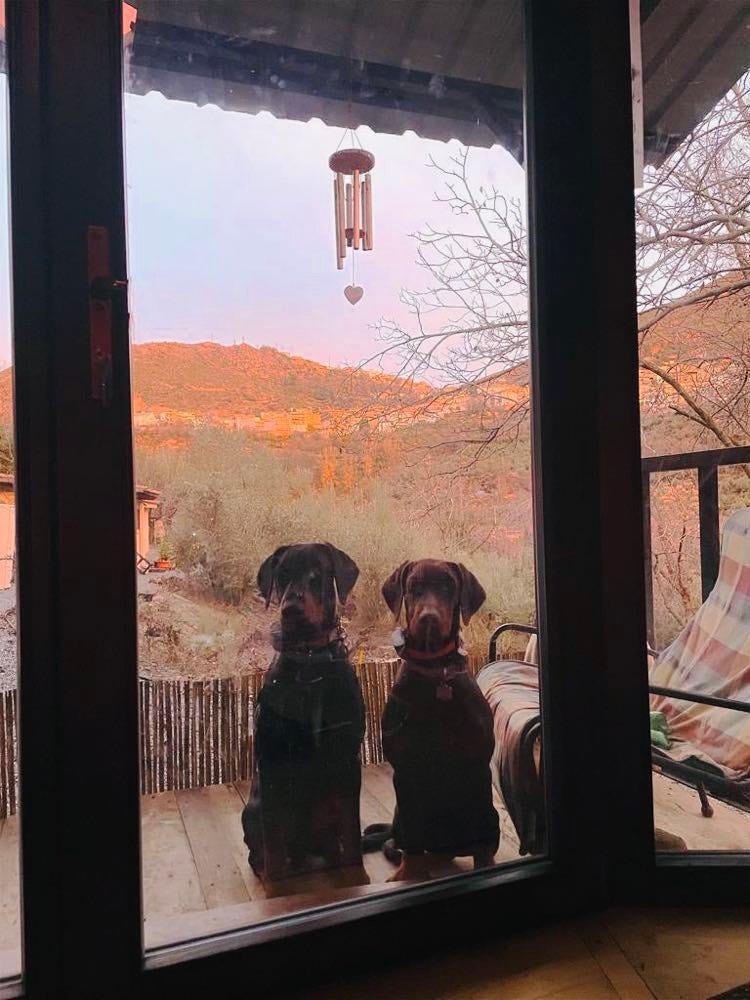
Last year, I chose to leave behind the comfortable modern life and live off the grid. Having spent my entire life in an apartment in the city, I wrote an article about my decision to make this lifestyle change:
Oh boy little did I know about life in the wilderness without having experience, not having the necessary skills to live in nature self-sufficiently.
Despite possessing diplomas, office skills, and titles, my education did not adequately prepare me for the knowledge and skills that I needed in order to survive off the grid.
My first winter was the most brutal and here is my story:
So, living off the grid can be a unique and rewarding experience, but it’s not without its challenges.
The lessons are very powerful, and I feel a sense of pride every day as I learn to live in the woods without modern amenities in Spain.
Here are some of the good, bad, and ugly aspects of living off the grid.
Good:
Self-sufficiency
Living off the grid means relying on yourself and your own resources to survive.
This empowers and gives me a sense of self-sufficiency. But this self-sufficiency comes after going through the bad and ugly. It takes time but the feeling is priceless.
Having your own heating, water, and energy system means you can continue your daily routine without any concerns about power outages on the grid.
Connection with nature
Living off the grid often involves being close to nature, with the opportunity to explore the outdoors and be outside pretty much all day with my animals.
I am experiencing a deep connection with nature for the first time and an appreciation for its beauty. Until I moved off the grid, I had no idea how disconnected from nature, I have been.
Being connected means you remember the last rain, drought, and even wind. You realize how much water you use and waste you produce.
You start to understand animals and how smarter, more intuitive, and more connected they are to nature.
Incredible lessons.
Reduced bills over time
When living off the grid, you can save a lot of money on utility bills and other expenses. But again that comes after the bad experience: high initial costs.
Currently, our expenses for utilities include $100 every three months for gas, $30 for internet and three phone lines, and $100 for gasoline for the car. Also, animal food costs $200 a month.
Reduced environmental impact
Living off the grid can reduce your carbon footprint and contribute to a healthier planet and that is true but for me, I learned how much water I use, and the waste that goes to the garden as a compost.
Also, I know how to live without electricity. Indeed, the resources are limited and for me, that is a good thing.
Bad:
High initial costs
Setting up our off-grid system including buying a property required some cash upfront. You’ll need to invest in solar panels, generators, batteries, water deposits with pumps, and other equipment to generate your own power and water.
When we bought the property there was only a little shack and a small cabin at the property.
So, we decided to build a small kitchen next to the shack and remodel the cabin.
Also, we bought a 500sqf yurt. So, we ended up with 3 small buildings on our property.
Maintenance
Off-grid systems require a lot of maintenance to keep them running smoothly. To keep everything in good working order, you or your spouse must be skilled with tools.
During the previous winter, while staying with my daughter at our property, I gained new knowledge by watching online videos.
When our solar panels malfunctioned, I had to identify the problem on my own. I carefully read the entire manual and learned about solar systems, and eventually resolved the issue by correcting the error message displayed on the digital panel of the solar panels.
Also, I learned how to defrost water pipes and prevent them from freezing in the future. This experience taught me the importance of continuous learning and willingness to learn. Also, not to be afraid to ask for help.
Grunt work and heavy work required
I am able to live off the grid thanks to my husband’s help with the farm’s physical demands such as grunt work and heavy lifting.
I, as a woman, don’t have the physical strength for this. Without my husband and his friends, I’d have to hire workers.
Ugly:
Extreme weather
Living off the grid means being vulnerable to extreme weather conditions. I dealt with power outages, flooding in the yurt, and extreme heat. I always joke with everyone who tells me I have no boss.
Yes, I do.
It is Mother Nature.
Every day, I watched the weather and planned accordingly throughout the seasons when to water, plant, and use A/C or a wood stove.
Mother Nature is my boss, and I better obey her.
Wildlife encounters
Living off the grid often means living in close proximity to wildlife, which can be dangerous if you don’t know what to expect.
You’ll need to learn what kind of wild animals live in your natural environment and how dangerous are they.
For example, we had geese on our property and I was aware of the small foxes in the area, but others were insisting that foxes only eat chickens and couldn’t take down a goose due to their size.
Late one evening, I discovered that the geese had disappeared while leaving their feathers behind. It was a massacre.
I collected evidence and learned a valuable lesson from what I now refer to as the “crime scene.”
It wasn’t pretty sightseeing.
Thankfully, we do not have bears, mountain lions, or coyotes. However, we do have wild goats, horses, grass snakes, and boars in addition to foxes.
Health challenges
Living off the grid means being responsible for your own health and well-being. You’ll need to be prepared to deal with medical emergencies on your own. As a nurse, both my husband and I are fortunate to have the ability to address various emergencies ourselves.
And many times either of us may experience illness or injury, or where one of our animals requires medical attention. It is a constant state of emergency at the farm.
Fortunately, we can solve them on our own.
Lack of modern amenities
Living off the grid often means living without modern amenities television, a dishwasher, a dryer, or other luxuries. This can be a challenge if you’re used to a modern luxurious lifestyle. Sometimes, I can take a shower once a week, and wash clothes like my grandma used to by hand.
Overall, living off the grid can be a rewarding experience, but it’s not for everyone. It requires a lot of hard work, dedication, and resources to maintain. If you’re up for the challenge, though, it can be a great way to live a simpler, more self-sufficient life.
I once received valuable advice on off-grid living which can be summarized in three points:
nights are pitch dark,
winters are chilly,
and water always flows downhill.