
Living in a Multilingual World
The one about the MFL teacher and his pupil
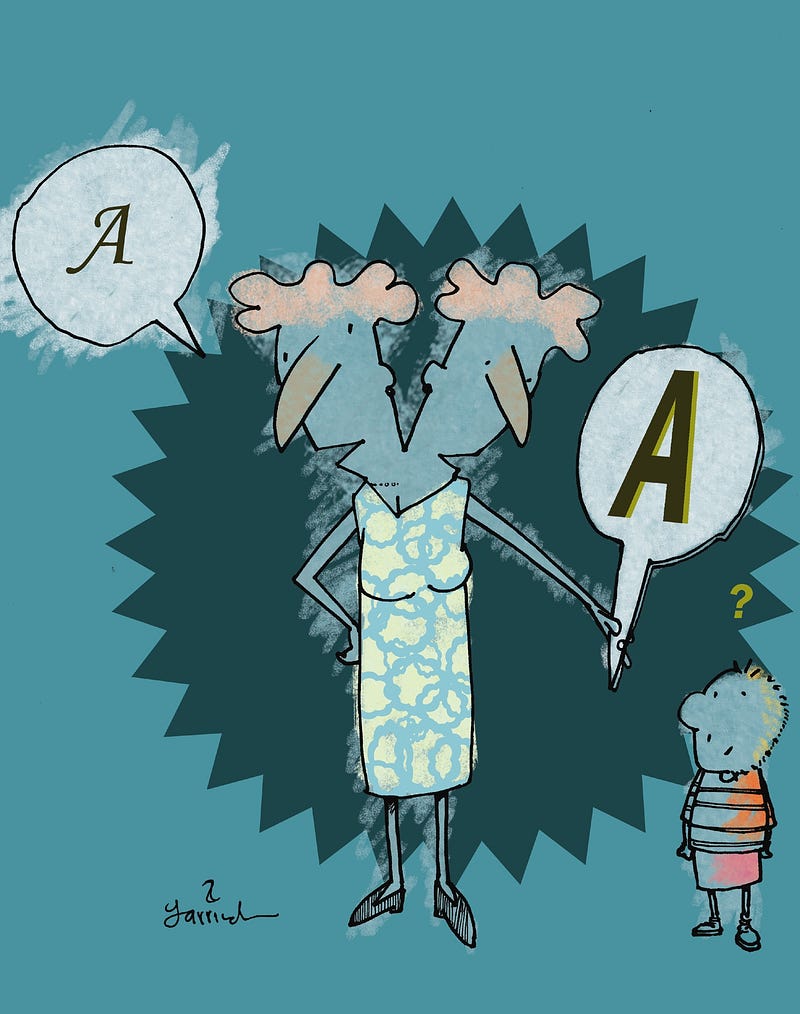
Many years ago, I read a story in The Guardian that warmed the cockles of my heart. It was about a secondary school MFL (modern foreign languages) teacher who told a student he could learn a language in three months. The teacher’s claim was merely an attempt to get his young charge to show interest in the subject. However, the pupil’s reaction was to throw the gauntlet at his teacher. The student would learn French in three months if the teacher did the same with Vietnamese (the teenager’s native tongue).
At the time I remember feeling impressed by this teacher’s creative (some would say “cunning”) way to motivate his students. To think that there are so many ways in which to stimulate the minds of young people who are keen to learn a foreign language.
At the same time, part of me felt apprehensive at the challenge. If I’d been faced with the prospect of learning a language outside my comfort zone, i.e., neither Romance nor Germanic, I would have probably got cold feet and backtracked. This teacher’s experience showed me that sometimes all you needed was a little bit of adrenaline at the right time.
In the article, the teacher also addressed other topics like the eternal dilemma of having to speak in a foreign language in front of a group of native speakers. In my experience, at least with English and German, I found that native speakers were rather considerate and most of the time helped out if they could.
It was slightly different when I took up French at the Alliance Française, in Havana. There was a certain anti-Anglo-Saxon attitude, which usually surfaced whenever I said that my diploma was in English language and literature. So, wasn’t it good enough for your education and culture and therefore you ended up here learning French? I heard my teachers “joke” more than once.
I persevered, though, and adapted to the school, thus making it to intermediate level. When the author of The Guardian’s article, Rick Jones, mentions his embarrassment of having to speak out loud in a foreign language as a teenager, I had a flashback. It instantly reminded me of the time when I learnt that there were more than one type of ‘e’ in French and they were, of course, pronounced differently. After long periods of miming the position of the mouth in front of the mirror, I achieved such high level of expertise that I was pretty sure that even the late mime artist Marcel Marceau would have been proud of me.
Rick’s story had two endings, one happy, one less so. The teacher achieved the lower of the two qualifying grades in his Vietnamese exam: pass. Meanwhile, his student regressed, instead of progressing in his French one. It was a tough challenge to overcome. It was said to be possible for a pupil to improve a predicted grade by one degree, but two (as the teacher wanted) was rare. The school’s reputation did gain a wider international recognition after the British Council funded Rick’s trip to Hanoi. As a result, his school established firm links with their Vietnamese counterparts, which led to cultural exchanges.


