
Living Abroad and Grieving From Afar

I lost my grandmother six months after moving to America during the pandemic. While this wasn’t the first death in my family, I’ve learned that no matter how hard you prepare yourself for death, when it comes, it’s never easy.
Out of all her 15 grandchildren, my brother and I were the closest to my Lola (grandmother in Tagalog) because we lived with her, and she took care of us growing up. Her cooking was superb, her gardening topnotch, and her patience for two hardheaded quarreling grandkids was unmatched (especially when compared to my grandfather’s).
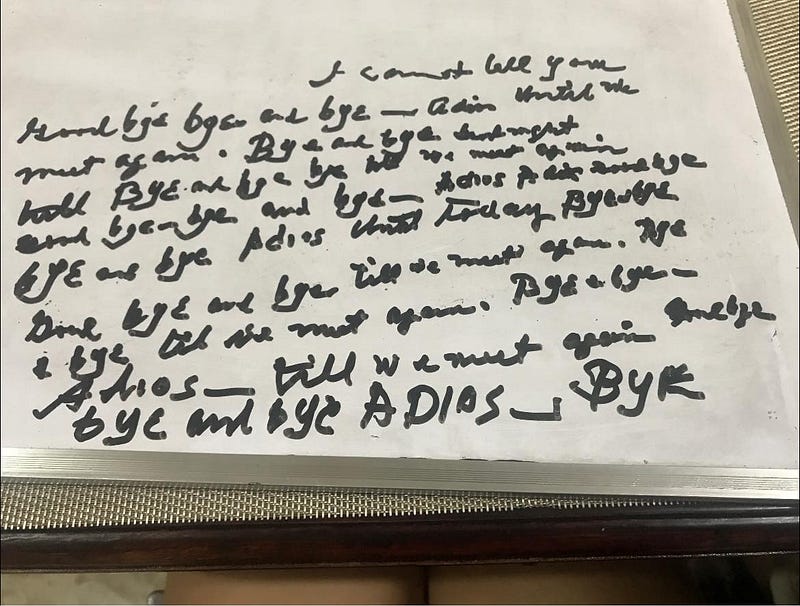
A month before I left for the States, I paid her a visit and told her I had gotten married and was moving abroad. At 92, my Lola was no longer what she used to be. She constantly lost track of time and day. She had deteriorating hearing and difficulty speaking. My biggest flex is that while her memory had significantly declined, she never forgot who I am. We communicated on a whiteboard where we would write and read each other’s messages. She wrote, “Goodbye. God bless you. Adios. Until we meet again.”
Those were her last words to me.
I had just started my first week at work when the dreaded phone call came. The call from my Tita (aunt in Tagalog) came just when I stepped out of the office doors on a chilly fall afternoon.
“Tumawag ka sa Lola mo, kausapin mo, magpaalam ka na. Parang may hinihintay pa siya eh.” (You need to call your grandma and say your goodbyes. She seems to be waiting for someone.)
My grandmother had been rushed to the hospital days prior because she was not responding. She had stopped breathing after days in the hospital, but the doctors could not pronounce her dead because her heart was still beating. My Tita took this as a sign that maybe my grandma was waiting for someone to say goodbye to her.
The call to my grandma was both uncomfortable and heartbreaking. My cousin, who was at the hospital, placed his phone on my grandma’s ear, put it on loudspeaker, and then I said my piece. I thanked her for all she was to me and told her she could rest peacefully knowing I was doing well. I was in tears, walking home from work while talking to my dying grandmother on a video call.
I was heartbroken about losing this woman who raised me, but more than that, I couldn’t bear the fact that that was how I would say goodbye. Over a stupid video call, devoid of presence and dignity. Who does that? It’s shitty enough to break up with someone over the phone, but what more with saying goodbye to a dying loved one?
Distance makes it harder to say goodbye. In Filipino culture, we pay our respects to the dead by holding a wake for 3 to 7 days, or what we call “lamay.” People gather either in a funeral home or in the dead’s family home to honor the dead’s life and offer condolences to the family. Another cultural belief is that the soul of the dead wanders with the living for 40 days after death. To protect the dead, the family follows a custom called “pasiyam,” where a novena prayer is said for nine days and on the 40th day.
My aunts and cousins back home did all the traditions for my grandmother’s funeral as I painfully scrolled on our group messenger for all the updates, photos, and videos of the wake. Overcome with grief and regretful sorrow, all I could think about was this: I should’ve been there.
Losing a loved one while thousands of miles away is incredibly isolating. I was lucky enough to have my husband by my side through all this. As soon as I got home after the phone call, I hugged my husband and wept like a child for hours.
The next days at work were the hardest. I told no one and kept my grief to myself while I was trying to navigate the workplace dynamics in my second week. It was draining and overwhelming. People thought I was too quiet.
It’s been four months since her passing. I lost my job (a story for another time), and I’m slowly processing my grief. One thing I’ve learned in dealing with death, though, is that you can’t rush the process. While I wasn’t physically present at her funeral, I can take as much time as I need to honor my grandma’s life in a way that gives me comfort and healing.
One thing I did was gather all my photos with Lola and reminisced about my times with her. I used to take tons of photos and videos of her whenever I visited. Some made me smile, most I cried over. I also cooked Filipino food which reminded me of her cooking. Although they were not as good as my grandma’s, my sinigang and leche flan were a hit to my husband.
There are still days when my grief takes over, but each time it does, I feel a step closer to healing. I know it will take a while. And as I write about my pain and regrets, I feel more at peace and accepting of the fact that I have to grieve from afar. We do what we can with what we have right now.
Goodbye and thank you, Lola, until we meet again.